



目录

  • 1 Chapter 1 – Preparing for a Leadership Career
    • 1.1 Introduction
    • 1.2 Why a Career in Hospitality and Tourism?
    • 1.3 Selecting an Industry Segment
    • 1.4 Types of Available Positions
    • 1.5 Traits of Leaders
    • 1.6 Traditional Management Styles
    • 1.7 Varying your Leadership Style
  • 2 Chapter 2 – Hospitality and Tourism Leadership
    • 2.1 Introduction
    • 2.2 21st Century Leadership Styles
    • 2.3 Leadership Development Goals
    • 2.4 Empowerment
    • 2.5 Showing Respect and Value for Diversity
    • 2.6 Global Guest Audiences
    • 2.7 Welcoming Other Cultures
  • 3 Chapter 3 – Leadership and the Guest Cycle
    • 3.1 Introduction
    • 3.2 Follow the Guest: Making the Cycle Seamless
    • 3.3 Guest Recovery
    • 3.4 Problem Solving
  • 4 Chapter 4 – Managing the Guest Experience Cycle
    • 4.1 Introduction
    • 4.2 Managing the Guest Experience: Being Inclusive
    • 4.3 Guest Experience Property Standards
    • 4.4 Managing the Guest Service Measurement (GSM) Process
    • 4.5 Guest Service Gold: Leading a Gold Team
    • 4.6 Managing Green Practices
  • 5 Chapter 5 – Leadership, Employees and Communication
    • 5.1 Introduction
    • 5.2 Purpose of the Mission Statement
    • 5.3 Communicating Employee Purpose and Role
    • 5.4 Setting Performance Goals
    • 5.5 Listening, Speaking and Writing
    • 5.6 Managing Difficult People
    • 5.7 Guest Communication
    • 5.8 Media Training
  • 6 Chapter 6 – Front Office Leadership
    • 6.1 Introduction
    • 6.2 Responsibilities of the Front Office Manager
    • 6.3 Reports: The Night Audit Paper Trail
    • 6.4 Labor Costs and the Night Audit
    • 6.5 Measuring Employee Performance
    • 6.6 Guests and the Front Desk
    • 6.7 Green Practice Programs for Guests
  • 7 Chapter 7 – Managing Housekeeping Operations
    • 7.1 Introduction
    • 7.2 Being the Executive Housekeeper
    • 7.3 Building a Budget
    • 7.4 Budgeting Labor and Linen Expenses
    • 7.5 Managing Housekeeping Performance Standards
    • 7.6 Training Housekeeping Staff
    • 7.7 Managing Housekeeping Green Practices
  • 8 Chapter 8 – Leadership and Facilities Management
    • 8.1 Introduction
    • 8.2 Function of the Chief Engineer
    • 8.3 Budgeting to Meet ADA Requirements
    • 8.4 Energy Management
    • 8.5 Emergency Systems Planning
    • 8.6 Managing the Facility’s Green Practices
  • 9 Chapter 9 – Food and Beverage Service Leadership
    • 9.1 Introduction
    • 9.2 Organization and Staffing of Food and Beverage Operations
    • 9.3 Menu Management
    • 9.4 Purchasing Supplies and Equipment
    • 9.5 Facility Design, Décor and Cleaning
    • 9.6 Managing Sanitation and Safety
    • 9.7 Labor and Revenue Control
    • 9.8 Nutrition and Sustainable Foods
  • 10 Chapter 10 – Managing Banquets and Catered Events
    • 10.1 Introduction
    • 10.2 Booking and Planning Events
    • 10.3 Reports: Preparing for Service
    • 10.4 Delivering Service
    • 10.5 After Service
  • 11 Chapter 11 – Human Resources
    • 11.1 Introduction
    • 11.2 Interview and Hiring Practices
    • 11.3 Employment Laws
    • 11.4 Managing Compensation and Benefits
    • 11.5 Corporate Social Responsibility
  • 12 Chapter 12 – Managing Operational Finance
    • 12.1 Introduction
    • 12.2 Financial Statements
    • 12.3 Operational Expenses and the Capital Budget
    • 12.4 Revenue Management
    • 12.5 Managing Labor Costs
    • 12.6 Taxes: Reporting and Remitting
  • 13 Chapter 13 – Marketing
    • 13.1 Introduction
    • 13.2 The Marketing Mix
    • 13.3 Steps of a Marketing Plan
    • 13.4 Channels of Distribution
    • 13.5 The Marketing Budget
    • 13.6 Industry Trends and Marketing
  • 14 Chapter 14 – Sales
    • 14.1 Introduction
    • 14.2 Training for Sales Success
    • 14.3 Managing a Sales Team
    • 14.4 Selling to Global Audiences
    • 14.5 Selling to Special Segments
    • 14.6 Selling to the Digital Traveler
  • 15 Chapter 15 – Safety
    • 15.1 Introduction
    • 15.2 Managing Workplace Safety
    • 15.3 Risk Management and Insurance
    • 15.4 OSHA: Following the Requirements
  • 16 Chapter 16 – Security
    • 16.1 Introduction
    • 16.2 Hotel Security: Access Control and Guestroom Security
    • 16.3 Employee Security Issues
    • 16.4 Emergency Management and Media Relations
Green Practice Programs for Guests


Being green can have many different applications in the lodging industry from encouraging guests to recycling and reuse and many more initiatives.
在酒店业中,环保可以有许多不同的应用,从鼓励客人到回收再利用,再到更多的创意。
The front office department plays a large role in educating guests about the hotel’s green programs and features.
前台部门在培养客户有关酒店环保项目和特色项目中扮演重要角色。
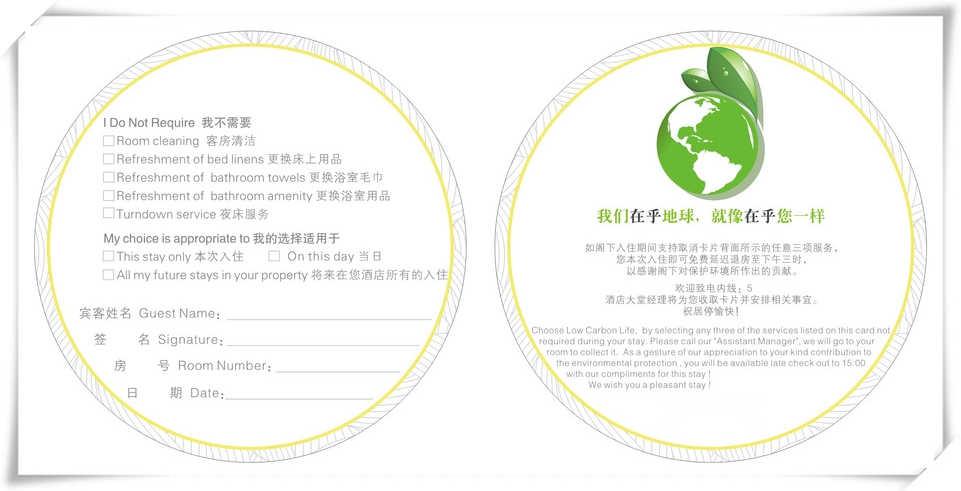
According to recent statistics the travellers appear to be increasingly interested in staying and meeting in environmentally friendly buildings.
据近期数据统计,旅客似乎对在环保建筑物里居住和会客越来越感兴趣。
About 65% of Travelocity customers said green ratings influence their selection when prices are the same.
大约65%的旅客表示同等价位的酒店,其环保评级会影响他们的选择。
Reservation agents during the booking process can take a moment to tell guests about their property’s green initiatives and also a good opportunity to inform guests about any green discounts.
预订过程中,预订代理商可以花点时间向客户介绍他们的物业环保措施,同时借此机会向客户提及环保折扣价。
In addition some hotels provide guests the opportunity to make contributions to organizations that fund projects that reduce the emission of greenhouse gases.
此外,一些酒店让客户有机会参与公司为减少温室气体排放而设立的基金项目。

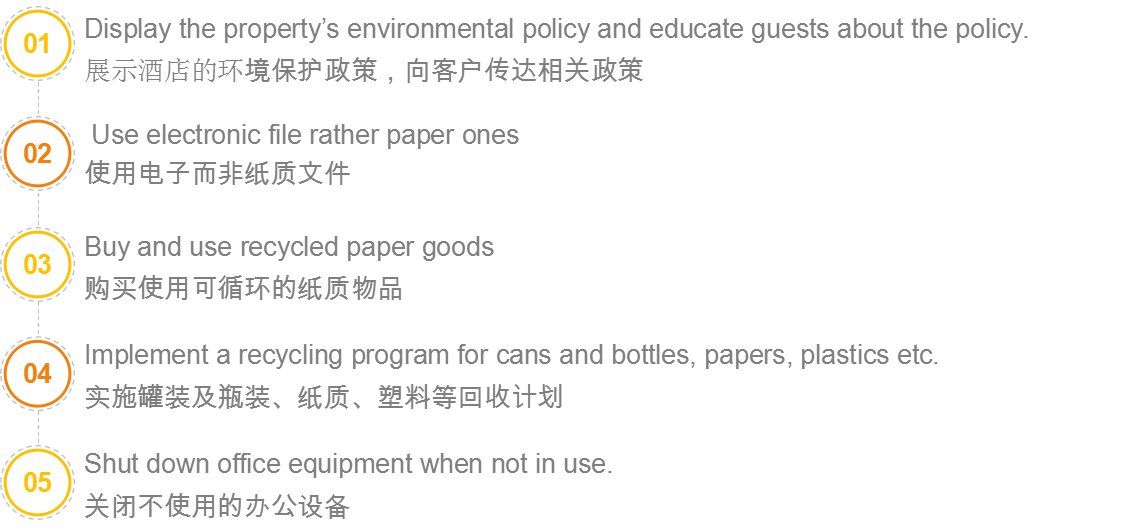
Front office department can do its part in contributing to the property’s green efforts, such as:
前台部门可尽其所能为物业环保努力做出贡献,例如:

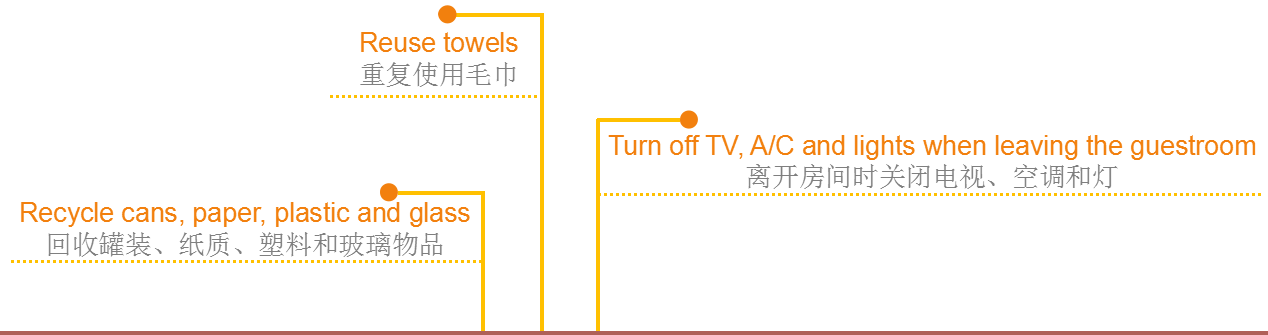
Front office employees can also encourage some green practices for the guests such as:
前台员工同时可以向客户倡导一些环保行为,例如:
This section concludes Chapter 6 of this course.Thank you for your attention and participation.
以上为第6章的全部内容,感谢您的关注和参与。