



目录

  • 1 Chapter 1 – Preparing for a Leadership Career
    • 1.1 Introduction
    • 1.2 Why a Career in Hospitality and Tourism?
    • 1.3 Selecting an Industry Segment
    • 1.4 Types of Available Positions
    • 1.5 Traits of Leaders
    • 1.6 Traditional Management Styles
    • 1.7 Varying your Leadership Style
  • 2 Chapter 2 – Hospitality and Tourism Leadership
    • 2.1 Introduction
    • 2.2 21st Century Leadership Styles
    • 2.3 Leadership Development Goals
    • 2.4 Empowerment
    • 2.5 Showing Respect and Value for Diversity
    • 2.6 Global Guest Audiences
    • 2.7 Welcoming Other Cultures
  • 3 Chapter 3 – Leadership and the Guest Cycle
    • 3.1 Introduction
    • 3.2 Follow the Guest: Making the Cycle Seamless
    • 3.3 Guest Recovery
    • 3.4 Problem Solving
  • 4 Chapter 4 – Managing the Guest Experience Cycle
    • 4.1 Introduction
    • 4.2 Managing the Guest Experience: Being Inclusive
    • 4.3 Guest Experience Property Standards
    • 4.4 Managing the Guest Service Measurement (GSM) Process
    • 4.5 Guest Service Gold: Leading a Gold Team
    • 4.6 Managing Green Practices
  • 5 Chapter 5 – Leadership, Employees and Communication
    • 5.1 Introduction
    • 5.2 Purpose of the Mission Statement
    • 5.3 Communicating Employee Purpose and Role
    • 5.4 Setting Performance Goals
    • 5.5 Listening, Speaking and Writing
    • 5.6 Managing Difficult People
    • 5.7 Guest Communication
    • 5.8 Media Training
  • 6 Chapter 6 – Front Office Leadership
    • 6.1 Introduction
    • 6.2 Responsibilities of the Front Office Manager
    • 6.3 Reports: The Night Audit Paper Trail
    • 6.4 Labor Costs and the Night Audit
    • 6.5 Measuring Employee Performance
    • 6.6 Guests and the Front Desk
    • 6.7 Green Practice Programs for Guests
  • 7 Chapter 7 – Managing Housekeeping Operations
    • 7.1 Introduction
    • 7.2 Being the Executive Housekeeper
    • 7.3 Building a Budget
    • 7.4 Budgeting Labor and Linen Expenses
    • 7.5 Managing Housekeeping Performance Standards
    • 7.6 Training Housekeeping Staff
    • 7.7 Managing Housekeeping Green Practices
  • 8 Chapter 8 – Leadership and Facilities Management
    • 8.1 Introduction
    • 8.2 Function of the Chief Engineer
    • 8.3 Budgeting to Meet ADA Requirements
    • 8.4 Energy Management
    • 8.5 Emergency Systems Planning
    • 8.6 Managing the Facility’s Green Practices
  • 9 Chapter 9 – Food and Beverage Service Leadership
    • 9.1 Introduction
    • 9.2 Organization and Staffing of Food and Beverage Operations
    • 9.3 Menu Management
    • 9.4 Purchasing Supplies and Equipment
    • 9.5 Facility Design, Décor and Cleaning
    • 9.6 Managing Sanitation and Safety
    • 9.7 Labor and Revenue Control
    • 9.8 Nutrition and Sustainable Foods
  • 10 Chapter 10 – Managing Banquets and Catered Events
    • 10.1 Introduction
    • 10.2 Booking and Planning Events
    • 10.3 Reports: Preparing for Service
    • 10.4 Delivering Service
    • 10.5 After Service
  • 11 Chapter 11 – Human Resources
    • 11.1 Introduction
    • 11.2 Interview and Hiring Practices
    • 11.3 Employment Laws
    • 11.4 Managing Compensation and Benefits
    • 11.5 Corporate Social Responsibility
  • 12 Chapter 12 – Managing Operational Finance
    • 12.1 Introduction
    • 12.2 Financial Statements
    • 12.3 Operational Expenses and the Capital Budget
    • 12.4 Revenue Management
    • 12.5 Managing Labor Costs
    • 12.6 Taxes: Reporting and Remitting
  • 13 Chapter 13 – Marketing
    • 13.1 Introduction
    • 13.2 The Marketing Mix
    • 13.3 Steps of a Marketing Plan
    • 13.4 Channels of Distribution
    • 13.5 The Marketing Budget
    • 13.6 Industry Trends and Marketing
  • 14 Chapter 14 – Sales
    • 14.1 Introduction
    • 14.2 Training for Sales Success
    • 14.3 Managing a Sales Team
    • 14.4 Selling to Global Audiences
    • 14.5 Selling to Special Segments
    • 14.6 Selling to the Digital Traveler
  • 15 Chapter 15 – Safety
    • 15.1 Introduction
    • 15.2 Managing Workplace Safety
    • 15.3 Risk Management and Insurance
    • 15.4 OSHA: Following the Requirements
  • 16 Chapter 16 – Security
    • 16.1 Introduction
    • 16.2 Hotel Security: Access Control and Guestroom Security
    • 16.3 Employee Security Issues
    • 16.4 Emergency Management and Media Relations
The Marketing Mix


The term marketing mix is used to explain how several variables work together to satisfy specific consumer needs.
术语营销组合解释了各种不同因素如何共同作用来满足消费者的特定需求。

The marketing mix is a planned mix of controllable elements of a marketing plan known as 4Ps:
营销组合是营销计划中各种可控因素(也称之为4Ps)的计划性组合:
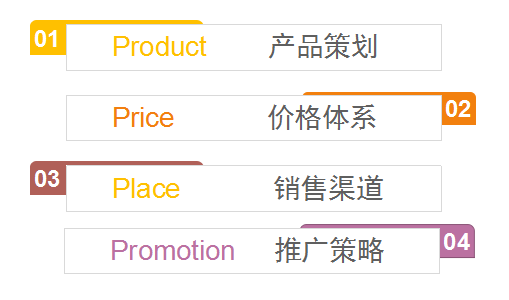
The goal of each P is complementary to each other in order to satisfy consumer needs.
每个可控因素相互补充以满足消费者的需求。

Product – is about selecting a high consumer demand product or service
产品策划-选择消费者需要的大量产品和服务。
Price – is making it desirable to the consumers
价格体系-让产品对消费者有吸引力
Place – is to determine the right place to sell the product and service
销售渠道-确定一个合适的渠道去销售产品和服务
Promotion – is about the right way to make the sale
促销策略-有关合理的销售产品

Most of the marketing efforts can be successful only if the product or service answers the needs and wants of the consumers, in other words, we cannot ignore the consumer trends.
只有产品或服务满足消费者的需求和期待时,营销策略才能算作成功,换句话说,我们不能忽视消费者动态。
The products and services are more consumer-driven therefore, next to 4Ps, a new concept of 4Cs has been introduced.
产品和服务更多是以消费者导向的,与4Ps相对应产生了一个新的概念,即4Cs。

4Cs are  4Cs是:

Consumer:  study the consumers want and needs and create a customer solution
消费者:研究消费者的期望和需求,创建消解决消费者问题的方案
Cost: consider that price is only part of the total cost
成本:该金额只是总成本的一部分
Convenience: focusing on ease of finding the product, information and buying the product
便捷:让消费者更容易找到产品信息以及做出购买行为
Communication: the two-way communication between the consumer and the company
沟通:消费者和公司之间的双向沟通

Combining the 4Ps and 4Cs enables to concentrate the marketing efforts on a small but specific segment of population, known as Niche market.
将4Ps和4Cs结合起来,会在特定小范围的人群中集中营销,这一范围也称为利基市场。
Niche marketing contrary to mass marketing, allows companies to sell goods and services that fulfill consumer preferences, avoid intense competition and earn higher profit margins.
利基营销不同于大众营销,公司销售的产品和服务完全满足消费者的偏好,同时避免激烈竞争并获得较高利润。
Several luxury brands in hospitality such as Ritz Carlton, Shangri-La, Fairmont, are focusing in this particular concept in order to achieve successful results.
酒店业的奢侈品牌如瑞兹卡尔顿、香格里拉、费尔蒙特,都把专注于这一市场概念来获得成功。
In addition to managing the four main interrelated variables in appealing specific target markets, managers must be aware of other uncontrollable variables that might affect the marketing mix.
除了处理四个主要相互作用的因素以争取特定的目标市场外,经理人们必须留意可能影响营销组合的其他不可控因素。

These external factors known as PEST, in which  这些外部因素称为PEST

  • P – (stands for) Political and Legal Influences  代表政策和法律的影响 

  • E – Economic Environment  经济大环境

  • S - Social and Cultural Environment  社会与文化环境

  • T- Technology  技术

Next to these variables other factors such as natural disasters, competitors, energy crisis and transportation can play a significant role in creating the perfect marketing mix.
还有其他因素也影响是否能 建立完美的营销组合,如自然灾害,竞争对手,能源危机和运输等。
A carefully researched, planned and managed sales and marketing effort must be developed to ensure that the organization attracts the guests and keeps them.
经过精心调研、计划和管理的市场营销才能确保公司吸引并留住客户。

We will discuss the steps of a marketing plan in the next section.
我们讲在下一节讨论营销计划的步骤。