



目录

  • 1 Chapter 1 – Preparing for a Leadership Career
    • 1.1 Introduction
    • 1.2 Why a Career in Hospitality and Tourism?
    • 1.3 Selecting an Industry Segment
    • 1.4 Types of Available Positions
    • 1.5 Traits of Leaders
    • 1.6 Traditional Management Styles
    • 1.7 Varying your Leadership Style
  • 2 Chapter 2 – Hospitality and Tourism Leadership
    • 2.1 Introduction
    • 2.2 21st Century Leadership Styles
    • 2.3 Leadership Development Goals
    • 2.4 Empowerment
    • 2.5 Showing Respect and Value for Diversity
    • 2.6 Global Guest Audiences
    • 2.7 Welcoming Other Cultures
  • 3 Chapter 3 – Leadership and the Guest Cycle
    • 3.1 Introduction
    • 3.2 Follow the Guest: Making the Cycle Seamless
    • 3.3 Guest Recovery
    • 3.4 Problem Solving
  • 4 Chapter 4 – Managing the Guest Experience Cycle
    • 4.1 Introduction
    • 4.2 Managing the Guest Experience: Being Inclusive
    • 4.3 Guest Experience Property Standards
    • 4.4 Managing the Guest Service Measurement (GSM) Process
    • 4.5 Guest Service Gold: Leading a Gold Team
    • 4.6 Managing Green Practices
  • 5 Chapter 5 – Leadership, Employees and Communication
    • 5.1 Introduction
    • 5.2 Purpose of the Mission Statement
    • 5.3 Communicating Employee Purpose and Role
    • 5.4 Setting Performance Goals
    • 5.5 Listening, Speaking and Writing
    • 5.6 Managing Difficult People
    • 5.7 Guest Communication
    • 5.8 Media Training
  • 6 Chapter 6 – Front Office Leadership
    • 6.1 Introduction
    • 6.2 Responsibilities of the Front Office Manager
    • 6.3 Reports: The Night Audit Paper Trail
    • 6.4 Labor Costs and the Night Audit
    • 6.5 Measuring Employee Performance
    • 6.6 Guests and the Front Desk
    • 6.7 Green Practice Programs for Guests
  • 7 Chapter 7 – Managing Housekeeping Operations
    • 7.1 Introduction
    • 7.2 Being the Executive Housekeeper
    • 7.3 Building a Budget
    • 7.4 Budgeting Labor and Linen Expenses
    • 7.5 Managing Housekeeping Performance Standards
    • 7.6 Training Housekeeping Staff
    • 7.7 Managing Housekeeping Green Practices
  • 8 Chapter 8 – Leadership and Facilities Management
    • 8.1 Introduction
    • 8.2 Function of the Chief Engineer
    • 8.3 Budgeting to Meet ADA Requirements
    • 8.4 Energy Management
    • 8.5 Emergency Systems Planning
    • 8.6 Managing the Facility’s Green Practices
  • 9 Chapter 9 – Food and Beverage Service Leadership
    • 9.1 Introduction
    • 9.2 Organization and Staffing of Food and Beverage Operations
    • 9.3 Menu Management
    • 9.4 Purchasing Supplies and Equipment
    • 9.5 Facility Design, Décor and Cleaning
    • 9.6 Managing Sanitation and Safety
    • 9.7 Labor and Revenue Control
    • 9.8 Nutrition and Sustainable Foods
  • 10 Chapter 10 – Managing Banquets and Catered Events
    • 10.1 Introduction
    • 10.2 Booking and Planning Events
    • 10.3 Reports: Preparing for Service
    • 10.4 Delivering Service
    • 10.5 After Service
  • 11 Chapter 11 – Human Resources
    • 11.1 Introduction
    • 11.2 Interview and Hiring Practices
    • 11.3 Employment Laws
    • 11.4 Managing Compensation and Benefits
    • 11.5 Corporate Social Responsibility
  • 12 Chapter 12 – Managing Operational Finance
    • 12.1 Introduction
    • 12.2 Financial Statements
    • 12.3 Operational Expenses and the Capital Budget
    • 12.4 Revenue Management
    • 12.5 Managing Labor Costs
    • 12.6 Taxes: Reporting and Remitting
  • 13 Chapter 13 – Marketing
    • 13.1 Introduction
    • 13.2 The Marketing Mix
    • 13.3 Steps of a Marketing Plan
    • 13.4 Channels of Distribution
    • 13.5 The Marketing Budget
    • 13.6 Industry Trends and Marketing
  • 14 Chapter 14 – Sales
    • 14.1 Introduction
    • 14.2 Training for Sales Success
    • 14.3 Managing a Sales Team
    • 14.4 Selling to Global Audiences
    • 14.5 Selling to Special Segments
    • 14.6 Selling to the Digital Traveler
  • 15 Chapter 15 – Safety
    • 15.1 Introduction
    • 15.2 Managing Workplace Safety
    • 15.3 Risk Management and Insurance
    • 15.4 OSHA: Following the Requirements
  • 16 Chapter 16 – Security
    • 16.1 Introduction
    • 16.2 Hotel Security: Access Control and Guestroom Security
    • 16.3 Employee Security Issues
    • 16.4 Emergency Management and Media Relations
Being the Executive Housekeeper


The housekeeping is a “support” department under the rooms division and is known as “the heart” of a hotel operation.
客房部是客务部门下一个“支持”的部门,也是酒店运营的“核心”所在。
This department is operated by the “Executive Housekeeper” and uses available resources to meet the objectives set by top management executives.
这一部门主要由客房部的“行政管家”负责运营,并利用各种有效资源达到高层设立的目标。


Planning is the executive housekeeper’s most important management function and begins with creating an “area inventory list”
计划是客房部主管最重要的管理职责,其中第一步就是建立“区域库存单”。
Area Inventory list determines all items within each area of a hotel that are the responsibility of the housekeeping.
区域库存单列出的是客房服务部在酒店各个区域所负责的所有物品。
These lists are detailed and specific, follow the order in which room attendants will clean items and in which supervisors will inspect them.
这些表格详细具体,列述哪位客房员工负责清理物品,以及那位主管负责检查。
Inventory lists are the basis for developing cleaning procedures, training plans and inspection checklists.
库存单是建立清理程序、培训计划和检查清单的基础。
After Area Inventory Lists are established Frequency Schedules show how often items on the area inventory are to be cleaned or maintained.
区域库存单准备之后,要建立清洁频率日程表,其中涵盖物品清理或维修的频率。
While some areas and items are cleaned daily on a routine basis, other items are cleaned on a weekly, bi-weekly or monthly basis. These items become part of a deep cleaning program and are scheduled as special projects in low occupancy periods.
有些区域和物品需要日常例行清理,另一些的频率则是每周、每两周或一个月。这些物品往往成为深度清洁项目的一部分,并在住宿淡季的时候进行特别规划。
Cleaning after an extensive repair work and maintenance, cleaning carpets, washing tiles, shampooing of lounges, dining rooms, washing curtains and cleaning windows are all examples of deep cleaning process.
就待在经历大范围的维修和保养之后,(再进行)清洗地毯,清洗瓷砖,清洗走廊休息厅,清洁餐厅,清洗窗帘和清洗窗户,这些都是深度清洁的例子。
Under the rooms division, housekeeping department is in very close collaboration with the front office department.
在客务部下面的客房部要与与前厅部紧密合作。
The front desk agent cannot assign guestrooms until the rooms have been cleaned, inspected and released by the housekeeping department.
只有在客房部完成客房的清理、检查和转房态之后,前台才能再次对该房间安排和分配。
Teamwork and clear communication is essential for a successful daily hotel operation.
团队合作和清晰的沟通是成功的日常酒店运作的必要条件

The communication occurring between the two departments involves several key reports such as:  两个部门之间涉及的常见的报告有:
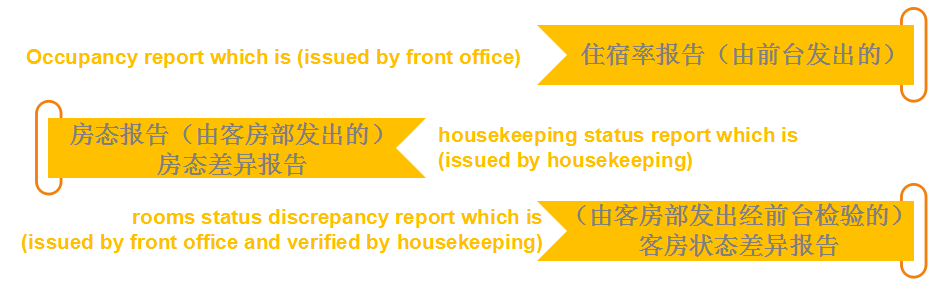


The front office and housekeeping department are often in contact with the maintenance department to ensure all room facilities and equipment are in good and working condition before releasing them for sale.
前台与客房服务部会经常和维修部门保持联系,确保安排客房销售之前其中所有的设备设施都状态良好适合运行。

We will discuss building the housekeeping budget in the next section.
下节我们将讨论客房部的预算。