



As we have seen in the beginning of this chapter in Section 5.1, communication is the most important skill that everyone in any business should perform correctly for successful results.
正如我们在本章开头的5.1节所了解的,沟通是任何领域获取成功最重要的技能。
Communication is a two-way street and involves exchanging information between the sender and the receiver.
沟通是双向的,涉及输送方和接收方之间信息交换。
Successful communication is a message that the speaker or the writer or the sender and the listener or the receiver receives and that both parties understand the same way and act on.
成功的沟通是演讲者或作者或发件人输送信息,听者或是读者或接收方接收,双方用相同的方式理解并且行动。
As we discussed previously communication in hospitality and tourism business is very crucial. You will recall that managers spend as much as 80% of their day engaging in some form of communication.
正如我们先前讨论的,在款待业和旅游业的沟通是非常重要的。你可以回忆起管理者大概每天花80%的时间从事某种形式的交流。
The communication process involves three parts: Listening, Speaking, and Writing
沟通过程涉及三方面:听、说、写
Most managers spend about 55% of their workday listening. Often they have to make decisions based on the information they gather while listening.
大多管理者花费55%的工作时间用于倾听。他们常常需要依据倾听时收集的信息做出决策。
There is a significant difference between hearing and listening. Listening goes far beyond just hearing.
听和倾听有很大的区别,倾听远不止是听见。
A recent study suggests that people understand and remember only 20% of what they hear. About 75% of the time they are supposed to be listening, people are distracted or preoccupied.
最近的调查显示人们只了解和记住他们所听到的20%,当倾听时,大约75%的时间,注意力是分散的或是出神的。
A good listener is an active listener, and active participant in the communication process.
一个好的倾听者是一个积极的听者,同时积极参与沟通过程。
The word listen stands for Listen这个词代表:
★ L- Look interested 看起来有兴趣 — get interested 实际也感兴趣
★ I - Involve yourself by responding 让自己参与回应
★ S- Stay on Target, keep focused 聚焦目标,保持注意力
★ T- Test your understanding by asking questions 通过提问检测自己的理解
★ E- Evaluate the message 评估信息
★ N- Neutralize your feelings 中和你的感受
Many techniques can help everyone to become a better listener.
很多方式可以帮助人们成为更好的倾听者
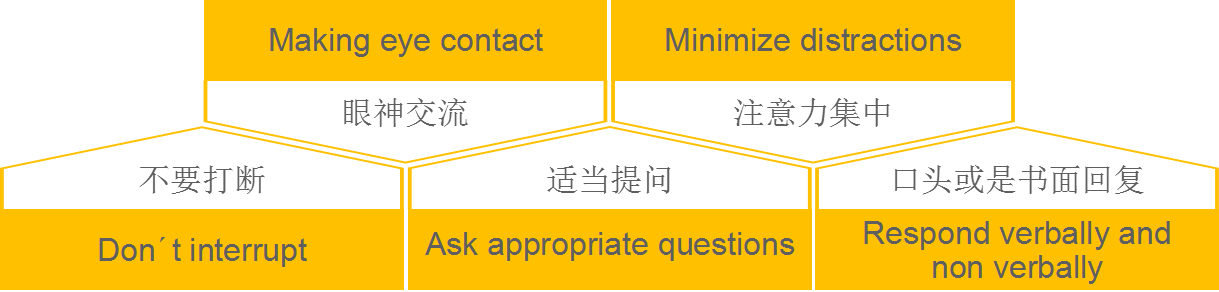
And finally remember: We don’t learn from talking we learn from listening
最后谨记:我们不是从说话中汲取信息,而是从倾听中获得信息源。
Speaking professional is another important component of successful communication.
专业演讲是成功沟通的另一个重要部分。
You need to communicate with employees, guests, and fellow managers and need to keep your speech professional.
你需要与员工、客户、其他领导沟通,需要保持你的专业的演讲水平。
As we discussed earlier the quality of vocal delivery - Your tone of voice, volume, rate of speech and how the words are said, accounts for 38% of communication.
正如我们先前讨论的,声音传递的质量——你的语气、音量、语速和说话方式,占沟通中的38%。
As a hospitality professional, public speaking skills, speaking in the meetings, speaking on the phone, leaving voice messages are the key areas to avoid expressing yourself too casually, but practice thoroughly for delivering successful messages.
作为一名酒店专业人士,公开演讲技巧,在会议上发言,在电话中沟通,留下语音信息等都是避免随意表达自己的关键所在,但是想要将信息成功传递给对方需要大量的练习。
Writing is another key component of the successful communications.
书写是成功沟通的另一个重要组成部分。
Nowadays with the proliferation of all kinds of electronic devices and facilities like texting and chatting writing professionally and communication of a message with a letter, by email or a report remains a real challenge.
如今随着不同种类的电子设备增加,如短信和专业的聊天软件,以书信、邮件以及报告的交流变成了一个挑战。
The importance of written communication cannot be underestimated. When something is written down, is on the record and you can refer back to if needed. This is why it is essential for managers to be professional and clear in their writing.
书面沟通的重要性是不可低估的。当一些事被书写下来,是一种记录,如果需要的话你可以再次查阅。这就是管理者要求书写专业、清晰的必要性。
Most of us spend a significant portion of our day reading and composing emails. But the messages we send can be confusing to others.
我们中的大部分每天花费重要的一部分时间用来阅读和撰写邮件。但是我们发送的信息可能会被他人误读。
To write effective emails, first ask yourself if you should be using email at all. Sometimes, it might be better to pick up the phone.
撰写有效邮件,首先要问自己是否一定要用邮件方式。有时候,选择电话沟通更好。
Make your emails concise and to the point. Only send them to the people who really need to see them, and be clear about what you would like the recipient to do next.
让你的邮件简明扼要,仅发送给真正需要的人员,同时明确你希望接受方下一步做什么。
Remember that your emails are a reflection of your professionalism, values, and attention to detail. Try to imagine how others might interpret the tone of your message. Be polite, and always proofread what you have written before you click "send."
谨记,你的邮件是对你的专业性、价值观和细节关注的反应,试着想象别人如何解读你的信息。要有礼貌,在发送前仔细核对发送内容。
Follow these simple rules to get your emails noticed and acted upon
遵循以下规则,让你的邮件简明有
1. Don't over communicate by email. 不要频繁使用邮件交流
2. Make good use of subject lines. 充分利用脉络架构
3. Keep messages clear and brief. 保持信息清晰、简洁
4. Be polite. 礼貌
5. Check your tone 检查你的语气
6. Don’t write all in capital letters 不要全部大写
7. Proofread and use spell check 校对并使用拼写检查
We will discuss on managing difficult people in the next section.
下一节,我们将讨论如何应对不易相处的人。

