




目录

  • 1 Chapter 1 – Preparing for a Leadership Career
    • 1.1 Introduction
    • 1.2 Why a Career in Hospitality and Tourism?
    • 1.3 Selecting an Industry Segment
    • 1.4 Types of Available Positions
    • 1.5 Traits of Leaders
    • 1.6 Traditional Management Styles
    • 1.7 Varying your Leadership Style
  • 2 Chapter 2 – Hospitality and Tourism Leadership
    • 2.1 Introduction
    • 2.2 21st Century Leadership Styles
    • 2.3 Leadership Development Goals
    • 2.4 Empowerment
    • 2.5 Showing Respect and Value for Diversity
    • 2.6 Global Guest Audiences
    • 2.7 Welcoming Other Cultures
  • 3 Chapter 3 – Leadership and the Guest Cycle
    • 3.1 Introduction
    • 3.2 Follow the Guest: Making the Cycle Seamless
    • 3.3 Guest Recovery
    • 3.4 Problem Solving
  • 4 Chapter 4 – Managing the Guest Experience Cycle
    • 4.1 Introduction
    • 4.2 Managing the Guest Experience: Being Inclusive
    • 4.3 Guest Experience Property Standards
    • 4.4 Managing the Guest Service Measurement (GSM) Process
    • 4.5 Guest Service Gold: Leading a Gold Team
    • 4.6 Managing Green Practices
  • 5 Chapter 5 – Leadership, Employees and Communication
    • 5.1 Introduction
    • 5.2 Purpose of the Mission Statement
    • 5.3 Communicating Employee Purpose and Role
    • 5.4 Setting Performance Goals
    • 5.5 Listening, Speaking and Writing
    • 5.6 Managing Difficult People
    • 5.7 Guest Communication
    • 5.8 Media Training
  • 6 Chapter 6 – Front Office Leadership
    • 6.1 Introduction
    • 6.2 Responsibilities of the Front Office Manager
    • 6.3 Reports: The Night Audit Paper Trail
    • 6.4 Labor Costs and the Night Audit
    • 6.5 Measuring Employee Performance
    • 6.6 Guests and the Front Desk
    • 6.7 Green Practice Programs for Guests
  • 7 Chapter 7 – Managing Housekeeping Operations
    • 7.1 Introduction
    • 7.2 Being the Executive Housekeeper
    • 7.3 Building a Budget
    • 7.4 Budgeting Labor and Linen Expenses
    • 7.5 Managing Housekeeping Performance Standards
    • 7.6 Training Housekeeping Staff
    • 7.7 Managing Housekeeping Green Practices
  • 8 Chapter 8 – Leadership and Facilities Management
    • 8.1 Introduction
    • 8.2 Function of the Chief Engineer
    • 8.3 Budgeting to Meet ADA Requirements
    • 8.4 Energy Management
    • 8.5 Emergency Systems Planning
    • 8.6 Managing the Facility’s Green Practices
  • 9 Chapter 9 – Food and Beverage Service Leadership
    • 9.1 Introduction
    • 9.2 Organization and Staffing of Food and Beverage Operations
    • 9.3 Menu Management
    • 9.4 Purchasing Supplies and Equipment
    • 9.5 Facility Design, Décor and Cleaning
    • 9.6 Managing Sanitation and Safety
    • 9.7 Labor and Revenue Control
    • 9.8 Nutrition and Sustainable Foods
  • 10 Chapter 10 – Managing Banquets and Catered Events
    • 10.1 Introduction
    • 10.2 Booking and Planning Events
    • 10.3 Reports: Preparing for Service
    • 10.4 Delivering Service
    • 10.5 After Service
  • 11 Chapter 11 – Human Resources
    • 11.1 Introduction
    • 11.2 Interview and Hiring Practices
    • 11.3 Employment Laws
    • 11.4 Managing Compensation and Benefits
    • 11.5 Corporate Social Responsibility
  • 12 Chapter 12 – Managing Operational Finance
    • 12.1 Introduction
    • 12.2 Financial Statements
    • 12.3 Operational Expenses and the Capital Budget
    • 12.4 Revenue Management
    • 12.5 Managing Labor Costs
    • 12.6 Taxes: Reporting and Remitting
  • 13 Chapter 13 – Marketing
    • 13.1 Introduction
    • 13.2 The Marketing Mix
    • 13.3 Steps of a Marketing Plan
    • 13.4 Channels of Distribution
    • 13.5 The Marketing Budget
    • 13.6 Industry Trends and Marketing
  • 14 Chapter 14 – Sales
    • 14.1 Introduction
    • 14.2 Training for Sales Success
    • 14.3 Managing a Sales Team
    • 14.4 Selling to Global Audiences
    • 14.5 Selling to Special Segments
    • 14.6 Selling to the Digital Traveler
  • 15 Chapter 15 – Safety
    • 15.1 Introduction
    • 15.2 Managing Workplace Safety
    • 15.3 Risk Management and Insurance
    • 15.4 OSHA: Following the Requirements
  • 16 Chapter 16 – Security
    • 16.1 Introduction
    • 16.2 Hotel Security: Access Control and Guestroom Security
    • 16.3 Employee Security Issues
    • 16.4 Emergency Management and Media Relations
Communicating Employee Purpose and Role


The first impression of the organization for the employees begins with orientation.
企业对员工的第一印象开始于员工培训。
This is the process of introducing new employees to the company and their jobs. This is the perfect opportunity for management to foster pride and communicating the vision, values and mission of the company.
这是将新员工引进公司带入工作的过程。这是管理层培养员工自豪感和交流公司愿景、价值观和使命的绝佳机会。

A well-planned orientation makes employees feel welcomed and valued. Moreover it helps to:
一个精心策定的目标使员工感到受欢迎和有价值。而且它有助于:
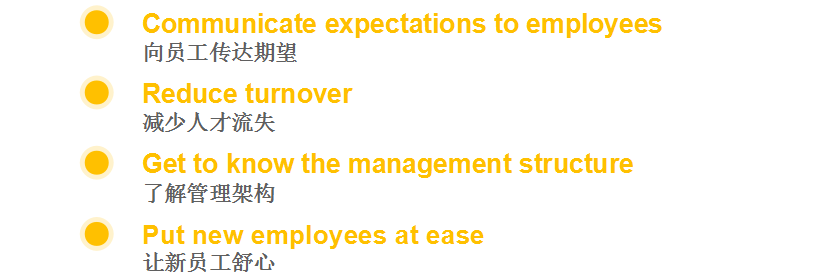
As a common rule, there are 2 types of orientation.
作为一个普遍的规则, 有2种类型的培训方向

  • A general orientation is an introduction to the company as a whole, including its values, mission, vision and philosophy. A manager’s role is to provide all employees with a consistent message and they understand the overall goals of the organization.
    一般的定位是对公司整体的介绍,包括它的价值、使命、愿景和哲学。经理的职责是为所有员工提供一致的信息,并理解组织的总体目标。

  • A specific job orientation focuses on explaining the employee’s department structure, job description and his or her role in the department in terms of job performance and other responsibilities.
    另外一个特定的工作定位是着重于解释员工的部门结构,职位描述以及他或她在部门中的角色,在工作表现和其他职责方面。


A manager’s role is to build a positive relationship with the employee.
管理者的角色是与员工建立积极的关系
The overall role of managers during the orientation process is to make sure that employees feel comfortable and all their questions are answered.
在员工培训中,管理者在引导过程中的整体角色是确保员工感到愉悦轻松, 并且回答所有的问题。
It is also important to evaluate the orientation process to make sure that it continues to be effective.
评估引导过程也很重要, 以确保它继续有效。

We will discuss setting performance goals in the next section.
下一节我们将讨论建立绩效目标。