



目录

  • 1 Chapter 1 – Preparing for a Leadership Career
    • 1.1 Introduction
    • 1.2 Why a Career in Hospitality and Tourism?
    • 1.3 Selecting an Industry Segment
    • 1.4 Types of Available Positions
    • 1.5 Traits of Leaders
    • 1.6 Traditional Management Styles
    • 1.7 Varying your Leadership Style
  • 2 Chapter 2 – Hospitality and Tourism Leadership
    • 2.1 Introduction
    • 2.2 21st Century Leadership Styles
    • 2.3 Leadership Development Goals
    • 2.4 Empowerment
    • 2.5 Showing Respect and Value for Diversity
    • 2.6 Global Guest Audiences
    • 2.7 Welcoming Other Cultures
  • 3 Chapter 3 – Leadership and the Guest Cycle
    • 3.1 Introduction
    • 3.2 Follow the Guest: Making the Cycle Seamless
    • 3.3 Guest Recovery
    • 3.4 Problem Solving
  • 4 Chapter 4 – Managing the Guest Experience Cycle
    • 4.1 Introduction
    • 4.2 Managing the Guest Experience: Being Inclusive
    • 4.3 Guest Experience Property Standards
    • 4.4 Managing the Guest Service Measurement (GSM) Process
    • 4.5 Guest Service Gold: Leading a Gold Team
    • 4.6 Managing Green Practices
  • 5 Chapter 5 – Leadership, Employees and Communication
    • 5.1 Introduction
    • 5.2 Purpose of the Mission Statement
    • 5.3 Communicating Employee Purpose and Role
    • 5.4 Setting Performance Goals
    • 5.5 Listening, Speaking and Writing
    • 5.6 Managing Difficult People
    • 5.7 Guest Communication
    • 5.8 Media Training
  • 6 Chapter 6 – Front Office Leadership
    • 6.1 Introduction
    • 6.2 Responsibilities of the Front Office Manager
    • 6.3 Reports: The Night Audit Paper Trail
    • 6.4 Labor Costs and the Night Audit
    • 6.5 Measuring Employee Performance
    • 6.6 Guests and the Front Desk
    • 6.7 Green Practice Programs for Guests
  • 7 Chapter 7 – Managing Housekeeping Operations
    • 7.1 Introduction
    • 7.2 Being the Executive Housekeeper
    • 7.3 Building a Budget
    • 7.4 Budgeting Labor and Linen Expenses
    • 7.5 Managing Housekeeping Performance Standards
    • 7.6 Training Housekeeping Staff
    • 7.7 Managing Housekeeping Green Practices
  • 8 Chapter 8 – Leadership and Facilities Management
    • 8.1 Introduction
    • 8.2 Function of the Chief Engineer
    • 8.3 Budgeting to Meet ADA Requirements
    • 8.4 Energy Management
    • 8.5 Emergency Systems Planning
    • 8.6 Managing the Facility’s Green Practices
  • 9 Chapter 9 – Food and Beverage Service Leadership
    • 9.1 Introduction
    • 9.2 Organization and Staffing of Food and Beverage Operations
    • 9.3 Menu Management
    • 9.4 Purchasing Supplies and Equipment
    • 9.5 Facility Design, Décor and Cleaning
    • 9.6 Managing Sanitation and Safety
    • 9.7 Labor and Revenue Control
    • 9.8 Nutrition and Sustainable Foods
  • 10 Chapter 10 – Managing Banquets and Catered Events
    • 10.1 Introduction
    • 10.2 Booking and Planning Events
    • 10.3 Reports: Preparing for Service
    • 10.4 Delivering Service
    • 10.5 After Service
  • 11 Chapter 11 – Human Resources
    • 11.1 Introduction
    • 11.2 Interview and Hiring Practices
    • 11.3 Employment Laws
    • 11.4 Managing Compensation and Benefits
    • 11.5 Corporate Social Responsibility
  • 12 Chapter 12 – Managing Operational Finance
    • 12.1 Introduction
    • 12.2 Financial Statements
    • 12.3 Operational Expenses and the Capital Budget
    • 12.4 Revenue Management
    • 12.5 Managing Labor Costs
    • 12.6 Taxes: Reporting and Remitting
  • 13 Chapter 13 – Marketing
    • 13.1 Introduction
    • 13.2 The Marketing Mix
    • 13.3 Steps of a Marketing Plan
    • 13.4 Channels of Distribution
    • 13.5 The Marketing Budget
    • 13.6 Industry Trends and Marketing
  • 14 Chapter 14 – Sales
    • 14.1 Introduction
    • 14.2 Training for Sales Success
    • 14.3 Managing a Sales Team
    • 14.4 Selling to Global Audiences
    • 14.5 Selling to Special Segments
    • 14.6 Selling to the Digital Traveler
  • 15 Chapter 15 – Safety
    • 15.1 Introduction
    • 15.2 Managing Workplace Safety
    • 15.3 Risk Management and Insurance
    • 15.4 OSHA: Following the Requirements
  • 16 Chapter 16 – Security
    • 16.1 Introduction
    • 16.2 Hotel Security: Access Control and Guestroom Security
    • 16.3 Employee Security Issues
    • 16.4 Emergency Management and Media Relations
Managing Green Practices


Tourism is recognized as one of the world's largest industries and continues to expand at a rapid rate.
旅游业是全球最大的行业之一,并还在高速扩张。
Tourism is also a profitable economic endeavor, making it an economically enticing industry and a form of development for many countries around the world.
旅游业同时利润丰厚,让它成为具有经济诱惑力的行业,并在全世界各地得到飞速发展。

However, the benefits of tourism are often accompanied by many negative environmental and social impacts. These include:
然而旅游业丰厚利润的背后往往伴随着环境和社会的负面影响,其中包括:

              ★ air noise and water pollution   空气、噪音和水质污染

              ★ degradation and depletion of natural resources   自然资源的恶化与损耗

              ★ biodiversity loss   生物多样性的缺失

              ★ encroachment and overbuilding   过度的土地使用和过度建房

The hotel industry forms a large part of the tourism industry and if not managed properly, it has the potential to be detrimental to the social and natural environments within which it functions.
酒店业占旅游业的很大部分,如若不加以管理,它很可能为社会和自然环境在其功能范围内带来不利影响。
Hotels are also resource intensive and in order to reduce their impact, it is imperative to go "green!"
酒店也是资源密集型的,为了减少它们的影响,必须要实施“绿色”行动。
Many greening initiatives are not expensive to implement and provide substantial benefits to the business!
许多绿色计划的实施并不昂贵,并且为企业带来了巨大的利益。
Individually, hotels do not have a significant negative impact on the environment.
单个的酒店不会为环境带来那么重大的负面影响。
but Collectively however, they can be very wasteful and consume huge amount of resources.
但扎堆一起就会产生很多浪费,并且消费大量的资源。
It has been estimated that seventy-five percent of hotels' environmental impacts can be directly related to excessive consumption.
据估计酒店对产生的影响中75%都与过渡消费有着直接联系。
This is wasteful in terms of resources and it creates unnecessary operational costs.
这是资源浪费,并且产生许多不必要的运营成本。

The three key areas of environmental impact are energy, water, and waste.
对环境产生的影响主要发生在三个方面:能源、水资源以及废物废料。
Several studies have indicated that economic benefits can be gained in hotels through implementing environmental and social initiatives; many with little or no capital.
许多研究表明如若执行环保和社会措施会为酒店带来经济利益;有些甚至完全不需要成本。

In addition to cost benefits, there are also benefits to choosing an environmentally sustainable strategy. Such as:
除了节省成本外,选择可持续性的环保措施还会带来其他益处。

Gaining competitive advantage by being
    a leaderin the sector
    在这一方面成为领袖获得竞争优势
Customer loyalty  提高客户忠诚度
Employee retention  能留住员工
Awards and recognition  奖项及表彰
Regulatory compliance  符合法律法规
Risk management  风险管理
Increased brand value  提升品牌价值

But most of all, because it's the right thing to do!
但归根到底主要还是因为这件事是正确的,非做不可!
A recent survey has shown that 83% of consumers are concerned with buying green products and services.
最近的研究显示83%的消费者考虑购买绿色环保的产品及服务。
The hospitality and tourism industry was one of the first to employ green practices, since the 1990s due to fluctuating economic levels and a strong focus on customer service.。
自上世纪90年代以来,由于经济水平的波动和对客户服务的高度重视,酒店和旅游行业率先采用了绿色环保的做法。

There are many green practices that hotels can implement as preventative measures to save unnecessary costs. Examples of these practices are:
酒店可实行许多环保措施来防止不必要的开支出现,例如:

Today many guests look for hotels with green features and this makes a good business sense to invest in them.
如今,许多客人都在寻找具有绿色特色的酒店,这对他们来说是一种很好的商业意识。

Reports by hundreds of businesses around the world illustrate that by implementing appropriate management processes they have:
来自世界上百分的报告显示实施合适的管理措施会让酒店:

  • Reduced energy and water consumption costs by more than 20 percent.
    节水节能高达20%以上

  • Solid waste and wastewater disposal costs by more than 15 percent.
    减少15%的固定处理废物废水的成本

  • Reduced carbon footprint;
    降低碳排放量

  • Improved the air quality and the environment in which they operate.
    提升空气和周遭环境的质量

  • Improved staff motivation and community relations
    提高员工士气和社会关系

  • Increased market competitiveness
    提升市场竞争力

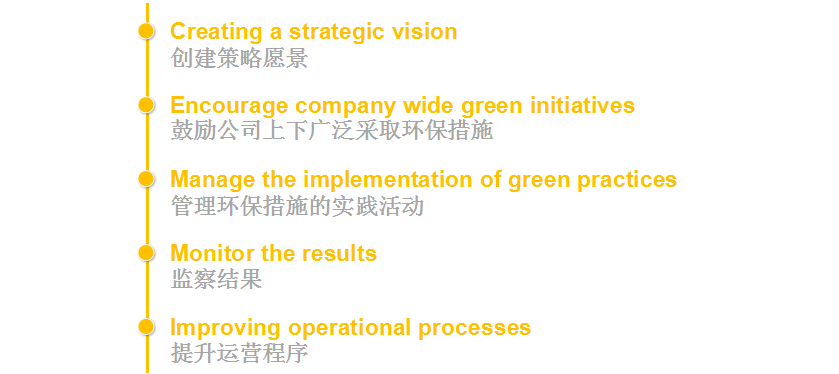
Leaders in every segment of the hospitality and tourism industry must be aware of the benefits “going green” and promote green practices by:
酒店和旅游行业的每一个部门的领导都必须意识到“绿色环保”的好处,并提倡绿色环保措施

This section concludes Chapter 4 of this course.Thank you for your attention and participation.
以上为第4章的全部内容,谢谢你的收看和参与。