



目录

  • 1 Chapter 1 – Preparing for a Leadership Career
    • 1.1 Introduction
    • 1.2 Why a Career in Hospitality and Tourism?
    • 1.3 Selecting an Industry Segment
    • 1.4 Types of Available Positions
    • 1.5 Traits of Leaders
    • 1.6 Traditional Management Styles
    • 1.7 Varying your Leadership Style
  • 2 Chapter 2 – Hospitality and Tourism Leadership
    • 2.1 Introduction
    • 2.2 21st Century Leadership Styles
    • 2.3 Leadership Development Goals
    • 2.4 Empowerment
    • 2.5 Showing Respect and Value for Diversity
    • 2.6 Global Guest Audiences
    • 2.7 Welcoming Other Cultures
  • 3 Chapter 3 – Leadership and the Guest Cycle
    • 3.1 Introduction
    • 3.2 Follow the Guest: Making the Cycle Seamless
    • 3.3 Guest Recovery
    • 3.4 Problem Solving
  • 4 Chapter 4 – Managing the Guest Experience Cycle
    • 4.1 Introduction
    • 4.2 Managing the Guest Experience: Being Inclusive
    • 4.3 Guest Experience Property Standards
    • 4.4 Managing the Guest Service Measurement (GSM) Process
    • 4.5 Guest Service Gold: Leading a Gold Team
    • 4.6 Managing Green Practices
  • 5 Chapter 5 – Leadership, Employees and Communication
    • 5.1 Introduction
    • 5.2 Purpose of the Mission Statement
    • 5.3 Communicating Employee Purpose and Role
    • 5.4 Setting Performance Goals
    • 5.5 Listening, Speaking and Writing
    • 5.6 Managing Difficult People
    • 5.7 Guest Communication
    • 5.8 Media Training
  • 6 Chapter 6 – Front Office Leadership
    • 6.1 Introduction
    • 6.2 Responsibilities of the Front Office Manager
    • 6.3 Reports: The Night Audit Paper Trail
    • 6.4 Labor Costs and the Night Audit
    • 6.5 Measuring Employee Performance
    • 6.6 Guests and the Front Desk
    • 6.7 Green Practice Programs for Guests
  • 7 Chapter 7 – Managing Housekeeping Operations
    • 7.1 Introduction
    • 7.2 Being the Executive Housekeeper
    • 7.3 Building a Budget
    • 7.4 Budgeting Labor and Linen Expenses
    • 7.5 Managing Housekeeping Performance Standards
    • 7.6 Training Housekeeping Staff
    • 7.7 Managing Housekeeping Green Practices
  • 8 Chapter 8 – Leadership and Facilities Management
    • 8.1 Introduction
    • 8.2 Function of the Chief Engineer
    • 8.3 Budgeting to Meet ADA Requirements
    • 8.4 Energy Management
    • 8.5 Emergency Systems Planning
    • 8.6 Managing the Facility’s Green Practices
  • 9 Chapter 9 – Food and Beverage Service Leadership
    • 9.1 Introduction
    • 9.2 Organization and Staffing of Food and Beverage Operations
    • 9.3 Menu Management
    • 9.4 Purchasing Supplies and Equipment
    • 9.5 Facility Design, Décor and Cleaning
    • 9.6 Managing Sanitation and Safety
    • 9.7 Labor and Revenue Control
    • 9.8 Nutrition and Sustainable Foods
  • 10 Chapter 10 – Managing Banquets and Catered Events
    • 10.1 Introduction
    • 10.2 Booking and Planning Events
    • 10.3 Reports: Preparing for Service
    • 10.4 Delivering Service
    • 10.5 After Service
  • 11 Chapter 11 – Human Resources
    • 11.1 Introduction
    • 11.2 Interview and Hiring Practices
    • 11.3 Employment Laws
    • 11.4 Managing Compensation and Benefits
    • 11.5 Corporate Social Responsibility
  • 12 Chapter 12 – Managing Operational Finance
    • 12.1 Introduction
    • 12.2 Financial Statements
    • 12.3 Operational Expenses and the Capital Budget
    • 12.4 Revenue Management
    • 12.5 Managing Labor Costs
    • 12.6 Taxes: Reporting and Remitting
  • 13 Chapter 13 – Marketing
    • 13.1 Introduction
    • 13.2 The Marketing Mix
    • 13.3 Steps of a Marketing Plan
    • 13.4 Channels of Distribution
    • 13.5 The Marketing Budget
    • 13.6 Industry Trends and Marketing
  • 14 Chapter 14 – Sales
    • 14.1 Introduction
    • 14.2 Training for Sales Success
    • 14.3 Managing a Sales Team
    • 14.4 Selling to Global Audiences
    • 14.5 Selling to Special Segments
    • 14.6 Selling to the Digital Traveler
  • 15 Chapter 15 – Safety
    • 15.1 Introduction
    • 15.2 Managing Workplace Safety
    • 15.3 Risk Management and Insurance
    • 15.4 OSHA: Following the Requirements
  • 16 Chapter 16 – Security
    • 16.1 Introduction
    • 16.2 Hotel Security: Access Control and Guestroom Security
    • 16.3 Employee Security Issues
    • 16.4 Emergency Management and Media Relations
Guest Service Gold: Leading a Gold Team


Going above and beyond guest service is a core belief of many successful companies in the world.
提供极致的宾客服务是世界上很多成功酒店企业的核心追求。
This is the guiding principal in raising the guest experience, from basic, meaning meeting expectations, to exceptional, meaning far exceeding expectations.
这是提升宾客体验的指导原则,满足客户需求是基本,超出客户预期是卓越。
The ability to provide the very highest level of guest service at all times is a talent that everyone in the hospitality and tourism industry must work to develop.
在酒店业和旅游业中,每个人都必须努力发展,才能在任何时候提供最高水平的客服服务。
Providing exceptional guest service is not about having one particular quality or skill, it is about creating a memorable guest experience.
提供卓越的宾客服务并不在于拥有某种才干或技能,而是要为客人营造难忘的住店体验与回忆。
In the first part of this program we have covered in details the American Hotel and Lodging Educational Institute (AHLEI)’s training and certification program called Guest Service GOLD.
本课程的第一部分我们已经详述美国饭店协会教育学院培训的专业项目,如何提供黄金般的宾客服务。
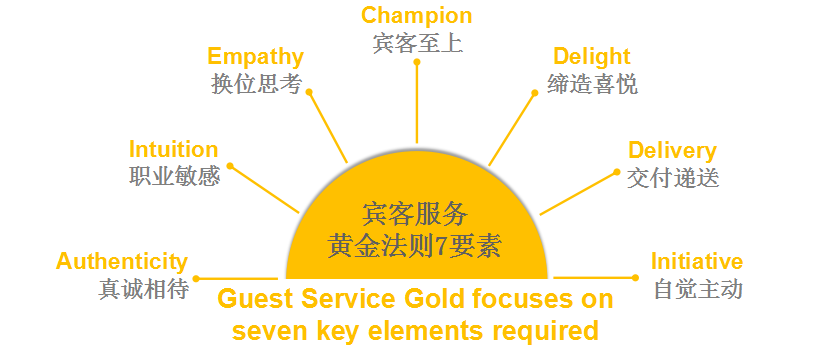
After mastering this concept, as a professional hospitality industry member, you should be able to lead the way to GOLD and enable your property to stand apart with its exceptional service.
在掌握这一理念之后,作为酒店旅游业的一员,你应带领团队将服务升至黄金级别,并让酒店因其卓越的服务脱颖而出。
In order to achieve this mission, being the role model and maximizing training efforts are essential steps.
为了达成这一任务,以身作则,并且努力训练员工都是必不可少的步骤。
Managers should focus on providing consistent and ongoing training to employees and keeping them motivated to continue providing a gold level of service.
经理应当关注持续不断的培训员工,并激励他们一直保持黄金般的服务水平。

Several ways can build the employees and properties in becoming GOLD.
有几个方法可以让员工和酒店都提升至黄金级别

Holding pre-shift and after shift briefings in focusing to the GOLD service components班前班后总结概述黄金宾客服务的要素
Inspire employees to share their daily experiences
激励员工分享他们的日常经验
Observe employee performance

观察员工的工作表现
Provide constructive feedback on ongoing basis
持续给出建设性回馈
Show employees they are valued
让员工知道他们是有价值的

Combining continuous quality training, the tangible and the intangible parts of the service, using the 7 elements of the GOLD service then every company has the possibility to deliver exceptional and memorable experiences to all their guests.
只要结合持续的品质培训,服务的有形部分和无形部分,运用宾客服务的黄金法则7要素,这样每个公司都有可能为宾客提供独一无二令人难忘的体验经历。

We will conclude this chapter in the next session: Managing Green Practice
下一节我们将学习最后的内容:实践环保措施