



目录

  • 1 Chapter 1 – Preparing for a Leadership Career
    • 1.1 Introduction
    • 1.2 Why a Career in Hospitality and Tourism?
    • 1.3 Selecting an Industry Segment
    • 1.4 Types of Available Positions
    • 1.5 Traits of Leaders
    • 1.6 Traditional Management Styles
    • 1.7 Varying your Leadership Style
  • 2 Chapter 2 – Hospitality and Tourism Leadership
    • 2.1 Introduction
    • 2.2 21st Century Leadership Styles
    • 2.3 Leadership Development Goals
    • 2.4 Empowerment
    • 2.5 Showing Respect and Value for Diversity
    • 2.6 Global Guest Audiences
    • 2.7 Welcoming Other Cultures
  • 3 Chapter 3 – Leadership and the Guest Cycle
    • 3.1 Introduction
    • 3.2 Follow the Guest: Making the Cycle Seamless
    • 3.3 Guest Recovery
    • 3.4 Problem Solving
  • 4 Chapter 4 – Managing the Guest Experience Cycle
    • 4.1 Introduction
    • 4.2 Managing the Guest Experience: Being Inclusive
    • 4.3 Guest Experience Property Standards
    • 4.4 Managing the Guest Service Measurement (GSM) Process
    • 4.5 Guest Service Gold: Leading a Gold Team
    • 4.6 Managing Green Practices
  • 5 Chapter 5 – Leadership, Employees and Communication
    • 5.1 Introduction
    • 5.2 Purpose of the Mission Statement
    • 5.3 Communicating Employee Purpose and Role
    • 5.4 Setting Performance Goals
    • 5.5 Listening, Speaking and Writing
    • 5.6 Managing Difficult People
    • 5.7 Guest Communication
    • 5.8 Media Training
  • 6 Chapter 6 – Front Office Leadership
    • 6.1 Introduction
    • 6.2 Responsibilities of the Front Office Manager
    • 6.3 Reports: The Night Audit Paper Trail
    • 6.4 Labor Costs and the Night Audit
    • 6.5 Measuring Employee Performance
    • 6.6 Guests and the Front Desk
    • 6.7 Green Practice Programs for Guests
  • 7 Chapter 7 – Managing Housekeeping Operations
    • 7.1 Introduction
    • 7.2 Being the Executive Housekeeper
    • 7.3 Building a Budget
    • 7.4 Budgeting Labor and Linen Expenses
    • 7.5 Managing Housekeeping Performance Standards
    • 7.6 Training Housekeeping Staff
    • 7.7 Managing Housekeeping Green Practices
  • 8 Chapter 8 – Leadership and Facilities Management
    • 8.1 Introduction
    • 8.2 Function of the Chief Engineer
    • 8.3 Budgeting to Meet ADA Requirements
    • 8.4 Energy Management
    • 8.5 Emergency Systems Planning
    • 8.6 Managing the Facility’s Green Practices
  • 9 Chapter 9 – Food and Beverage Service Leadership
    • 9.1 Introduction
    • 9.2 Organization and Staffing of Food and Beverage Operations
    • 9.3 Menu Management
    • 9.4 Purchasing Supplies and Equipment
    • 9.5 Facility Design, Décor and Cleaning
    • 9.6 Managing Sanitation and Safety
    • 9.7 Labor and Revenue Control
    • 9.8 Nutrition and Sustainable Foods
  • 10 Chapter 10 – Managing Banquets and Catered Events
    • 10.1 Introduction
    • 10.2 Booking and Planning Events
    • 10.3 Reports: Preparing for Service
    • 10.4 Delivering Service
    • 10.5 After Service
  • 11 Chapter 11 – Human Resources
    • 11.1 Introduction
    • 11.2 Interview and Hiring Practices
    • 11.3 Employment Laws
    • 11.4 Managing Compensation and Benefits
    • 11.5 Corporate Social Responsibility
  • 12 Chapter 12 – Managing Operational Finance
    • 12.1 Introduction
    • 12.2 Financial Statements
    • 12.3 Operational Expenses and the Capital Budget
    • 12.4 Revenue Management
    • 12.5 Managing Labor Costs
    • 12.6 Taxes: Reporting and Remitting
  • 13 Chapter 13 – Marketing
    • 13.1 Introduction
    • 13.2 The Marketing Mix
    • 13.3 Steps of a Marketing Plan
    • 13.4 Channels of Distribution
    • 13.5 The Marketing Budget
    • 13.6 Industry Trends and Marketing
  • 14 Chapter 14 – Sales
    • 14.1 Introduction
    • 14.2 Training for Sales Success
    • 14.3 Managing a Sales Team
    • 14.4 Selling to Global Audiences
    • 14.5 Selling to Special Segments
    • 14.6 Selling to the Digital Traveler
  • 15 Chapter 15 – Safety
    • 15.1 Introduction
    • 15.2 Managing Workplace Safety
    • 15.3 Risk Management and Insurance
    • 15.4 OSHA: Following the Requirements
  • 16 Chapter 16 – Security
    • 16.1 Introduction
    • 16.2 Hotel Security: Access Control and Guestroom Security
    • 16.3 Employee Security Issues
    • 16.4 Emergency Management and Media Relations
Managing the Guest Experience: Being Inclusive


Developing the ultimate guest experience is in the heart of every hospitality and tourism business.
发展最终的客户体验是每一个酒店和旅游行业的核心。
You will recall the R.A.V.E principle from the first part of this program. Respect and Value Everyone from all walks of life and focusing in providing and exceptional service and memorable experiences means being inclusive.
你可能回忆起我们曾在这一课程的第一部分学习过R.A.V.E.原则,尊重和珍视来自各行各界的人,专注于提供卓越的服务和难忘的经历,这意味着包容。

Inclusiveness must start at the highest organizational levels and cascade down to all employees and guests. Managers play an important “role modeling” in demonstrating inclusive behavior at all times.
包容应从公司的最高层做起,然后逐层落实到全体员工以及宾客身上。经理应随时以身作则表现包容的态度处理事情。
Inclusiveness is closely related to diversity.
包容与多样性密不可分。
Many organizations, the hospitality and tourism industry and other industries have embraced inclusiveness and have seen very positive benefits in the workplace as well as the impact on positive guest experiences.
许多公司组织、酒店旅游业以及其他行业都采纳包容的态度,不止工作场所受益,还制造了正面积极的宾客体验。
A research conducted by American Express worldwide credit card company, show that engaged employees advance productivity. The more diversity—differences across values, perspectives and backgrounds—and the greater the level of inclusiveness within a team, the stronger the level of employee engagement.
美国运通全球信用卡公司进行的一项调查显示,敬业的员工提高了生产力。不同价值观、观点和背景之间的差异越大,团队内部的包容性越强,员工参与的程度就越高。

Well known global hospitality groups have integrated diversity and inclusiveness in their mission and vision as their brand promise.
许多知名的全球酒店集团都作出品牌承诺,将多样性和包容力融入他们的目标和愿景。

In Hilton Worldwide diversity and inclusion are the core values of the corporation and form as:
多样性和包容力是希尔顿全球酒店集团的核心理念,具体如下:

  • Our diversity and inclusion approach is aligned with our mission to become the preeminent global hospitality company. We seek to leverage the unique cultures of our global communities, and to develop culture, talent and marketplace strategies to create a work environment of inclusiveness.
    我们的多样性和包容力会协助我们达到成为全球杰出酒店业公司的任务。我们充分利用国际社区这一独特文化,并为制造包容的工作环境而发展文化、才能和市场方面的策略。

  • As such, we hold ourselves, and all of our Team Members to the highest standards of integrity, ethics and service excellence.
    因此我们要求自己以及团队里的所有成员都表现高度团结、高标准道德建设以及提供优质的服务。

  • We will achieve and maintain this status by living our core values; attracting the best and brightest talent; and valuing and leveraging the diversity of our Team Members, Guests, Suppliers, Partners and Owners.
    我们将贯彻核心价值观达到和维持这一状态;吸引最优秀聪慧的人才;尊重并平等合理看待团队成员、宾客、供应商、合作伙伴以及股东的多样性。

Marriott Group formulates the importance of diversity and inclusion as:
万豪集团则为多样性和包容力的重要性作出如下阐述:

  • Since 1927, Marriott has valued diversity and inclusion.
    万豪自1927年已开始注重多样性和包容力。

  • Embracing differences is part of the way we do business around the world, and essential to our success as a leading hospitality company with a growing global portfolio.
    接纳不同是万豪进行全球业务时必备的处理方式,不断扩大的全球产品组合也让我们跻身于全球领先的酒店业公司。

  • Diversity and inclusion are closely tied to our core values and our strategic business goals, so they are embedded into every facet of our business.
    多样性和包容力一直与我们的核心价值观和商业目标策略紧密相连,因此它们早已嵌入公司的方方面面。

Global companies around the globe have recognized the significant benefits for both their guest and employees.
全球的酒店业公司早已发现这会为他们的宾客和员工带来影响深远的益处。

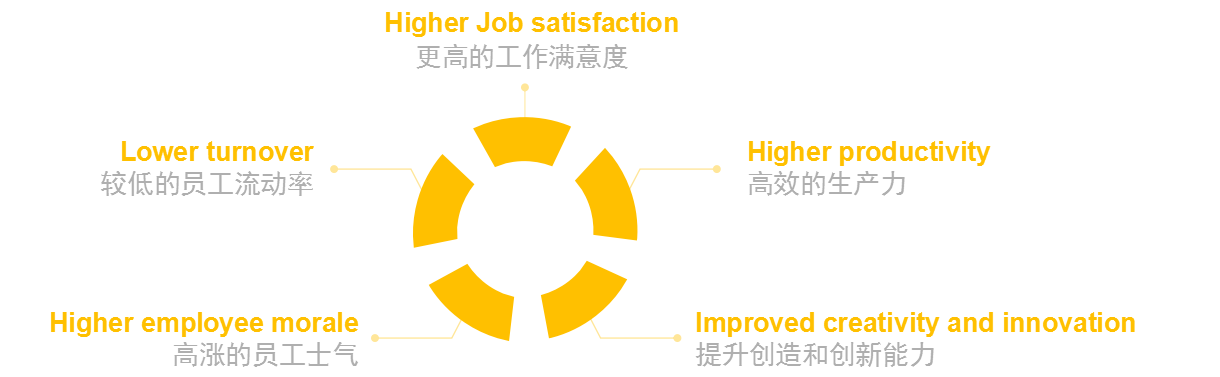
Inclusive organizations have   包容性强的会有:
We will discuss the guest experience property standards in the next section.
下节我们将探讨宾客体验的酒店标准。