



目录

  • 1 Chapter 1 – Preparing for a Leadership Career
    • 1.1 Introduction
    • 1.2 Why a Career in Hospitality and Tourism?
    • 1.3 Selecting an Industry Segment
    • 1.4 Types of Available Positions
    • 1.5 Traits of Leaders
    • 1.6 Traditional Management Styles
    • 1.7 Varying your Leadership Style
  • 2 Chapter 2 – Hospitality and Tourism Leadership
    • 2.1 Introduction
    • 2.2 21st Century Leadership Styles
    • 2.3 Leadership Development Goals
    • 2.4 Empowerment
    • 2.5 Showing Respect and Value for Diversity
    • 2.6 Global Guest Audiences
    • 2.7 Welcoming Other Cultures
  • 3 Chapter 3 – Leadership and the Guest Cycle
    • 3.1 Introduction
    • 3.2 Follow the Guest: Making the Cycle Seamless
    • 3.3 Guest Recovery
    • 3.4 Problem Solving
  • 4 Chapter 4 – Managing the Guest Experience Cycle
    • 4.1 Introduction
    • 4.2 Managing the Guest Experience: Being Inclusive
    • 4.3 Guest Experience Property Standards
    • 4.4 Managing the Guest Service Measurement (GSM) Process
    • 4.5 Guest Service Gold: Leading a Gold Team
    • 4.6 Managing Green Practices
  • 5 Chapter 5 – Leadership, Employees and Communication
    • 5.1 Introduction
    • 5.2 Purpose of the Mission Statement
    • 5.3 Communicating Employee Purpose and Role
    • 5.4 Setting Performance Goals
    • 5.5 Listening, Speaking and Writing
    • 5.6 Managing Difficult People
    • 5.7 Guest Communication
    • 5.8 Media Training
  • 6 Chapter 6 – Front Office Leadership
    • 6.1 Introduction
    • 6.2 Responsibilities of the Front Office Manager
    • 6.3 Reports: The Night Audit Paper Trail
    • 6.4 Labor Costs and the Night Audit
    • 6.5 Measuring Employee Performance
    • 6.6 Guests and the Front Desk
    • 6.7 Green Practice Programs for Guests
  • 7 Chapter 7 – Managing Housekeeping Operations
    • 7.1 Introduction
    • 7.2 Being the Executive Housekeeper
    • 7.3 Building a Budget
    • 7.4 Budgeting Labor and Linen Expenses
    • 7.5 Managing Housekeeping Performance Standards
    • 7.6 Training Housekeeping Staff
    • 7.7 Managing Housekeeping Green Practices
  • 8 Chapter 8 – Leadership and Facilities Management
    • 8.1 Introduction
    • 8.2 Function of the Chief Engineer
    • 8.3 Budgeting to Meet ADA Requirements
    • 8.4 Energy Management
    • 8.5 Emergency Systems Planning
    • 8.6 Managing the Facility’s Green Practices
  • 9 Chapter 9 – Food and Beverage Service Leadership
    • 9.1 Introduction
    • 9.2 Organization and Staffing of Food and Beverage Operations
    • 9.3 Menu Management
    • 9.4 Purchasing Supplies and Equipment
    • 9.5 Facility Design, Décor and Cleaning
    • 9.6 Managing Sanitation and Safety
    • 9.7 Labor and Revenue Control
    • 9.8 Nutrition and Sustainable Foods
  • 10 Chapter 10 – Managing Banquets and Catered Events
    • 10.1 Introduction
    • 10.2 Booking and Planning Events
    • 10.3 Reports: Preparing for Service
    • 10.4 Delivering Service
    • 10.5 After Service
  • 11 Chapter 11 – Human Resources
    • 11.1 Introduction
    • 11.2 Interview and Hiring Practices
    • 11.3 Employment Laws
    • 11.4 Managing Compensation and Benefits
    • 11.5 Corporate Social Responsibility
  • 12 Chapter 12 – Managing Operational Finance
    • 12.1 Introduction
    • 12.2 Financial Statements
    • 12.3 Operational Expenses and the Capital Budget
    • 12.4 Revenue Management
    • 12.5 Managing Labor Costs
    • 12.6 Taxes: Reporting and Remitting
  • 13 Chapter 13 – Marketing
    • 13.1 Introduction
    • 13.2 The Marketing Mix
    • 13.3 Steps of a Marketing Plan
    • 13.4 Channels of Distribution
    • 13.5 The Marketing Budget
    • 13.6 Industry Trends and Marketing
  • 14 Chapter 14 – Sales
    • 14.1 Introduction
    • 14.2 Training for Sales Success
    • 14.3 Managing a Sales Team
    • 14.4 Selling to Global Audiences
    • 14.5 Selling to Special Segments
    • 14.6 Selling to the Digital Traveler
  • 15 Chapter 15 – Safety
    • 15.1 Introduction
    • 15.2 Managing Workplace Safety
    • 15.3 Risk Management and Insurance
    • 15.4 OSHA: Following the Requirements
  • 16 Chapter 16 – Security
    • 16.1 Introduction
    • 16.2 Hotel Security: Access Control and Guestroom Security
    • 16.3 Employee Security Issues
    • 16.4 Emergency Management and Media Relations
Guest Recovery


No matter how hard you try to provide exceptional guest service, even with the outstanding training, clearly defined processes and a well-prepared team of employees sometimes things go wrong.
无论你多么努力地提供出色的客户服务,即使是出色的培训、清晰的流程和精心准备的员工团队,有时也会出问题。
They may or may not be things you can control, but what is important is how you respond to them.
它们可能不是你能控制的东西,但重要的是你如何回应它们。
Handling guest complaints professionally, you may have a customer for life.
宾客投诉处理得当,会让他成为你的终身客户。

However, poorly handled experiences can lead to negative word of mouth campaign that could reach millions through social media.
然而处理不当带来差评,再通过社交媒体传播 ,就会让数以百万计的人知道这一负面影响。
Statistics show that 20% of dissatisfaction can counter 80% satisfaction.
数据显示,20%的不满就能抵消80%的满意。
This negative impact cannot be ignored; therefore, efficient guest recovery becomes one the most crucial management function in every hospitality and tourism business.
这一负面影响不容忽视;因此有效的服务补救成为酒店旅游业最为关键的管理职能。

  • 96% of guests do not complain to anyone who can help them.
    96%的客人不会向任何能帮助他们的人投诉。

  • 90% of guests with unresolved complaints will never return.
    90%的宾客看到投诉未被处理便不会再来。

  • 95% of guests will return if they feel their complain was resolved professionally and at their total satisfaction. In fact these guests leave with an overall favorable impression and they feel that the organization cares about their needs.
    95%的宾客认为如果他们的投诉处理得当并且非常满意,就会成为回头客。事实上,顾客离开酒店时的总体印象很好,同时认为酒店很留意他们的需求。

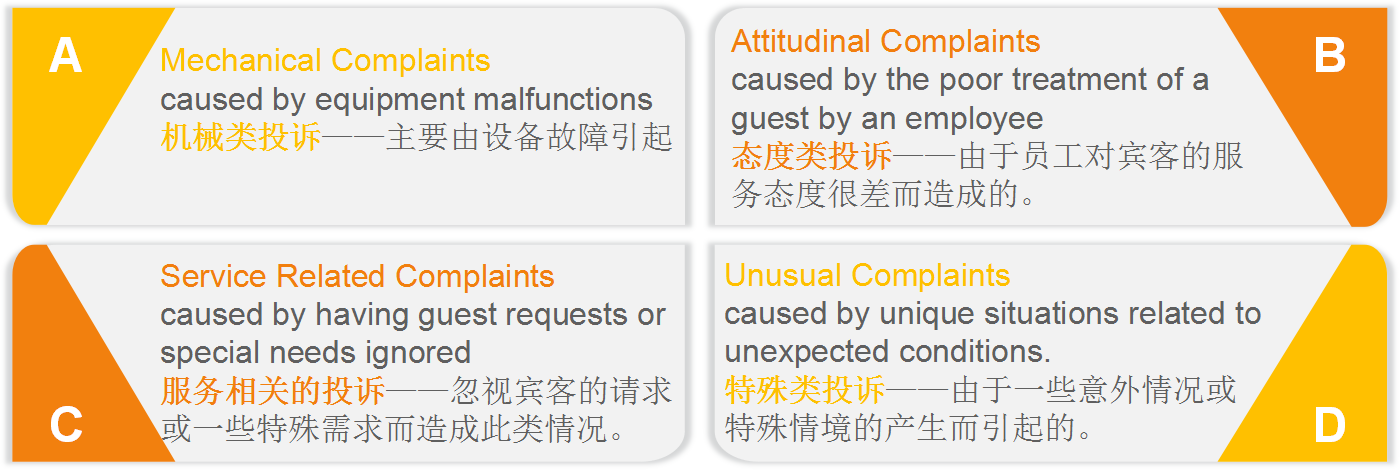
Guest complaints can be classified in four basic categories   宾客投诉大体分成四类:

Empowering the employees to effectively handle guest recovery is essential for a seamless experience in the hospitality business.
酒店想要提供无瑕疵的优质服务,授权员工实施服务补救必不可少。
Remarkable guest recovery means handling the service breakdown in a way that makes the guest even more loyal to your business after the issue has been properly resolved to the total satisfaction of the guest.
卓越超凡的服务补救意味着,服务失败之后还能把问题处理得当并让宾客完全满意,甚至让他们对你更加忠诚。
We will discuss the problem solving techniques in the next section.
下一节我们将探讨一些解决问题的技巧。