



Management is process based and is focused in execution and controlling.
管理有基础流程 ,重在执行和控制。
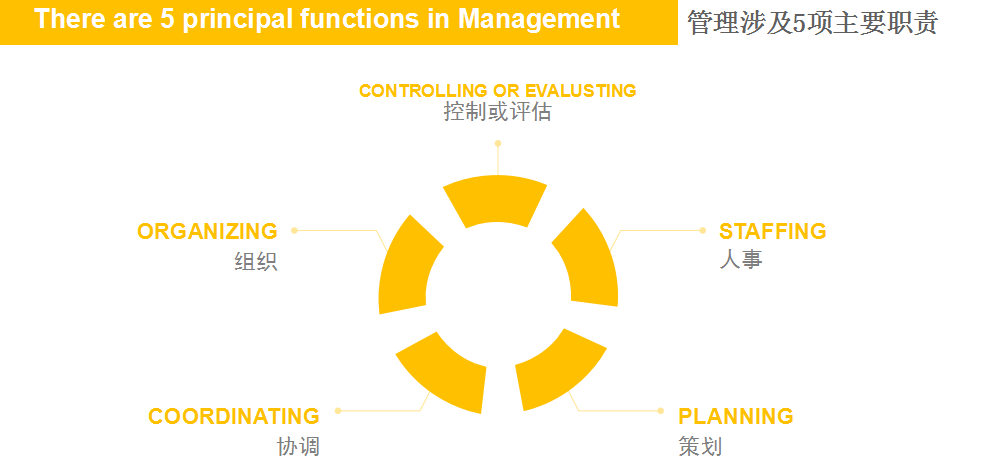
These functions are interdependent and require managers’ attention as well as their efficient communication throughout the organization.
这5项职责相互依存,尽职的管理者不仅要面面俱到,还要对公司上下保持高效的沟通。
Management styles are patterns of behaviors that managers use to interact with other managers and with their staff.
管理风格指的是,管理者与其他管理人以及员工互动的行为模式。
The four traditional management styles are:
通常存在4种管理风格:
Autocratic Managers指令式管理者
Stress immediate, short term results over concerns about people. They often give orders without explanations and expect employees to obey instructions.
强调直接,相比对员工而言,管理者更关心短期结果。他们给出指令时往往不会加以解释,并且认为雇员应该按照指示完成任务。
The impact of this style: 这种管理风格所产生的作用:
Helps complete urgent tasks that need doing quickly or where there is an element of risk about the work.
在处理紧急任务或工作出现风险时,完成处理的速度会很快。
An example can be an emergency situation such as fire or flood in a hotel, which needs an immediate decision and order following since the event involves everyone’s safety.
比如酒店着火、洪水来袭这样危害生命的突发状况出现时需要迅速地作出决定指示。Overusing this style, may lead to lack of creativity or resistance if employees have no input.
滥用这种风格,不与员工沟通,会造成员工创意缺失、态度消极。
Bureaucratic Managers 官僚式管理者
makes decisions by enforcing rules, regulations, policies and procedures that are already in place. Concerns for results and for people. Employees of bureaucratic managers suppress their initiatives and simply follow the rules.
做决定时强制执行现有的规章制度、政策及流程,注重结果的同时也会关注员工。但这种管理风格往往打消员工的主动性,让他们变得只会死守规定。
As an impact of this style employees may feel valued but frustrated because there is little scope for decision-making.
其影响是让员工在受到重视的同时也会感到沮丧,因为他们几乎没有做决定的空间。
An application using this style can be when managers and employees are involved to comply with strict regulations such as legal issues, sanitation procedures, security procedures or using machines and equipment.
管理者和员工在涉及法律问题、卫生程序、安全程序、机械和设备的使用方面都要严格遵守规定,此时恰好可以应用这种管理风格。
Democratic Managers民主式管理者
focuses more on participative process than on short-term results, shares decision making and problem solving responsibilities with staff and is open to new ideas.
比起短期效益更注重员工参与的过程,与员工共同担负做决定、处理问题的职责,对新鲜的观点报以开放的态度。
These managers keep employees informed and often delegate so employees can gain more experience and job satisfaction. They want employees to be less dependent and take initiatives to get things done themselves.
这些管理者会与员工分享最新动态,也会经常把一些工作委托给员工,这样员工从中不仅获得工作经验也能得到更多满足感。管理人希望员工减少依赖性,并能自己主动完成任务。
The impact of this style这种管理风格所产生的作用:
Gains team commitment particularly when changes need to be made.
尤其在需要作出改变的时候,容易获得团队的支持。Slows the decision making process but employees are more likely to support the decisions.
做决定的过程虽然缓慢下来,但员工支持决定的可能性更大。
An example for this style can be when a manager discusses with his or her team on implementing a new menu in the restaurant or a new service procedure.
比如管理者与他的团队商量要在餐厅实施一个新的菜单或提供一种新的服务流程,在此情景下可运用此种管理方式。
Laissez-Faire Managers 放任式管理者
The origin of this term is French and literally means “Allow to do”.
该词源于法语,其字面意思是“放手去做”。
In this management style managers provide little or no direction and gives employees as much as freedom as possible. This style is also known as “hands off” management.
这种方式的管理者几乎不会给任何指示,同时还尽可能地给员工自由。这种方式也被称为“放任自流’’的管理模式。
Managers make themselves available but they give subordinates the power to develop their goals, make decisions and solve problems.
下属员工可以向管理者求助,但他们也会被赋予权力,培养个人目标、做决定以及解决问题。
Managers are more likely to use this style with a few experienced and highly skilled teams, while regular feedback and communication is required for this approach to work.
管理者可使用该方式对待少数经验丰富、技能娴熟的团队,但需要常规反馈和定期沟通。
However without centralized control, using this style may lead to chaos in a company.
然而在没有集中控制的情况下使用这种方式会造成公司混乱。
An example for this style can be when a new initiative is started in a department and is controlled by the employees.
比如部门出了一个新方案由雇员负责控制,此时就可以运用这种管理方式。
Now that we have covered all the 4 traditional management styles, which one you think is the most useful one to adopt? Which one is the most effective?
现在我们已经学习过4种典型的管理模式,你觉得采用哪种管理方式最有用呢?哪种最能见效呢?
We will discuss the different situations in the next section.
下一章我们会谈一谈不同的运用情景。

