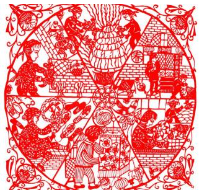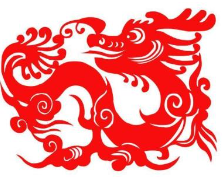
Paper-cutting originated in China in the 7th century and spread to the rest of the world in the 14th century. In China, it is associated with traditional festivals and wedding ceremonies. With a pair of scissors, a clever hand can make beautiful patterns out of a piece of paper which is then pasted on walls, windows, doors and ceiling as decoration. It is one of the most popular rural folk arts in China and paper-cuts are still very popular with most Chinese people today. It is difficult to say why paper-cutting started. One idea is that it originatesd in religious ceremonies to represent sacrificial offerings. But even, a thousand years ago, paper-cuts were used as decoration. According to historic records, women during the Tang Dynasty used paper-cuts as headdresses. During the Song Dynasty, they were used to decorate gifts.
Most paper-cuts are done by women in the countryside. Their subjects are anything familiar and often have some specific meanings. They use auspicious designs to symbolize good luck abd the aviodance of evil. The child, lotus and bottle gourd designs suggest a family with a large number of children and grandchildren. Domestic birds, livestock, fruit, fish and worms are also depicited. There are some special paper-cuts of traditional design which are now used as patterns for embroidering clothes, shoes, hats, pillows and curtains.