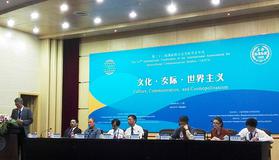
B&R and Intercultural Communication
Among the challenges to the West in understanding China, many lies in the cognitive misunderstanding of the deceived individuals mainly because of the deliberate distortions by their local news media. Therefore, we have to and should play a role in telling China's story in an objective and intercultural manner to present the whole picture of China to the rest of the world.
The
art of telling a Chinese story well is a matter of national confidence.
After all, we are each an inheritor of our own culture and
history. As a Chinese old saying goes: “If you know the enemy and know yourself, you will not be imperiled in a hundred battles.”
"Who I am?"
"How should I let you know what I am?"
This is the question.
Here is a model:
Chinese Martial Arts -- Behaviors → Norm → Value
Intercultural Reflection: a Chinese blogebrity Li Ziqi
Li Ziqi is an iconic name among vloggers. She posts videos of her selfpicking fruits and vegetables and making them into delicious dishes and snacks in the beautiful and peaceful scenery of her hometown, a small village in Southwest China’s Sichuan Province. In most of her videos, she wears a Chinese traditional costume and cooks Chinese traditional recipes. Her channel on YouTube enjoys increasing popularity and about 7,000,000 watchers follow her uploads. Many people believe her videos promote China’s cultural identity through recording traditional Chinese food, Chinese ways of cooking, Chinese customs and rural life. She lets the world know how Chinese people enjoy their daily life and live peacefully with nature. But some argue that her videos are about trivial things in daily life and she presents rural life in the country rather than a modernized China, and therefore does not deserve to be called “a symbol of Chinese culture”.
Why do you think Li Ziqi’s channel attracts so many followers on YouTube?
How can China’s cultural identity be more widely known and understood through intercultural communication? Give your suggestions.

