
Intercultural Barriers
Every culture has a different set of rules, values, ethics, and expectation, which form the way people think and behave. When people from different cultures communicate with each other, these factors can become barriers, like anxiety, frustration, misunderstanding, etc. This usually occurs to students, workers, and short-term travelers who are studying, working, and traveling in foreign countries. So identifying different forms of barriers contributes to avoiding different types of misunderstanding and conflicts.
In this Module, you will learn different types of barriers to intercultural communication and why it is important for us to be open to completely new ideas and to take the initiative to increase our intercultural competence and communication skills when working with international students or people from a different country.
Lead–in Scenario---What Do You See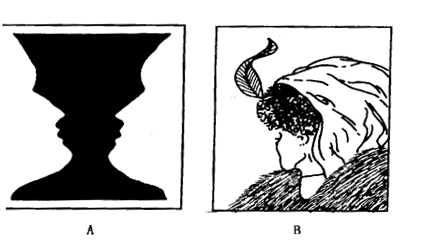
In Professor Smith's Intercultural Communication class, he started his class with two pictures. “Please take a good look at the two pictures for a minute, and then describe what you see,” he instructed the students.
For Picture A, student A says, “This is a vase.” But student B says, "There are two opposing faces in the picture.”
Whose answer is right?
For Picture B, student A replies that there is a young lady with a hat, but student B's answers that it is an old woman wearing ascarf and shawl.
Whose answer is right and whose answer is wrong?
Then the professor asks the students to consider why is it that they both see differently subject matter when they look at the same images? Does something similar happen in our everyday lives? What would occur if it happens in intercultural communication situations?
Question for Intercultural Understanding. Check your understanding by choosing A, B, C, and / or D. You can choose more than one choice for the appropriate answer.
Now let's get started on a new journey in this Module.

