目录

  • 1 Unit 1 Idols and Heroes
    • 1.1 Lead-in
    • 1.2 Part A
    • 1.3 Part B
    • 1.4 Part C
  • 2 Unit 2 Love
    • 2.1 Lead-in
    • 2.2 Part A
    • 2.3 Part B
    • 2.4 Part C
  • 3 Unit 3
    • 3.1 Lead-in
    • 3.2 Part A
    • 3.3 Part B
    • 3.4 Part C
  • 4 Unit 4
    • 4.1 Lead-in
    • 4.2 Part A
    • 4.3 Part B
    • 4.4 Part C
  • 5 Unit 5
    • 5.1 Lead-in
    • 5.2 Part A
    • 5.3 Part B
    • 5.4 Part C
  • 6 Unit 6
    • 6.1 Lead-in
    • 6.2 Part A
    • 6.3 Part B
    • 6.4 Part C
  • 7 大学英语视听说-第二期
    • 7.1 Nice to meet you!
      • 7.1.1 Part one Greetings and Farewell
      • 7.1.2 Part two Watching
      • 7.1.3 Part three Chinese Story
      • 7.1.4 Post-test
    • 7.2 Can you tell me where the bank is?
      • 7.2.1 Pre-test
      • 7.2.2 Part one Asking for Directions
      • 7.2.3 Part two Watching
      • 7.2.4 Part three Chinese Story
      • 7.2.5 Post-test
    • 7.3 I would like to make a reservation
      • 7.3.1 Pre-test
      • 7.3.2 Part one Food and Reservation
      • 7.3.3 Part two Watching
      • 7.3.4 Part three Chinese Story
      • 7.3.5 Post-test
    • 7.4 Would you like to dinner together?
      • 7.4.1 Pre-test
      • 7.4.2 Part one Oral Invitation
      • 7.4.3 Part two Watching
      • 7.4.4 Part three Chinese Story
      • 7.4.5 Post-test
    • 7.5 I will take your advice.
      • 7.5.1 Pre-test
      • 7.5.2 Part one Giving and Responding to advice
      • 7.5.3 Part two Watching
      • 7.5.4 Part three Chinese story
      • 7.5.5 Post-test
    • 7.6 I got a bargin.
      • 7.6.1 Pre-test
      • 7.6.2 Part one Shopping
      • 7.6.3 Part two Watching
      • 7.6.4 Part three Chinese Story
      • 7.6.5 Post-test
    • 7.7 In my opinion, it is perfect.
      • 7.7.1 Pre-test
      • 7.7.2 Part one How to show your opinions
      • 7.7.3 Part two Watching
      • 7.7.4 Part three Reading
      • 7.7.5 Post- test
    • 7.8 I love mountains and rivers
      • 7.8.1 Pre-test
      • 7.8.2 Part one Talk about hobbies
      • 7.8.3 Part two Watching
      • 7.8.4 Part three Chinese story
      • 7.8.5 Post - test
    • 7.9 Festivals
      • 7.9.1 Pre-test
      • 7.9.2 Part one Spring Festival
      • 7.9.3 Part two Watching
      • 7.9.4 Part three Chinese Story
      • 7.9.5 Novel Coronavirus Pneumonia
      • 7.9.6 Post-test
    • 7.10 I am qualified for the job.
      • 7.10.1 Pre-test
      • 7.10.2 Part one How to succeed in a job interview.
      • 7.10.3 Part two Watching
      • 7.10.4 Part three Chinese story
      • 7.10.5 Post-test
    • 7.11 Weather Forecast
      • 7.11.1 Pre-test
      • 7.11.2 Part one Weather Forecast
      • 7.11.3 Part two Reading
      • 7.11.4 Post-test
    • 7.12 三级专项
      • 7.12.1 语法专项
        • 7.12.1.1 虚拟语气
        • 7.12.1.2 主谓一致
        • 7.12.1.3 非谓语动词
        • 7.12.1.4 时态语态
        • 7.12.1.5 倒装句
        • 7.12.1.6 定语从句
        • 7.12.1.7 状语从句
      • 7.12.2 翻译专项
      • 7.12.3 阅读专项
      • 7.12.4 写作专项
        • 7.12.4.1 邀请函写作
        • 7.12.4.2 通知写作
        • 7.12.4.3 感谢信写作
        • 7.12.4.4 求职信的写作
    • 7.13 拓展视频
      • 7.13.1 Receive a Guest at the Airport
      • 7.13.2 Our company
      • 7.13.3 Product Description
Part A

Dialogues


Task Listen to the short dialogues and choose the best answer according to what you have heard.

1. A) It’s worse than 30 years ago.

   B) It remains almost the same as before.

   C) There are more extremes in the weather.

   D) There has been a significant rise in temperature.

2. A) She enjoys the summer sun.

    B) She is struggling with depression.

    C) She is depressed about the future.

    D) She will not go out in rainy days.

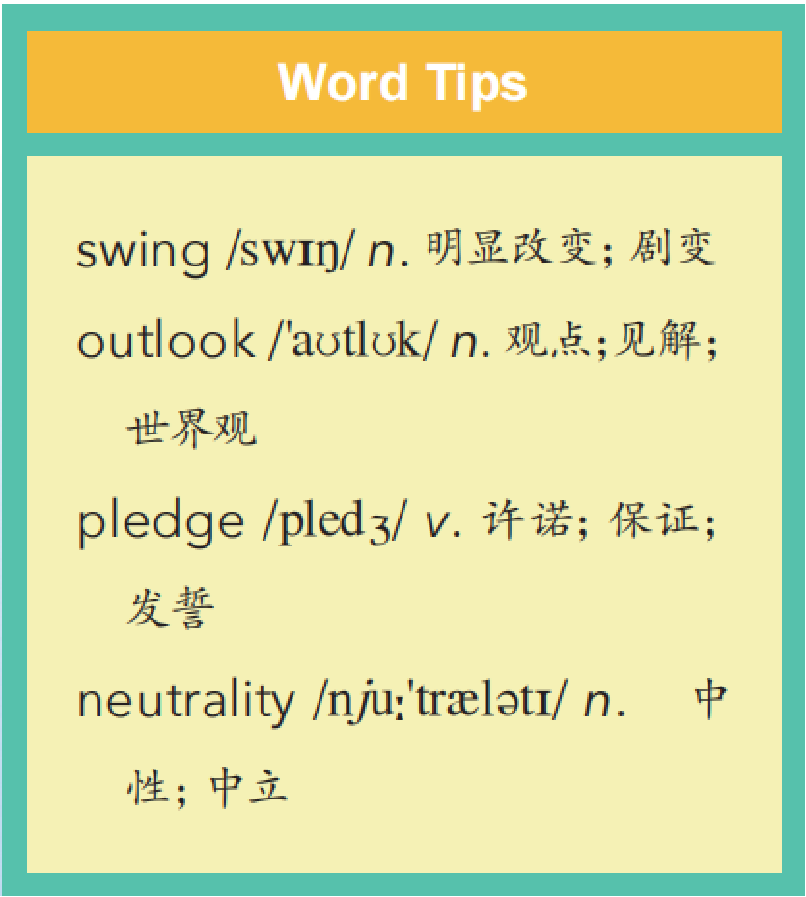
3. A) The total amount of greenhouse gases that are emitted into the atmosphere by a person.

   B) The total amount of greenhouse gases produced to directly support human activities

    C) The sum of greenhouse gases released into the atmosphere due to your purchases.          

    D) The sum of greenhouse gases resulting from everyday economic and human activities.

4. A) China aims to achieve carbon neutrality in about 40 years.

    B) China plans to reach carbon neutrality in about 60 years.

    C) China’s carbon emissions will reach zero by 2060.

    D) China’s net carbon emissions have reached peak by 2016.

5. A) They are putting back a dustbin.

    B) They are talking about a new dustbin.

    C) They are collecting used batteries.

   D) They are looking forward to attending a lecture.

Conversation

Task1 Listen to the conversation and choose the best answer according to what you have heard.

1. Why is the man talking to himself?

 A) Because he is a stranger.

 B) Because he likes to do so.

 C) Because he sees a strange photo.

 D) Because he feels nervous.

2. What are the two speakers mainly talking about?

    A) A photo.

    B) Global warming.

    C) Death.

    D) Disaster.

 3. Which of the following statements is NOT mentioned in the conversation?

 A) The photo shows something wrong in Arctic.

 B) The woman tells the man how to prevent global warming.

 C) The man is a little bit nervous about global warming.

 D) The woman tells the man how to get a girlfriend.

Task2 Listen to the conversation again and fill in the blanks according to what you have heard.

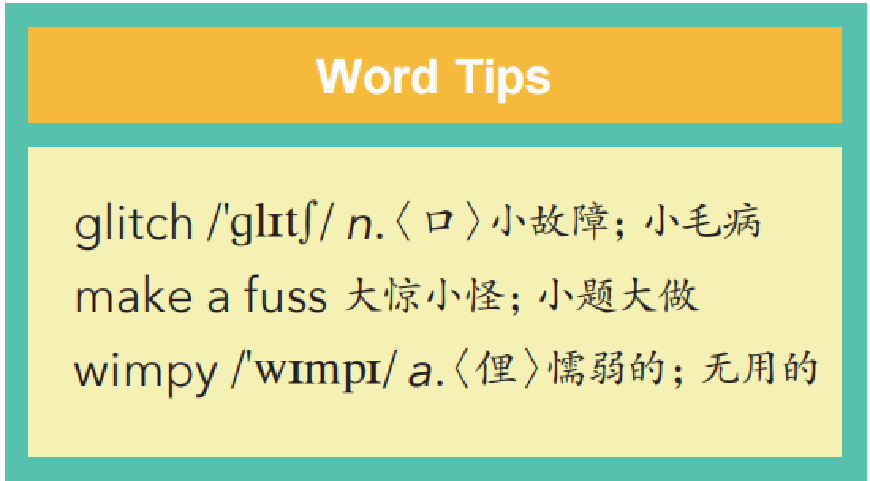
1. Jesus Christ! What’s that? It’s so __________ !

2. There must be a __________ in Arctic.

3. I don’t want to make a __________ either.

4. What will happen next? More and more __________ ?

5. Don’t be so wimpy! You can do something to  __________ global warming.

Task3 Give a short talk about preventing global warming.

Passage

Task1 Listen to the passage and choose the best answer according to what you have heard.

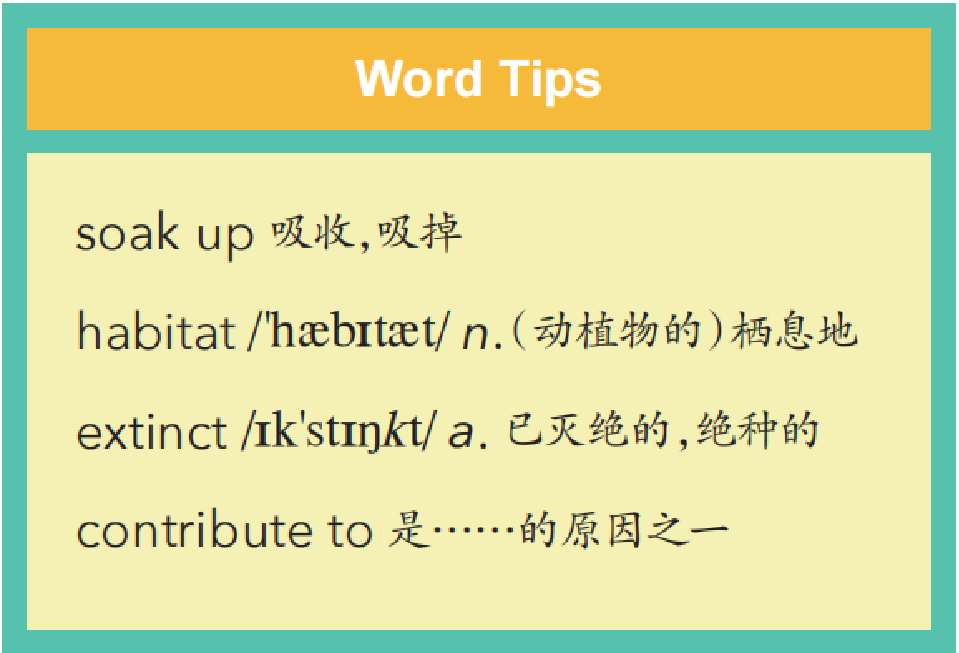
1. Why may sea levels rise as a result of global warming?

    A) Because there is water pollution.

    B) Because there are too many large ships.

    C) Because the icecaps are melting.

    D) Because there are more storms and floods.

2. Which of the following contributes most to global warming?

    A) Unleaded gas.

    B) Carbon dioxide.

    C) Oxygen.

    D) Natural gas.

3. Why may some areas become too dry for farming?

    A) Because there is too much over-planting.

   B) Because the growing season would be too short.

    C) Because heat would dry out the farmland.

    D) Because water is polluted.

Task2 Listen to the passage again and complete the notes by filling in the blanks.
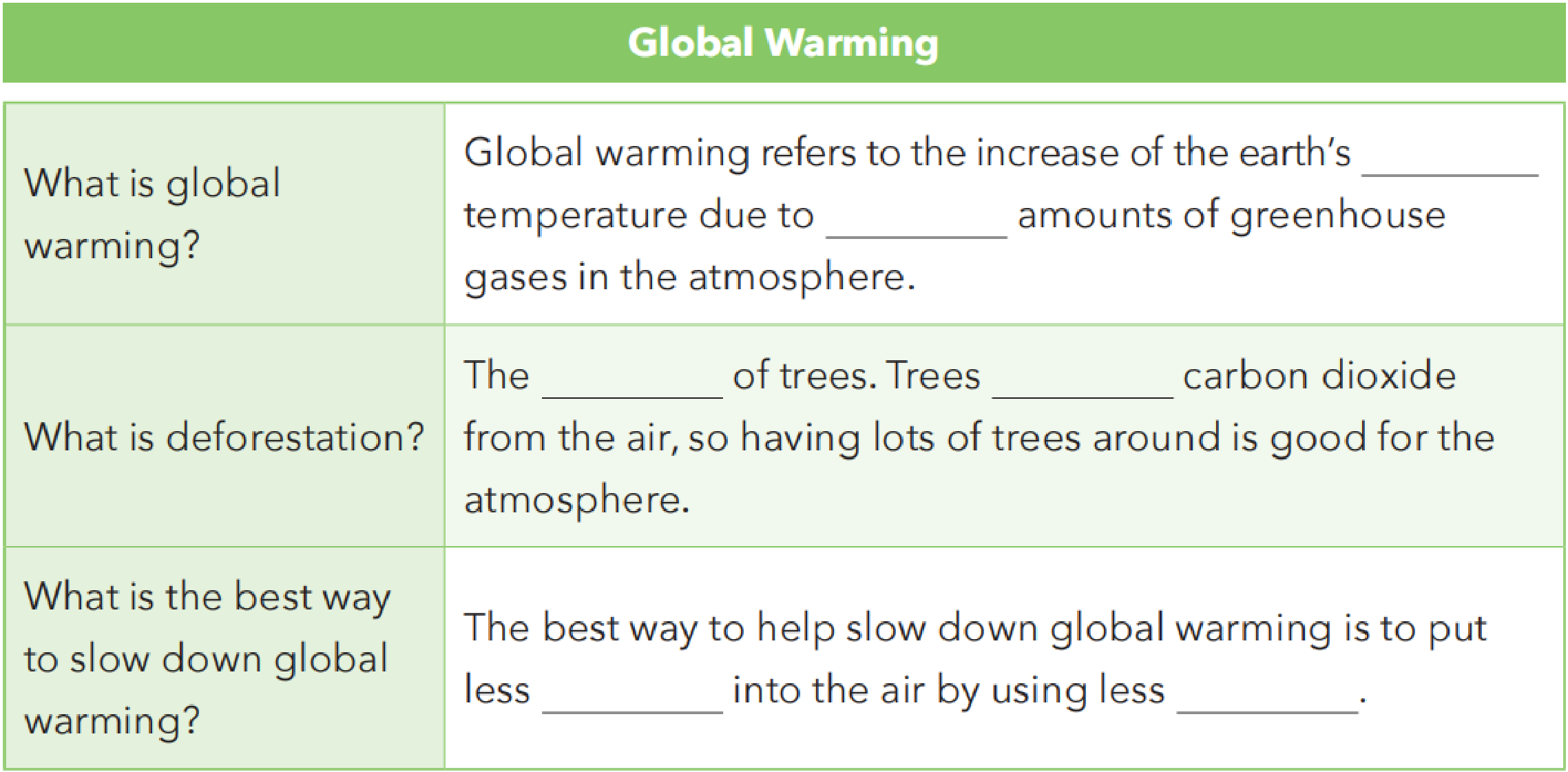

Task3 Work in groups. Make an oral report on the effects of global warming with the help of the key words and expressions below.