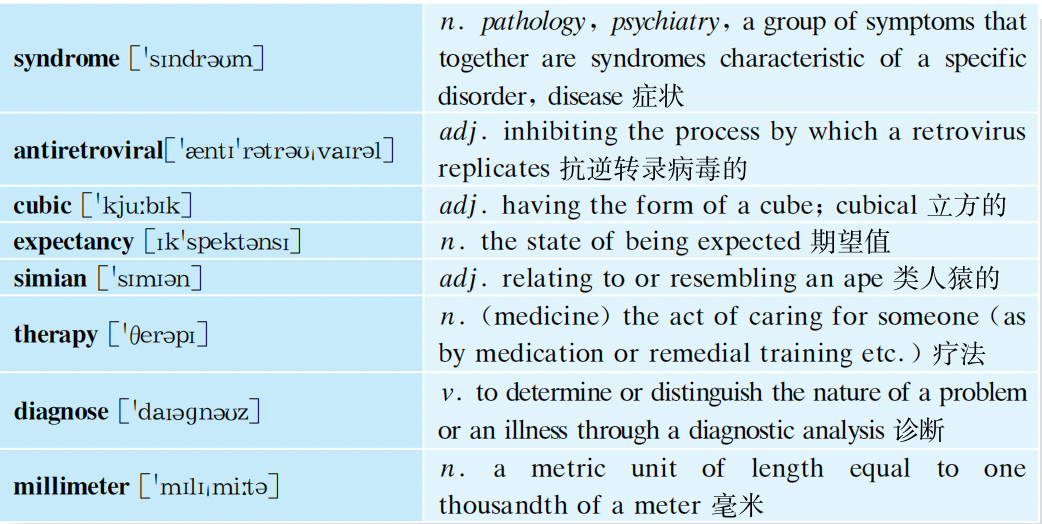
02 Read the following passage and answer these questions.

An introduction to HIV/AIDS
Human immunodeficiency virus (HIV)
HIV stands for human immunodeficiency virus. If left untreated, HIV can lead to the disease AIDS(acquired immunodeficiency syndrome). Unlike some other viruses, the human body can’t get rid of HIV completely. So once you have HIV, you have it for life.
HIV attacks the body’s immune system, specifically the CD4 cells (T cells), which help the immune system fight off infections. If left untreated, HIV reduces the number of CD4 cells (T cells) in the body, making the person more likely to get infections or infection-related cancers. Over time, HIV can destroy so many of these cells that the body can’t fight off infections and disease. These opportunistic infections or cancers take advantage of a very weak immune system and signal that the person has AIDS, the last state of HIV infection.
No effective cure for HIV currently exists, but with proper treatment and medical care, HIV can be controlled. The medicine used to treat HIV is called antiretroviral therapy or ART. If taken the right way, every day, this medicine can dramatically prolong the lives of many people with HIV, keep them healthy, and greatly lower their chance of transmitting the virus to others. Today, a person who is diagnosed with HIV, treated before the disease is far advanced, and stays on treatment can live a nearly as long as someone who does not have HIV.
The only way to know for sure if you have HIV is to get tested. Testing is relatively simple. You can ask your health care provider for an HIV test. Many medical clinics, substance abuse programs, community health centers, and hospitals offer them too. You can also buy a home testing kit at a pharmacy or online.
Acquired Immunodeficiency Syndrome (AIDS)
AIDS stands for acquired immunodeficiency syndrome. AIDS is the final stage of HIV infection, and not everyone who has HIV advances to this stage.
AIDS is the stage of infection that occurs when your immune system is badly damaged and you become vulnerable to opportunistic infections. When the number of your CD4 cells falls below 200 cells per cubic millimeter of blood (200 cells/mm3), you are considered to have progressed to AIDS. (The CD4 count of an uninfected adult/adolescent who is generally in good health ranges from 500 cells/mm3 to 1,600 cells/mm3.) You can also be diagnosed with AIDS if you develop one or more opportunistic infections, regardless of your CD4 count.
Without treatment, people who are diagnosed with AIDS typically survive about 3 years. Once someone has a dangerous opportunistic illness, life expectancy without treatment falls to about 1 year. People with AIDS need medical treatment to prevent death.
HIV Medication Overview
HIV medications aim to interfere with the virus's ability to reproduce inside the body. To date, no single drug has been effective in stopping the HIV virus, and thus HIV medications are taken in combinations in order to be more effective. These combinations are known as HAART - Highly Active Anti-Retroviral Therapy.
The common HAART treatment regimen is composed of three drugs, a combination widely known as a "drug cocktail" or a "triple cocktail." The drug cocktail has proven highly effective in reducing the amount of virus in the body and thus in reducing the rate of new AIDS cases worldwide.
The Drug Cocktail Breakdown
The HIV drug cocktail is typically comprised of combinations such as two nucleoside reverse transcriptase inhibitors (NRTIs) and one protease inhibitor (PI); two NRTIs and one non-nucleoside reverse transcriptase inhibitor (NNRTI); and other similar combinations.
What do these strange abbreviations mean? Simply put, anti-retroviral drugs are grouped according to which phase of the HIV-virus lifecycle the particular drug inhibits. Here is a brief explanation of some of the HIV medications typically found in a drug cocktail.
As with most drugs, HIV drug cocktails can give rise to unpleasant side effects. Among these potential side effect are: nausea, vomiting, diarrhea, weight loss, depression, dry mouth, fever, fatigue, rash, and peripheral neuropathy.
The good news is that HIV drug cocktails work, and that researchers are continuing to look for new HIV medications and combinations that interrupt the HIV cycle and improve the quality of life for those afflicted with HIV and AIDS.
However, HIV medications are complicated and thus it is essential to be in close contact with a professional in the field who can explain treatment regimens and advise accordingly. HIV drugs should always be taken exactly as prescribed and not changed or stopped without consulting the doctor first.
(Source: https://www.hiv.gov/hiv-basics/overview/about-hiv-and-aids/what-are-hiv-and-aids)