-
1 History of&n...
-
2 Issues and&n...
-
3 Lexical Chun...
-
4 Bilingual tr...


The History of Autism
New England Journal of Medicine once featured a historical perspective by Jeffrey Baker on autism, marking the 70th anniversary of psychiatrist Leo Kanner’s 1943 description of the disorder.
“This year's revision of the diagnostic criteria for autism is among the most contentious of any," writes author and Duke University pediatrician and medical historian Jeffrey Baker. “It reflects one of the central themes in the history of autism: a debate over where to set its boundaries.”
Dr. Kanner didn’t so much define autism as portray it, Dr. Baker notes. The 1943 paper described 11 children who shared high intelligence, a profound preference for being alone and an “obsessive insistence on the preservation of sameness.”
Autism is not a new problem; it's actually been on the books for more than 70 years-and our thinking about the condition has changed dramatically during that time.
Through the 1960s, psychiatrists continued to view autism as a form of "childhood schizophrenia." Also popular through the 1960s was the now-debunked idea that autism resulted from emotionally distant mothering (the “refrigerator mom” theory of autism).
The 1970s brought understanding that autism stemmed from biological differences in brain development. Objective criteria for diagnosing autism followed in the 1980s. So did a clear separation from childhood schizophrenia.
“Until the present, subsequent DSM editions have generally moved in the direction of greater diagnostic flexibility and expansion,” Dr. Baker writes. In 1994, for example, the DSM-IV added Asperger syndrome to the autism spectrum.
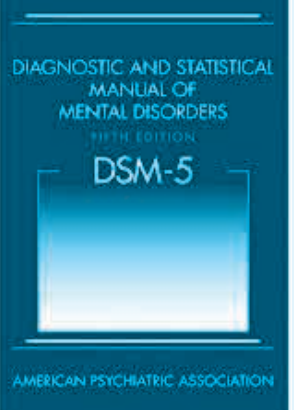
The Diagnostic and Statistical Manual of Mental Disorders (DSM) is published by the American Psychiatric Association (APA) and offers a common language and standard criteria for the classification of mental disorders. It is used for patient diagnosis and treatment, and is important for collecting and communicating accurate public health statistics. The Fourth Edition of the Diagnostic and Statistical Manual of Mental Disorders, or DSM-IV is the standard classification of mental disorders used by mental health professionals in the United States. The DSM is now in its fifth edition, DSM-5, published on May 18, 2013.
While the expanding definition provided greater access to services, it created difficulties in determining what kinds of therapy (and how much) are needed, Dr. Baker notes. “The DSM-5 criteria will not solve these problems,” he writes. “But they do represent a move toward a more rigorous definition of autism.”
“Rather than argue over the true definition of autism,” he concludes, “it may be more helpful to ask what definition is appropriate for the task at hand.”
History of Autism at a Glance:
1908: The word autism is used to describe a subset of schizophrenic patients who were especially withdrawn and self-absorbed.
1943: Leo Kanner publishes “Autistic Disturbance of Affective Contact” describing 11
socially isolated children who share an obsessive desire for sameness.
1950s-1960s: Autism widely regarded as a form of “childhood schizophrenia. Psychoanalysts blame emotionally cold mothering.
1970s: Autism understood as a biological disorder of brain development.
1980: DSM-III distinguishes autism from childhood schizophrenia.
1987: DSM-IIIR lays out a checklist of criteria for diagnosing autism.
1994-2000: DSM-IV and DSM-IV-TR expand definition of autism and include Asperger’s syndrome.
2013: DSM-5 folds all subcategories into one umbrella diagnosis of autism spectrum disorder (ASD). It is defined by two categories: impaired social communication and/or interaction and restricted and/or repetitive behaviors.
If you want to get a further glimpse of the history of autism, you can also refer to the book In a Different Key: The Story of Autism. In this book, the author portrays an extraordinary narrative history of autism: the riveting story of parents fighting for their children ’s civil rights; of doctors struggling to define autism; of ingenuity, self-advocacy, and profound social change.
(Source: https://www.autismspeaks.org/science/science-news/autism-70-%E2%80%93-kanner-dsm-5;
https://en.wikipedia.org/wiki/Diagnostic_and_Statistical_Manual_of_Mental_Disorders)