目录

  • 1 关于课程
    • 1.1 教学指引
  • 2 学生优秀作品展示
    • 2.1 Organ Transplant
      • 2.1.1 Organ Transplant (Group 2,临床7-8班)
      • 2.1.2 Organ Transplant (Group 1,药分9-10班)
      • 2.1.3 Cloning & Transplantation (Group2,医技1-2班)
      • 2.1.4 Cord Blood Transplantation (Group 1,临床7-8班)
      • 2.1.5 3D Printing Technology in Organ Transplantation (Group 8,医技1-2班)
      • 2.1.6 A Pig Heart (Group 2,药分9-10班)
    • 2.2 Influenza
      • 2.2.1 Influenza  (Group 1,医技1-2班)
      • 2.2.2 Spanish Influenza (药分9-10班)
      • 2.2.3 Avian Influenza  (Group 6,医技1-2班)
      • 2.2.4 The Avain Virus - H1N1(Group 4,临床7-8班)
      • 2.2.5 Swine Influenza (Group 3,临床7-8班)
      • 2.2.6 The Similarities and Differences Between Flu and COVID-19 (Group 7,药分9-10班)
      • 2.2.7 Differences and similarities (Group 3,临床7-8班)
      • 2.2.8 Cold vs Flu vs Covid-19 (Group 4,中制17-18班)
      • 2.2.9 Cold vs Flu vs Covid-19 (Group 5,药分9-10班)
      • 2.2.10 Cold vs Flu vs Covid-19 (Group 10,临床7-8班)
    • 2.3 Autism
      • 2.3.1 Autism (Group 10,临床7-8班)
      • 2.3.2 Autism (Group 3,医技1-2班)
      • 2.3.3 Autism Spectrum Disorders (Group 6,药分9-10班)
      • 2.3.4 Asperger‘s Syndrom (Group 6,医技1-2班)
      • 2.3.5 Asperger‘s Syndrom (Group 8,中制17-18班)
      • 2.3.6 Therapy for Autism (Group 9,护理1-2班)
      • 2.3.7 Treatment for Autism (Group 9,临床7-8班)
      • 2.3.8 Animal therapy for Autism (Group 3,药分9-10班)
      • 2.3.9 Care For Autistic Children (Group 8,智工11-12班)
    • 2.4 First Aid
      • 2.4.1 A Brief Introduction to First Aid (Group 2,医技1-2班)
      • 2.4.2 First Aid(Group 2,智工11-12班)
      • 2.4.3 First Aid(Group 3,临药15-16班)
      • 2.4.4 CPR(Group 6,临床7-8班)
      • 2.4.5 First Aid in Fires(Group 3,临药15-16班)
      • 2.4.6 First Aid in Water Incidents(Group 5,信管3-4班)
      • 2.4.7 First Aid in Electrical Incidents(Group 2,健管3-4班)
  • 3 Unit 1 Organ Transplant
    • 3.1 Micro-lectures
      • 3.1.1 Vocabulary
      • 3.1.2 Subjunctive Mood
      • 3.1.3 Sentence Analysis
      • 3.1.4 Coherence
    • 3.2 Text Book
      • 3.2.1 Info-storm
      • 3.2.2 Watching-in
        • 3.2.2.1 Watching-in -1
        • 3.2.2.2 Watching-in -2
      • 3.2.3 Pre-reading
        • 3.2.3.1 Pre-reading -1
        • 3.2.3.2 Pre-reading -2
        • 3.2.3.3 Pre-reading -3
      • 3.2.4 Critical Reading
      • 3.2.5 Speaking Out
      • 3.2.6 Pros/Cons
        • 3.2.6.1 Pros/Cons -1
        • 3.2.6.2 Pros/Cons -2
      • 3.2.7 Outcome
    • 3.3 More About the Topic
    • 3.4 Reading Practice
    • 3.5 Tips for CET 6
  • 4 Unit 2 Influenza
    • 4.1 Micro-lectures
      • 4.1.1 Vocabulary
      • 4.1.2 Postpositive Attributes
      • 4.1.3 Sentence Analysis
      • 4.1.4 Coherence
    • 4.2 More About the Topic
    • 4.3 Reading Practice
    • 4.4 Tips for CET 6
  • 5 Unit 3 Allergy
    • 5.1 Micro-lectures
      • 5.1.1 Vocabulary
      • 5.1.2 动名词 Gerund
      • 5.1.3 Sentence Analysis
      • 5.1.4 Coherence
    • 5.2 More About the Topic
  • 6 Unit 4 Plastic surgery
    • 6.1 Micro-lectures
      • 6.1.1 Vocabulary
      • 6.1.2 Gerunds and Present Participles
      • 6.1.3 Sentence Analysis
      • 6.1.4 Coherence
    • 6.2 More About the topic
    • 6.3 Reading Practice
    • 6.4 Tips for CET6
  • 7 Unit 5 Autism
    • 7.1 Micro-lectures
      • 7.1.1 Vocabulary
      • 7.1.2 Grammar
      • 7.1.3 Sentence Analysis
      • 7.1.4 Coherence
    • 7.2 More about the Topic
  • 8 Unit 6 HIV/AIDS
    • 8.1 Micro-lectures
      • 8.1.1 Vocabulary
      • 8.1.2 Grammar
      • 8.1.3 Sentence Analysis
      • 8.1.4 Coherence
    • 8.2 More about the Topic
    • 8.3 Reading Practice
    • 8.4 Tips for CET 6
  • 9 Unit 7 First Aid
    • 9.1 Micro-lectures
      • 9.1.1 Vocabulary
      • 9.1.2 Grammar
      • 9.1.3 Sentence Analysis
      • 9.1.4 Coherence
  • 10 Unit 8 Surrogacy
    • 10.1 Micro-lectures
      • 10.1.1 Vocabulary
      • 10.1.2 Grammar
      • 10.1.3 Sentence Analysis
      • 10.1.4 Coherence
  • 11 Unit 2 Influenza
    • 11.1 Info-storm
    • 11.2 Watching-in
      • 11.2.1 Watching-in -1
      • 11.2.2 Watching-in -2
    • 11.3 Pre-reading
      • 11.3.1 Pre-reading -1
      • 11.3.2 Pre-reading -2
      • 11.3.3 Pre-reading -3
    • 11.4 Critical Reading
    • 11.5 Speaking Out
    • 11.6 Pros/Cons
      • 11.6.1 Pros/Cons -1
      • 11.6.2 Pros/Cons -2
    • 11.7 Outcome
    • 11.8 Micro-lectures
      • 11.8.1 Vocabulary
      • 11.8.2 Postpositive Attributes
      • 11.8.3 Sentence Analysis
      • 11.8.4 Coherence
  • 12 Unit 3 Allergy
    • 12.1 Info-storm
    • 12.2 Watching-in
      • 12.2.1 Watching-in -1
      • 12.2.2 Watching-in -2
    • 12.3 Pre-reading
      • 12.3.1 Pre-reading -1
      • 12.3.2 Pre-reading -2
      • 12.3.3 Pre-reading -3
    • 12.4 Critical Reading
    • 12.5 Speaking Out
    • 12.6 Pros/Cons
      • 12.6.1 Pros/Cons -1
      • 12.6.2 Pros/Cons -2
    • 12.7 Outcome
    • 12.8 Micro-lectures
      • 12.8.1 Vocabulary
      • 12.8.2 动名词 Gerund
      • 12.8.3 Sentence Analysis
      • 12.8.4 Coherence
  • 13 Unit 4 Plastic Surgery
    • 13.1 Info-storm
    • 13.2 Watching-in
      • 13.2.1 Watching-in -1
      • 13.2.2 Watching-in -2
    • 13.3 Pre-reading
      • 13.3.1 Pre-reading -1
      • 13.3.2 Pre-reading -2
      • 13.3.3 Pre-reading -3
    • 13.4 Critical Reading
    • 13.5 Speaking Out
    • 13.6 Pros/Cons
      • 13.6.1 Pros/Cons -1
      • 13.6.2 Pros/Cons -2
    • 13.7 Outcome
    • 13.8 Micro-lectures
      • 13.8.1 Vocabulary
      • 13.8.2 Gerunds and Present Participles
      • 13.8.3 Sentence Analysis
      • 13.8.4 Coherence
  • 14 Unit 5 Autism
    • 14.1 Info-storm
    • 14.2 Watching-in
      • 14.2.1 Watching-in -1
      • 14.2.2 Watching-in -2
    • 14.3 Pre-reading
      • 14.3.1 Pre-reading -1
      • 14.3.2 Pre-reading -2
      • 14.3.3 Pre-reading -3
    • 14.4 Critical Reading
    • 14.5 Speaking Out
    • 14.6 Pros/Cons
      • 14.6.1 Pros/Cons -1
      • 14.6.2 Pros/Cons -2
    • 14.7 Outcome
    • 14.8 Micro-lectures
      • 14.8.1 Vocabulary
      • 14.8.2 Grammar
      • 14.8.3 Sentence Analysis
      • 14.8.4 Coherence
  • 15 Unit 6  HIV/AIDS
    • 15.1 Info-storm
    • 15.2 Watching-in
      • 15.2.1 Watching-in -1
      • 15.2.2 Watching-in -2
    • 15.3 Pre-reading
      • 15.3.1 Pre-reading -1
      • 15.3.2 Pre-reading -2
      • 15.3.3 Pre-reading -3
    • 15.4 Critical Reading
    • 15.5 Speaking Out
    • 15.6 Pros/Cons
      • 15.6.1 Pros/Cons -1
      • 15.6.2 Pros/Cons -2
    • 15.7 Outcome
    • 15.8 Micro-lectures
      • 15.8.1 Vocabulary
      • 15.8.2 Grammar
      • 15.8.3 Sentence Analysis
      • 15.8.4 Coherence
  • 16 First Aid
    • 16.1 Info-storm
    • 16.2 Watching-in
      • 16.2.1 Watching-in -1
      • 16.2.2 Watching-in -2
    • 16.3 Pre-reading
      • 16.3.1 Pre-reading -1
      • 16.3.2 Pre-reading -2
      • 16.3.3 Pre-reading -3
    • 16.4 Critical Reading
    • 16.5 Speaking Out
    • 16.6 Pros/Cons
      • 16.6.1 Pros/Cons -1
      • 16.6.2 Pros/Cons -2
    • 16.7 Outcome
    • 16.8 Micro-lectures
      • 16.8.1 Vocabulary
      • 16.8.2 Grammar
      • 16.8.3 Sentence Analysis
      • 16.8.4 Coherence
  • 17 Unit 8 Physical Fitness
    • 17.1 Info-storm
    • 17.2 Watching-in
      • 17.2.1 Watching-in -1
      • 17.2.2 Watching-in -2
    • 17.3 Pre-reading
      • 17.3.1 Pre-reading -1
      • 17.3.2 Pre-reading -2
      • 17.3.3 Pre-reading -3
    • 17.4 Critical Reading
    • 17.5 Speaking Out
    • 17.6 Pros/Cons
      • 17.6.1 Pros/Cons -1
      • 17.6.2 Pros/Cons -2
    • 17.7 Outcome
Critical Reading
  • 1 Pet allergy
  • 2 Natural Alle...
  • 3 Lexical Chun...
  • 4 Bilingual tr...


01 Read the following passage and complete the following exercises.

Pet allergy


(1)                                                                   

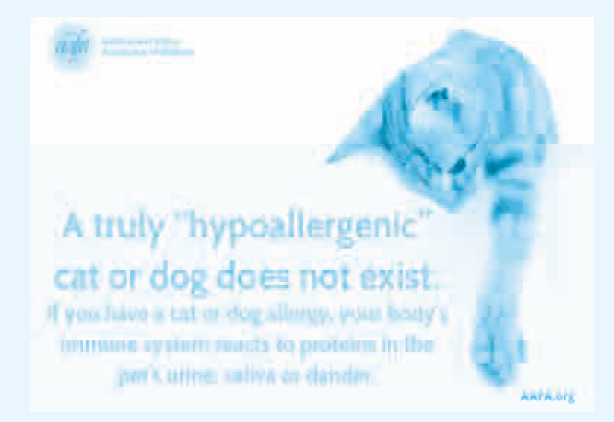
Allergies to pets with fur are common, especially among people who have other allergies or asthma. In the United States, as many as three in 10 people with allergies have allergic reactions to cats and dogs. Cat allergies are about twice as common as dog allergies. Is there such a thing as a hypoallergenic Pet? People with dog allergies may be more sensitive to some breeds of dogs than others. Some people may be allergic to all dogs. People may think certain breeds of dogs are “hypoallergenic,” but a truly non-allergic dog or cat does not exist.

(2)                                                                   

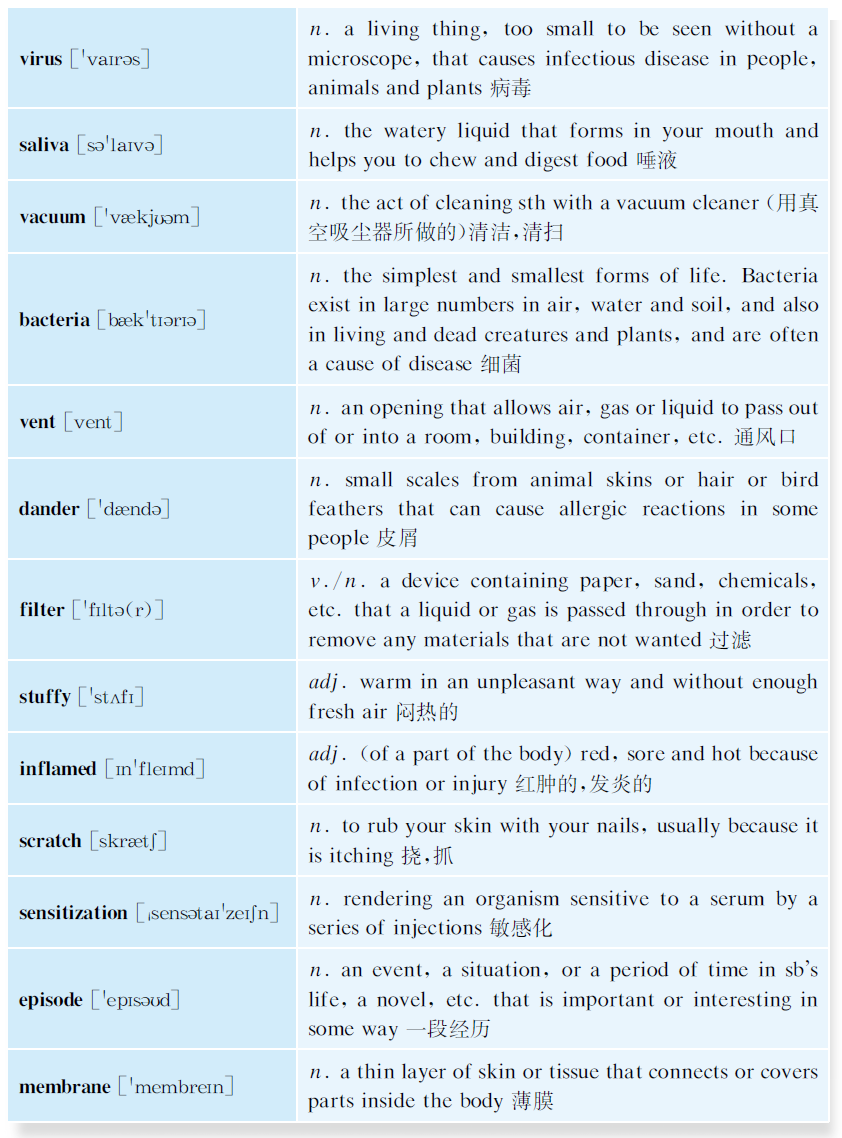
The job of the immune system is to find foreign substances, such as viruses and bacteria, and get rid of them. Normally, this response protects us from dangerous diseases. People with pet allergies have over-sensitive immune systems. They can react to harmless proteins in the pet's urine, saliva or dander (dead skin cells). The symptoms that result are an allergic reaction. The substances that cause allergic reactions are allergens.

Pet allergens can collect on furniture and other surfaces. The allergens will not lose their strength for a long time. Sometimes the allergens may remain at high levels for several months and cling to walls, furniture, clothing and other surfaces.

Pet hair is not an allergen. It can collect dander, urine and saliva. It also can carry other allergens like dust and pollen.

Cat and dog allergens are everywhere. Pet allergens are even in homes and other places that have never housed pets. This is because people can carry pet allergens on their clothing. Also, allergens can get into the air when an animal is petted or groomed. Pet allergens can also be stirred into the air where the allergens have settled. This can happen during dusting, vacuuming or other household activities. Once airborne, the particles can stay suspended in the air for long periods.

(3)                                                                   

Cat and dog allergens can land on the membranes that line the eyes and nose. Reactions include swelling and itching of the membranes, stuffy nose and inflamed eyes. A pet scratch or lick can cause the skin area to become red. It is common to get itchy eyes after petting an animal then touching your eyes.

If allergen levels are low or sensitivity is minor, symptoms may not appear until after several days of contact with the pet.

Many airborne particles are small enough to get into the lungs. For some, this exposure can cause severe breathing problems. Highly sensitive people can begin coughing, wheezing and have shortness of breath within 15 to 30 minutes of inhaling allergens. Sometimes highly sensitive people also get an intense rash on the face, neck and upper chest.

Contact with a cat can trigger a severe asthma episode (asthma attack) in up to three in ten people with asthma. Cat allergies also can lead to chronic asthma.

(4)                                                                   

Your doctor will diagnose a pet allergy based on your symptoms, physical examination, medical history and test results. Your doctor can use either a blood test or skin test to aid in the diagnosis. Allergy testing will show if there is allergic sensitization to the animal.

Some people find it hard to believe that they could be allergic to their pets. The doctor may tell you to stay out of the home where the pet lives to see if your symptoms go away. It does not help to remove the dog or cat, because the allergen will remain. Pet allergens still in the home can cause symptoms months after the animal is gone.

(5)                                                                   

The best treatment is to avoid contact with cats or dogs or the areas where they live. Keep pets out of your home. If possible, try to avoid visiting homes with pets that you are allergic to. Avoiding cats and dogs may give you enough relief that you will not need medicine.

Keeping the pet outdoors will help, but will not rid the house of pet allergens. Another option is to choose pets that do not have fur or feathers. Fish, snakes or turtles are some choices.

Pet allergy can be a social problem making it difficult to visit friends and relatives who have cats and dogs (and sometimes horses and other animals). This may be especially troublesome for children who cannot participate in activities at the home of friends. Talk to your doctor about possible use of medication before these social exposures and specific measures to take after the exposure.

(6)                                                                   

Removing the pet from the home is often the best treatment. However, if you still want to keep your pet, there may be some strategies to reduce exposure. Remove your pet from the bedroom. You spend from one-third to one-half of your time there. Keep the bedroom door closed and clean the bedroom aggressively. You might consider using a HEPA (high efficiency particulate air) air cleaner in your bedroom. Animal allergens are sticky. So you must remove the animal's favorite furniture, remove wall-to-wall carpet and scrub the walls and woodwork. Keep surfaces throughout the home clean and uncluttered. Bare floors and walls are best. If you must have carpet, select one with a low pile and steam clean it frequently. Better yet, use throw rugs and wash them in hot water. Wear a dust mask to vacuum. Vacuum cleaners stir up allergens that have settled on carpet and make allergies worse. Use a vacuum with a HEPA (high efficiency particulate air) filter if possible. Change your clothes after prolonged exposure with an animal. Forced-air heating and air-conditioning can spread allergens through the house. Cover bedroom vents with dense filtering material like cheesecloth. Adding an air cleaner combined with a HEPA filter to central heating and air conditioning can help remove pet allergens from the air. Use an air cleaner at least four hours per day. Another type of air cleaner that has an electrostatic filter will remove particles the size of animal allergens from the air. No air cleaner or filter will remove allergens stuck to surfaces, though. Washing the pet every week may reduce airborne allergens, but is of questionable value in reducing a person's symptoms. Have someone without a pet allergy brush the pet outside to remove dander as well as clean the litter box or cage. Talk to your allergist about options for medicine or immunotherapy.

    (Source: http://www.aafa.org/page/pet-dog-cat-allergies.aspx)