Chapter 5.
How to choose the Business Model?
中文參考課件:
Objectives:
To understand business model creative opportunities
Identify and prevention of entrepreneurial risks
Understand the business model and ideas and methods of business model development
Evaluation of entrepreneurial opportunities
Contents:
1.Identification of creative opportunities
2.Identification of entrepreneurial risks
3.Business model development
"A Business model describes how your company creates, delivers, and capture value"- Steve Blank
A business model is a framework for finding a systematic way to unlock long-term value for an organization while delivering value to customers and capturing value through monetization strategies.
A business plan is a holistic framework to understand, design, and test your business assumptions in the marketplace
The whole concept of business modeling starts indeed by understanding what the customer want. To develop a business model companies need to create value for several stakeholders.
Each company has its own business model for example McDonald’s, the key business model success is the heavily franchised restaurant. The vital component of Coca-Cola is its distribution n strategy.
The primary goal of the business model is to create a long-term sustainable chain, able to unlock value for several players in a market, industry, or niche.
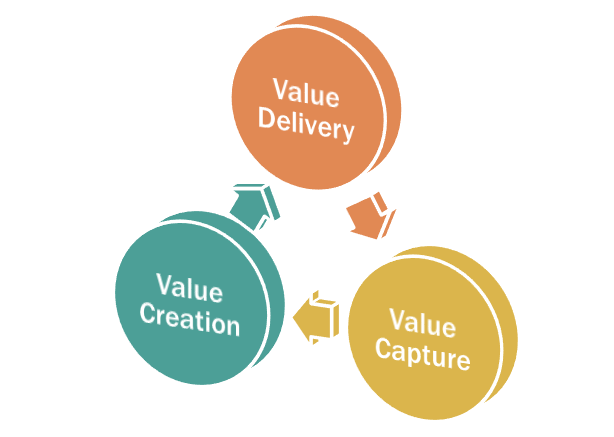
The business model has three core logics
Value Creation
Value Delivery
Value Capture
Value Creation
You create value for your customers with your unique value proposition in order to create an effective value proposition you have to first deeply understand customers' needs and problems. Value can be created in two ways: First by producing an offering( products or service) and second by preventing the production of an offering that is worthless to the market than its production cost.
Value Delivery
Every successful business actually delivers what it promises to its customers. You deliver value to your customers through your solutions- which customers find through your channels. Value delivery depends upon your companies performance.
Value Capture
You capture value back from your customers through your revenue stream. The concept of value creation says nothing about profit. The benefits are measured to the consumer; the costs to the firm—you can't determine profit just from that.