
语法知识——Indefinite Tense(一般时态)
一、 一般现在时(Present Indefinite Tense)
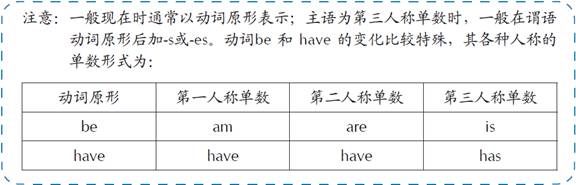
1. 一般现在时通常表示现状、性质、状态和经常性的或习惯性的动作。如:
(1) As a college student, I find that I am more and more in need of a computer.
(2) But I don’t have enough money to buy one.
(3) Asking my parents for help is not a sensible solution.
2. 一般现在时也可以表示客观事实或普遍真理。如:
(1) The sun rises in the east.
(2) A horse is a useful animal.
二、 一般过去时(Past Indefinite Tense)
1. 一般过去时表示过去的动作或状态,这种动作或状态可能只限于一次,也可能是经常性的。如:
(1) On Saturday morning, I went out to look for a job. (一次性动作)
(2) The weather was warm last month.(经常性状态)
2. 一般过去时通常由动词过去式表示。不规则动词的过去式有其特殊形式,规则动词的过去式是在动词原形后面加-d或-ed,具体规则如下:
(1) 一般情况下,动词原形加-ed构成过去式。如:work — worked,want — wanted,play — played。
(2) 如果动词以不发音的-e结尾,其过去式的构成为动词原形加-d。如:live — lived,hope — hoped,move — moved。
(3) 如果动词以辅音字母加-y结尾,其过去式的构成需要将动词末尾的-y变为-i,再加-ed。如:study — studied,cry — cried,try — tried。
(4) 如果动词是以一个辅音字母结尾的重读闭音节词,其过去式的构成则需双写末尾字母,再加-ed。如:stop — stopped,beg — begged,plan — planned。
三、一般将来时(Future Indefinite Tense)
一般将来时表示将来发生的动作或状态,主要有以下几种表示法:
1. shall / will + 动词原形:表示将来发生的动作或状态。如:
(1) I will keep myself clean and tidy.
(2) All right, all right, I’ll give you a try.
2. be going to + 动词原形:常用于口语中,表示打算、决心要做的事情或可能要发生的事情。如:
(1) When are you going to finish your work?
(2) I am afraid I am going to have a bad cold.
3. go,come,leave,start等表示移动的动词可用现在进行时来表示安排或计划好的将来发生的动作。如:
(1) Jack is coming to see us tomorrow.
(2) Professor Young is leaving for Shanghai tonight.
4. be about to + 动词原形:表示即将发生的动作。如:
(1) The party is about to begin.
(2) Autumn harvest is about to start.
5. be to+ 动词原形:表示安排或计划好了的动作,含有职责、义务的意味。如:
(1) You are to be back by 10 o’clock.
(2) We are to meet at the school gate.
视频讲解:
Grammar Tips / Exercises
A. Complete each sentence with the given verb in its indefinite tense.
1. Tom plays (play) football with his friends after school.
2. The classroom has (have) eight big windows.
3. Did you visit (visit) your relatives last Spring Festival?
4. — Did he fly (fly) a kite on Sunday? — Yes, he did .
5. I will give (give) it to you as soon as he comes back.
B. Choose the best answer.
1. Where does your grandparents live?
A. No, they live in the country. B. They lived in the city.
C. They live in the country. D. They used to live in the country.
2. Does Peter go to school by subway?
A. No, he does. B. No, he doesn’t.
C. Yes, on foot. D. Yes, he is.
3. — Did you win the basketball game?
— Bad luck. Our team ________ in the final round.
A. won B. beat C. were won D. were beaten
4. It ________ us a long time to learn English well.
A. takes B. costs C. spends D. will spend
5. The train ________ at 11.
A. going to arrive B. will be arrive C. is going to D. is arriving
Practical Reading and Writing
文档资料:
范例讲解:
写作练习: