
目录

  • 1 第一单元 Company Knowing
    • 1.1 Listening
    • 1.2 Speaking
      • 1.2.1 Tell your company
    • 1.3 Reading
    • 1.4 Language at Work and Class Activity
      • 1.4.1 Extra Learning -body parts in business
      • 1.4.2 Real Estate Problem
    • 1.5 Writing
  • 2 第二单元 Job Hunting
    • 2.1 Listening
    • 2.2 Speaking
      • 2.2.1 Job
    • 2.3 Reading
    • 2.4 Language at Work and Class Activity
      • 2.4.1 Extra Learning Job Titles
    • 2.5 Writing
      • 2.5.1 Letter of application
  • 3 第三单元 Office Activities
    • 3.1 Listening
    • 3.2 Speaking
      • 3.2.1 Extra speaking practice - Phone call
        • 3.2.1.1 Phone Call
      • 3.2.2 telephone glossary
    • 3.3 Reading
    • 3.4 Language at Work and Class Activity
    • 3.5 Writing
  • 4 第四单元 Effective Work
    • 4.1 Listening
    • 4.2 Speaking
      • 4.2.1 Extra Speaking Practice - Report
    • 4.3 Reading
    • 4.4 Language at Work and Class Activity
    • 4.5 Writing
  • 5 第五单元 Workplace Safety
    • 5.1 Listening
    • 5.2 Speaking
    • 5.3 Reading
    • 5.4 Language at Work and Class Actuvity
    • 5.5 Writing
  • 6 第六单元 Workplace Emotion
    • 6.1 Listening
    • 6.2 Speaking
      • 6.2.1 Diplomatic language to express criticism
    • 6.3 Reading
      • 6.3.1 Extre Reading
      • 6.3.2 Mixing Business and Pleasure
    • 6.4 Language at Work and Class Activity
      • 6.4.1 Sentence Making
      • 6.4.2 Read & Answer
    • 6.5 Writing
      • 6.5.1 Letter of Complain
  • 7 第七单元 Produt Introduction
    • 7.1 Listening
      • 7.1.1 listening practice 2
    • 7.2 Speaking
      • 7.2.1 Extra Speaking - Presentation
    • 7.3 Product Presentation
    • 7.4 Reading
    • 7.5 Language at Work and Class Activity
      • 7.5.1 Comparing products
      • 7.5.2 grammar review
      • 7.5.3 Translation
      • 7.5.4 Advertising and prodcutt
      • 7.5.5 Vocabulary
    • 7.6 Writing
      • 7.6.1 Extra Writing Practice
  • 8 第八单元  Career Development
    • 8.1 Listening
    • 8.2 Speaking
      • 8.2.1 Extra speaking practice
    • 8.3 Reading
      • 8.3.1 Extra Reading
    • 8.4 Language at Work and Class Activity
    • 8.5 Writing
  • 9 职场文字沟通能力训练
    • 9.1 Writing  (1)
    • 9.2 Wrting (2)
  • 10 职场英语阅读能力训练
    • 10.1 Reading with Vocabulary
    • 10.2 Reading
  • 11 职场沟通听力能力训练
    • 11.1 Listening
    • 11.2 Audio-Visual and Speaking
    • 11.3 翻转课堂
    • 11.4 机械专业英语图解 Extra Learning
  • 12 课程标准
    • 12.1 课程标准内容
  • 13 授课计划
    • 13.1 授课计划内容
Writing


                              Part four   Writing

E-mail --- onestyle of communications 

 与人沟通的另一种形式---写邮件

 与人沟通是我们生活中不可缺少的元素。而一个得体文字的沟通与交流会提升你在职场中的能力。沟通的形式很多种,而每种形式都有其自身用途。写邮件已经是商务信函不可或缺的一种形态,它已成为日常工作中快速方便的文件收发、商务信函往来的文字交流形式。


一个标准邮件应该是这样的:
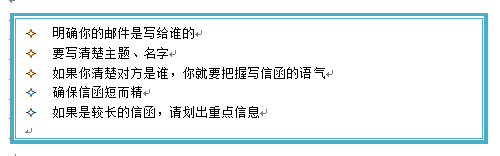
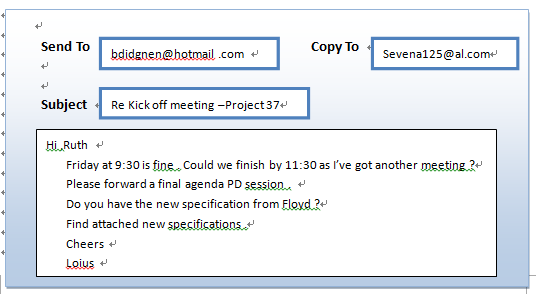
电子邮件不仅仅是一种沟通方式,它还是一个沟通的载体。写电子邮件有多种方式,但用什么形式写要看每个公司的具体要求以及看你是给顾客写商务信函、给下属写备忘录还是给你同事写便条等等。通常给熟悉的同事写信函往往用一些非正式的信函形式,请看下面的例子。
business letter is usually a letter from one company to another, or between such organizations and their customers, clients and other external parties. The overall style of letter depends on the relationship between the parties concerned. Business letters can have many types of contents, for example to request direct information or action from another party, to order supplies from a supplier, to point out a mistake by the letter's recipient, to reply directly to a request, to apologize for a wrong, or to convey goodwill. A business letter is sometimes useful because it produces a permanent written record, and may be taken more seriously by the recipient than other forms of communication.

Task 1  

A Match the opening and closing greetings.

a Dear Sirs                                       1 Takecare

Dear Sir or Madam Best wishes

Ladies and Gentlemen All the best

b Hi Susan                                       2 Yoursfaithfully

Dear Robert and Mary Sincerely (yours)

c Dear Mrs Jones                                 3 (Best/Kind)Regards

Dear Mr Smith Sincerely

B Finish the sentences about the greetingsin 4A.

1 When you don’t know the name of theperson, use ___________ for an opening and             ___________ for a closing greeting.

2 _________is suitable to write when youknow the person by the first name.

3 If you’ve just met the customer, then it’sappropriate to open with _____________ and close with _______________.


 Task 2 Fill in the blanks with the words in the boxbelow