
1 Background
When young students graduate from high school, many of them may decide to go to atechnical school to learn a useful trade, whereas many others may want to go tocollege to continue their education. But what difference is there between these twochoices? Why do many young people go to college or university? What are theseextra years at school for? Young people do not always know the answers. And theseare the questions addressed by Professor Ciardi in this essay based on the speech hegave in an orientation to freshmen.
In this essay, Professor Ciardi started by making a distinction between job trainingand education. Job training is important and is the purpose why many choose to go totechnical schools. But for colleges and universities there is something else other thanjob training. Students must be exposed to ideas generated by mankind in history.Therefore, education is not just training. Training helps young people to learntechnical skills with which they can make a living, while education teaches them howto live. Training can be measured by its money value whereas education makes youngpeople worthy, well-rounded human beings. To put it in another way, training ismainly concerned with the eight hours of work which gives us a pay check andenables us to sustain life and support our family. But education is about the other eighthours when we direct our attention to other things such as art, music, literature,history, religion, philosophy, politics, love, family, friendship and society. We mustunderstand, to have a job does not necessarily mean to be making contributions tosociety automatically; and to make a lot of money does not necessarily mean we arehappy or our life is meaningful. Without proper education we can only be “savageswho happen to know how to push buttons”.
Professor Ciardi is clearly proud of the American liberal arts tradition in colleges anduniversities. He keeps reminding us that these institutions of higher learning serve asgreat storehouses of human wisdom and experience, and young people should treasurethe opportunity to be exposed to the accumulated human knowledge. He particularlyurges young students to read books written by great people in the past so that they canbenefit from their minds, share their experiences, and in this way overcome their ownlimitations.
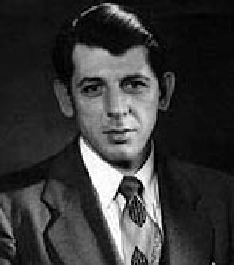
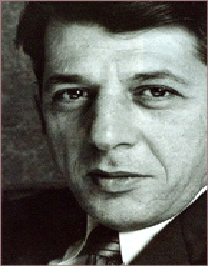
a child of Italian immigrants
Began his career teaching English at the University of Kansas City
Joined the US Air Force in 1942, served as a gunner in fighter planes
went on to teach at Harvard University in 1946
in 1953 accepted a position at Rutgers University
in 1961, gave up teaching and devoted himself to his own literary endeavors.
This text is chosen because we compilers feel that the writer has touched upon a very important problem: the purpose of school education. We are not always really clearwhat education is about, taking for granted that this is something students andteachers must do if they want to survive. No schooling, no diploma; no diploma, nojob; and no job, no money. The most popular logo for universities is to claim they are“a cradle of engineers”, “a cradle of lawyers”, “a cradle of business CEOs” or “acradle of ambassadors”. Only very recently have people once again started toemphasize the importance of developing fully-grown and well-rounded human beings.
We do not think the writer has given an in-depth analysis of the problem. Nor has heexplained convincingly enough why students need to know art, literature, etc. Onemay perhaps also disapprove of his generally sarcastic tone when he describes thatstudent. And although he does not mean to play down the role played by technicalschools, he still gives us the impression that he thinks colleges are far superior. Webelieve that our students and teachers can offer much stronger arguments for the valueof education, based on our own experience.
2 Structure
The text can be conveniently divided into two parts. In the first part (paras. 1–8), thewriter describes his encounter with a student of his. He tried but failed to convince thestudent that a pharmacy major needs to read great writers. In the second part (paras.9–14), he restates, fourteen years later, what he still believes to be the purpose of auniversity: to put its students in touch with the best civilizations the human race hascreated.
I. The writer’s encounter with a student (paras. 1–8)
1. A student came to his office to question the use of the course he was teaching.(para. 1)
2. The writer wanted to tell him that a university offers both training and education.(para. 2)
3. The writer tried to explain the importance of education by describing to the student how he would spend his 24-hour day after college. (paras. 3–6)
1) He would sleep for about eight hours. (paras. 3–4)
2) He would work for another eight hours using what he had learned at college.
(para. 5)
3) He should spend his leisure time improving his mind and developing a taste in music, art, and literature. (para. 6)
4. The student was not convinced and said he attended college only to make money. (paras. 7–8)
II. Fourteen years later, his conviction about the purpose of a university remains the same. (paras. 9–14)
1. A university does not train mechanized savages but specialists armed with what thebest human minds have thought. (para. 9)
2. At university, students learn what great scholars have discovered in the past. (paras. (10–11)
3. To be well developed human beings and useful members of society, students should read great books. (paras. 12–13)
4. In summary, the purpose of a university is to produce specialists who are alsocivilized humans. (para. 14)
3 Style
As it is originally a talk, the writer adopts a basically colloquial and familiar style. Asyou read, you feel as if the professor is talking to you face to face. To recreate thescene of his encounter with the tall boy in his office, he uses direct speech. This way,the reader can imagine the ignorance and arrogance of the student. The sentencestructure is generally not very complicated. But there are a few long and involvedsentences in the second part of the text, for example, the last sentence of Paragraph 12,and the two very long ones in the last paragraph.
The tone in the first part is humorous and mildly sarcastic. The student is referred to as “a beanpole with hair on top”, “this specimen” and “this particular pest”.

