目录

  • 1 General information
    • 1.1 Syllabus
    • 1.2 Overview
      • 1.2.1 Learning objectives
      • 1.2.2 Learning contents
      • 1.2.3 Learning activities
      • 1.2.4 Schedule
        • 1.2.4.1 Online schedule
        • 1.2.4.2 Offline schedule
      • 1.2.5 Grading policy
      • 1.2.6 Office hour
    • 1.3 Ap knowledge
    • 1.4 Platform usage guideline and technical support
  • 2 Nomenclature
    • 2.1 Nomenclature
    • 2.2 Inorganic compounds
    • 2.3 Organic compounds
  • 3 Atom
    • 3.1 Basic Atomic Theory
    • 3.2 Evolution of Atomic Theory
    • 3.3 Atomic Structure and Symbolism
    • 3.4 Isotopes
    • 3.5 Early development of the periodic table of elements
    • 3.6 Organization of the elements
  • 4 Atoms: the quantum world
    • 4.1 Wave Nature of Light
    • 4.2 Quantized Energy and Photons
    • 4.3 the Bohr Model
    • 4.4 Wave Character of Matter
    • 4.5 Atomic Orbitals
    • 4.6 3D Representation of Orbitals
    • 4.7 Many-Electron Atoms
    • 4.8 Electron Configurations
  • 5 Chemical Bonds
    • 5.1 Prelude to Chemical Bonds
    • 5.2 Lewis Electron Dot Diagrams
    • 5.3 Ionic Bonds
    • 5.4 Covalent Bonds
    • 5.5 Other Aspects of Covalent Bonds
    • 5.6 Violations of the Octet Rule
  • 6 Molecular Shape and Structure
    • 6.1 VSEPR theory
    • 6.2 Hybridization
      • 6.2.1 sp3 hybridization
      • 6.2.2 sp2 hybridization
      • 6.2.3 sp hybridization
      • 6.2.4 Other hybridization
    • 6.3 Multiple Bonds
    • 6.4 Molecular Orbitals
    • 6.5 Second-Row Diatomic Molecules
  • 7 Properties of Gases
    • 7.1 Property of Gases
    • 7.2 新建课程目录
  • 8 Fundamentals of Thermochemistry
    • 8.1 Systems, States and Processes
    • 8.2 Heat as a Mechanism to Transfer Energy
    • 8.3 Work as a Mechanism to Transfer Energy
    • 8.4 Heat Capacity and Calorimetry
    • 8.5 The First Law of Thermodynamics
    • 8.6 Heats of Reactions - ΔU and ΔH
    • 8.7 Indirect Determination of ΔH - Hess's Law
    • 8.8 Standard Enthalpies of Formation
  • 9 Principles of Thermodynamics
    • 9.1 The Nature of Spontaneous Processes
    • 9.2 Entropy and Spontaneity - A Molecular Statistical Interpretation
    • 9.3 Entropy Changes and Spontaneity
    • 9.4 Entropy Changes in Reversible Processes
    • 9.5 Quantum States, Microstates, and Energy Spreading
    • 9.6 The Third Law of Thermodynamics
    • 9.7 Gibbs Energy
  • 10 Chemical equilibrium
    • 10.1 Equilibrium
    • 10.2 Reversible and irreversible reaction
    • 10.3 Chemical equilirbium
    • 10.4 Chemical equilibrium constant, Kc
    • 10.5 Le Chatelier's principle
      • 10.5.1 Haber process
    • 10.6 RICE table
      • 10.6.1 Calculating Equilibrium Constant Values
  • 11 Acid–Base Equilibria
    • 11.1 Classifications of Acids and Bases
    • 11.2 Properties of Acids and Bases in Aqueous Solutions
    • 11.3 Acid and Base Strength
    • 11.4 Buffer Solutions
    • 11.5 Acid-Base Titration Curves
    • 11.6 Polyprotic Acids
    • 11.7 Exact Treatment of Acid-Base Equilibria
    • 11.8 Organic Acids and Bases
  • 12 Kinetics
    • 12.1 Prelude to Kinetics
    • 12.2 Chemical Reaction Rates
    • 12.3 Factors Affecting Reaction Rates
    • 12.4 Rate Laws
    • 12.5 Integrated Rate Laws
    • 12.6 Collision Theory
    • 12.7 Reaction Mechanisms
    • 12.8 Catalysis
Property of Gases

Property of Gases

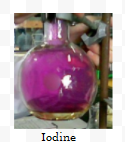
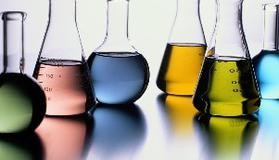
Why does the average person often overlook the presence of gases? Probably because the properties of gases are so unobtrusive. All gases are transparent, and most are colorless. The major exceptions to the second half of this rule are fluorine, F2, and chlorine, Cl2, which are pale yellow-green; bromine, Br2, and nitrogen dioxide, NO2, which are reddish brown; and iodine, I2, which is violet.
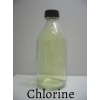
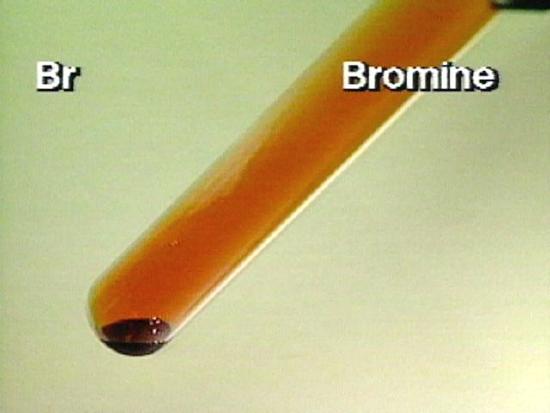
  

Image credits of the Chlorine Image: By W. Oelen (http://woelen.homescience.net/science/index.html) [CC BY-SA 3.0 (http://creativecommons.org/licenses/by-sa/3.0)], via Wikimedia Commons

Another important property of all gases is their mobility. Every gas will disperse to fill all space, unless prevented from doing so by a solid or liquid barrier or a force. (The force of earth’s gravity, for example, prevents air from escaping our planet.)
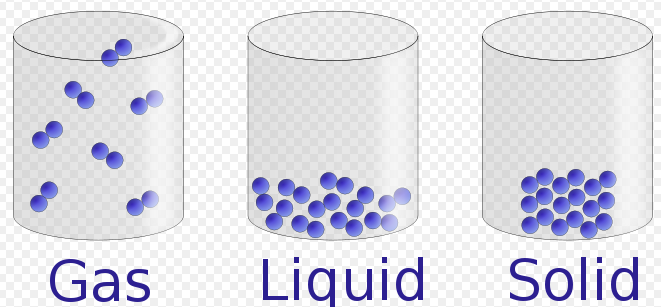

Illustration of the three different states of matter with circles in a beaker. The beaker labeled Gas has circles spread far apart occupying the entire beaker. The next beaker labeled liquid has circles that are still in a random order but are significantly closer to each other at the bottom of the beaker. The last beaker labeled Solid has an ordered arrangement of the circles tightly packed together.
Figure 1 Unlike solids and liquids, which have a definite shape, gases expand to fill the shape of their container, as can be seen from the image above.


Image source: By Yelod - Wikimedia Commons * Yelod - Wikipedia (En) [CC BY-SA 3.0 (http://creativecommons.org/licenses/by-sa/3.0)], via Wikimedia Commons

Moreover, gases are capable of escaping through small holes (pores) in barriers such as plaster of paris or a balloon, even though the human eye sees such materials as continuous and impenetrable. The mobility of gases is also demonstrated by the minimal resistance they present to objects moving through them. You can wave your hand through air much more easily than you can through any liquid.

A third general characteristic of gases is their wide variation in density under various conditions. Densities of solids and liquids change by only a few percent when temperature or pressure is doubled or halved. Similar changes in the conditions of a gas can alter its density by a factor of 2. This occurs because the volume of any gas increases greatly with an increase in temperature or with a reduction in pressure.

This third characteristic is related to gases abilities to compress and expand. The variable density of gases is made possible by their ability to change volume. This property of gases makes them very versatile, allowing gases to be compressed for storage or heated and expanded to drive a piston (as in an engine).