Nomenclature
Learning Objectives:
Derive names for common elements
Chemical nomenclature is the names we use for chemicals. For instance, H2O is called "water", and CH4 (the gas you burn in a stove) is called "methane." You should learn the chemical nomenclature here on this page now, so that you will be able to understand when it is used.
The basics
Here is some important info about how we write chemicals.
Elements have symbols of one or two letters. The first is a capital letter (ABC). If there is a second letter, it is a lower-case letter (abc). For instance, "m" is one unit, and "M" is a different unit. "K" is the symbol for one type of constant, and "k" is the symbol for a different type. You need to remember that capital letter symbols are usually different from lower-case symbols. For instance, Co is cobalt, a metal element next to iron, and CO is carbon monoxide, a poisonous gas made of one carbon atom and one oxygen atom.

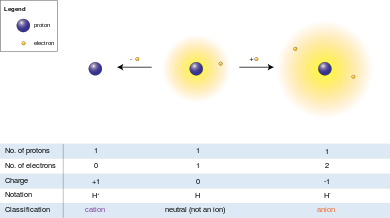
We write the charge of a chemical using a superscript, which looks like this: H+or H–. If we write just H, that means an H atom, which is one proton and one electron. H+ means 1 H atom – 1 electron, so it means just one proton, also called hydrogen ion. If we write H– this means one hydrogen atom + one electron, so a proton and 2 electrons, also called hydride ion. If there's an number in the superscript, that says how many electrons are added or removed. For instance, Ca2+ is a calcium atom – 2 electrons, or calcium ion. S2– is sulfide, or sulfur + 2 electrons.
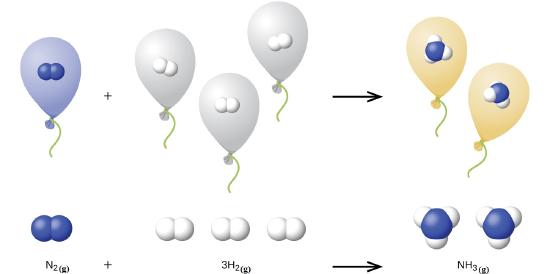
We indicate the number of atoms of a particular type using a subscript, like this: CO2. This means one carbon atom and 2 oxygen atoms. If we write O2 that means the oxygen molecule, which is two atoms of oxygen connected together. Sometimes people might write O2 to mean the same thing. If the number comes first, though, it has a different meaning. 2 O means 2 atoms of oxygen that aren't connected to anything.

If we want to show how many protons and neutrons are present in an atom, we can use the mass number, as a superscript before the element symbol, such as13C. This means carbon with (protons + neutrons) = 13. You can tell that this is different from the charge, because the charge will always include + or – and come after the symbol.

Most molecules or ions that are stable have an even number of electrons. If they have an odd number of electrons, this is called a radical. For instance, H is a radical, because it has one electron. Because this is unusual, it might be indicated with a dot, like this: H•. For instance, water is H2O, and if you remove hydrogen ion, you are left with hydroxide ion, OH–. If you remove H• from water, you are left with OH molecule, which is neutral. This is also called hydroxyl radical, written OH•.
The phase of a substance is often indicated by a letter in () after the symbol. For instance, He is almost always a gas, written He(g). If it's a liquid (4.2K or below, less than -269° C) that is written He(l). You'll probably never hear about He(s), since it would be very hard to make it a solid. You might also see something written with (aq), which means "dissolved in water." For instance, NaCl(aq) means salt dissolved in water so there is no solid left. Or you might just see K+(aq), meaning potassium ions dissolved in water.
Elements
There are lots of elements and you don't need to memorize them all. Here are a few that you should learn right now, though, because they are common or important, so that you won't be confused when they are mentioned later. They are organized by their type.
Non-metals
Light elements: the elements with smallest mass
Hydrogen (H): exists as H2 or in combination with other elements, such as in water
Helium (He): named after the sun, because it was discovered in the sun before being discovered on Earth (we'll explain how later); it doesn't react with anything
Major gases in air
Oxygen (O): we get most of our energy from reactions with oxygen, when we breathe or when we burn fuel; O2 is 21% of air
Nitrogen (N): often the limiting factor for agriculture or population growth, even though N2 is 78% of air, because it only reacts under special circumstances.
Halogens: reactive elements that make salts; common negative ions
Fluorine (F): the lightest halogen and most reactive element in the periodic table, people say that it killed the first two chemists who tried to isolate F2
Chlorine (Cl): part of normal salt, NaCl, it is common in the ocean and in your body
Bromine (Br): one of only two elements that are liquid at room temperature, bromine is also found in salts and minerals
Iodine (I): a soft, shiny silver solid that easily evaporates to a purple gas, iodine can be used to disinfect cuts and is essential for human brains, suggesting that humans may have evolved to live near the ocean, which provides sources of iodine in fish and seaweed
Main group solid non-metals: non-conductive and usually soft materials
Carbon (C): the element on which biology is based, also found in diamond, graphite, coal, and charcoal
Silicon (Si): the basis of the electronics industry; also a main component of sand, glass, and most rocks
Sulfur (S): a smelly yellow solid, used to make strong acid in industry, also common in minerals and essential to life
Phosphorus (P): first isolated from urine, although common in minerals; essential for life, often glows
Metals: soft or hard, light or heavy, usually solid electric conductors
Alkali metals: soft, light, common soluble positive ions
Lithium (Li): the lightest alkali, used in batteries and anti-depressants
Sodium (Na, you may know it as natrium): common in the ocean and salt
Potassium (K, you may know it as kalium): also common, high concentration inside cells
Alkaline Earth metals: like alkalis, but less so, less reactive, less soluble, positive ions more common in rocks, but also abundant in ocean
Magnesium (Mg): common in rocks, essential for life, especially photosynthesis
Calcium (Ca): common in biomaterials such as bone, tooth, and shells, also essential for muscles
Main group metals
Aluminum (Al, also called aluminium): requires lots of energy to produce the metal from the mineral sources, but very common and useful metal
Tin (Sn, from Latin stannum): used since ancient times, especially in alloys such as bronze; still used in solder and many other applications
Lead (Pb, from Latin plumbum): very heavy, soft, sweet-tasting toxic metal, commonly used since ancient times, now used to shield radiation and in bullets, among many other uses
Transition Metals: a widely varied group, often characterized by complex chemical properties
Iron (Fe, from Latin ferrum): most abundant element on earth, essential in steel, with complex reaction properties essential to life
Copper (Cu, from Latin cuprum): less reactive metal, with characteristic colors, commonly used in coins and electronics
Silver (Ag, from Latin argentum): used in jewelry, coins and other ornaments and utensils since ancient times, it didn't tarnish until after the industrial revolution, and now also used in electronics
Gold (Au, from Latin aurum): used since ancient times in coins and jewelry, to color stained glass, also in dentistry and other applications
Mercury (Hg, from Latin hydrargyrum): also called quicksilver, because it is a silver liquid, it is toxic but very important in the history of science; it may be familiar from thermometers

