Reading and writing
一、教材分析
本课教学内容选自教材Unit 6读写部分,要求学生能读懂关于中国古代工匠的故事,写出中国工匠楷模的故事,能读懂介绍中外各国工匠精神的文章,并能就关键信息做对比分析。从而了解中西方文化,解读工匠精神的不同侧重点,继承中国传统文化。
二、学情分析
经过前两节课的学习,学生已能用自己的语言正确描述职业品质和职业精神。学生基本了解了工匠精神的内涵,但对于对中国古代工匠故事了解还有待提升,对中西方工匠精神的侧重缺乏差异对比分析和系统认识。还不能完整的书写出中国工匠楷模的故事。
三、教学目标
1. 学生能读懂中国古代工匠的故事,学习古代工匠精神;
2. 学生能提取故事信息,写出中国工匠楷模故事;
3. 通过对比分析,学生能理解不同国家对工匠精神的侧重和行为规范,客观地看待中西方的文化差异,传播中华优秀敬业精神和工匠精神;
四、教学重点、难点分析
教学重点:学习运用叙述故事发展的句型,以及表述故事寓意的句型,就古代工匠故事进行简单写作。
教学难点:对比中西方工匠行为规范的异同;能讲述中国当代大国工匠的故事和优良品质。
五、教学过程
Before class:
* 1. 拓展活动: 课前布置学生上网搜索与“庖丁解牛”类似的古代工匠成语故事,例如:“胸有成竹”“百步穿杨”“卖油翁”等。下载介绍故事的视频,或打印故事来源的文章。
During class:
Step 1 Pre-reading
1. Think and discuss. 处理教材活动9。
(1) 学生展示课前准备的古代工匠故事“庖丁解牛”“胸有成竹”“百步穿杨”等(视频播放或故事来源简介)。
*(2)拓展活动:讨论这些故事告诉我们什么道理,交流反馈。为后续阅读活动做铺垫。
(设计意图:本环节培养学生课前利用网络资源自学的习惯,进一步加深对中国古代工匠的精神正确理解,从而为阅读理解下文中的故事情节和故事寓意做铺垫,降低理解难度。也为讲述中国古代工匠故事提供素材)
Step 2 While-reading
1. Read and choose.
处理教材活动10,可分两步:
(1)学生快速阅读理解三个备选标题,理解标题意思,明确阅读任务。老师简单讲解标题中的生僻词汇。
(2)快速阅读:学生选择快速阅读策略,理解故事大概,选择故事标题。在语境中理解核心词汇的意思和词性及用法:butcher屠夫、解剖(名词&动词),
* (3) 拓展活动:查读第一段,并回答问题:
What was Ding?(a cook)
What was Ding asked to do?(butcher a cow)
How is Ding’s skill?(amazing)
2. Read and complete.
(1)处理教材活动11。学生根据任务要求和提示时间再读文段2,补全庖丁经历的三个技艺发展阶段。学生选择查读策略,老师核对答案,查看学生是否理解填入信息,并解释词汇意思和句型结构。检查学生是否理解文本第二段的短语和固定搭配,学生运用语块学习法,或词组搭配学习法理解提示语的句型和语言表达。
The whole cow---the structure---use mind,
从句knowing where every bone and joint is and where to cut exactly.
(2)处理教材活动12。读前教师带领学生理解庖丁成功的三个因素。学生根据任务要求细读文段2,找出对应成功因素的具体做法,完成信息表。教师核对答案,并检查学生对词块语块的理解,尤其是固定短语的理解。简单解释过去完成时的结构及概念,对比过去时的特征和用法。
took up/be at sth./a number of/no longer/ever since then/stop doing/instead
take-took-taken
be-was/were/been
see-saw-seen
* 3. read and underline
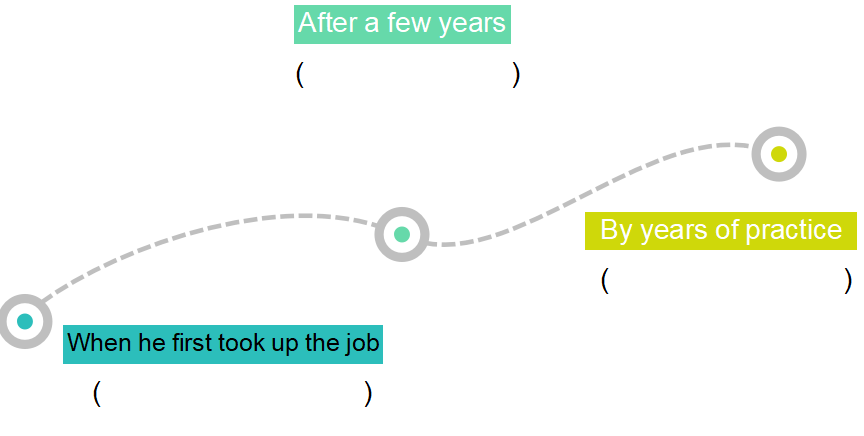
拓展活动:学生依据上面三个阶段的表达,归纳按时间的顺序讲述故事发展的过程。根据活动11、12,用下划线在文本中划出叙述结构的起始句,学习讲述故事的结构和方法。
When I first took up the job, what I saw was...
After I had been at it for...and butchered ...,what I saw was...
Ever since then,I stopped...and used...,knowing...
(设计意图:本环节借助查找关键信息、寻找支撑语句等一系列活动,侧重培养学生在阅读过程中通过查读寻找关键表达,利用语块学习法细读,对比分析句型结构、分析并提炼叙述结构和叙述起始句,从而解读文本内涵的能力,学习阅读技巧和学习方法,以及按时间顺序讲述故事的结构和方法。)
Step 4 Post-reading
1. Compare and discuss
*(1)铺垫活动:学生跟录音大声齐读最后一段文字,让学生找出“庖丁解牛”故事的寓意,并划出表述寓意的句型。学生利用学案自学生僻词汇practice/excellence/continued的意思和用法。
Even today,his story is till told to show that a good craftsman comes from continued practice.
(2)处理教材活动13。学生阅读理解以下4种做法。勾出和庖丁的精神相符的表述,并说明原因。(任务前教师发给学生学案,用下划线划出语块,学生查找学案中词块的意思,降低理解难度。)教师核对答案,检查学生对生僻词汇的理解和掌握情况。
1√) Li Nan majors in vehicle repair and he has repaired more than 100 old cars. His work uniform often has oil stains but he doesn’t care about it.
2) Steven has been a welder trainee for 2 months, and he just welded what was handed to him without careful thinking.
3√) John is a good maintenance worker. He not only knows how to fix electrical equipment, but also their working principles.
4) Li Mei has been a costume designer for 3years. She worked hard but didn’t receive any honors so far. She is disappointed and wants to quit.
1. Have 100 cars repaired Ding :by years of practice | 3.not only know how to fix but also know work principles Ding :understand the rules and use them flexibly |
2.without thinking Ding:used my mind stead | 4. Is disappointed and want to quit Ding:keep practicing |
(设计意图:本环节通过分析现代不同职业人的做法,对比庖丁的做法,在此基础上进一步理解判断庖丁精神,培养学生分析关键信息,进行推理判断的思维能力。培养学生语块学习法,利用学案培养学生自学能力)
Step 5 Writing
1. Read and write.
*(1)铺垫活动:找出课文描述庖丁解牛故事用到的关键句型。(教师给出信息点:who, when, what happened,what methods,what skills or excellence he got)
l a cook named Ding was asked to butcher a cow for King Hui.
l once upon a time=in ancient time
l the movements ere graceful,like dancing to music
l the sound of the knife between the bones was like a whisper.
l by years of practice,
l know the structure of the cow
l I stopped using eyes and used the mind instead.
l know where to cut exactly.
(2)完成写作:处理教材活动14。学生利用自己的语言,从五个要素重组语言点,讲述庖丁解牛的故事,完成邮件。
参考答案:
From Emma
To Mary
Subject A Chinese Story of Ding Butchering a Cow
Dear Mary,
Recently I have learned about a story. It’s about a cook called Ding in ancient China. He was ordered by King Hui to butcher a cow. His movement was as beautiful as dancing to music. The King was astonished. Ding told the King he had practiced for several years. He was so clear about the structure of a cow the he used his mind to cut exactly. That’s why the cook finally achieved excellence in butchering. Are there similar stories in your country? Just tell me!
Sincerely yours,
Emma
(3)学生小组分享写作,师生分别进行评价。
写作评价标准 |
(1)描述故事的词汇与句型的使用是否正确? |
(2)所描述的内容是否满足讲述工匠故事的六个要素(时间,人物,工作过程,工作方法,工作效果和技能)? |
(3)行文思路是否清晰且符合逻辑? |
(4)语法运用是否正确? |
(5)单词拼写是否正确,标点符号使用是否规范? |
(设计意图:本环节是写作活动,教师引导学生在反复研读阅读材料的基础上,运用所学语言知识进行重写,练习讲述故事的逻辑思维,训练学生重组语言的思维能力,体验写作的方法。)
Step 6 Culture Understanding
学生阅读文本Craftsmanship Across Countries,对比德国、日本、中国三个制造业大国的工匠精神。完成信息表:
What are the characteristics of the craftsman spirit in different countries? |
Germany | 参考答案: l Products are well-built and durable l German are serious and strive for perfection l Quality is the life of products l Pay attention to technology and work ethic |
Japan | 参考答案: l See their work as their first duty and remain loyal l Continued learning and creating l Love the work they do l Work hard l Try their best to do it perfectly |
China | 参考答案: l art apprentice system from ancient time l Master taught apprentices skills and passed on the spirit of being hard-working, creative and dedicated through words and deeds. l Still carry forward craftsmanship and strive for excellence. |
(设计意图:本环节是中西方文化的对比活动,教师引导学生研读阅读材料的基础上,找出核心信息,并以列表的方式直观对比各国工匠精神和行为规范。开拓学生视野,学习中国传统的工匠文化。)
Step 7 Conclusion
1. 教师利用PPT的动画功能,闪现生词和语块,复习检查学生是否能正确阅读单词,是否能说出词汇的正确意思。
2. 总结三段式文章写作结构:
第一段 | 讲述时间,工匠人物,工匠故事过程 |
第二段 | 按时间顺序讲述工匠发展的三个阶段 |
第三段 | 总结工匠精神和启发 |
3. 用思维导图总结优秀的工匠精神,和成功因素。
Step 8 Homework.
学生选择自己喜欢的工匠楷模,用英语写出中国人自己的工匠故事,总结工匠的成功经验和工匠精神。可以写文字故事在作业本上,也可下载工匠楷模的视频,给视频配音介绍楷模故事分享班群。

 、
、
