
国际商务函电

邓来英、周彬

目录

  • 1 Fundamental of Business Communication
    • 1.1 Parts of a business letter
    • 1.2 Princinples of business writing
    • 1.3 Other commonly used methods of communication
    • 1.4 Translation of the text and keys to the exercise
  • 2 Establishing Business Relations
    • 2.1 Business Knowledge
    • 2.2 Case Study
    • 2.3 Skill training
    • 2.4 Role play (sample)
    • 2.5 Typical sentences
    • 2.6 Translation of the text and keys to the exercise
  • 3 Business Negotiations
    • 3.1 Enquiry
      • 3.1.1 Business knowledge
      • 3.1.2 Case study
      • 3.1.3 Skill training
      • 3.1.4 Typical sentences
      • 3.1.5 How to complete pair work through wechat
    • 3.2 Offer
      • 3.2.1 Business knowledge
      • 3.2.2 Case study
      • 3.2.3 Skill training
      • 3.2.4 Typical sentences
    • 3.3 Counter offer
      • 3.3.1 Business knowledge
      • 3.3.2 Case study
      • 3.3.3 Skill training
      • 3.3.4 Typical sentences
    • 3.4 Translation of the text and keys to the exercise
  • 4 Sending Samples
    • 4.1 Business knowledge
    • 4.2 Case study
    • 4.3 Skill training
    • 4.4 Typical sentences
    • 4.5 Translation of the text and keys to the exercise
  • 5 Signing a Contract
    • 5.1 Business knowledge
    • 5.2 Case study
    • 5.3 Skill training
    • 5.4 Typical sentences
    • 5.5 Translation of the text and keys to the exercise
    • 5.6 Sample vedios for group work
  • 6 Terms of Payment
    • 6.1 Business knowledge
    • 6.2 Case study
    • 6.3 Skill training
    • 6.4 Typical sentences
    • 6.5 Translation of the text and keys to the exercise
  • 7 Packing
    • 7.1 Business knowledge
    • 7.2 Case study
    • 7.3 Skill training
    • 7.4 Typical sentences
    • 7.5 Translation of the text and keys to the exercise
  • 8 Insurance
    • 8.1 Business knowledge
    • 8.2 Case study
    • 8.3 Skill training
    • 8.4 Typical sentences
    • 8.5 Translation of the text and keys to the exercise
  • 9 Shipment
    • 9.1 Business knowledge
    • 9.2 Case study
    • 9.3 Skill training
    • 9.4 Typical sentences
    • 9.5 Translation of the text and keys to the exercise
  • 10 Complaints and Claims
    • 10.1 Complaints
    • 10.2 Claims
    • 10.3 Adjustment
    • 10.4 Translation of the text and keys to the exercise
  • 11 Supplementary Knowledge
    • 11.1 Skills on the translation of Business Cmmunication
      • 11.1.1 How to translate "请"
      • 11.1.2 How to translate numbers and dates
    • 11.2 Tactics on Business Negotiation
      • 11.2.1 Tactis 1
      • 11.2.2 Tactics 2
    • 11.3 Business Etiquettes
      • 11.3.1 Exhibition Etiquettes
      • 11.3.2 Business Dressing
  • 12 Final exams
    • 12.1 Sections to be tested
    • 12.2 The Make up Exam
Business knowledge


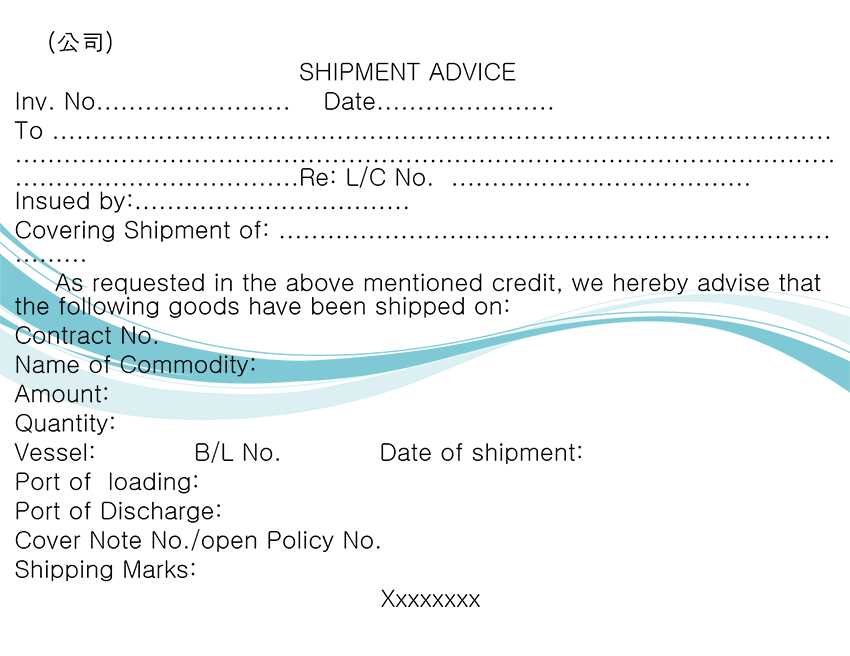
Shipment

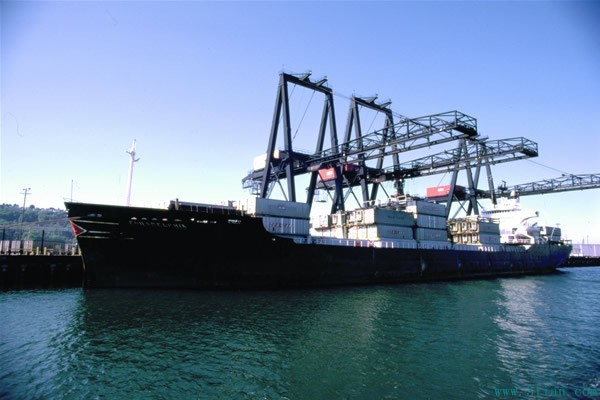
Shipment refers to the carriage of the goods from the seller to the buyer, and is  realized by sea transport services.

Usually there are three parties concerned: the consignor(发货人), the consignee(收货人) and the carrier(船运公司). The carrier can be liner(班轮) and tramp (不定期货船).

Useful expressions of shipment

1. 定期装运、近期装运和不定期装运。

㈠ 定期装运即明确规定具体期限 

限于某月或某几个月内装运。

for shipment during September and October in 2015 (2015年9月,10月装运)

限于某月某日前装运。

shipment on or before 15 November 2015 (2015年11月15日之前装运)

㈡ 近期装运:采用某些术语表示装运期

immediate shipment立即装运prompt shipment即期装运 shipment as soon as possible

㈢ 不定期装运即规定在收到信用证后若干天装运。

Shipment should be made within 30 days after receipt of the L/C.
simple
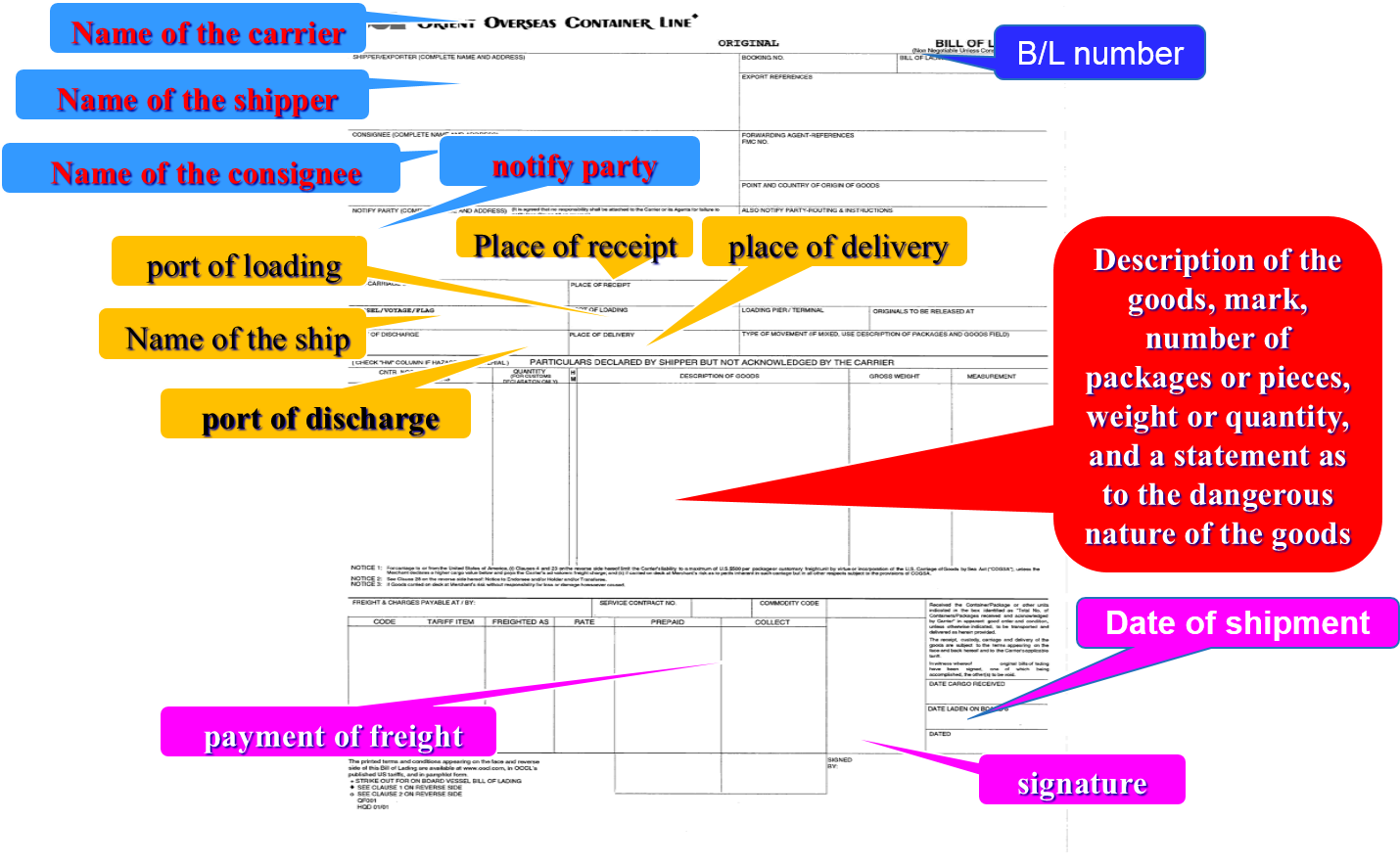
Bill of Lading

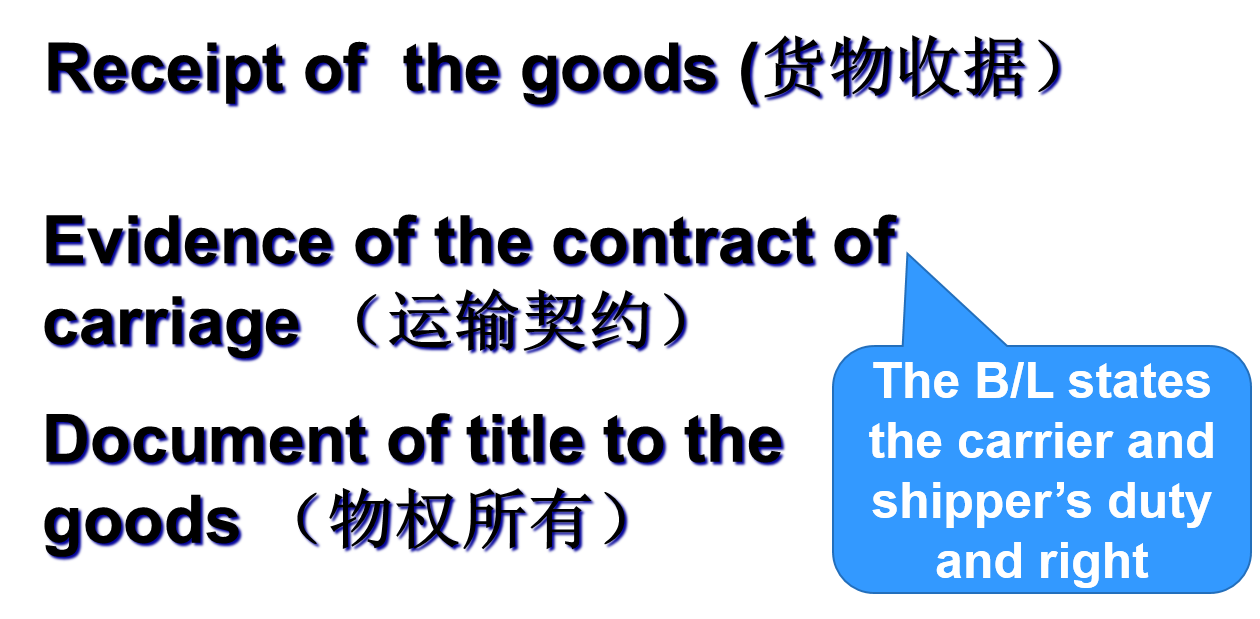
A Bill of Lading is a transportation document which is issued by an ocean carrier to a shipper with whom the carrier has entered into a contract for the carriage of goods.

The B/L is normally made out in three sets, which means three originals.

Features:

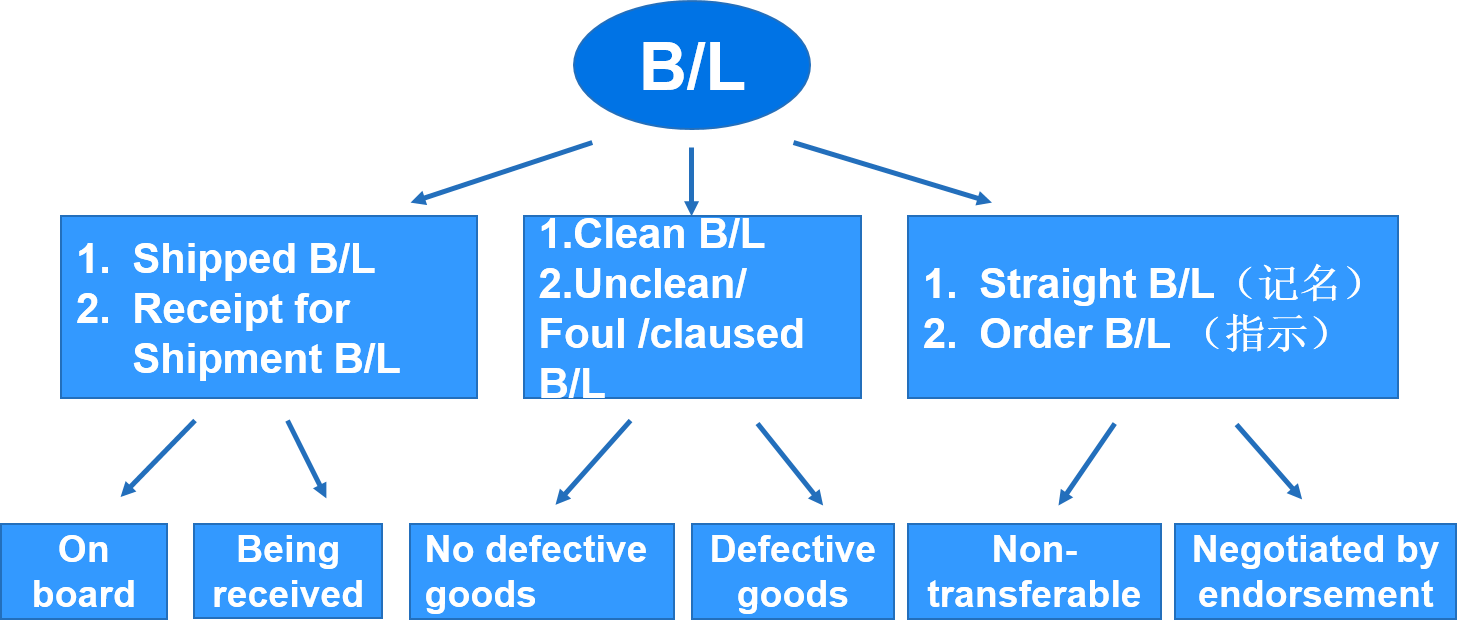
2.Classification of B/L

3.Sample