目录

  • 1 3.1 Storage Part I
    • 1.1 教学PPT
    • 1.2 交叉材料
    • 1.3 学生作业精选
  • 2 3.1 Storage Part II
    • 2.1 教学PPT
    • 2.2 交叉材料
    • 2.3 学生作业精选
  • 3 3.2 Tank Classification
    • 3.1 教学PPT
    • 3.2 交叉材料
    • 3.3 学生作业精选
  • 4 3.3 Floating Roofs
    • 4.1 教学PPT
    • 4.2 交叉材料
    • 4.3 学生作业精选
  • 5 3.4 Tank Emissions and Venting
    • 5.1 教学PPT
    • 5.2 交叉材料
    • 5.3 学生作业精选
  • 6 3.5 Fire Prevention and Foam System
    • 6.1 教学PPT
    • 6.2 交叉材料
    • 6.3 学生作业精选
  • 7 2.1 Types of Pipelines
    • 7.1 教学PPT
    • 7.2 交叉材料
    • 7.3 学生作业精选
  • 8 2.2 Other Pipelines & 2.3 Line Pipes
    • 8.1 2.2 Other Pipelines
    • 8.2 2.3 Line Pipes
    • 8.3 交叉材料
    • 8.4 学生作业精选
  • 9 2.4 Pumps and Pump Stations
    • 9.1 教学PPT
    • 9.2 交叉材料
    • 9.3 学生作业精选
  • 10 2.5 Compressors
    • 10.1 教学PPT
    • 10.2 交叉材料
    • 10.3 学生作业精选
  • 11 2.6 Pipeline Pigging
    • 11.1 教学PPT
    • 11.2 交叉材料
    • 11.3 学生作业精选
  • 12 3.1 Causes of Underground Corrosion
    • 12.1 教学PPT
    • 12.2 交叉材料
  • 13 3.2 Cathodic Protection Fundamentals
    • 13.1 教学PPT
    • 13.2 交叉材料
  • 14 3.3 Pipeline Corrosion & 3.4 Tank Corrosion
    • 14.1 3.3 Pipeline corrosion
    • 14.2 3.4 Tank corrosion
    • 14.3 交叉材料
    • 14.4 学生作业精选
  • 15 4.1 Metering Gases
    • 15.1 教学PPT
    • 15.2 交叉材料
  • 16 4.2 Metering of Liquids
    • 16.1 教学PPT
    • 16.2 交叉材料
  • 17 Planet Oil
    • 17.1 How Oil Made Us
    • 17.2 The Carbon Wars
    • 17.3 Climate Wars
  • 18 Coronavirus Special
  • 19 Team Work
    • 19.1 Definitions of the Different Storage Tank Types(LNG)
    • 19.2 Construction of Long Distance Pipeline
    • 19.3 Natural Gas
    • 19.4 Natural Gas and LNG Tank Car
    • 19.5 Oil and Gas Processing Facilities
    • 19.6 Liquefied Gas Carrier
    • 19.7 Corrosion in Oil Field
    • 19.8 Flange Electrostatic Bridging
    • 19.9 Limited  Space  Operation
    • 19.10 Right Here Waiting For You
学生作业精选

第一部分 翻译(出处为PetroWiki)

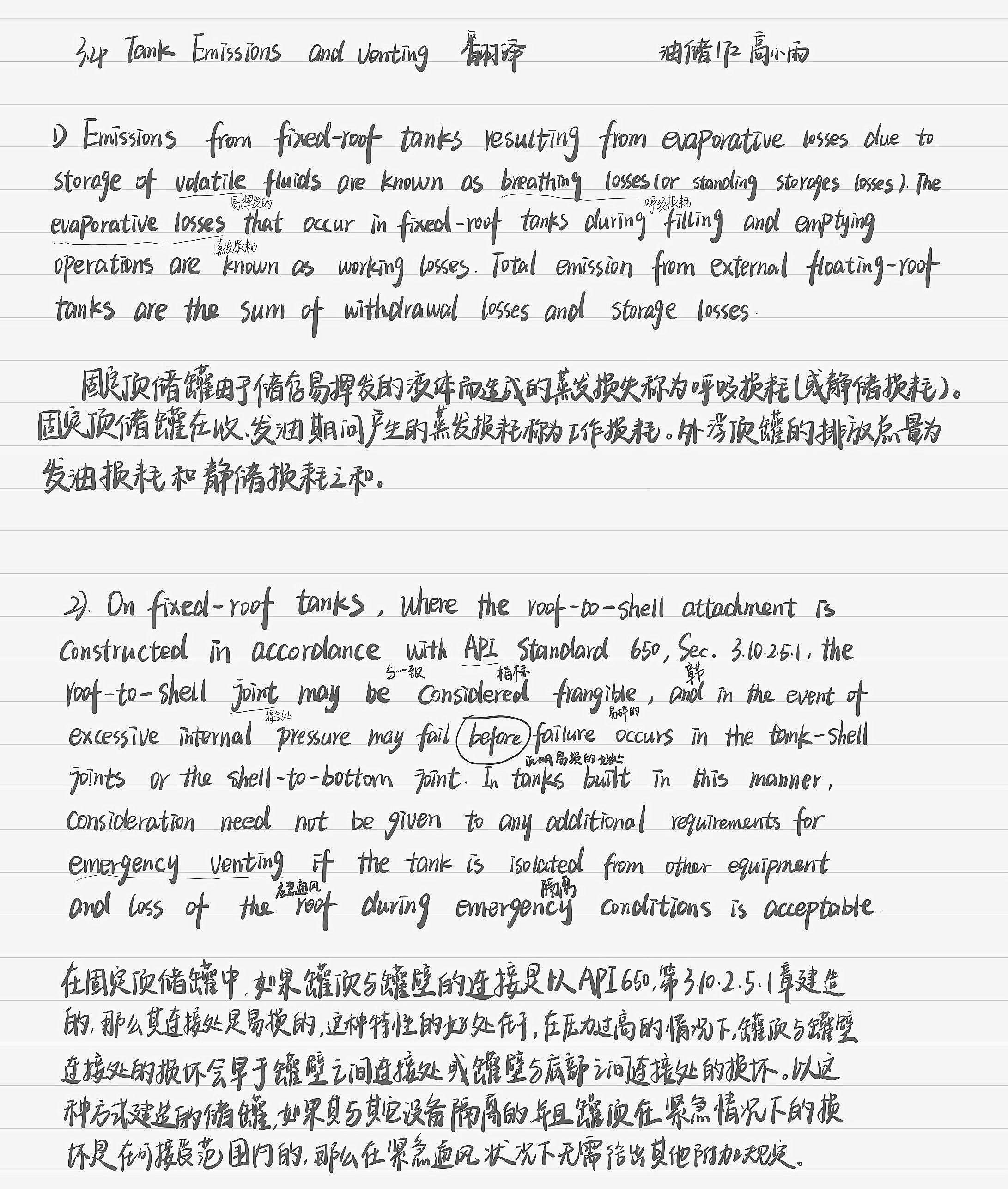
1)Emissions from fixed-roof tanks resulting from evaporative losses due to storage of volatile fluids are known as breathing losses (or standing storages losses). The evaporative losses that occur in fixed-roof tanks during filling and emptying operations are known as working losses. Total emissions from external floating-roof tanks are the sum of withdrawal losses and storage losses.

2)On fixed-roof tanks, where the roof-to-shell attachment is constructed in accordance with API Standard 650, Sec. 3.10.2.5.1, the roof-to-shell joint may be considered frangible, and in the event of excessive internal pressure may fail before failure occurs in the tank-shell joints or the shell-to-bottom joint. In tanks built in this manner, consideration need not be given to any additional requirements for emergency venting if the tank is isolated from other equipment and loss of the roof during emergency conditions is acceptable.
第二部分 听力

播放mp3  3-5遍


第三部分

启动PetroWiki专题大作业(4人一组)