目录

  • 1 3.1 Storage Part I
    • 1.1 教学PPT
    • 1.2 交叉材料
    • 1.3 学生作业精选
  • 2 3.1 Storage Part II
    • 2.1 教学PPT
    • 2.2 交叉材料
    • 2.3 学生作业精选
  • 3 3.2 Tank Classification
    • 3.1 教学PPT
    • 3.2 交叉材料
    • 3.3 学生作业精选
  • 4 3.3 Floating Roofs
    • 4.1 教学PPT
    • 4.2 交叉材料
    • 4.3 学生作业精选
  • 5 3.4 Tank Emissions and Venting
    • 5.1 教学PPT
    • 5.2 交叉材料
    • 5.3 学生作业精选
  • 6 3.5 Fire Prevention and Foam System
    • 6.1 教学PPT
    • 6.2 交叉材料
    • 6.3 学生作业精选
  • 7 2.1 Types of Pipelines
    • 7.1 教学PPT
    • 7.2 交叉材料
    • 7.3 学生作业精选
  • 8 2.2 Other Pipelines & 2.3 Line Pipes
    • 8.1 2.2 Other Pipelines
    • 8.2 2.3 Line Pipes
    • 8.3 交叉材料
    • 8.4 学生作业精选
  • 9 2.4 Pumps and Pump Stations
    • 9.1 教学PPT
    • 9.2 交叉材料
    • 9.3 学生作业精选
  • 10 2.5 Compressors
    • 10.1 教学PPT
    • 10.2 交叉材料
    • 10.3 学生作业精选
  • 11 2.6 Pipeline Pigging
    • 11.1 教学PPT
    • 11.2 交叉材料
    • 11.3 学生作业精选
  • 12 3.1 Causes of Underground Corrosion
    • 12.1 教学PPT
    • 12.2 交叉材料
  • 13 3.2 Cathodic Protection Fundamentals
    • 13.1 教学PPT
    • 13.2 交叉材料
  • 14 3.3 Pipeline Corrosion & 3.4 Tank Corrosion
    • 14.1 3.3 Pipeline corrosion
    • 14.2 3.4 Tank corrosion
    • 14.3 交叉材料
    • 14.4 学生作业精选
  • 15 4.1 Metering Gases
    • 15.1 教学PPT
    • 15.2 交叉材料
  • 16 4.2 Metering of Liquids
    • 16.1 教学PPT
    • 16.2 交叉材料
  • 17 Planet Oil
    • 17.1 How Oil Made Us
    • 17.2 The Carbon Wars
    • 17.3 Climate Wars
  • 18 Coronavirus Special
  • 19 Team Work
    • 19.1 Definitions of the Different Storage Tank Types(LNG)
    • 19.2 Construction of Long Distance Pipeline
    • 19.3 Natural Gas
    • 19.4 Natural Gas and LNG Tank Car
    • 19.5 Oil and Gas Processing Facilities
    • 19.6 Liquefied Gas Carrier
    • 19.7 Corrosion in Oil Field
    • 19.8 Flange Electrostatic Bridging
    • 19.9 Limited  Space  Operation
    • 19.10 Right Here Waiting For You
学生作业精选

第一部分 翻译(出处为PetroWiki)


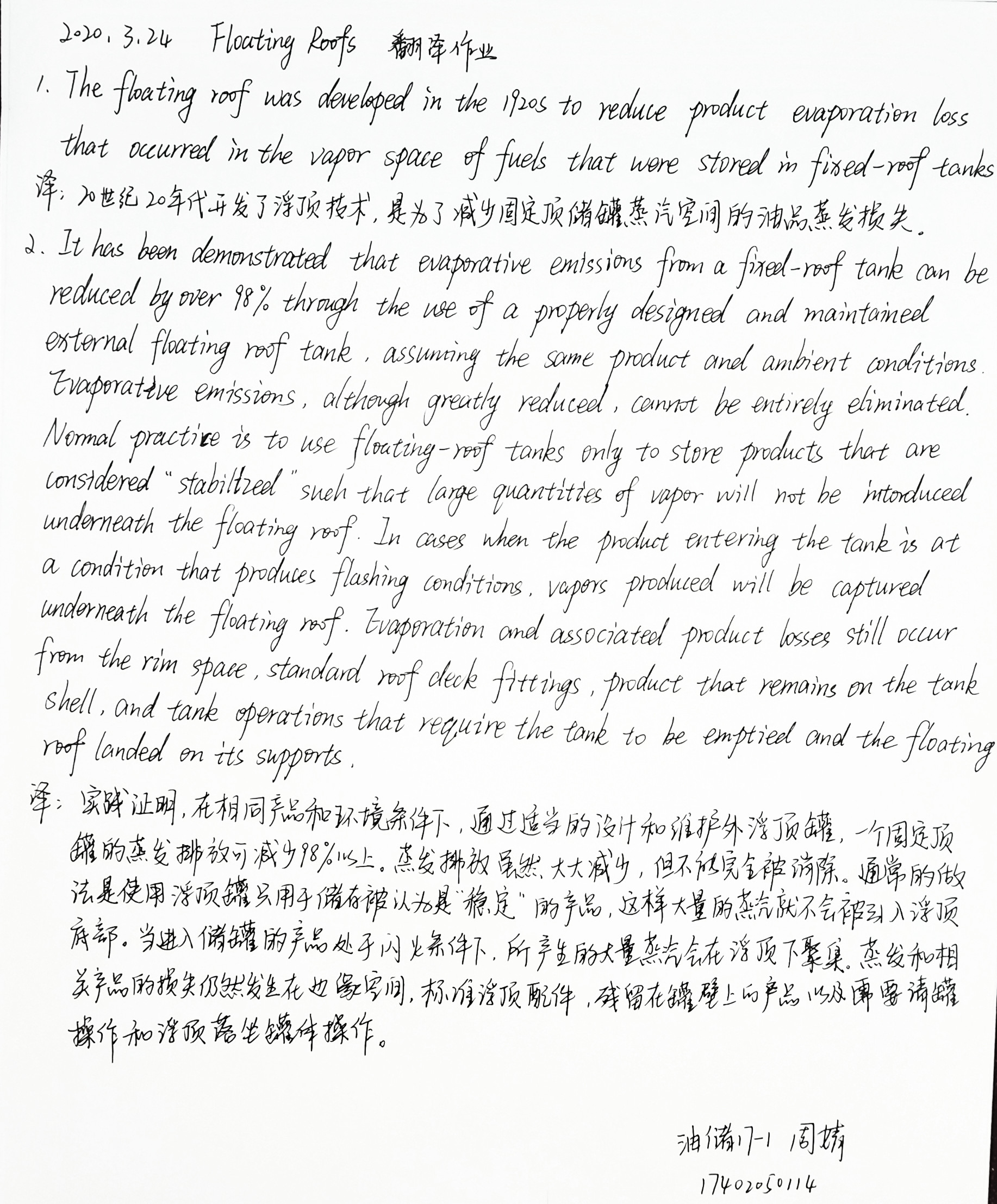
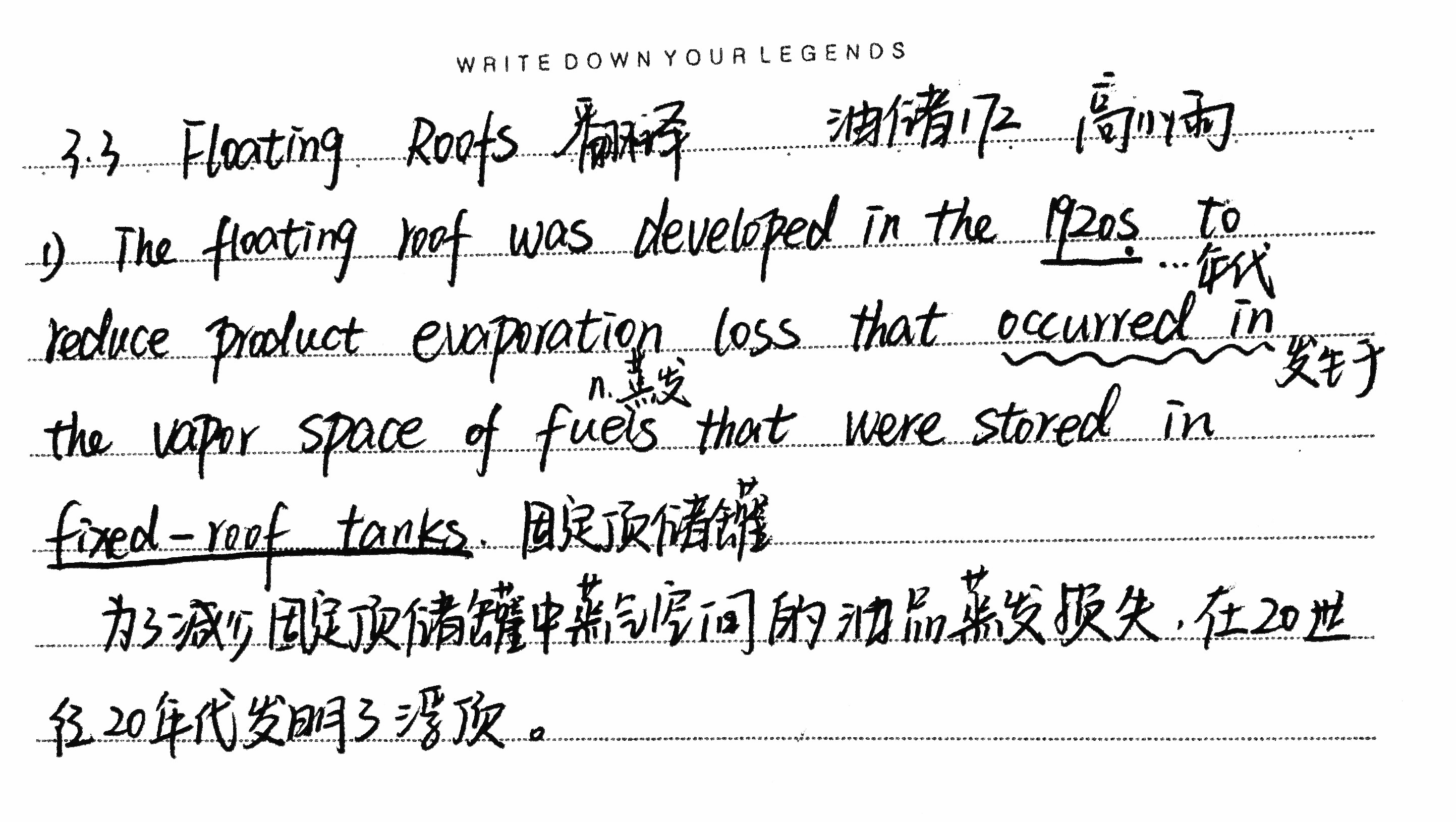
1)The floating roof was developed in the 1920s to reduce product evaporation loss that occurred in the vapor space of fuels that were stored in fixed-roof tanks.

2)It has been demonstrated that evaporative emissions from a fixed-roof tank can be reduced by over 98% through the use of a properly designed and maintained external floating roof tank, assuming the same product and ambient conditions. Evaporative emissions, although greatly reduced, cannot be entirely eliminated. Normal practice is to use floating-roof tanks only to store products that are considered "stabilized" such that large quantities of vapor will not be introduced underneath the floating roof. In cases when the product entering the tank is at a condition that produces flashing conditions, vapors produced will be captured underneath the floating roof. Evaporation and associated product losses still occur from the rim space, standard roof deck fittings, product that remains on the tank shell, and tank operations that require the tank to be emptied and the floating roof landed on its supports.
第二部分 听力

播放mp3  3-5遍


第三部分

启动PetroWiki专题大作业(4人一组)