英汉笔译

邓高峰

目录

  • 1 Chapter 1 Introduction
    • 1.1 brief introduction
    • 1.2 contents of this course
  • 2 Chapter 1  A General Introduction of Translation
    • 2.1 Definition
    • 2.2 Function of translation
    • 2.3 Nature of translation
    • 2.4 Criteria of Translation
    • 2.5 Qualities of A Good Translator
  • 3 Chapter 2   Process of translation
    • 3.1 Understanding
      • 3.1.1 Linguistic analysis
      • 3.1.2 Contextual analysis
      • 3.1.3 Logical analysis
    • 3.2 Expression
    • 3.3 Checking
  • 4 Chapter 3 Strategies of Translation
    • 4.1 Literal translation
    • 4.2 Free translation
    • 4.3 Foreignization
    • 4.4 Domestication
  • 5 Chapter 4 Translation Unit: Discourse
    • 5.1 Understanding of Discourse
    • 5.2 Discourse analysis and translation
  • 6 Chapter 5 A contrast between E & C
    • 6.1 Introduction
    • 6.2 Impersonal subject sentence vs.  Personal subject sentence
    • 6.3 Hypotaxis vs. Parataxis
    • 6.4 Passive voice vs. Active voice
  • 7 Chapter 6 Translation skills:
    • 7.1 Negation
    • 7.2 Affirmation
  • 8 Chapter 7 Amplification
    • 8.1 Definition
    • 8.2 Types
  • 9 Chapter 8 Omission
    • 9.1 Definition
    • 9.2 Types
  • 10 Chapter 9 Conversion
    • 10.1 Definition
    • 10.2 Types
brief introduction

I. Teaching  materials

《英汉翻译教程》(修订本),张培基 主编,上海外语教育出版社,2019年版。

II. Aims of this course

  1. To master some basic knowledge and theories about translation

  2. To understand better the differences between English and Chinese

  3. To acquire  some commonly-used translation techniques

III. Requirements of this course

   1.  Full attendance, active participation/involvement ( 30% of the final score)

   2.  Eagerness to accumulate information or materials related to translation from public places, newspaper, TV, magazines, internet and other mass media. 

   3. Ability to translate faithfully and smoothly 250-300 words in one hour after one term of study.


1、教学课件,PPT。


2、教学视频。


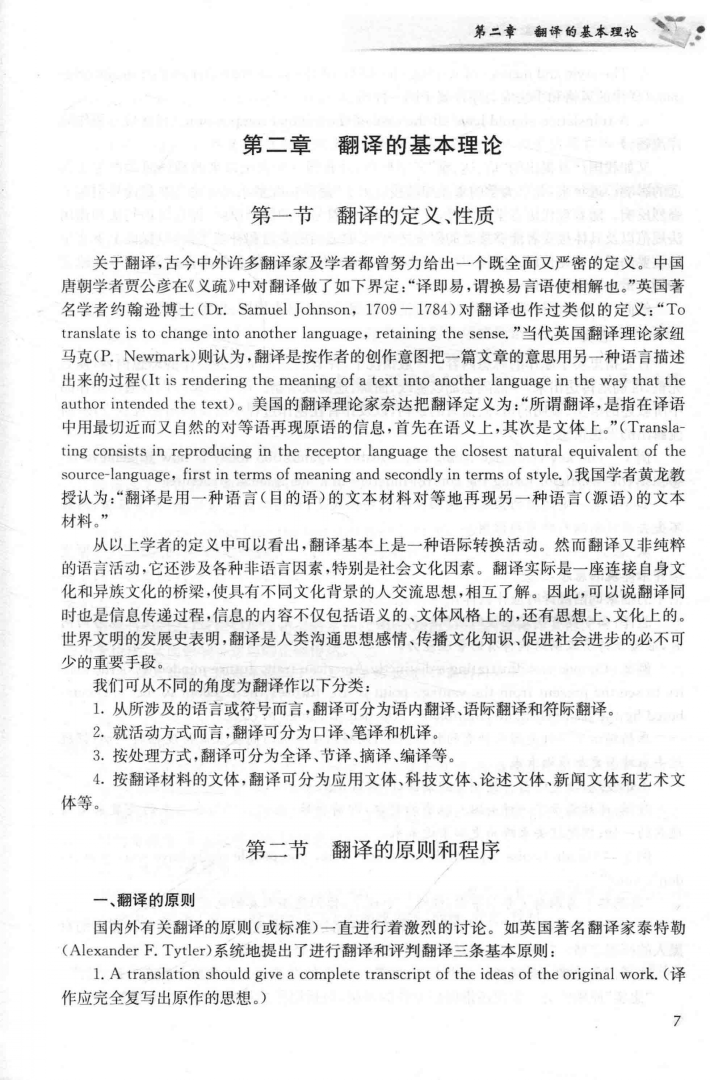
3、拓展阅读。1)此页第一节 翻译的定义、性质。