A discussion on the leadership would be incomplete without addressing(演说、演讲) the topic of communication—good, clear, honest communication. Leadership communication is distinct(独特的)—it is up close and personal. Whether the message is inspirational, criticizing, or crisis driven(危机驱动的), the form and the timing of the message are important. In fact, timing is everything. For real communication to occur, the message must be delivered and received. The receiver has to be in a frame of mind(一定的精神状态) to hear the message. Therefore, leaders must be very careful about when they transmit(传送) their message, particularly when it comes to communicating criticism(批评). They must also be explicit(简洁) in the scope of their words. Not everyone needs to know the big picture, only what is pertinent(恰当的,相宜的)to do the job. Too much information can hide or distract the intended message. Timely and precise communication can correct a problem before it becomes serious.
Project managers spend 75%-90% of working time on communication.
▷Communication forms(沟通形式)
Many forms of communication occur on project and within an organization.(verbal:口头的,语言的 written :书面的,文字的 vocal:音调的,发音的)
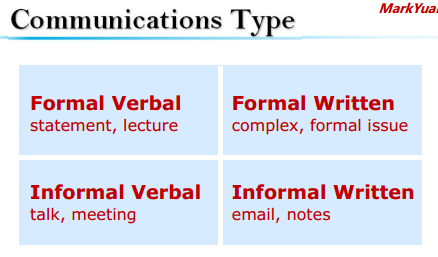
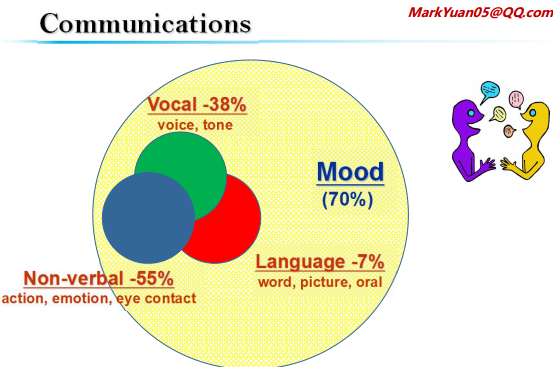
☛How to carry out effective written and oral communication.(如何开展有效的书面和口头交流)
1.written communication---being heard and understood
2.Oral communication ---being understood(被理解)
3.Oral communication ---be bold(大胆说出来)
▷Communication Loop(沟通环理论)
Whether the message is inspirational, criticizing, the form(形式) and the timing(及时性)of the message are important. Generally speaking, communication contains three components: a source, symbols (to impart a message(承载信息) and receiver. The source could be the project leader; the symbols could be a written memo or a verbal announcement(书面备忘录或口头通知), and the receiver a subordinate(部属、下级).
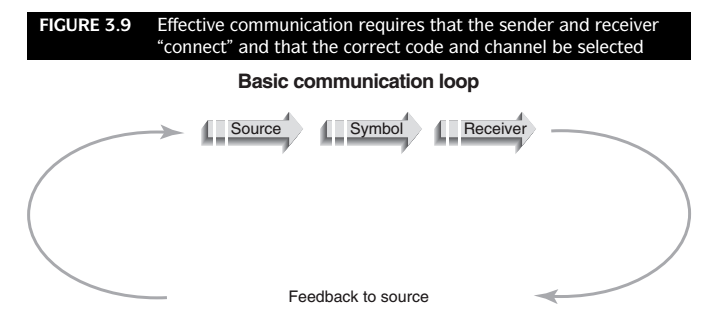
▶Source be explicit(明确)in the cope of their words. Be timely and precise to correct a problem before it becomes serious.
▶Symbol must consider the receivers background, experience and education. A written message sent to an audience that cannot read would be an ineffective method of communication. On the other hand, a message meant for one person that is announced in a group could do a lot of damage.
▶Receiver's obligation is to empathize(共情,同情), work with the sender, and try to connect and understand the message. Receivers need to indicate to the source that they understand the message. This will satisfactorily complete the transaction(交易).
视频:工作环境中的交流
视频:10个有效沟通的障碍因素
沟通的意义、原理以及方法
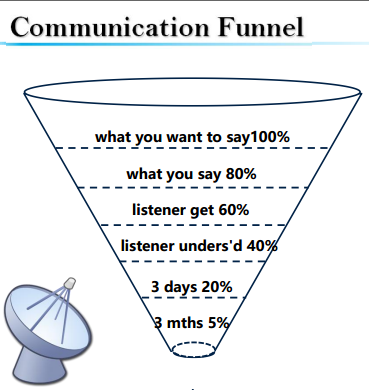
▷A interesting phenomeno assocaited with communication (一个有趣的沟通现象——漏斗效应)
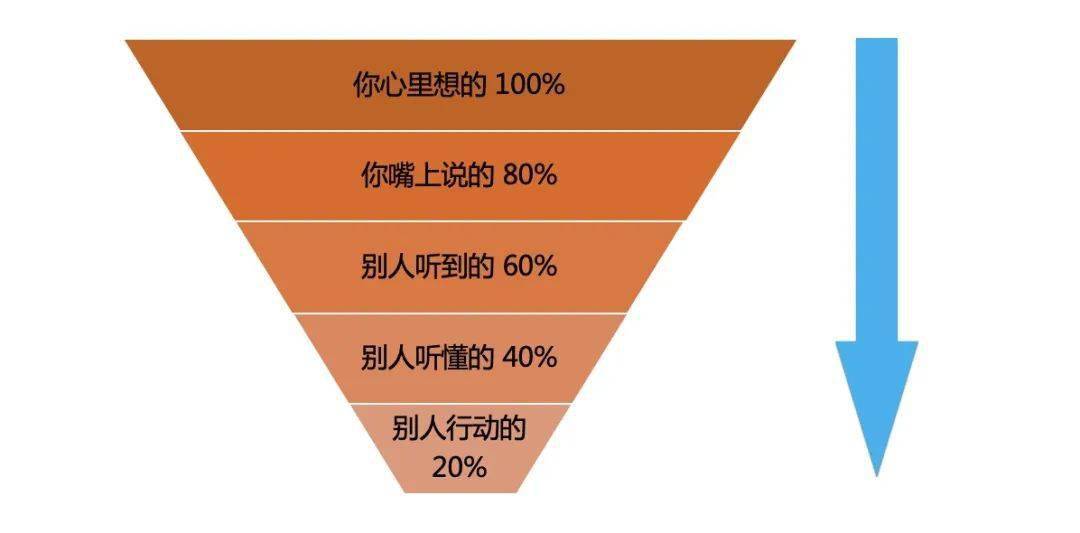
A joke: 一个黑人走进沙漠旅行,因为迷路而又累又渴,这时他发现了一盏阿拉丁神灯,擦了擦,一个精灵便出现了,精灵说:它在神灯里已被关了几千年了,今天黑人救了它,它要报答他,它可以满足黑人的一个要求,而且这个要求可以同时满足三个条件。
黑人想了想,便说:第一,因为肤黑老受歧视,他要变成白色的;第二,在沙漠太干渴了,他要有一辈子都喝不完的水;第三,他要每天能看见女人的臀部。
精灵想都没想,把黑人变成了一个白色的抽水马桶。
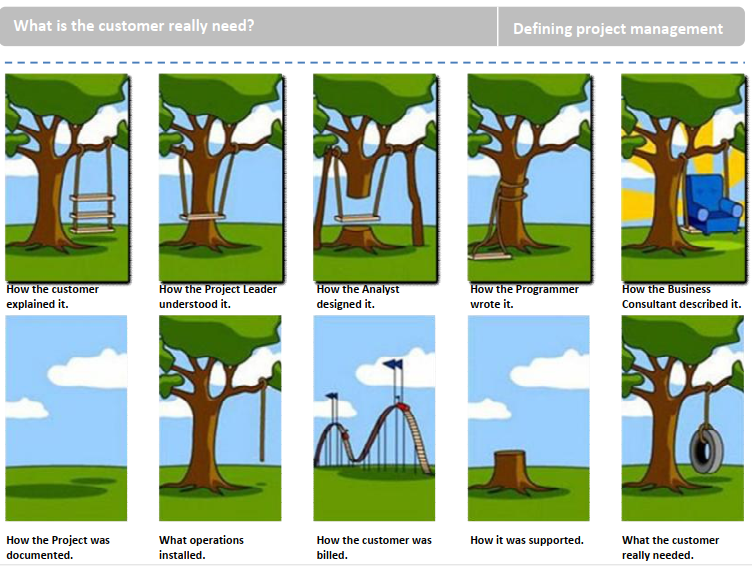
An example:
▷A interesting theory assocaited with communication skill ——(Johari Window 乔哈里视窗)
也被称为“自我意识的发现——反馈模型”,中国管理学实务中通常称之为沟通视窗。这个理论最初是由乔瑟夫(Joseph)和哈里(Harry)在20世纪50年代提出的。视窗理论将人际沟通的信息比作一个窗子,它被分为4个区域:开放区、隐秘区、盲目区、未知区,人的有效沟通就是这四个区域的有机融合。
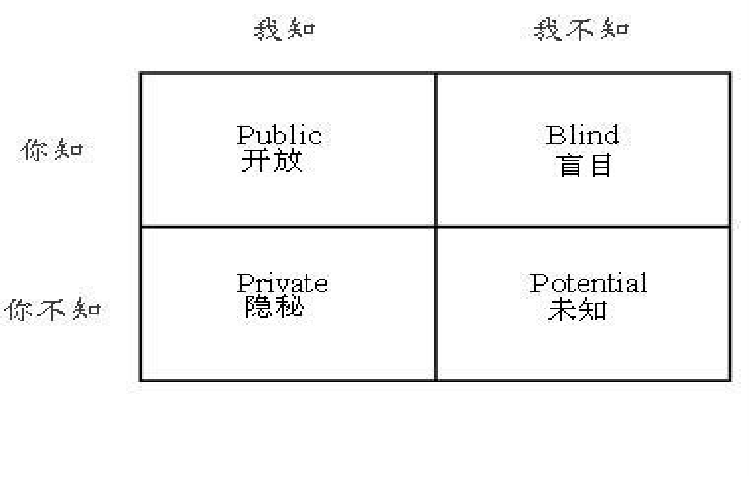
开放区:指信息对你自己和对别人,都是公开的区域(又称公开区)。比如你今天穿的是一件黑色 T 恤,别人一看,也是一件黑色 T 恤。
盲目区:是一个“别人知道”、“自己不知道”的区域。比如,你吃完饭没擦嘴,脸上挂着饭粒,跟客户聊了一下午,人家也不好意思说,就一直盯着你看,你还以为客户觉得你帅……所谓“被蒙在鼓里”,说的就是这种在盲目区的状态。
隐密区:这是一个“自己知道”、“别人不知道”的区域,也就是你心里的小秘密(又称隐藏区)。比如我今天穿了一条红色的内裤,我自己知道,但是你不知道,这个信息就在隐蔽区。
未知区:是“自己不知道”、“别人也不知道”的区域,叫做未知区,比如一个人生了重病,因为症状不明显,自己没有察觉到,别人更是没发现。
开放区的运用技巧
开放区大,通常让人觉得你很随和,容易赢得信任。要想使你的公开区变大,就要多说,多询问,询问别人对你的意见和反馈。多说、多问不仅是一种沟通技巧,同时也能赢得别人的信任。
盲目区的运用技巧
盲区大,会让人觉得你是一个不拘小节、夸夸其谈的人。很多不足之处,别人看的见,你却看不见。造成盲区太大的原因就是说的太多,问的太少,不去询问别人对你的反馈。所以在沟通中,你不仅要多说而且要多问,避免盲区过大的情况发生。
隐密区的运用技巧
隐密区大,会让人感觉你是一个内心封闭的人或者说是个很神秘的人。会激发别人的防范心理,导致信任度很低,合作态度下降。为什么造成隐藏区大?是因为你问的多,说的少。不擅长于主动告诉别人。
未知区的运用技巧
未知区大,原因是不问别人对自己的了解,也不主动向别人介绍自己。封闭会失去很多机会,能够胜任的工作可能就从身边悄悄溜走了。所以每一个人要尽可能缩小自己的未知区,主动的通过别人了解自己,主动的告诉别人自己能够做什么。
Discussion(1)