
BIM——“工程语言”
工程师有自己的语言,用来表达、交流、分享工程资讯,目的是实现工程的“建器造物”。BIM是工程语言升级中的佼佼者,立体、多彩、动态、声感,不掌握BIM,未来在工程界等于“哑巴”不会说话,不会说话自然也无法“行走工程江湖”了。还需要我补充说明BIM的要紧么?
What is BIM?
Building Information Modeling (BIM) is a digital tool that supports the continual updating and sharing of project design information. This is accomplished by keeping the design information in digital form, easing updating and transfer. In addition, the design information can be modeled in real time with the full consideration of cost and schedule information which increases project productivity and quality. The term “Building Information Modeling” was first used by autodesk and is now more widely in the industry to describe three-dimensional, object-oriented CAD.(建筑信息模型是一种数字工具,它能支持项目设计信息的持续更新和共享。该功能通过将设计信息以数字形式保存来实现的,简化了数据的更新和传输。此外,在充分考虑成本和进度信息的情况下,可以对设计信息进行实时建模,从而提高项目生产效率和质量。“建筑信息模型”最初由autodesk使用,现在在行业中它更多被用于描述三维的、面向对象的CAD)
What 's the value of BIM?
A prime value of BIM lies in the technology’s ability to support collaboration. Throughout the preconstruction stage of a project, professionals must continually balance project scope, quality, and cost with every design decision providing a positive or negative impact. At the design review stage every stake-holder needs to verify that their vision is being fulfilled. Users look to verify that the scope of the project is being met in terms of spaces, and relationships between spaces. Designer and sub-designers need to ensure consistency in design in terms of quality specified and in the relationship and coordination of building systems. Constructors look to the constructability of the design and to the cost and speed of construction. Because of BIM’s ability to present the design digitally in three dimension, users are able to clearly view the design to date. Spaces and relationships between spaces are evident; conflicts in mechanical, electrical, and structural systems can be seen; and through the inclusion of cost and productivity information, the constructor can produce a reliable estimate and schedule.(BIM的主要价值在于该技术支持多方协作。在项目整个施工前期阶段,专业人员必须不断平衡项目范围、质量和成本,以及每一个产生积极或消极影响的设计决策。在设计评审会上 ,让每一个利害关系人都参与进来,确认他们的愿景正在实现。用户希望验证项目空间以及空间关系是否满足项目范围要求。设计师和副设计师需要确保设计 在质量、建筑系统关系以及各部协同方面的一致性。施工人员关注设计的可施工性,以及施工的成本和速度。由于BIM能够以三维数字方式呈现设计,所以用户能够清楚地查看到目前为止的设计版本。空间和空间之间的关系显而易见;机械、电气和结构系统中的冲突显而易见;通过包含成本和生产效率信息,建造商可以得出可靠的估算和进度。)
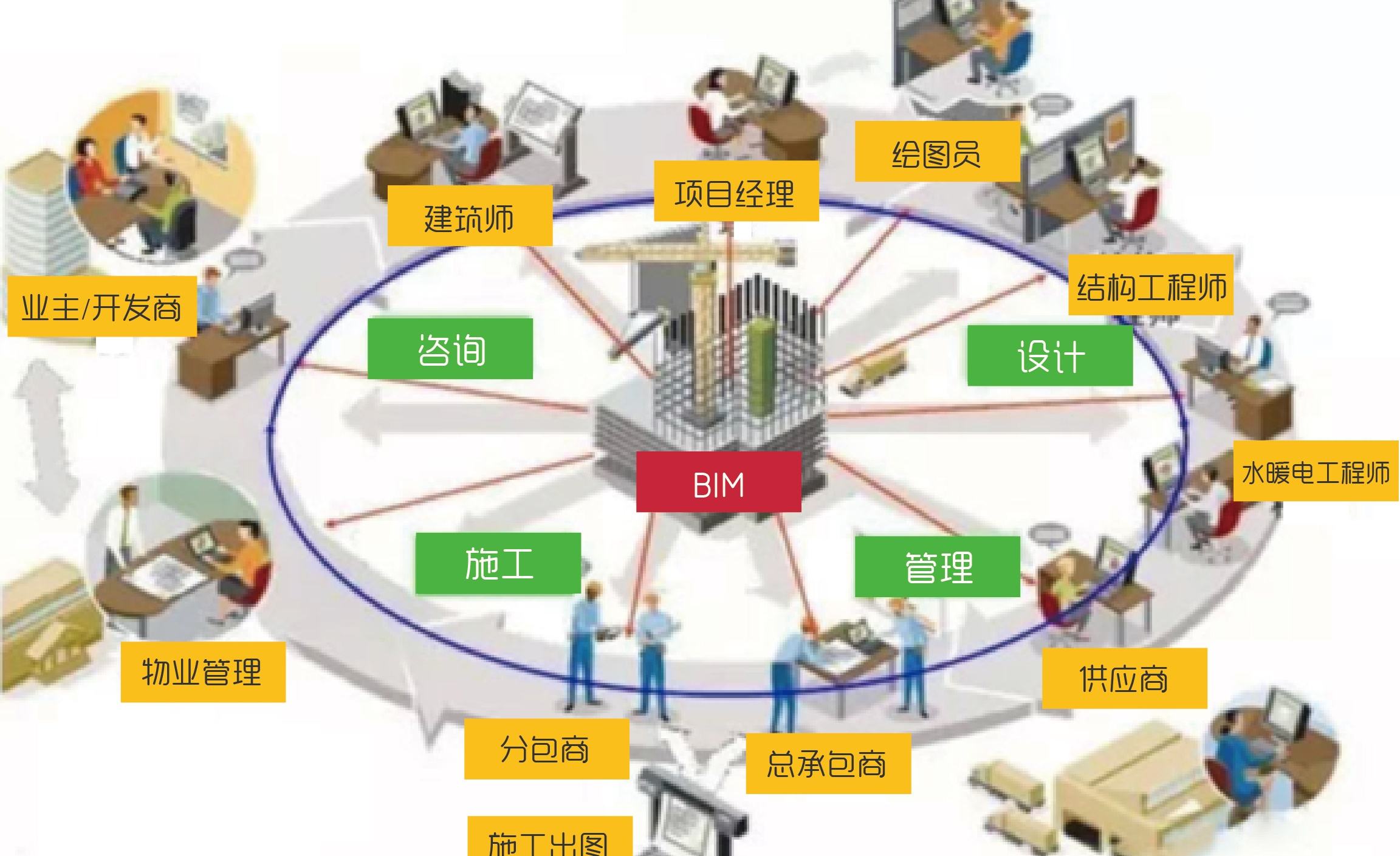
Since project designs evolve and each project review leads to adjustments in project scope and design, keeping the design in a digital format is a real plus. Design changes can be made quickly, encouraging the project team to investigate alternative approaches; it is also called a “what- if?” analysis. this is true value engineering; and with the full participation of the owner, designer, and constructor the team can really seek out the best approach to take. Systems decisions such as whether or not to utilize a concrete, steel, or wood structure can be evaluated early from the perspective of time, cost, and quality.(由于项目设计不断完善,每次项目评审都会导致项目范围和设计的调整,因此将设计保持在数字格式是一个真正的优势。这样可以快速开展设计变更,鼓励项目团队研究替代方法;这也被称为“如果?”分析,这是真正的价值工程;在业主、设计师和建造师的充分参与下,团队可以真正找到最佳的方法。一些系统决策,比如混凝土结构、钢结构还是木结构的选用,可以从时间、成本和质量的角度进行早期评估。)
In fully utilizing BIM technology, a BIM model is in the hands of many of the project participants. The architect has a BIM model to work out the floor plans(平面图), elevations(立面图), sections(剖面图), and finishes(饰面图). the mechanical electrical and plumbing engineers use the model to design the building’s heating, cooling, and plumbing systems. the structural engineer has a model to design the building structure. By “rolling” the engineering designs back to the architect’s model, design coordination can be done efficiently. The builder also utilizes a BIM model to determine how the work will be phased and to study different construction approaches. The model speeds up quantity takeoff work and estimating. Curtain-wall subcontractors and structural steel fabricators(制造商) can also use the BIM model to detail and fabricate their building components.(在充分利用BIM技术的过程中,BIM模型掌握在许多项目参与者手中。建筑师有一个BIM模型来制作平面图, 立面图, 剖面图, 饰面图。 机电和管道工程师使用该模型设计建筑的供暖、制冷和管道系统。结构工程师利用该模型来设计建筑结构。通过“滚动”工程设计回到建筑师的模型,设计协调可以有效开展。建造商还利用BIM模型来确定工程如何分阶段进行,并研究不同的施工方法。该模型加快了土方计算的工作和估算速度。幕墙分包商和结构钢制造商 也可以使用BIM模型来详细描述和制造建筑构件。)
According to the contractor’s Guide to BIM published by the associated General contractors, the advantages of using BIM include identifying collisions, such as where piping may run into structural steel; studying what will be built in a safe, simulated environment; reducing errors and corrections in the field; having more reliable expectations of field conditions; being able to incorporate more prefabricated components and assemblies; and comparing “what if” scenarios for logistics, sequencing, hoisting, and other major moves.(根据总承包商发布的BIM指南,使用BIM的优势还包括碰撞识别, 比如管道可能会与结构钢相撞;研究将在一个安全的、模拟的环境中进行,从而减少现场的错误和返工;利用模型可以对现场条件有更可靠的预期;能够整合更多预制组件;可以对物流、工序安排、起重吊装以及其他一些重大举措开展“如果”场景的优化分析。
The value of BIM does not end with construction. BIM is of great use to facility managers. It allows them to plan out their renovations and to provide a quick digital record of the work that was done. BIM includes project components, details, and quantities, so the preparation of the estimate, schedule, and the design for the renovation should be a lot faster. There should be fewer unknowns, and it should be easier for the designer and builder to match existing conditions. It also can be used as a basis for facility maintenance since the BIM documents hold information about manufacturers, part numbers, and their location in the building.(BIM的价值不会随着施工完结而告终。BIM对设施设施管理员非常有用。 它使他们能够规划自己的翻修,并提供已完成工作的数据记录。BIM模型中包括项目组成、细节和数量,因此成本估算、进度计划以及翻修准备能很快完成。由于有更少的未知数,因此设计师和建造者更容易匹配现有条件。BIM文件包含有制造商、零件号以及它们在大楼的具体位置等信息,因此它也可作为设施维护的基础)
BIM can best be viewed as computer aided design with additional “layers” that allow for life-cycle management. It can also be viewed as an attitude, promoting the sharing of electronic design information with all of the key construction management participants. BIM keeps the design electronic and encourages every project stakeholder to look at the design from their own organizational perspective. Since the design is “electronically alive,” project participants can continue to collaborate and perfect the design right into the construction phase of the project, and facility managers can utilize and modify the information to maintain and renovate the building throughout its useful life.(BIM最好被视为具有“多层” 特征,允许开展生命周期管理 的计算机辅助设计技术。它还可以被视为一种态度,即促进所有关键建造管理参与人之间共享电子设计信息。BIM将设计保持的电子化,并鼓励每个项目干系人从自己的组织角度看待设计。由于设计是“电子化的”,项目参与者可以讲设计合作以及完善进一步带入项目的施工阶段。设施经理可以利用和修改这些信息,在建筑物的整个使用寿命周期内对其进行维护和翻新。)
视频:What is BIM ?
视频: A brief introduction of BIM
视频: A deep review of BIM
Discussion

