
★About remote documentation and management
A few years ago , internet use has grown rapidly in the industry. Many companies advertise on the internet in hopes of reaching a wider audience. Owners are increasingly using this source as a way of getting to know a company's expertise. Newsletters(时事通讯、业务通讯), project information and photos, and awards and recognition can all be shared by employees and viewed by potential clients.

It is also a platform(平台) for electronic project management programs. Now ,companies are increasingly using information and computing technologies to manage projects and to bridge the gap between home office and field office. Electronic communication and the ability to be plugged into the construction site through digital technology are starting to merge(融合) home office control and field office control.
The larger construction home offices have incorporated accounting software, Web communication, estimating and scheduling, two-dimensional and three-dimensional(二维、三维) modeling capability, electronic plan rooms, and other e-business models. Field offices have some of the home office capabilities depending on the size and duration of the project and may be utilizing Web-based project management software, file transfer protocol (ftp) sites(文件传输协议站点) for exchange of drawings and other large storage documents, and advanced software packages such as Building Information Modeling (BIM). On the site, there may be handheld devices(手持设备) in use for communication, photography, punch lists(工作清单), and timecards(考勤卡).
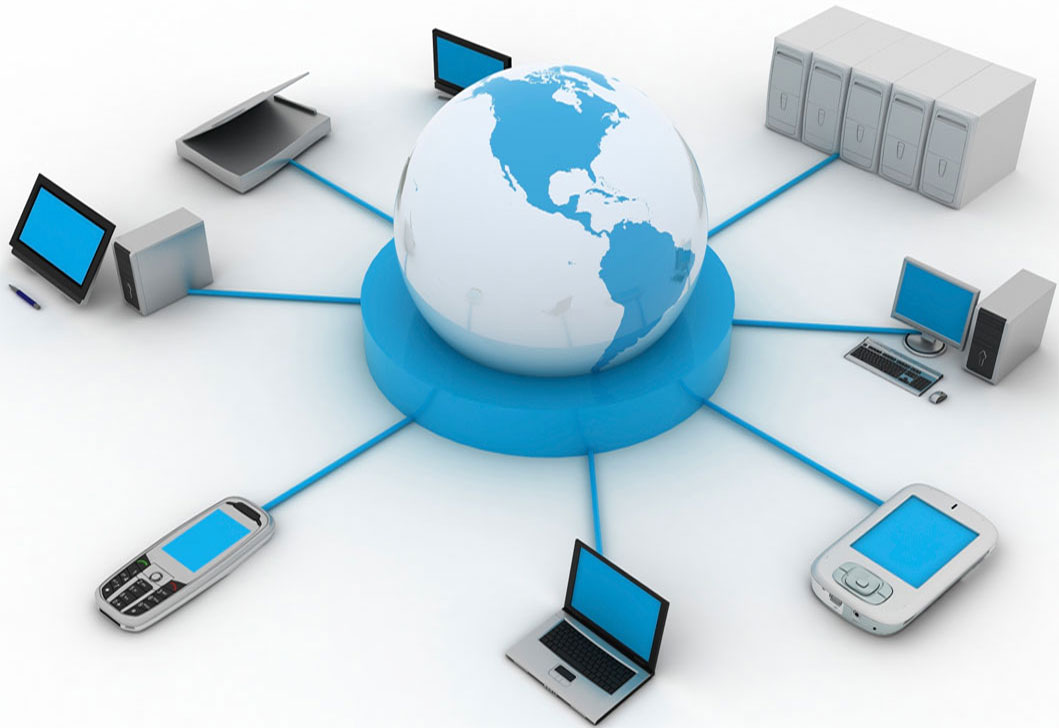
Some of the more common information and computing technologies being used for organizing and controlling the construction project are described below:
▶Three-Dimensional modeling (三维建模)
One of the most significant technology advances in recent years is the use of three-dimensional modeling programs, which blur the lines between design and construction. Commonly known as Building Information Modeling, this platform enables visualization of the project and can be linked to scheduling, estimating, and procurement functions and allows people to work efficiently from multiple locations (近年来最重要的技术进步之一是三维建模程序的使用,它模糊了设计和施工之间的界限。被称为BIM的平台,可实现项目的可视化,并与工期计划,估算和采购功能相关联,允许人们在多个地点高效工作)
▶Electronic plan rooms(电子计划室)
Electronic plan rooms are secure Web environments that allow owners, architects, and general contractors to invite subcontractors to bid on jobs. The subcontractors can access the site and view documents and can either download them directly or through a copy vendor.(电子计划室是一种安全的网络环境,允许业主、建筑师和总承包商邀请分包商进行投标。分包商可以进到现场查看文件,可以直接下载,也可以通过复印店下载)
▶E-commerce(电子商务)
E-commerce is an electronic platform for buying and selling material, products, and equipments, sometimes by auction and sometimes through an open exchange model that serves as a center for searching, evaluating, and procuring products. (电子商务是一个用于购买和销售材料、产品和设备的电子平台,有时通过拍卖,有时通过一种开放式交换模式 ,该模式承担着搜索、评估和采购产品中心的角色。)
▶File Transfer Protocol (ftp)(文件传输协议)
FTP refers to a series of rules for computers to transfer files over the Internet. It is a common method of posting and downloading large files such as CAD documents. (文件传输协议是用于通过互联网传输文件的一系列规则。它是发布和下载大型文件(如CAD文档)的常见方法。)
▶Radio Frequency Identification ( RFID)(射频识别)
RFID is an identification and tracking system that consists of a transponder (应答器)or tag, which is a microchip attached to an antenna(天线), and a reader(读卡器). The reader communicates with the tag through radio waves.(射频识别是一种识别和跟踪系统,由应答器(或标签)以及阅读器组成,应答器是一个连接到天线的微芯片。阅读器通过无线电波与标签通信。)
视频:RFID介绍
视频:文档管理电子化趋势
视频:如何改进数字化项目管理(3种方法)
视频:如何实现远程团队管理(3点建议)
Discussion

