
The fact is that just about everyone engages in the act of procurement. In its most basic form, this term is nothing more than the word used for the steps taken in the acquisition of goods and services. From this perspective, all consumers participate in the process since, whether for business or for the home, there are progressive steps that everyone follows as they work toward procuring those items that they desire.
During the latter stages of design, the owner or the construction manager purchases critical items needed to the job earlier than normal bidding processes allow for.These maybe large equipment or materials such as structural steel that are needed early in the construction process.
In a simple world, purchasing would involve ordering a specific item for a specific amount of money to be delivered at a specific time. But in the more complex world of construction, the project manager has to consider many factors, especially when the purchase involves much money. For example, an understanding of global economic conditions and local construction activities will help identify which items should be bought early.
Procurement deals with the entire cycle of material handling- from purchasing, delivery, installation, testing and then turning over the completed project to the owner. The control of material purchasing, delivery, and storage on the site can have a large effect on overall production on the job. Such as a missing widget(小器具) can delay a major installation, and the early arrival ductwork(管道系统) can cause storage problems(rust, theft 生锈 偷盗) at the site.
视频:工程采购
视频:招标的流程
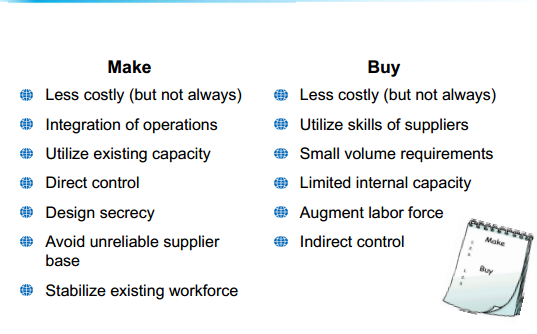
☛Make or buy decision
☛拓展阅读:RFI、RFP、RFQ、IFB in procurment documents
根据PMBOK的描述,不同类型的采购文件有不同的常用名称,可能包括信息邀请书(RFI)、建议邀请书(RFP)、报价邀请书(RFQ)、投标邀标书(IFB)等。具体的采购术语可能因行业或采购地点有所差异。
RFI —— request for information (信息邀请书)
A solicitation document used to obtain general information about products, services, or suppliers. It is an information request, not binding on either the supplier or the purchaser, and is often used prior to specific requisitions for items. 一个用来取得产品,服务,或供应商一般资讯的请求文件。这是一个资讯的要求,并不能成为对供应商或采购的约束,通常使用在请购之前。
RFP ——request for proposal (建议邀请书)
A solicitation document used to obtain offers to be used either in a firm–bid purchasing process or in a negotiated purchasing process, as stipulated in the request. 用于稳固报价采购流程,或议价采购流程中,依要求之明文规定,为取得报价的请求文件。
RFQ—— request for quotation( 报价邀请书)
In the private sector, the RFQ usually is considered to be the same as the RFP. In some organizations, however, an RFQ is used to obtain approximate information for planning purposes; in such cases, this fact should be clearly stated in the request. In federal government purchasing, the RFQ is used only for the purpose of obtaining planning information.(在民营企业中,RFQ通常被认为与RFP相同,但在某些组织中,RFQ则被用于取得为计划目的之约略资讯,此时在要求中需明确说明。在政府采购中,RFQ只被用于计划资讯的取得)
一般使用顺序:都使用在采购规划阶段,RFI:征求供应商意见,以使需求明确化,如果需求很明确,则用RFP,征求供应商的建议书(Proposal), 招标或要求供应商报价前,使用RFQ,以作为招标底价及比价的参考(前提是给所有供应商的报价格式都一样的,如果不一样,则无法比较,也失去了意义),在这些过程中,能够降低需求不明确及预算不精确的风险(这个风险确实存在的哦,你看哪个项目到最后不是超标的?就好比装修房间,最后的花费比预算多出20%属于正常。
IFB(Invitation for Bid) (投标邀请书)
IFB为所有供应商报价提供他们最佳方案的平等的机会。因为招标流程会约束了采购方和供应方,IFB只有在满足以下条件时才可以使用:已经清楚地定义了规范书和工作说明书(Statement Of Work);采购金额足够大;法规或企业规程条例强制的要求;其他方法不适合。因为正式的招标流程对采购方和供应方来说都是花费比较高的,所以当其他方法可以提供必要的信息时,就不应该使用IFB方法。
RFI、RFQ、RFP和IFB的对比
信息邀请书RFI | 报价邀请书RFQ | 报价邀请书RFP | 投标邀标书IFB | |
目的 | 获得与产品、服务、供应商相关的信息 | 取得供应商对所需产品、服务或服务的承诺 | 要求供应商对需求提出最好解决方案的建议 | 为所有的供应商做出最好的方案而提供平等的机会 |
使用条件 | 适用于具体申请之前 | 对所需要的物料或服务的具体要求已经明确 | 用于评估供应商,或采购方不清楚的流程、质量、服务、准标或其他元素 | 用于定价比价高的物料,或者该物料存在最低价格 |
灵活性 | 非正式的、不是招标 | 正式的、提出具体要求 | 采购方可以开始谈判、信息收集,在最佳来源确定前,不承诺一定采购 | 对采购和供应双方都有约束 |
结果 | 目录、价格表和产品信息 | 比较供应商提交的方案 | 可供选择的大量潜在解决方案 | 最好的和最终的方案 |
优点 | 简单、快捷 | 供应商受限于报价的承诺,而采购方可以就所有问题进行谈判 | 采购方可以对提交的方案中的任何问题与某一个或所有的供应商进行谈判 | 正式的流程。各招标或流程文件都是可比较的 |
缺点 | 没有确定目标,仍然需要RFQ或IFB | 如果没有很好地准备报价申请书请求,各个供应商的投标可能无法比较 | 如果允许一个供应商修改方案,就必须允许所有的投标者修改方案 | 因为其他方法为采购提供了更多的灵活性。最好不使用这个方法 |

