
People who work in an organization are grouped so that their efforts can be channeled for maximum efficiency.
Organizational structure refers to a structural system formed by all members of an organization in terms of job scope, responsibilities, and rights in order to achieve organizational goals.(组织结构是组织全体成员为实现组织目标,围绕职务范围、责任、权利等所形成的结构体系。)
Organizational structure consists of three key elements.
1. Organizational structure designates (指明,标明) formal reporting relationship, including the number of levels in the hierarchy and the span of control of managers and supervisors.
2. Organizational structure identifies the grouping together of individuals into departments and departments into the organization.
3. Organizational structure includes the design of systems to ensure effective communication, coordination, and integration(融合) of efforts across departments.
视频:什么是组织结构
Organizational structure types
Organizations can be structured in an infinite(无限的) variety of ways, ranging from highly complex to extremely simple. What is important to understand is that typically the structure of an organization does not happen by chance(偶然); it is the result of a reasoned response to forces acting on the firm. Generally, the structure types include the following.
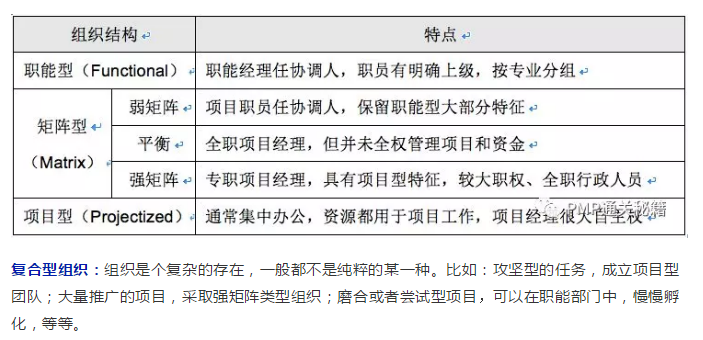
Functional structure(职能式)are organized according to technological disciplines(技术分工). Several technicians are under control of a functional manager. Senior functional managers are responsible for allocating resources. Coordination occurs through rules and procedures. If a company consists of more than one department, it is usually structured as a functional organization. If products need a high level of specialized knowledge, it's usually a functional structure.
Project structure(项目式) means grouping people into project teams on temporary assignments. It is the most fitting structure for those organizations whose task is always carried out in project forms. The project members leave their functional department and devote(投入) all their time to the project.
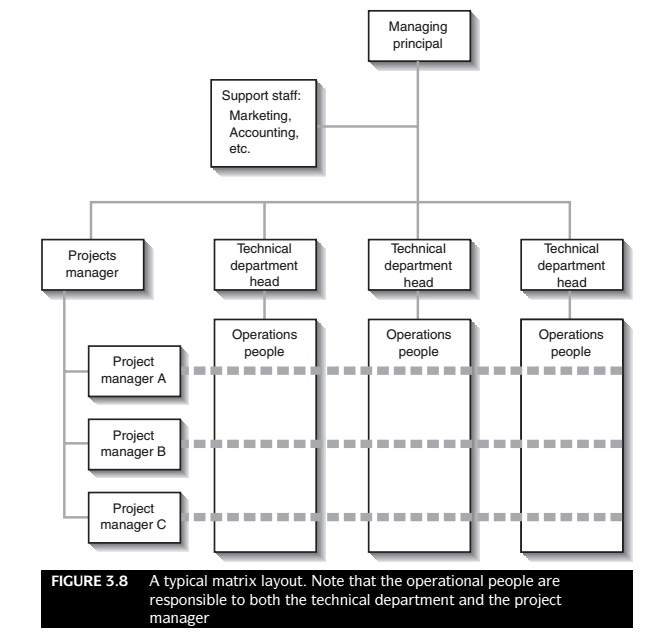
Matrix structure: (矩阵式)means creating a dual hierarchy(双重层次) in which functions and projects have equal prominence(重要性). when an organization is on a major project, communication among the involved departments must be sound and swift(踏实、快捷). Links (gangplanks or planks) (跳板)must be made between the working levels of the involved departments. The links can be formalized(正式化) and directed by a project manager. This leads to what is called a matrix organization. The matrix organizational structure allows project teams to communicate effectively. Otherwise, all formal communications would have to go through the department managers.
The aim of organizational structure analysis and design is to make sure that structure and strategy can best work together to increase company's efficiency, effectiveness, and profitability.
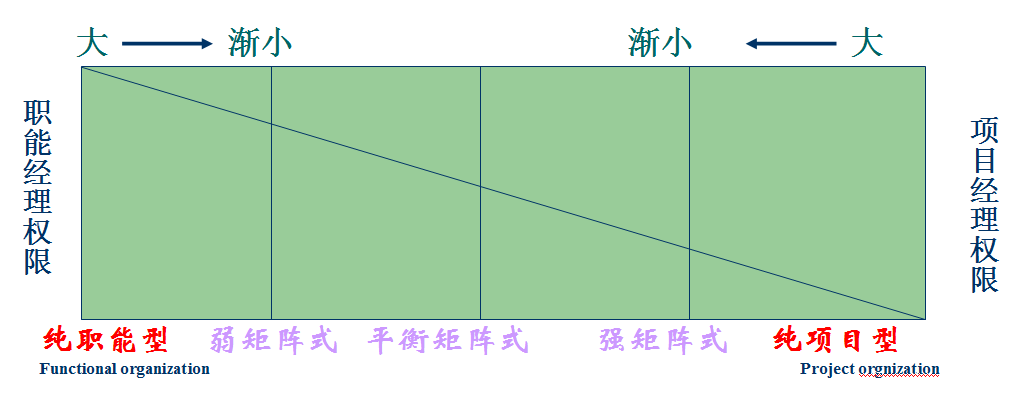
Organizational structure is the way in which the interrelated groups of an organization are constructed. Wheel wright and Clark define a continuum of organizational structures between two extremes(极端), functional organizations(职能式组织) and project organizations(项目式组织).
Discussion

