
 Introduction
A construction facility can last for hundreds of years, but the period in which it is actually designed and built is very small. The design and build period can always be illustrated(展示)by the following waterfall mode(瀑布模型).
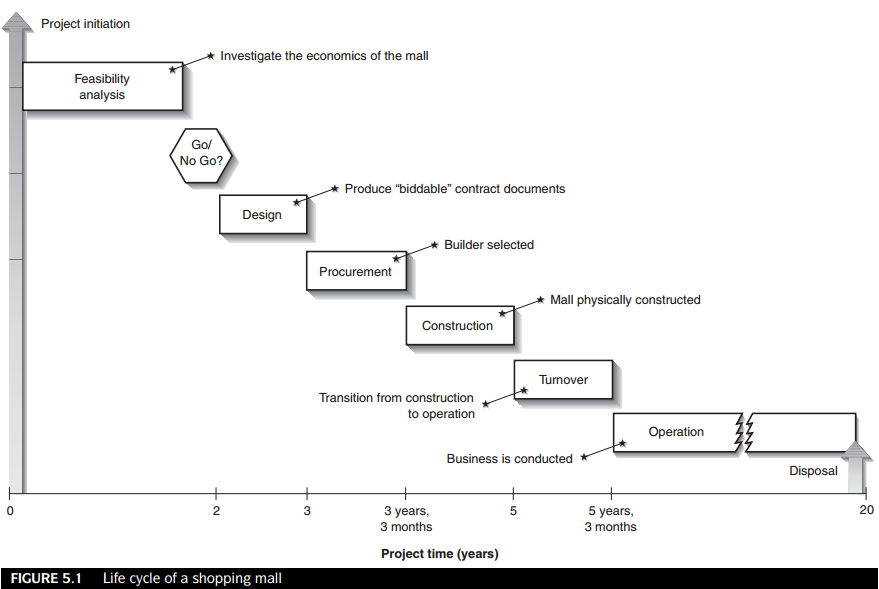
★Initiation of the project(项目发起)


All construction activity is the result of basic economic demand. Individual consumers have on going(持续的) needs for homes, stores, roads, manufacturing plants, and similar facilities that provide shelter, food and other goods and services to meet the needs of daily life.
Specific construction project arise because corporations or government bodies realize the need for facilities to the demand. One construction activity tends to foster(鼓励,促进) further construction activities. For example, a large community needs store, roads, schools.
Recognizing needs is the first step, but there must be a way to move from recognition to reality. The answer lies in the economic structure of the country. -------1. Private corporations are constantly searching for new opportunities to invest. Since almost all business activity needs a facility from which to operate, construction is a direct result of the increased business activity. 2. As businesses increase, more roads and other transportation modes(交通方式) become necessary, as well as sewage(下水道), school and other pubic facilities. These facilities are funded with public money that comes mostly from taxes paid by businesses or the works in them(企业或其开展的工程).

★Feasibility analysis(项目可行性分析)
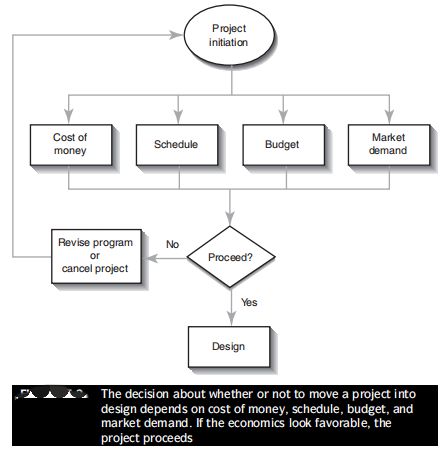
Before deciding to invest in a specific area, an investor wants to be reasonably sure that he or she will see an adequate return. An analysis is usually performed to examine the proposed investment from several standpoints.
First there must be a demand for the specific service or product. An example is the single family homes. Generally, in time of expanding business activity, there is also a demand for single family homes, however if the area is in an economic recession(衰退), there may be an over supply of existing housing.
Second, the cost of the actual construction must be taken into consideration. In time of economic expansion, costs also increase. Because all the materials or labors needed cannot be supplied as usual. The suppliers have to buy from other areas or nations; this cost is passed onto the builder.
Third, the cost of money can also be a key factor. Most construction projects use borrowed money. If the interest rates are high, the investors will tradeoff (权衡).
Finally the timing of the project is also important. Construction projects always involve long periods of time between conception and completion. During this period, the anticipated markets(预期的市场) can change radically.
During the early analysis stage, the owner often consults with architects and construction professionals. Architects provide early design advice, and the construction professionals offer cost and constructability advice. Their advice helps the owner make a more informed decision about the feasibility of a specific project.
视频:如何编制可行性研究报告?(how to conduct a feasibility study)
★Financing(项目融资)
If the project gets past the first hurdle(障碍) of the profitability(盈利), the owner must line up financial backing for some of the work. Although investors walk into project with some money, most are unable to fund 100 percent of the work. A developer might borrow from banks or invite other investors to share the future profits. A corporation will sell additional stocks or bonds(股票或者债券). Whatever the source of the additional funds, other individuals or firms decide to lend or invest fund based on their own expectation of return on investment.
视频:融资1——自有资金
视频:融资2——债权与股权
Discussion

