
★About estimating(关于成本估算)
There are many costs associated with construction projects. Some are not directly associated with the construction itself but are important to qualify because they can be a significant factor in whether or not the project goes forward. Such as real estate transactions, consultant services, public relations, marketing, government regulations, maintenance, and operations. None is a direct cost of construction; but all put financial pressure on the project.
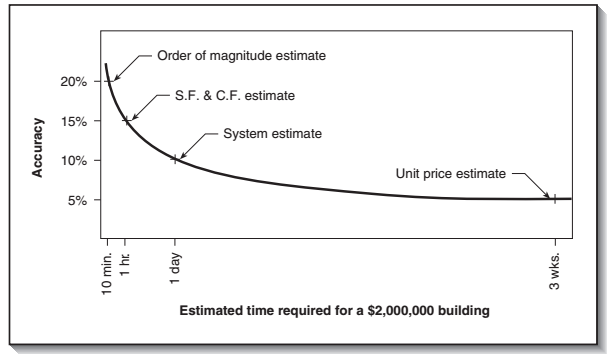
▷Estimating is a dynamic process that begins in the early stages of a project and ends when the project is turned over to the owner. As a project moves along in time, the amount of information generated increases. This information improves an estimate's accuracy but also costs more to develop and takes more time.
▷Estimator consider past projects while anticipating new factors, such as current technologies, market demands on material and labor, quantities of materials, collective bargaining agreements(集体谈判协定) and so on.
▷A good data base of actual costs from past project experiences facilitates(促进,有利于) the preparation of a quick and accurate estimate. Professional estimators spend considerable time and resources developing and protecting this data base. Large design and construction companies maintain their own data base. Smaller companies may rely on the data developed from independent cost consultant and cost dada supplier such as R.S Means, which is one of the groups selling construction cost information to owner, designer, and constructors.
★The function of the estimate(成本估算的作用)
▷From an owner's perspective, an early estimate helps define the affordability(支付能力) of the project, how big the project can be for the money available, and what level of quality is possible. The estimates can also guide the decision among two or three possible options by identifying costs.
▷From a designer's perspective, estimates offer guidelines. They help selects materials and sizes the project to fall within the owner's budget. As the project proceeds, the design must be continually compared to this budget. If it begins to exceed the budget, the designer must determine the best alternatives for cost reduction. Estimating and designing are intimately(亲密地) related. A change in one forces a change in the other.
▷From a project manager perspective, an estimate can be used to define the scope of the work for each subcontractor as well as define fair pricing, because each estimate is broken down by units of work. It is used as a planning tool. (Figure)
▷From trade contractors' perspective, the estimates can help them figure their bid price.
★Common estimating traits(成本估算一般特征)
Though estimates' format varies with the type of estimate, type of project, and the company procedures, there are common traits(特点) such as the following:
▷Conflicts are bound to arise Owners want the biggest building with the best finishes(润饰) and systems for the least amount of money. With these criteria,. The design and construction team uses estimates to ensure that good information is development and a feedback loop established so that conflicts can be addressed as quickly as possible. The owner can decide to proceed based on this information or ask for some alteration in the design. The designer can then devise ways to meet the cost targets. Through this feedback loop, conflicting demands of cost versus performance can be resolved.
▷Estimates combine science and art. Estimates are a product of information supplied by the designer, the owner, and the supplier.
▷Estimates are not guarantees of costs. The costs developed during design and even at the building stage are almost never the final and complete costs of the project. However, if properly used, they can be important tools in bringing a project under or at budget with the appropriate features for the owner.
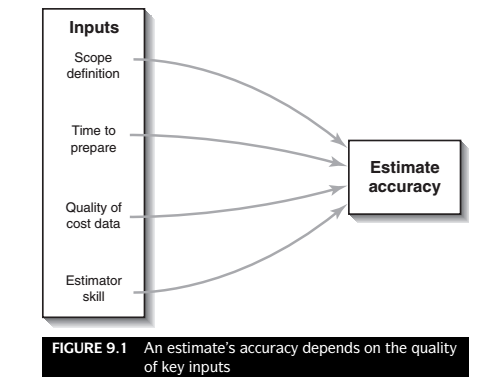
▷An estimate can only be as accurate as the information upon which it is based. Estimates depend on many factors.
▷An estimate's accuracy increases as the design becomes more precisely defined.
▷Each estimate is based on previous estimates. A good, accurate estimate does not stand alone. It is the product of lessons learned from previous estimates.
▷Methodology(方法学、方法论) and procedure are important for accurate estimating. As the design process proceeds, the level of detail increases. Estimates, as a consequence, become more complex, reflecting the many different factors that go into each unit of work. Calculations increases in number, and the potential to leave something out becomes greater. Only through the adherence to strict methods and procedures can mistakes minimized.
视频:成本估算常用的四种方法(工具)
Discussion

