目录

  • 1 建筑业 The Construction Industry
    • 1.1 本章纲要 Chapter Outline
    • 1.2 建筑业本质与特征 Industry essence and characteristics
    • 1.3 建筑业的分类 Industry sectors
    • 1.4 建筑业发展趋势 Trends in the industry
    • 1.5 建筑业道德规范 Construction ethics
  • 2 工程项目参与人 Project participants
    • 2.1 本章纲要 Chapter Outline
    • 2.2 业主方 Owners
    • 2.3 设计方 Design professionals
    • 2.4 建造方 Construction professionals
    • 2.5 其他参与方 Other participants
    • 2.6 参与方协同工具  BIM
    • 2.7 各方冲突管理 Conflict management
  • 3 项目的组织领导 Organizing and Leading project
    • 3.1 本章纲要 Chapter outline
    • 3.2 项目以及项目管理定义 Definition of project & PM
    • 3.3 项目管理相关术语 Basic PM terms
    • 3.4 项目领导艺术 Leadership
    • 3.5 项目沟通 Communication
    • 3.6 项目团队组建 Team assembling and building
    • 3.7 项目组织结构 Organizational structure
    • 3.8 合法的所有制形式 Legal forms of business ownership
  • 4 工程项目交付方式 Project Delivery Method
    • 4.1 本章纲要 Chapter Outline
    • 4.2 项目交付导言 Introduction
    • 4.3 项目交付方式类型 Project delivery methods
    • 4.4 项目中的合同 Contract
    • 4.5 项目风险 Project risk management
  • 5 项目生命周期简介 Project Chronology
    • 5.1 本章纲要 Chapter Outline
    • 5.2 项目发起、可行性、融资分析Initiation;Feasibility analysis;Financing
    • 5.3 项目设计、采购、建造Design, Procurment, Construction
    • 5.4 项目交付、运营、报废Turnover,Operation,Disposal
    • 5.5 项目管理生命周期 PM life cycle
  • 6 设计中建造相关服务 Construction Services during Design
    • 6.1 本章纲要 Chapter Outline
    • 6.2 建造相关服务引入背景Introduction
    • 6.3 服务之“可行性与可建造性分析”Feasibility ,Constructability analysis
    • 6.4 服务之“价值工程” Value engieering
    • 6.5 服务之“”建造干扰缓解” Construction mitigations
  • 7 项目投标与招标 Bidding and procurement
    • 7.1 本章纲要 Chapter Outline
    • 7.2 投标 Bidding
    • 7.3 工作分包 Work packages
    • 7.4 招标采购 Procurement
    • 7.5 招投标以及合同文档 Construction documents
  • 8 工程施工管理 Construction management
    • 8.1 本章纲要 Chapter Outline
    • 8.2 施工内容 Construction Activities
    • 8.3 施工效率 Construction productivity
    • 8.4 工程收尾 Construction Closeout
  • 9 项目成本估算 Estimating Project Costs
    • 9.1 本章纲要 Chapter Outline
    • 9.2 成本估算导言 Introduction
    • 9.3 成本估算类型 Types of estimates
    • 9.4 成本估算因素与常见问题 Estimate considerations and common problems
  • 10 项目进度计划 Project Scheduling
    • 10.1 本章纲要 Chapter outline
    • 10.2 进度计划的内涵  Essence of schedule
    • 10.3 进度计划编制流程  Scheduling Process
    • 10.4 进度计划编制方法 Scheduling Methods
  • 11 项目CTQ控制 Controlling Project Cost,Time and Quality
    • 11.1 本章纲要 Chapter Outline
    • 11.2 控制系统介绍 Project control system
    • 11.3 质量控制 Quality control
    • 11.4 成本、进度基线计划 Cost time Baselines
    • 11.5 成本、进度绩效模型 Cost and schedule performance models
    • 11.6 成本、进度联合的挣值分析 Earned Value Analysis
  • 12 现场以及远程管理 Job site and remote administrative management
    • 12.1 本章纲要 Chapter Outline
    • 12.2 现场管理Job site administrative management
    • 12.3 远程电子化管理 Remote electronic management
  • 13 工程安全与健康管理 Construction Safety and Health
    • 13.1 本章纲要 Chapter Outline
    • 13.2 工程安全与健康管理 Construction Safety and Health
    • 13.3 事故预防与处理 Accident Prevention and Programs
业主方 Owners

Construction  project are born  from ideas. For an idea to be realized, it must be translated into graphic form(图形格式), which in turn must be transformed into a finished product. The idea is defined by the owner, developed by the designer, and produced by the constructor, who then turns it over to the owner.

At first glance(乍一看), the roles seem simple to define: the owner is the  one with  the deep pockets, the designer is the expert, and the constructor is the guy with the pickup truck(皮卡) and the backhoe(反铲车). At a closer look, their roles are more complex and interesting.

 ★Owner(业主)

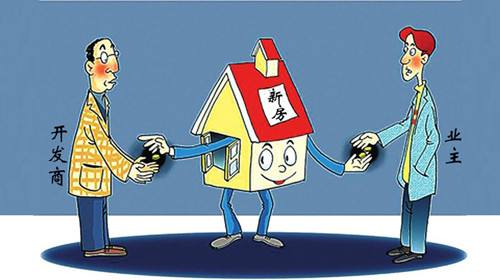
Owners can be individuals who want to have a larger house for their growing families, or a developer(开发商) working to make money . Whatever the motivation, however, the owner is where the project is born.  After identifying the need, the owners’ most important function is to financially back(金融支持) the project. The source of financing partly defines the type of the owner.  Owners include Public owner, private owner and  owner representative.
Public owner (公共业主)

Such as government agencies. They use the public money and represent the public interest, so they must follow specific methods of managingthe projects. Public approval processes have to be figured into schedule and budget.

Some publicly funded projects are managed by private organizations such as universities or hospitals. The funding of these projects often combines public funding or loans with private money for some or all of the construction. Thus, institutional(机构的) owners may need to comply with(遵守) public agency requirements while managing the pressures of private oversight boards(私人监督委员会).

Private owner(私人业主)

 They use their own money and are responsible for themselves. A developer is a special type owner who often owns the project only for the duration of construction. They make money either through a quick sale or long-term rentals(租赁).  

Owner representative(业主代表)

They are usually found in large organization and institutions, such as schools, universities, and hospitals.

Facility managers(设施经理) are the most common professional owner representative. Their job is to understandthe goals and objectives of their organization and ensure that the facilities are planned to support them.Organization without large in-house departments often hire outside consultants to manage construction projects.

A building committee(建设委员会)is another form of owner representation. It often consists of users, financial backers(资金提供方)and sometimes community residents(社区居民)

Discussion