
■What's construction industry?(什么是建筑业)
If we want to have a good understanding of construction industry, we have to take a look at the word“construct” at first. Construct in dictionary means: form by assembling(组装) parts. It includes two potential meanings, one is to form a structure by using divergent (不同的) materials, such as the iron and cement(水泥); the other is to form a group or an organization by uniting diverse(不同的) people.
Although construction is principally defined by the concept of assembling materials and products, it is in fact multitasked(多任务的). The construction of a building or infrastructure involves first an assembly of people(召集一批人), a definition of process(定义一个过程), and the creation of a site specific work space(开辟一个工作空间). Just as divergent materials come together to form a structure, so,too, do a diverse group of people come together to make the project possible. To bring together numerous independent businesses and corporate personalities into one goal-oriented(目标导向的) process is the peculiar(特有的,不寻常的) challenge of the construction industry.
■Major characteristics of construction industry(建筑业的主要特征)
(1)Construction industry exits everywhere(建筑业无处不在)
The highways or express(高速公路)we drive on, the bridges we cross, the oil we burn are all the fruits of construction industry. Likewise, where we work, where we shop, where we have leisure(休闲) time all exist because of the industry. In fact ,it is difficult to think of an industry that is more basic to our economy and to our daily life.
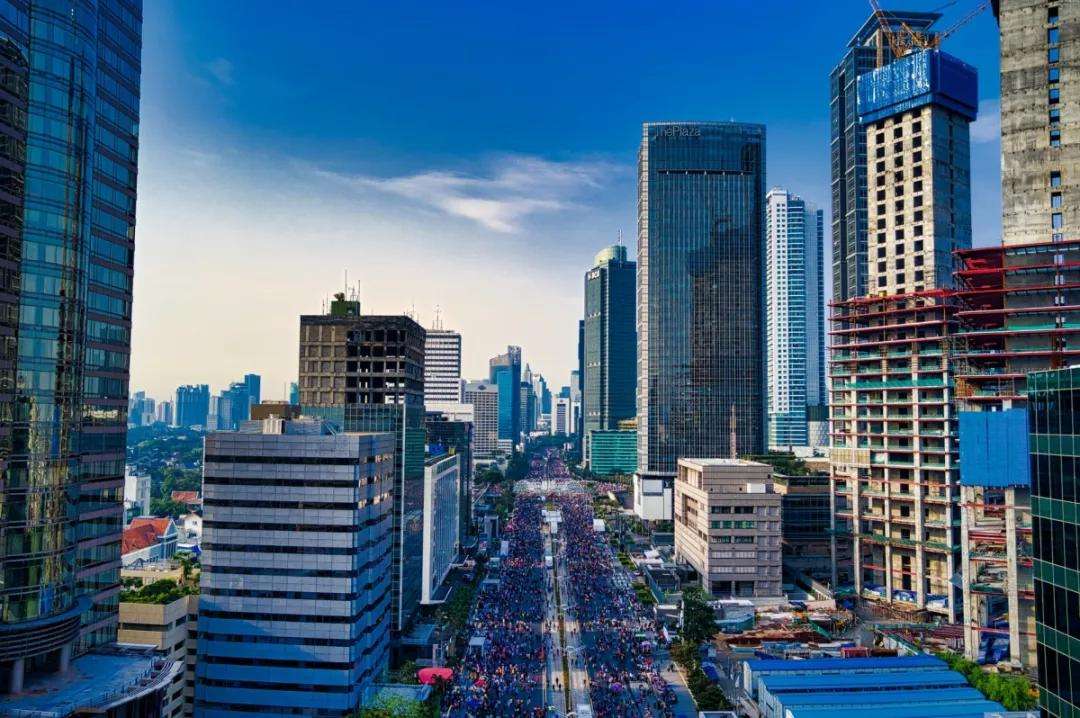
(2)Construction industry is interwined with many aspects of our lives(建筑业与我们生活方方面面紧密相关)
★Technological development:e.g. With the development of cheap methods of producing iron and steel and the invention of the lift, architects can design higher buildings.
★Wide application of computers and machinery:e.g. By using computers and BIM models, designers can imitating potential Pipeline collision(模拟潜在管道碰撞) ,then they can create better designs to counteract (抵消对抗)them. With robots directing equipment during construction, contractors can gain more control over processes that require precision for success, such as the construction of the underwater tunnel.
★Baby burst and bust: (婴儿数量爆满和破灭, 比喻生殖率的高潮和低潮) e.g. Demographics(人口统计) will shape the construction industry of the future. For example a second child is allowed, so, the need of more houses are stimulated(激发,刺激). In one word, the population fluctuation(波动) and composition(构成) plays a very important role in the direction of construction. At the other end, people are living longer, which puts strains(压力)on health care facilities and creates additional need for assisted-living facilities(生活辅助设施) and other health-related businesses.
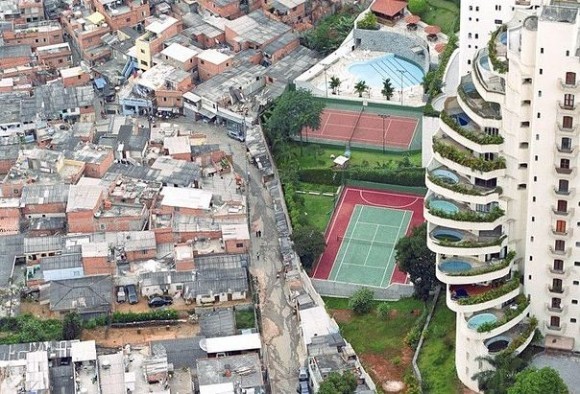
★Economic and political practices: e.g. real estate control(房地产调控) Because of the rocketing of land cost, the price of house is flying .The developers(开发商) are forced to develop skyscrapers. Political conflicts, poverty gap(贫富差距) and even terrorist attacks also have a far-reaching(深远的) impact on the development of the construction industry.
巴西贫富差距对建筑业产品的影响
视频:911事件回顾与反思
☛Terrorist attacks are the extinction of human nature. Contradictions and conflicts are everywhere in the world, but terrorist attacks are never the solution to the problem.(恐怖袭击是人性的泯灭。 矛盾与冲突无处不在,但恐怖袭击永远不是解决问题的选项。)
(3)Construction is a big business in most countries(建筑业在大多数国家都是个大买卖)
Just because it is closely related to every aspect of human life. According to the Bureau of Labor Statistics(国家统计局), the industry employs a huge amount of workforce. for example, in
(4)The industry is easy to enter(建筑业进入门槛较低)
As we can see most rural immigrant workers get a job in this industry. In this way, it's only a service industry. Moreover construction does not require a patent (专利)or a large capital investment, so anyone with motivation, proper technical skills can start a business and get success.
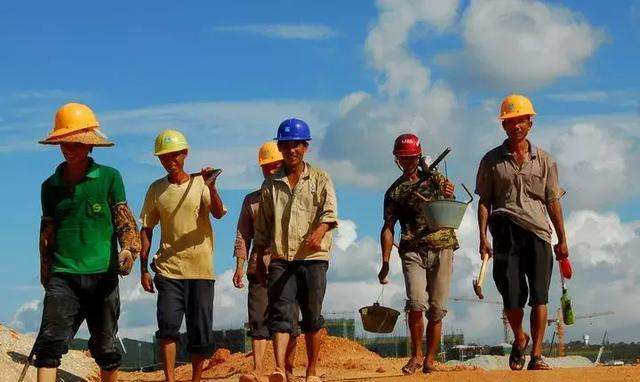
(5)The industry is facing a high risk(建筑业面临很高的风险)
The risk factor is much higher because of many outside factors, such as government funding policy, demographics(人口统计), and market trends, except for these, unpredictable nature also plays an amazing role, such as heavy rain, landslide(滑坡), storm, typhoon(台风) and other extreme weather conditions.

(6)Construction industry is facing an image problem(建筑业面临着形象问题)
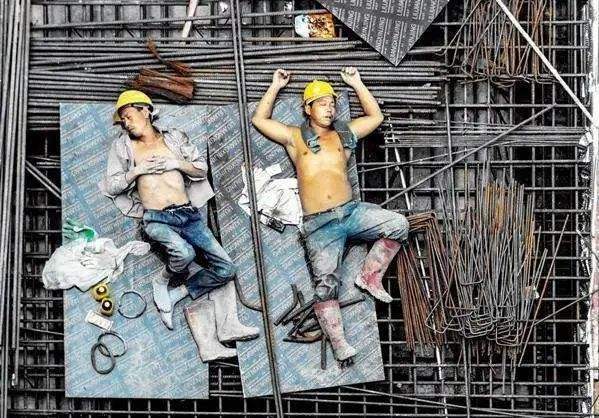
Though construction related jobs are well paid in some countries, they are often not a person's first career choice. Why? The construction industry is facing an image problem. That is to say it has a negative image. As we know, the work is dangerous, with one of the poorest safety records of any industry. Outdoors, the workers are exposed to dirt, rain, cold, and heat. And the work force is hired on a project basis, when a job ends, employment ends, the worker has to look for another job, this means most work lack continuity(连续性)and chances of promotion(升迁). This fact also has a negative impact on a person's feelings. Less time with families, once others’house is set up, their temporary home will be crushed down.
(7)Construction projects can be awe-inspiring in their breadth and complexity(建筑项目在其广泛性和复杂性方面令人惊叹)
Such as the great wall, the Egyptian Pyramids, and the soaring skyscrapers(摩天大楼) are all the fruits of construction industry. The Great Wall is located in north of China stretching(延伸) from the east of Shanhai's Pass to the west of Jia Yu Guan in the north part, the overall length is more than 6,700 kilometers, the construction of the great wall had continued for more than two thousand years. During the long building process ,Qing, Han, and Ming dynasty had built more than 5000 kilometers. The Great Wall is a military defense project with the longest building time in human history. So it's always regarded as the symbol of Chinese spirit.
视频:长城——中国古代建筑杰出代表
(8)Construction industry has inheritance(建筑业具有传承性)
As we talked before, the construction industry has few positive images; in fact, construction is one of the noblest professions(高尚的职业). Working with your hands, solving problems in the field,working collaboratively with other partners to create a real product that can be handed down to the coming generations (传承给后代), this is construction . It is hard to image another profession that has such a physical impact on the quality of people's lives. In one word, this industry has a lot to be proud of.
视频:圆明园——中华建筑文明传承之痛
Discussion (1)

