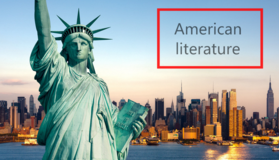
美国文学

彭荻、万莉莉、陈义华

目录

  • 1 colonial period
    • 1.1 I. Background: Puritanism
    • 1.2 1.2Jonathan Edwards: Sinner in the Hands of Angry God
    • 1.3 1.3Anne Bradstreet: Verse upon the Burning of Our House
  • 2 Age of Enlightenment
    • 2.1 Benjamin Franklin ;autobiography
    • 2.2 Thomas Jefferson: The Declaration of Independence
  • 3 American Romanticism
    • 3.1 What is Romanticsim
    • 3.2 Washington Irving
  • 4 Summit of Romanticism – American Transcendentalism
    • 4.1 four sources, appearance, feature, influence
    • 4.2 Ralph Waldo Emerson :Self-Reliance
    • 4.3 Henry David Thoreau: Walden
  • 5 late Romanticism
    • 5.1 nathaniel Hawthorne
    • 5.2 Herman Melville
  • 6 Romantic Poet
    • 6.1 Walter Whitman
    • 6.2 Emily Dickinson
    • 6.3 comparison: Whitman vs. Dickinson
  • 7 American Gothic Literature
    • 7.1 Edgar Allen Poe
    • 7.2 Raven, The Masque of the Red Death
  • 8 The Age of Realism
    • 8.1 background, characteristics
    • 8.2 Three Giants in Realistic Period
    • 8.3 local colorism
  • 9 American Naturalism
    • 9.1 background,features, significance
    • 9.2 Poems of naturalism
  • 10 The Modern Period
    • 10.1 The 1920s and imagist movement
    • 10.2 Robert Frost
  • 11 Novels in the 1920s
    • 11.1 I.F. Scott Fitzgerald
    • 11.2 II.Ernest Hemingway
  • 12 Southern Literature
    • 12.1 William Faulkner
    • 12.2 Barn Burning
  • 13 American Drama
    • 13.1 Eugene O'Neil
    • 13.2 Absurd Drama
  • 14 The Post-War Period: 50s & 60s
    • 14.1 Allen Ginsburg: Howl
    • 14.2 Sylvia Plath: Daddy (confessionist)
  • 15 Post-War American literature
    • 15.1 Salinger
    • 15.2 Joseph Heller
  • 16 Multi-ethic American Literature
    • 16.1 Hughes:
    • 16.2 Toni Morrison
Ralph Waldo Emerson :Self-Reliance

I. Ralph Waldo Emerson

1. life

2. works

(1) Nature

(2) Two essays: The American Scholar, The Poet

3. point of view

(1) One major element of his philosophy is his firm belief in the transcendence of the “oversoul”.

(2) He regards nature as the purest, and the most sanctifying moral influence on man, and advocated a direct intuition of a spiritual and immanent God in nature.

(3) If man depends upon himself, cultivates himself and brings out the divine in himself, he can hope to become better and even perfect. This is what Emerson means by “the infinitude of man”.

(4) Everyone should understand that he makes himself by making his world, and that he makes the world by making himself.

4. aesthetic ideas

(1) He is a complete man, an eternal man.

(2) True poetry and true art should ennoble.

(3) The poet should express his thought in symbols.

(4) As to theme, Emerson called upon American authors to celebrate America which was to him a lone poem in itself.

5. his influence