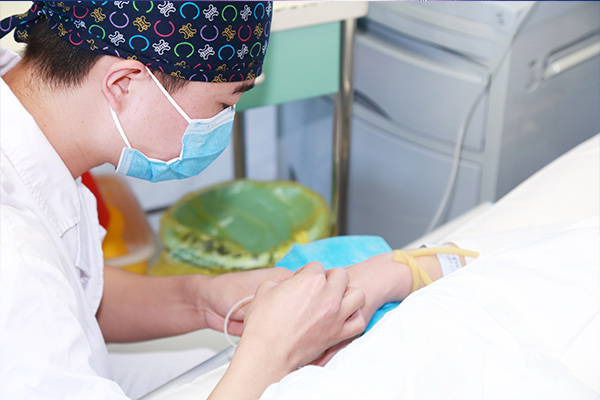
1.静脉输液:是利用大气压和液体静压形成的输液系统内压高于人体静压的原理,将大量无菌溶液或药液直接输入静脉的治疗方法。
Intravenous infusion: It’s the method that a large volume of solution infused into body to handle fluid and electrolyte disturbance.
2.静脉输血:是将缺血或血液成分通过静脉输入体内的方法,是临床抢救和治疗疾病的重要措施。
Blood transfusion: is the introduction of whole blood or blood components into the venous circulation.
3.经外周中心静脉置管输液术:是将输液导管有由外周静脉插入至导管末端进入中心静脉的深静脉置管技术。
Peripherally inserted central catheter(PICC): It’s a deep venous catheterization that a infusion tube insert into central vein from peripheral veins.
4.交叉配验血试验:是检验受血者与验血者之间有无不相合抗体。将受血者血清和供血者红细胞混合(直接交叉配血试验),再将供血者血清和受血者红细胞混合(间接交叉配血试验),结果必须无凝集现象,方可进行输血。无论间接还是直接交叉配血试验,只要有一项发生凝集就表示血型不合,不能输血。
Cross-matching test: Serum from recipient is tested against the donor's cells, and serum from donor is tested against the recipient's cells, this test is called cross-matching test.
5.成分输血:是现代数学技术发展的产物,是根据血液成分比重的不同,使用血液分离技术,将新鲜血液快速分离成各种成分,然后根据患者的需要,输入一种或数种成分。
Componential transfusion: is the product of modern blood transfusion technology development, it is according to the different use of blood component proportion of blood separation technique, fresh blood quick separation into various ingredients, and then according to the needs of patients, the input of one or several components.
6.自体输血:是指采集患者体内血液或手术中收集自体失血,经过洗涤、加工,再回输给患者的方法。
Autologous transfunsion: refers to the acquisition of the patients' blood or surgical collection of autologous blood loss, after washing, processing, back to the patient's method.
7.发热反应:是输血中最常见的反应,发生率为2%~10%,多见于输血开始后15分钟~2小时内。
Febrile reaction: is common in blood transfusion reaction, the rate of 2% ~ 10%, see more at 15 minutes to 2 hours after transfusion reactions.
8.过敏反应:可发生于输血中或输血后,多发生在输血数分钟后,发生率为3%。Anaphylactic transfusion: Can occur on or after blood transfusion, blood transfusion in tend to occur in a few minutes, blood transfusion rate was 3%.
9.溶血反应:是受血者的红细胞或供血者的红细胞发生异常破坏或溶解而引起的一系列不良反应,是最严重的输血反应。
Hemolyticreaction: is blood red blood cells or blood donor red blood cells occur a series of adverse reactions caused by abnormal destruction or dissolution, is one of the most serious transfusion reaction.

Unit13 Intravenous Infusion and Blood Transfusion
intravenous infusion 静脉输液
intravenous blood transfusion 静脉输血
hemorrhage 出血
hemoglobin(Hb) 血红蛋白
osmolality 渗透压
air embolism 空气栓塞
phlebitis 静脉炎
infiltration 液体外渗
infusion particles 输液微粒
compatibility 相容性
anaphylactic 过敏的
hemolytic reaction 溶血反应