-
1 Task 3 ...
-
2 课程思政
-
3 拓展阅读
-
4 章节测试
-
5 教案
Task3 Cross-border E-commerce Development in China
1. Learning Goals
(1) Acquire basic knowledge about thecharacteristics of Cross-border E-commerce in China.
(2) Know the trend of Cross-border E-commercein China.
(3) Know the main problems inthe development of Cross-border E-commerce in China.
2. Introduction
Jiang Yong, Lightintheboxs vice president said, “Our businesses cover scoresof countries and we hired some local people in after-sales service. We alsoestablished local warehouses. For example, U.S. and European customers can havetheir purchased goods directly returned to local warehouses instead of China.”
3.Larning Tasks
4. Learning Points
(1) Cross-border E-commerce Development in China
The sale of Cross-border E-commerce continues to expand, and the proportion to import and export tradecontinues to rise. In terms of import and export structure, the development of Cross-border E-commerce export business is rapid, and the proportion of import business rises steadily. In terms of business model, Cross-border E-commerce is B2B-dominanted, and B2C gradually develops.
(2) Internantional Brands Thrive on Tmall Gloabal
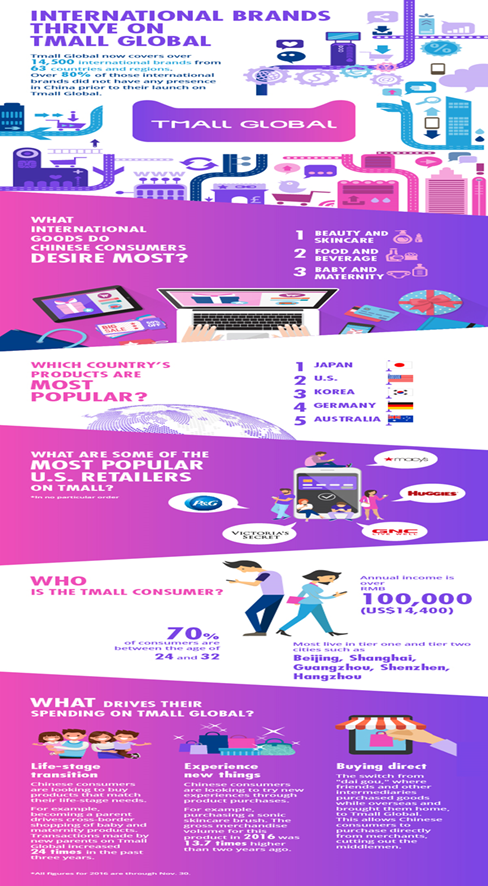
The demand for overseas goods continues to drive cross-border e-commerce in China and, as a result, further growth for Tmall Global.
The B2C shopping site, which provides Chinese consumers with a direct sales channel to overseas retailers, saw the total number of international brands on the platform sky rocket 169 percent to 14,500 in 2016 from 5,400 last year. The number of product categories soared 85 percent to 3,700 from 2,000 over the same period.
So what are Chinese consumers buying? Where do their favorite products come from? The infographic below showshow different trends in cross-border e-commerce are playing out on Tmall Global.
5. LearningResources