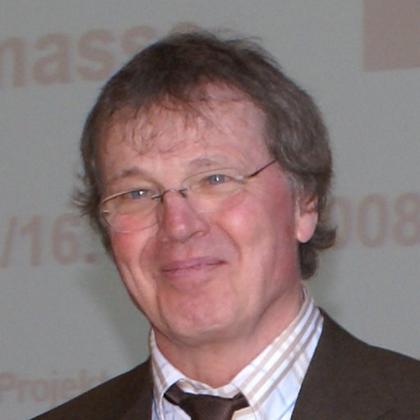
- 单位:德国哥廷根大学 University of Goettingen 地球科学中心
- 职称:教授
- 职位:河海学者讲座教授
- 性别:
- 社会职务:
- 微博:
Planned lecture/course (in English)
EnvironmentalGeosciences -
concepts to manage the pollution of air,soils, plants, sediments and water
Topics:
Atmosphere, air pollution, climate change; renewableenergy
Transport and dissipative distribution of pollutants
Water cycle, water balance, water demand
Sewage, sewage plants, water quality, water pollution
Water ecology, nutrient cycles and food chains inlakes and rivers; eutrophication
Wastes, dumps, abandoned polluted sites; use ofpolluted sites
Effect of pollution on ecosystems
Natural environmental memories - reconstruction ofpollution history; reference systems for pollution
Marine pollution; overexploitation of the seas (raw materialsand food)
Reserves resources of metallic and non-metallic rawmaterials and of energy sources; problems of exponential economic growth inlimited world
Chances and limits of recycling; ways out of resourceshortages (e.g. renewable energy)
Population growth - environmental stress
Water availability, soil degradation and worldnutrition
Environmental and social compatibility of measuresagainst shortages and pollution
Development of environmental consciousness,consequences for the individual and society.
The subjectareas are discussed in their global, but also their local dimension (casestudies). Because environmental problems can only be assessed and abolished ona multidisciplinary level, the ability for thinking and planning in a network(interdisciplinarity) will be stimulated in the lecture. The solution ofexisting environmental problems and the prevention of future problems mostlyneeds a team from different disciplines (e.g. natural scientists, technicianand engineers, economists, social scientists such as sociologist, psychologist,political scientist) and the involvement, participation and engagement of localpeople.
Later lecture/course (in English)
EnvironmentalGeochemistry
Environmental Geochemistry is acourse for students from the geoscience, agriculture, forestry, biology andchemistry departments. In addition to have attended "EnvironmentalGeosciences I+II" the students should know the basics in physicalchemistry (especially thermodynamics) because we perform some basic modeling ofenvironmentally relevant reactions. Duration: approximately 5 h per week over 2months
Topics
Change of water, soil, air,organisms etc. by human activities in the local as well as in the globalcontext (short introduction)
Natural and anthropogenicfluxes and interactions of harmful elements in and between differentenvironmental spheres (air, water, soil, sediment, & biosphere), elementbalances
Background values andenrichment factors; element input rates
Interactions of harmfulelements with solid-water interface: release, fixation, accumulation andtransformation processes
The impossibility ofphytoremediation of heavy metal contaminated soils
Speciation of elements;sorption, (co-)precipitation of harmful elements
Critical loads and criticallevels
Environmental records andglobal change
Environmental impact ofrenewable energies.
Ruppert教授现为河海学者客座教授。曾任德国哥廷根大学地球科学中心教授,硕导、博导,教务处处长,哥廷根可持续发展中心主任,在美国斯坦福大学、智利南方大学、纳米比亚大学等众多高校担任客座教授。曾任德国慕尼黑巴伐利亚地勘局重点实验室主任,德国慕尼黑州政府参议会高级议员。主要研究方向为环境地球科学,并以第一作者和通讯作者身份在国际知名期刊发表SCI百余篇,著作多部,作为IZNE联合研究项目的领导者,自2000年以来获得来自德国研究基金会等数百万欧元的项目资助,享誉世界。