Cross Cultural Communication:An Introduction to the Fundamentals
Gudykunst,W.B
§1.Intercultural Communication
Human beings have a great desire to be with people who are similar to themselves.This is because they share the same ways of doing things,the same values and operate by similar rules.When we are with people who are similar to ourselves,the wayswe have of doing things just seem like common sense.However,sometimes work or study or a sense of adventure take us out of our comfort zone.When this happens we realise that the things we took for granted about human interaction are not necessarily the same for everyone.This can be a very difficult,even shocking experience.This helpsheet explainswhat happens when people step out of their comfort zone by experiencing other cultures,either by travelling to another country or by being in contactwith people from other cultures who are in your home country.It explains how we react,why we react the way we do and how tomake the interaction between people from other cultures a positive experience.
1.1 What is Culture?
Culture can be defined as human creation(Freire,1970).It is the human part of the environment(Wang,Brislin,Wang,Williams,&Chao,2000).In other words,culture is the non-biological aspects of life.It is the process of generating and sharingmeaningwithin a social system.This social system is comprised of values,norms and ways of behaving and so culture comprises the ways we interact,behave,and communicate with one another.Culture is something that is learned from parents,schools the media and the broader community.Singer (1998)defined culture as:
a pattern of learned,group-related perceptions—including both verbal and nonverbal language,attitudes,values,belief systems,disbelief systems and behaviours that is accepted and expected by an identity group(Singer,1998:5)
Yet cultures are not fixed.They are changing and interconnected although changemay be slow or irregular.Cultures are dynamic as they are created and recreated through shared interactions(Gudykunst,1983).However,these changesmay be slow or irregular.
The important thing to remember about culture is that while itmay be fundamental,it is not innate.Yet it’s often not discussed,analysed or critiqued but is seen as being“common sense”.Culture is made up of the shared values and assumptions of a particular group of people.Because these values and assumptions are shared,it is easy to take them for granted and believe that they are“normal”.In thisway it is possible for people to believe that theways in which they behave and the things they value are right and true for everyone.As Paige (1993)has pointed out,cultures have an internal logic and coherence and hence their own validity.
However,in order to facilitate communication between cultures it is necessary to understand human reality as socially constructed(Berger&Luckman 1967 cited in Paige 1993).Ifwe can understand that then we can begin to understand that different groups may have different values,different ways of communicating,different customs,conventions and assumptions.While thesemay conflictwith our own understandings and assumptions it does not necessarilymean that they are inferior,“wrong”or“rude”.
Wang et al.,(2000:1-3)identify the essential features of culture.They are:
•Culture is the human made part of the environment.
•Culture reflectswidely shared assumptions about life.
•Culture is so fundamental thatmost people do not and cannot discuss or analyse it.
•Culture becomes evidentwhen someone encounters someone from another country who deviates from their own cultural norms.
•Culture is transmitted from generation to generation.
•Even in new situations,people can make a judgement about what is expected in their own culture.
•Cultural values endure and change takes place over a number of generations.
•Violations of cultural norms have an emotional impact.
•It is relatively easy(although not necessarily helpful)to make generalisations about cultural differences.
These key features are useful when we consider communication between cultures.
1.2 What is Intercultural Communication?
Today the world we live in is“a global village”where no nation,group or culture can remain anonymous(Samovar&Porter,1991).What happens in one part of the world affects all parts of the world.As the world is becoming smaller,we are increasingly interacting with people from many different cultures.While modern technology has made it easier for us to communicate with people anywhere in the world,such interactions can be difficult ifwe do not know how to dealwith people and cultures different from our own.Here are examples of some of the obviousmistakes politicians and businesses havemade when it comes to dealingwith other languages cultures:
•In Germany,a Berliner is a jelly donut.In his speech the Berlin Wall,President Kennedy,when he said“Heute,ich bin ein Berliner”actually said“Today,I am a jelly donut”when he reallymeant“Today,Iam Berliner(a native ofWest Berlin)”.
•In China,KFC’s“finger-licking good”was translated as“eat your fingers off”.
•Chevrolet attempted unsuccessfully to market its Nova compact car in Latin American countries.In Spanish,no va means“does not go”or“it doesn’t run”.
•In Australia,President Bush flashed a backhanded peace sign in motorcades.Many in Australia interpret that gesture as obscene.
(Source:Jandt,2001,Intercultural Communication:An Introduction)
These language and culturalmistakes can clearly be avoided ifwe increase our knowledge and understanding of other people and their cultures.The study of intercultural communication addresses this need by examining the communication and interactions between people of different cultures or subcultures.Fundamental to intercultural communications is the belief that it is through culture that people learn to communicate.A Chinese,an Egyptian,or an Australian,for example,learns to communicate like other Chinese,Egyptians,or Australians. Their behavior conveysmeaning because it is learned and shared.In other words,it is cultural.Thus,the ways in which people communicate,their language patterns,style,and nonverbal behaviors are all culturally determined(Klopf&Park,1982).
Samovar&Porter(1997)point out that as cultures differ from one another,the communication practices and behaviours of people will inevitably vary as a result of their different perceptions of the world.Intercultural communication,more precisely then,is defined as the study of communication between people whose“cultural perceptions and symbol systems are distinct enough”to alter their communication(Samovar and Porter,1997:70).In their model of intercultural communication,Samovar and Porter(1997)illustrate the process of how themeaning of amessage changeswhen it is encoded by a person in one culture and decoded by a person in another culture in the context of his or her own cultural background.In some cases,themessagemay be interpreted to carry a differentmeaning than was intended.
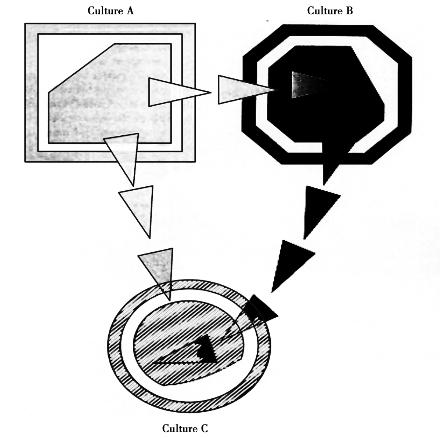
Figure1 Intercultural Communication M odel (Source:Samovar and Porter,1997)
In Figure 1 A,B and C represents three different cultures.Cultures A and B are similar to one another while culture C is quite different.Within each culture is another form similar to the shape of the influencing parent culture.This represents the person who has been molded by his/her culture.However,the shape of the person is somewhat different from that the parent culture since we are all shaped by our culture,but are also influenced by other factors aswell (e.g.age,gender,class,race,etc.).Also,within any culture there is internal variation.
The series of arrows connecting the figures represents the production,transmission,and interpretation ofmessages across cultures.When a message leaves culture A,for example,it carries the content of the message as it is intended.When it reaches culture B,the message changes because the new culture influences how the message is interpreted and hence its meaning.Also,the greater the differences between the cultures,themore likely themessagewill be changed.
For example,the change that occurs between cultures A and B is much less than the change between cultures B and C.This is because there is greater similarity between cultures A and B and themessage is interpreted more nearly like itwas originally intended.Culture C,on the other hand,is quite different from cultures A and B and the message is interrupted differently there and becomesmore like the pattern of culture C.
Samovar and Porter’smodel shows the possibility ofmisunderstandings that always exist in intercultural communication,especially if there is great variation in cultural differences.As their model illustrates,the amount of influence a culture has on communication between cultures clearly depends on the similarity of the cultures.The more the cultures are alike,the less influence culture will have on communication.For example,in intercultural communication situations involving Americans and Canadians,culture would not have a strong impact as the two cultures havemuch in common(e.g.language,geography,religion,political system,etc.).On the other hand,we can expect culture to have great impact when a German communicates with a Chinese as the two cultures differ greatly(e.g.physical appearance,language,religion,concept of self,etc.)
When communicating with someone from a different culture,we can therefore expect cultural differences to have an influence.Cultural differences stem from our differing perceptions,which in turn determines how we communicate with people of other cultures.By understanding how people perceive the world,their values and beliefs,we can better understand what they say and can anticipate potential cross-culturalmisunderstandings.Let’s now look more closely atwhatwemean by perceptions,beliefs and values in the intercultural context.
1.2.1 Perception
Perception is defined as“the internal process by which we select,organise and interpret information”from the outside world(Klopf&Park,1982:26).In other words,our perceptions of the world arewhatwe tend to notice,reflectupon and respond to in our environment thatare meaningful and significant to us.As a result,no two of us perceive our surroundings in exactly the sameway.This is especially the case ifwe interactwith peoplewho come from cultures very different from our own.The way in which each one of us perceives the world is learned and is part of our cultural experience.Whether itbe the judgmentwemake of a certain kind of food or the responseswe have to going to see the doctor,we all react to these different events in the way that our culture has taught.Our perceptions are culturally determined and in turn influence the way we communicate with others.
1.2.2 Beliefs
Beliefs are the judgmentswemake aboutwhat is true or probable.They are usually linked to objects or events that posses certain characteristics thatwe believe to be true with orwithout proof(Samovar&Porter,1997).For example,we have beliefs about religion(there is a God),events(the meeting was successful),other people(she is friendly)or even about ourselves(Iam hard-working).According to Price(2000),mostof our beliefs are ideas about how thingswork,why things are the way they are,and where things come from.Many of our beliefs are also concerned with providing an explanation for things which would otherwise be unpredictable or inexplicable,such as theweather,death and romance.Like our perception,our beliefs are determined by our cultural backgrounds and experiences.We are taught very early on what to believe based on what our culture considers worthy and true.Subsequently,our belief systems form the basis of our values,which determine in large measure how we behave and relate to others.
1.2.3 Values
Values are defined as“an enduring set of beliefs that serve to guide or direct our behaviour”(Klopf&Park,1982).They represent the norms of a culture and specify,for instance,what is good or bad,right or wrong,rude or polite,appropriate or inappropriate.In other words,they provide us with a set of rules for behaving,making choices and reducing uncertainty.Like our perceptions and beliefs,values are learned and hence subject to interpretation.When we interpret behaviour,an object,or an event,we are applying value judgments,which reflect our particular culture.
For instance,an English person who values personal space very highly may consider it rude when a Mexican stands too close.A Japanese who values conformity may find it inappropriate when an American express too much of his or her own opinions.The relative importance of valueswithin each culture can also be revealed through sayings,such as“Time ismoney”(American),“A zebra does not despise its stripes”(African)or“No need to know the person,only the family”(Chinese).Such sayings impart values that are important in each culture and can provide uswith a better understanding of others’cultural beliefs.
One of the criticisms of discussions of intercultural communication is that it can be said to generalise about cultures.However,our aim is not to oversimplify,or to claim that‘Asian students are like this’and‘Australian students and like that’.The idea that there is such a thing as an‘Asian student’is clearly an over generalisation as Asia is a vast area,comprising many nations.Even the idea of a‘Chinese’student is a difficult one.Do we mean only mainland China?Clearly not.Do wemean Chinese speaking?Not necessarily.The notion of an ‘Australian’is also a difficult one as this is a new country comprised of the original inhabitants,the Aborigines,the white colonists and more recentmigrants from a wide range of backgrounds.
When thinking about communication between cultures,rather than thinking of them as entirely separate and static it ismore useful to consider them as dynamic and interconnected.However,it is also important to consider that for particular characteristics(for example individualist/collectivist),while individuals in each culture will be found across the spectrum,in any one culture people will be clustered around a certain point.Although people are clustered around a certain point,there is also an area of overlap where they may share some similarities.
References
Freire,P.Pedagogy of the oppressed(M.B.Ramos,Trans.).New York:Seabury.1970.
Gudykunst,W.B.Intercultural communication theory:Current perspectives.Berverly Hills:Sage.1983.
Jandt,F.E.Intercultural communication:An introduction(third ed.).Thousand Oaks:Sage.2001.
Klopf,D.W.,&Park,M.Cross cultural communication:An introduction to the fundamentals.Seoul:Hanshin Publishing Co.1982.
Paige,R.M.On the nature of intercultural experiences and intercultural education.In R.M.Paige(Ed.),Education for the intercultural experience.Yarmouth,ME:Intercultural Press.1993.
Price,F.The naked Australian:The valuable Australian.Melbourne:Workshop.2000.
Samovar,L.A.,&Porter,R.E.Communication between cultures.Belmont,CA:Wadsworth.1991.
Samovar,L.A.,&Porter,R.E.(Eds.).Intercultural communication:A reader(eighth ed.).Belmont,Ca:Wadsworth Publishing Company.1997.
Wang,M.M.,Brislin,R.,Wang,W.,Williams,D.,&Chao,J.H..Turning bricks into jade:Critical incidents formutual understanding among Chinese and Americans.Yarmouth,ME:Intercultural Press.2000.