第三章 代词(Pronoun)
1.代词概述
代词pronoun简写pron.是代替名词的一种词类。大多数代词具有名词和形容词的功能。英语中的代词,按其意义、特征及在句中的作用分为:人称代词、物主代词、指示代词、疑问代词、关系代词、不定代词、反身代词和连接代词等等,如:
人称代词: I我 you你 he他 she她 they他们 me我(宾格)you你(宾格)him他(宾格)her她(宾格)them他们(宾格)
物主代词:my我的 his他的 your你的(your你们的) their他们的 her她的
指示代词:this这 that那 these这些 those 那些
疑问代词:who谁 what什么 which哪个
关系代词:which指物 who指人 that指人或物
不定代词:some一些 many许多 both两个;两个都
反身代词:myself我自己 himself他自己 themselves他们自己
连接代词: who, whom, whose, what, which, whatever, whichever, whoever, whomever
相互代词:each other 互相 one another互相
替代词:one(单数),ones(复数) 用于替代前面出现的同类事物
以下各节将分述各代词的用法。
2.人称代词
人称代词用以代替人和事物的名称,分为主格和宾格两种形式:
人称代词的主格与宾格
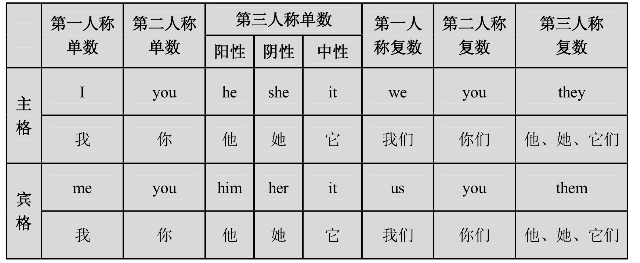
1)人称代词主格形式用来作句子的主语和表语。如:
I like kitty very much.
我非常喜欢小猫。
Are they Japanese?
他们是日本人吗?
Where are they?
他们在哪?
That’s it.
就那么回事。
It’s he who broken the window!
是他打破了玻璃!
She is a warm hearted girl.
她是个热心的女孩。
2)人称代词宾格形式用来作及物动词或者介词的宾语。如:
Give me a hand, please!
请帮帮我吧!
Who teaches you Math this year?
今年谁教你们的数学?
I believe in you.
我相信你。
Mary loves him very much.
玛丽很爱他。
He often writes letters to her.
他常给她写信。
Never forget it!
永远别忘了它(指代对话双方皆知的事物)。
If you got any information, please tell us.
如果你有任何消息,请告诉我们。
We’d better give them another chance.
我们最好再给他们一次机会。
3)人称代词作表语或者出现在比较状语从句连词than或as之后时,其主格形式及宾格形式皆可用,口语常用其宾格形式。如:
——Who is it? 是谁?
——It’s I/me. 是我。
You did better than he/him.
你比他做得好。
You look as beautiful as her/she.
你和她一样漂亮。
4)当三个不同人称同时出现,或者主语中包含“我”时,按照“you→he→I”的顺序来表达。如:
Both he and I are working at that company.
我和他都在那家公司上班。
——Who was chosen to go there? 谁被选中去那儿?
——You and me.你和我。
5)人称代词it除了可以指代人、物之外,还可以表示“时间、天气、温度、距离、情况”等含义,除此之外,还可以作“非人称代词”使用,作形式主语或者宾语的不定式、动名词或名词性从句。如:
——What’s the weather like today?今天天气怎样?
——It’s sunny. 天气晴朗。
——What’s the time? 几点啦?
——It’s 9:00. 9点。
It’s a long way to go.
那可要走好长的路。
It took me a week to clean my house.
打扫屋子花了我一周时间。
It is very clear that the public want to know when these men can go into space.
很显然,公众想知道这些人什么时候能进入太空。
We found it very difficult to learn advanced mathematics well for most girls.
我们发觉对大多数女孩来讲要学好高数是非常困难的。
3.物主代词
物主代词是用以说明事物所属关系的代词,分为形容词性物主代词和名词性物主代词两种:
名词性及形容词性物主代词
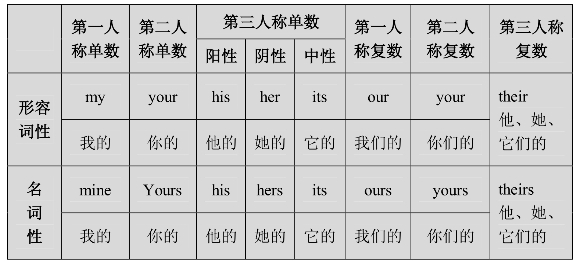
1)形容词性物主代词不能独立出现,后面要跟名词,作句子中名词的修饰语。如:
Is that your bag?
那是你的包吗?
I went to see my aunt last Sunday.
我上星期天去看的我阿姨。
These are their books.
这些是他们的书。
Fortune sometimes uses our faults for our advancement.
命运有时用我们的过错推动我们进步。
2)名词性物主代词相当于名词,既能代替事物又表明所属关系,在句子中往往独立地作主语、宾语或者表语,后面不可以跟名词。如:
This is your seat, but where is mine?
这是你的座位,可我的在哪儿?
Your classroom is very big, but ours is rather small.
你们的教室很大,我们的相当小。
Whose book is it? It’s hers.
这是谁的书?她的。
3)“of + 名词性物主代词”称为双重属格,作定语时置于名词之后。如:
A friend of mine will come to see me tomorrow.
我的一个朋友明天会来看我。(指若干朋友中有一个会来看我)
My friend will come to see me tomorrow.
我朋友明天会来看我。(指我的那个特定的朋友会来看我)
4.反身代词
反身代词,是一种表示反射或强调的代词,通过反身代词指代主语,使施动者把动作在形式上反射到施动者自己,因此,反身代词与它所指代的名词或代词形成互指关系,在人称、性、数上保持一致。其形式有如下几种:
反身代词
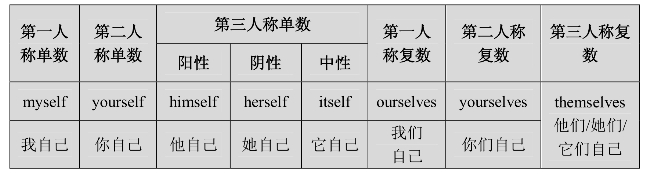
反身代词可用作宾语,表语,主语的同位语和宾语的同位语。
1)反身代词在句子中作宾语表示反射(指一个动作回到该动作执行者本身)。如:
Don’t play with the knife, Ann, you might hurt yourself.
安,不要玩刀子,那会割伤你自己的。
Take good care of yourself.
把自己照顾好。
I am teaching myself computer.
我自学计算机。
She prided herself on being a Chinese.
她以自己是中国人为荣。
2)反身代词在句子中作表语指表语和主语表示同一个或同一些人或事物。( be oneself )
I am not quite myself today.
我今天有点不舒服。
That poor boy was myself.
那个贫苦的男孩就是我自己。
The cat in the mirror is itself.
镜子里的猫就是它自己。
The poor girl in the story is herself.
故事中可怜的女孩就是她自己。
3)在句子中作同位语表示强调(即用来强调名词或代词的语气)。如:
The story itself is good. Only he didn’t tell it well.
故事本身是好的,只是他没有讲好。
The child himself drew this picture.
孩子自己画的这张画。
You should ask the children themselves.
你应该问一问孩子们自己。
Why not ask your friends for help when you can't collect enough information by yourself?
当你自己不能搜集足够的信息时,为何不要求你的朋友帮忙呢?
5.指示代词
指示代词用以指示说明近处或者远处、上文或者下文、以前或者现在的人或事物。其形式及含义如下:
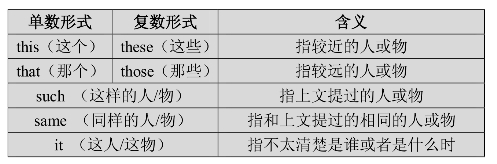
指示代词既可以单独使用作句子的主语、宾语或表语,也可以作定语修饰名词。如:
This is very good.
这个非常好。
I don’t like that.
我不喜欢那个。
That’s it.
就这样。
What’s this?
这是什么?
That model plane is made of plastic.
那只模型飞机是塑料做的。
Remember never to do such things.
记得永远不要做这样的事情。
Do the same as the teacher tells you.
按老师说的做。
——Who is it? 是谁?
——It’s me! 是我!
6. 关系代词
常用关系代词有who, which, that, who, whom, whose等,用以引导定语从句。
1)关系代词who, which, that, whom 等,将定语从句和主句连接起来,一方面在从句中担任一定的成分,另一方面又起连接作用。如:
The student who is drawing a picture is in Grade One.
正在画画的学生是一年级的。
This is the students whose name is Wang Hua.
这就是名叫王华的学生。
This is the man who helped me yesterday.
这个男人昨天帮了我。
The car which Mary drives is brought by her aunt.
玛丽开的车是她姨买的。
2)关系代词who / whom指人,如果作从句的宾语,有时可省。如:
Do you know the woman who is wearing a red hat?
你认识那个戴着红帽子的女人吗?
The girl in blue skirt is whom he loved.
那个穿蓝裙子的是他的所爱。
3)关系代词which指物,如作从句的宾语,有时可省。如:
Have you found the book which you lost several days ago?
你找到几天前丢失的那本书了吗?
The house which is burned is Green’s.
被烧的房子是格林的。
4)关系代词that既可指人也可指物,如作从句的宾语,则有时可省。如:
Can you see the dog that is running along the river bank?
你看得见顺着河跑的狗了吗?
Tom said that he want to go New York someday.
汤姆说他想有一天去纽约。
7. 连接代词
用来引导宾语从句、主语从句或表语从句的连接词称连接代词。英语中连接代词主要有:who, whom, whose, what, which, whoever, whomever, whichever, whatever(疑问代词在引起从句时都称为连接代词),一共九个,即除了whose后不能加后缀“-ever”,其余都可以。
1)宾语从句:
I don’t care what he thought.
他怎么想我不管。
Ask her which he wants.
问她他要哪一个。
My father said he will try his best to buy things whatever I want.
爸爸说我想要任何东西他都会尽力去买。
2)主语从句:
It hasn’t been announced which team won the prizes.
还没宣布哪个队获奖。
It is a lady who helps the poor man.
是位女士帮助了那可怜人。
It is clear enough what the boss meant.
老板是什么意思很清楚。
It is impossible that you could get what you want from Anna.
想要从安娜那里得到你想要是不可能的。
3)表语从句:
The question is who(m)we should trust.
问题是我们应当相信谁。
What I want to know is which road we should take.
我想知道的是我们应走哪条路。
The skirt I chose is which cheap and in light color.
我挑的是那件便宜点的浅色裙子。
He has become what he wanted to be ten years ago.
他已经成为了他10年前想成为的。
4)状语从句
Wherever you go, whatever you do, I will be right here waiting for you.
无论你去哪里,无论你做了什么,我都会在这里等你。
Where there is no rain, farming is very difficult.
在没有雨水的地方,耕作是很困难的。
Where she went, there she was warmly welcomed.
她走到哪里都受到热烈欢迎。
You should have put the book where you found it.
你本来应该把书放回原来的地方。
5)连接代词还可引起不定式,都用作宾语或介词的宾语:
Tell me what to do.
告诉我怎么做。
Tom can’t decide which to choose.
汤姆不能决定选哪个。
They exchanged views on the question of whom to elect.
他们就该选谁的问题交换了意见。
8.不定代词
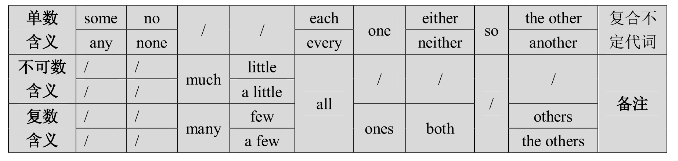
没有明确指定或代替任何特定名词或形容词的词叫做不定代词,其中,复合不定代词是由 some, any, no, every 和 body, one, thing 与表中不定代词组合构成的复合词。复合不定代词有:something(某事),someone(某人), somebody(某人), anything(任何事),anyone(任何人),anybody(任何人),nothing(没事),nobody(没有人),no one(没有人), everything(一切),everyone(每个人), everybody(每个人)。常用的不定代词如下表:
常用不定代词
1)some的用法:
不定代词some一般用于肯定句中,意思是“几个”、“一些”、“某个”,some作定语时可修饰可数名词或不可数名词,常用在肯定句中作主语、宾语、定语等。如:
some are doctors,some are nurses.
有些人是医生,有些人是护士。(作主语)
I have some work to do today.
今天我有些事情要做。(做宾语)
They will go there some day.
他们有朝一日会去那儿。
some 用于疑问句时,表示建议、请求或希望得到肯定回答。如:
Would you like some coffee?
你要些咖啡吗?
Do you want some changes?
想要些零钱吗?
2)any的用法:
any 一般用于疑问句或否定句中,意思是“任何一些”、“任何一个”,作定语时可修饰可数或不可数名词,作主语、宾语、定语等。如:
There isn’t any ink in the pen.
钢笔里没有墨水了。(作定语)
Till now, Tom didn’t have any friends here.
直到现在,汤姆在这里还没有任何朋友。
Have you got any questions to ask?
还有问题要问吗?
any 用于肯定句时,表示“任何的”。如:
you may come at any time,I’ll be home the whole day.
你任何时候来都行,我整天都会在家里 。
Come here with any friend.
随便带什么朋友来都行。
不定代词any也可以用作副词,做状语,表示程度。如:
Is your mother any better today?
今天你妈妈好一点了吗?
3)no的用法:
no是形容词,做不定代词用只能作定语,表示意思是“没有”,修饰可数名词(单数或复数)或不可数名词。如:
There is no time left.
没有时间了,请快点。
They had no books to lend.
他们没有书可以外借。
We have no youth to waste.
我们没有可以浪费的青春。
4)none的用法:
不定代词none表示的意义和no one,not any相同,和all相反,意思是“没有一个人(或事物)”,表示复数或单数,其用法相当于名词,一般在句子中作主语或宾语。
none代替不可数名词作主语时,谓语动词用单数形式;代替可数名词作主语时,谓语动词用单、复数都可以(谓语动词单复数形式一般根据所要表达的意义选择使用)。如:
None of the problems is /are easy to solve.
这些问题没有一个是容易解决的。
None of them is/are in the classroom.
他们当中没有一个在教室里。
I have many novels, but none is interesting.
我有很多的书,但没有一本是有趣的。
None of the sisters can play the piano.
姐妹中没有一个会弹钢琴。
None of the fish is fresh.
鱼都不新鲜了。
None of the water in this area is fresh.
这个区域没有淡水。
None of the money here is earned by you.
这里没有你赚的钱。
For elder brother I have none.
我没有哥哥。
For gold and silver I have none.
我没有金银财宝。
5)all 和both的用法:
不定代词all,含义为:“所有”,表示或修饰可数名词时,指两个以上的人或物;也可用来代替或修饰不可数名词。在句中可以作主语、宾语、表语、定语或同位语。如:
All were present at the meeting.
全都到会了。(作主语,代表可数名词。)
All men make fault.
人非圣贤,孰能无过。(作主语,修饰可数名词。)
The bread is all.
面包吃光了。(作表语)
We foresaw all this.
我们预见到这一点。(作宾语)
不定代词both,指两个人或物,用来代替或修饰可数名词,和all一样,可以在句子中作主语、宾语、表语、定语等。如:
They both have good personalities.
他们两个都有很好的性格。(作主语)
Both sides claimed the victory.
双方都主张自己拥有胜利。(作主语)
We invited both of you to come to our farm.
我们邀请你们两个人都来我们的农场?(作宾语)
He asked both of you.
你们两人他都问了。(作宾语)
The brothers are both dead.
兄弟两个都死了。(作表语)
all和both既可以修饰名词(all/both+(the)+名词),也可以独立使用,采用“all/both + of the +名词(复数)”的形式,其中的of 可以省略。如:
All(of)(the)boys are naughty.
是男孩都调皮。
We were both(of)the same nationality.
我们俩是同一国籍的人。
Both(of)the books are not helpful.
这两本书都没用。
Both(of)the drivers were at fault.
两个司机都有责任。
6)each 和every用法:
Each是不定代词也可做形容词,每个,各自的,指每一个人或事物的个别情况。它在句中可以作主语、宾语、定语和同位语。如:
she gave the children two apples each.
她给了每个小孩两个苹果。(作the children的同位语。)
Each has his good point.
各自有各自的好。(代词,主语)
Our head teacher had a talk with each of us.
我们的班主任分别找我们谈了话。(代词,宾语)
The students each have a desk.
学生们每人一张桌子。(代词,同位语,不影响谓语动词的单复数)
The children can have a bag each.
每个孩子可以有一个书包。(副词,状语)
Each school has its library.
每个学校都有图书馆。(形容词,定语)
Each vehicle is interchangeable.
各个装置都可以互换。(形容词,定语)
Each and every family knows it.
这事家喻户晓。(形容词,定语)
Each life is precious.
每个生命都是宝贵的。(形容词,定语)
Brush after each meal.
饭后刷牙。(形容词,定语)
every同样是不定代词也可做形容词,有每一的、一切的意思,表示整体概念“全体”的,和all的意义相近,但只能作定语。如:
Every shoe fits not every foot.
凡事不能用一种尺度。
Every barber knows that.
众人皆知。
We must make it Correct in every particular.
我们必须保证每个细节都没有错误。
Things like that will happen every second year.
这种事每两年会发生一次。
Every girl likes it.
每个女孩都喜欢它。
each与every都可用作形容词,在句中作定语,但each更强调个人或个别,every更强调全体或全部。如:
I know each member of your family.
我认识你们家的每一个成员。
I know every member of your family.
你们一家我都认识。
7)either 和neither 的用法:
不定代词 either,意义为两者之中的任何一个,这个或那个。可以作主语、宾语和定语。如:
Either of them will agree to this arrangement.
他们两人中会有人同意这样的安排的。(作主语)
I don’t care much for what to drink. Either of the two will do.
我不介意喝些什么,两个之中随便哪一个都行。(作主语)
Either will be OK.
都行。(主语)
On either side of the river there are a lot of trees.(定语)
河的两边都有许多树。
I will choose either east or west.
我会选择东或者西。(宾语)
不定代词 neither 是 either 的否定形式,意思是“两个都不”,可以作主语、宾语和定语。如:
——Will you go there by bus or by car? 你坐公交车去还是坐轿车去?
——Neither. I will go there by train. 一个都不坐,我坐火车去。
Neither boy is going there.
两个男孩儿都不打算去那里。(定语)
Neither is interesting.
两个都没有趣。(作主语)
Neither is dispensable.
两者缺一不可。(作主语)
I like neither.
(两个)我一个也不喜欢。(作宾语)
注意:neither和either在句子中作主语、宾语和定语等时,都用作单数。如:
Neither seat is occupied.
两个座位都没有被占。(定语)
Either way suits me.
每个方式都适合我。
8)other(others)、the other(the others)和another的用法:
不定代词other含义是“另一”、“另一些”,有复数形式。在句子中可作主语、宾语和定语。如:
Some girls are singing under the big apple tree and others are sitting on the grass talking.
有些女孩在大苹果树下唱歌,别的就坐在草地上说话。(作主语)
Other times other manners.
另一个时代,另一种风俗。(俗随时变)
What about we meet some other day?
我们改天再见如何?
The Greens move to other place.
格林一家搬去另外的地方了。
不定代词another,意思是“另外”、“又一个”,表示增加,在句中可作宾语和定语。the other意思是“另外的一个”主要从数量上区分,只有在说明两个中的另外一个时用the other,在原先基础上增加用another。如:
You have had several cakes. Do you really want another one?
你已经吃了好几块饼子了,你真的还要一块?
I want another four books.
我还要四本书。
This is one of your socks. Where is the other one?
这是你的一只袜子,还有一只呢?
I have eaten 4 cakes, but I still want another.
我已经吃了4块蛋糕,但是我还要1块。
注意:others与the others的主要区别:
others指“剩余的人/物”(指大部分);the others指“其余的人/物”,(指全部)。如:
A few students are playing soccer while others are watching them.
有几个学生在踢足球,其他一些人在观看。
Two of the ten girls are standing and the others are sitting round them.
十个女孩中有两个站着,其他人都围着他们坐着。
9)many和much的用法:
many的含义是“很多”,用于可数名词复数;much意思也是“很多”,但用于不可数名词。它们在句中可作主语、宾语和定语等。如:
I don’t have many friends in Xi’an.
在西安我没有很多的朋友。
Many pets died in the bus accident.
许多宠物在公交车祸中丧生。
There are many trees along the river.
沿河有很多树。
Bob picked many apples back.
鲍勃摘了很多苹果回来。
We can learn much with the help of him.
在他的帮助之下我们能学到很多。
He talks much errs much.
言多必失。
Much thinking yields wisdom.
多思出智慧。
Jack invested much capital in this company.
杰克给这个公司投资很多。
注意:在日常应用中,我们会发现肯定句中通常用a lot of 或者lots of;many和much常用于否定句,many / much用于肯定句时常在前面加上so,very或too。如:
There are a lot of people on the playground.
操场上有许多的人。
They haven’t got much work to do.
他们没有多少事情可做。
There are too many people in the room.
房间里人太多了。
10)few、little、a few、a little的用法:
few和little含义是“很少几个”、“几乎没有”,含否定意义,a few和a little意思是“有几个”、“有些”,有肯定含义;其中,little和a little用于不可数名词或代替不可数的事物;few和a few用于可数名词或代替可数的事物。它们在句中可作主语、宾语和定语。如:
At that time, he is very poor and has little money.
当时他很穷,几乎没有什么钱。(little与不可数money连用,表示否定意义)
Hurry up! There is little time left.
快点,没什么时间了。(little与不可数time连用,表示否定意义)
He spoke little.
他话不多。(作宾语,表示否定意义)
I know little French.
我懂的法语不多。(little与不可数French连用,表示否定意义)
Come on, there is a little water in the bottle.
来吧,瓶子里还有一点水。(a little与不可数Water连用,表示肯定意义。)
Presently he calmed a little.
他很快就平静些了。(a little与不可数calm连用,表示肯定意义。)
Give me a little hair-tonic, please.
给我点护发素。(a little与不可数hair-tonic连用,表示肯定意义。)
Uncle Wang looked a little excited.
王叔叔看上去有点激动。(a little与不可数excite连用,表示肯定意义。)
In that polar region there live few people.
在那个极地地区几乎不住人。(few与可数people连用,表示否定意义)
There are few or no results.
那是徒劳的。(few与可数result连用,表示否定意义)
Few people are randomly violent.
很少有人是随意发火的。(few与可数people连用,表示否定意义)
We saw few students there.
我们在那儿几乎没看见学生。(few与可数student连用,表示否定意义)
There are a few personal belongings.
有一点私人物品。(a few与可数belonging连用,表示肯定意义。)
It will continuous for a few months.
这会持续几个月。(a few与可数month连用,表示肯定意义。)
You can get a few sweets from him.
你可以从他那儿弄到一些糖果。(a few与可数sweet连用,表示肯定意义。)
She will stay for a few days.
她会小住几天。(a few与可数day连用,表示肯定意义。)
11)复合不定代词
复合不定代词,即由some,any,no,every和body,one,thing与“常用不定代词”表中不定代词构成的复合词:something(某事),someone(某人),somebody(某人),anything(任何事),anyone(任何人),anybody(任何人),nothing(没事),nobody(没有人),no one(没有人),everything(一切),everyone(每个人),everybody(每个人),以及whoever,whatever,whichever(后三者也可作疑问代词)等在句子中作单数使用。修饰复合不定代词的定语,应放在它们的后面。如:
He has nothing much to do today.
他今天没有多少事情做。
He would eat nothing sweetness.
他不肯再吃任何甜的东西。
Nobody offered any sharp objection.
没有人提出任何尖锐的反对意见。
Nobody else will come.
再不会有谁来了。
No one can remain youthful forever.
没有人能永保青春。
No one objected to the plan.
没有人反对这项计划。
Is everthing to your satisfaction?
一切都还满意吗?
Use everthing for your enrichment, learning, and growth.
用所有的事来丰富你的人生、学习和成长。
Everyone slaves for money.
每个人都为赚钱而辛苦工作。
She wishes everyone well.
她祝所有的人好运。
Everybody liked me, everybody petted me.
每个人都喜欢我,宠爱我。
Everybody has a high mind.
人人有一个崇高的理想。
注意:
复合不定代词中,somebody, something, someone 常用于肯定句中,如:
When somebody lies, somebody loses.
说谎者必失。
Somebody call an ambulance.
请叫救护车。
He'll certainly accomplish something.
他定会搞出名堂来的。
All turn into something beautiful.
使一切变得如此美丽。
Hey, Lily, There is someone outside the door.
嗨,丽丽,门外有人。
Hero means someone you admire.
英雄是指你所崇拜的人。
复合不定代词中anything,anybody,anyone一般用于疑问句、否定句和条件状语从句中。如:
Did you say anything?
你说什么来着?
Mother hates anything illegal.
母亲痛恨任何不合法的事。
What should I do if anything should occur?
如果发生什么事情的话我该怎么做?
Is anybody there?
有人在吗?
Hardly anybody came.
几乎没有人来。
If anybody phones, tell them I'm busy.
要是有人打电话来,告诉他我很忙。
Did you meet anyone when you came to school last Sunday?
上个星期天你来学校时见到什么人了吗?
I can't see anyone around.
我看见附近一个人也没有。
If anyone fouled, it was you.
要是有人犯规的话,那人是你。
12)one与ones的用法:
One与ones用以代替上文出现过或对话双方清楚的一个或多个人或事物,前面可以加冠词、形容词、指示代词、which等。如:
Which jacket would you like, this one or that one?
你要哪件夹克,这件还是那件?
One must drink as one brews.
自作自受。
——Which skirt should I buy in these two? 这两件裙子我该买哪个好?
——The brighter one. 颜色亮一点那个。
So many flowers here! Look at that one! What a beautiful lily!
哇!这里这么多花啊!看那个!多美的一枝百合啊!
I don’t like the green ones.
我不喜欢绿色的那些。
Would you like gold ones or platinum ones?
您想要黄金的还是白金的?
Which ones need improvement?
哪些有待改进?
Those ones are in good quality.
这些都是好质量的。
13)so的用法:
作为不定代词,so可以代替一件事情,作句子的宾语或表语。如:
I don’t think so.
我不是这样认为的。(宾语)
He lost a book. So did I.
他丢失了一本书,我也是。
It could be so.
可能如此。(表语)
14)a lot of、lots of、a number of(large numbers of)、a great deal of、plenty of的用法及区别:
以上五个都是“名词+介词”短语结构,都表示“大量,许多”。
a lot of(或lots of)既可以修饰不可数名词也可以修饰可数名词的复数形式,可以相应地换为much和many。如:
许多的人认为时间就是金钱。
A lot of people think that time is money.
Many people think that time is money.
她有许多的钱。
She has lots of money.
She has much money.
plenty of“足够、大量”,既可以修饰不可数名词也可以修饰可数名词的复数形式。如:
I don’t have to do it in a hurry because I have plenty of time.
我用不着赶忙,因为我有充足的时间。
This area didn’t have plenty of rain last year.
这个地区去年雨量不充沛。
a number of / large numbers of只可以修饰可数名词复数形式(它修饰的词作主语时谓语用复数形式)可以换为some、many、a lot of、plenty of。如:
I have a number of /many/a lot of/plenty of letters to write today.
今天我有好多信要写。
Large numbers of firms went into bankruptcy at that time.
那时候大批公司破产。
a great deal of只可以修饰不可数名词(它修饰的词作主语时其句谓语用单数形式)可以换为much。如:
A great deal of /much work awaits us.
大量的工作等着我们去做。
I spend a great deal of/much time and money on shopping.
在购物方面我花费了大量的时间和金钱。
15)none、no one、nobody的用法及区别:
no one和nobody都表示“没有人”的意思,仅仅指人,后面不跟of 短语,作主语时谓语用单数形式;none表示“没有一个人/物”,可指人也可以指物,后面可跟of短语,作主语时谓语可用单数也可用复数。如:
He slighted no one.
他不轻视任何人。
No one knows how he managed to get the ticket.
没有人知道他是怎样搞到那张票的。
Nobody answers the telephone.
没人接电话。
Nobody handed in his composition yesterday.
昨天没有一个人交作文。
He said he remember none of these formula.
他说这些公式他全记不得。
None of my friends came to see me that day.
那天没有一个朋友来看我。
9.相互代词
each other,one another是相互代词,即表示相互关系的词,意思是“互相”的,each other表示两者之间,而one anther表示许多人/物之间。如:
We must help each other when we are in trouble.
我们身处困境时要互相帮助。
They rely on each other.
他们互相依傍。
Sciences depend on one another.
各门科学都是互相关联的。
They sat there without talking to one another.
他们坐在那儿,互相都不说话。
它们有所有格形式each other’s ,one another’s。如:
Please don't waste each other's time.
请不要浪费彼此的时间。
They lost their tempers easily and called one another's names.
他们动不动就发脾气,互相谩骂。
10.疑问代词
疑问代词指用来提出问题的代词,常用的疑问代词有:who, whom, whose, what, which, whoever, whatever, whichever等。
1)who, whom, whose, what, which, whoever, whatever, whichever主要用于特殊疑问句中,一般放在句首。口语中也常用who代替whom作宾语,但在介词后则只能用whom。如:
Who (m) did you invite to your birthday party?
你都邀请了谁参加你的生日聚会的?
To whom do these goods belong?
这些货物属于谁?
Whose bag is it?
这是谁的包?
What does she want to be when she grows up?
她长大了想干什么?
Which one do you want to buy?
你想买哪一个?
注意:whoever,whatever,whichever构成的问句,一般有腔调意味,有“无论谁、到底是谁”,“无论什么、到底怎样”,“任何一个、究竟哪个”的意思,如:
Whoever said that?
到底谁讲的这话?
Whatever became of him?
他怎么样了?
Whichever did you choose?
你究竟挑哪个?
另,whoever, whatever, whichever也常用作不定代词(未归入不定代词中讲解),表示“任何人”,“任何事”,“任何一物”的意义,如:
Whoever comes will be welcome.
任何人来都欢迎。
Whoever knows him praises him.
认识他的所有人都赞扬他。
Do whatever seems best.
只要察觉出是最好的,就去做。(whatever这里指觉得最好的所有事)
Remember: Whatever happens happens for reason.
记住:无论发生任何事,每件事都有它的理由。
Whichever you want is yours.
你要哪个哪个就是你的。
Take whichever hat suits you best.
找个最适合你戴的帽子。
2)who和whom只能独立使用,其中who可以作句子的主语、表语或动词的宾语,whom只能作谓语动词的宾语;而what,which,whose等既可以独立使用作主语、表语和宾语,也可以与名词构成疑问短语。如:
One who applauds will get a teddy bear.
鼓掌的人可以得到一个玩具熊。
Who is that man?
那男的是谁?
Whom are you calling?
你要找谁听电话?
Who gives consent to whom?
谁又来准许谁?
What color are their hats?
他们的帽子是什么颜色?
I must know what the law ordains.
我必须知道法律所规定的内容。
What a lovely house!
房子可真漂亮!(感叹句)
Which car was made in Germany?
哪辆车是德国造的?(被动句)
Which he loved is a white horse.
他喜欢的是一匹白马。
——Which man is your father? 哪位男士是你的父亲?
——The man in the car is my father. 车里的(男士)是我父亲。
Whose car is it?
那是谁的车?
He is a landowner whose leases to others.
他是把土地或者房子出租给他人的人。
3)which除了可以询问指代的情况之外,还可以针对说明人物的时间、地点、岁数、颜色、大小、状况等进行提问。如:
Which direction? 往哪个方向?。
Which theater? 在哪儿上映?
Which kind? 要哪种?
Which train? 哪趟车?
Which woman? 哪一位女人?
Which age? 多大?
Which color? 哪个颜色?
Which size? 哪个码?
——Which people live a happy life? 哪些人生活幸福?
——People there live a very happy life. 那里的人生活幸福。
——Which hotel have you booked for this weekend? 你为周末预订了哪家旅馆?
——The biggest one in Haikou. 海口最大的那家旅馆。
4)疑问代词本身没有单、复数之分,以它所替代的人或事物决定单复数,但是通常用单数;如果修饰名词,则以名词的单复数为准。如:
Who is (are) in that playhouse? 谁在游戏房里?
What is that? 那是什么?
What are those? 那些是什么?
What colors do they have? 它们有哪些颜色?