高中英语语法新体验——从经典例句开始
-
1.1前 言
-
1.2目录
-
1.3限定词
-
1.3.1一、导论
-
1.3.1.11.限定词的句法作用
-
1.3.1.22.限定词在名词词组中的搭配关系
-
1.3.1.33.限定词有别于形容词
-
1.3.1.44.限定词的非限定词用法
-
1.3.2二、限定词与限定词的搭配
-
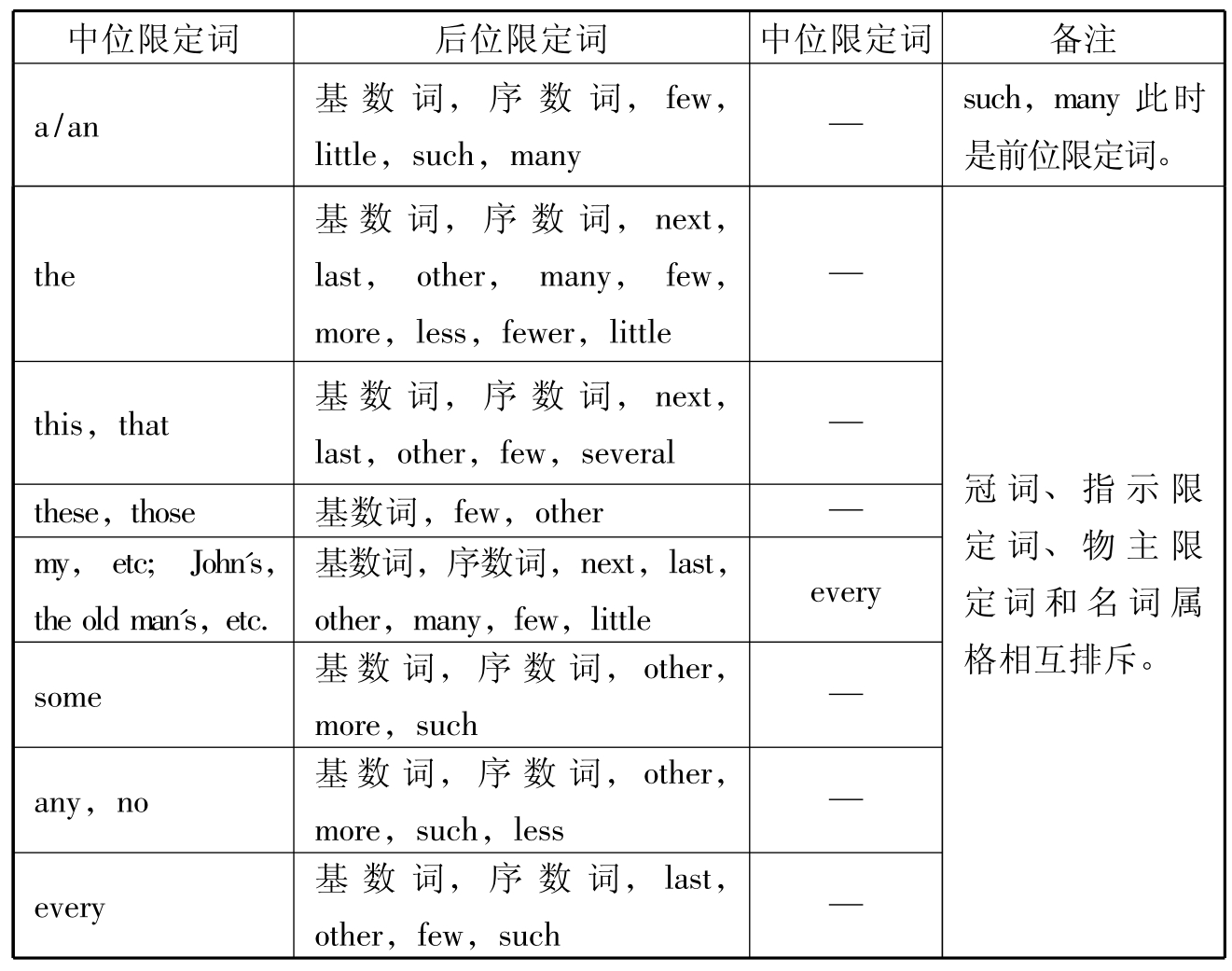
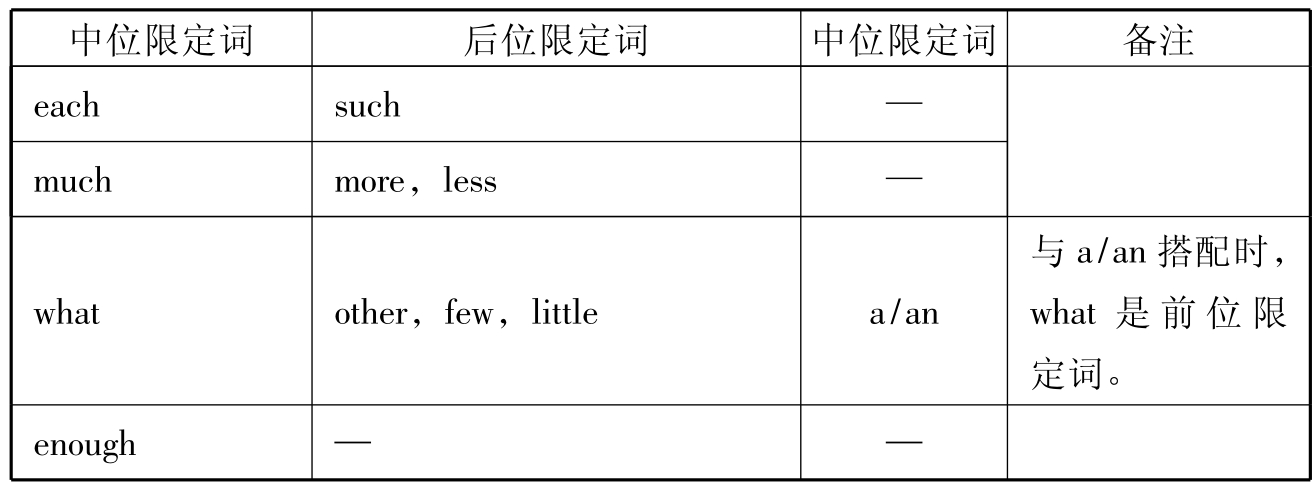
1.3.2.11.中位限定词
-
1.3.2.22.前位限定词
-
1.3.2.33.后位限定词
-
1.3.3三、限定词与三类名词的搭配
-
1.3.3.11.与三类名词搭配的限定词
-
1.3.3.22.与单数可数名词和不可数名词搭配的限定词
-
1.3.3.33.与单数可数名词和复数名词搭配的限定词
-
1.3.3.44.与复数名词搭配的限定词
-
1.3.3.55.与单数可数名词搭配的限定词
-
1.3.3.66.与复数名词和不可数名词搭配的限定词
-
1.3.3.77.与不可数名词搭配的限定词
-
1.4冠 词
-
1.4.1一、概说
-
1.4.1.11.冠词的类指
-
1.4.1.22.冠词的特指
-
1.4.1.33.冠词的独指
-
1.4.2二、不定冠词的基本用法
-
1.4.2.11.类指用法
-
1.4.2.22.特指用法
-
1.4.2.33.指量用法
-
1.4.2.44.其他用法
-
1.4.3三、定冠词的基本用法
-
1.4.3.11.特指用法
-
1.4.3.22.独指用法
-
1.4.3.33.类指用法
-
1.4.3.44.副词用法
-
1.4.3.55.其他用法
-
1.4.4四、零冠词的基本用法
-
1.4.4.11.用在物质名词之前
-
1.4.4.22.用在抽象名词之前
-
1.4.4.33.用在复数名词之前
-
1.4.4.44.用在部分单数可数名词之前
-
1.4.4.55.用在某些结构或搭配中
-
1.4.5五、专有名词前冠词的用法
-
1.4.5.11.用零冠词
-
1.4.5.22.用定冠词
-
1.4.5.33.用不定冠词
-
1.4.6六、两个普通名词并列时冠词的使用
-
1.4.7七、冠词的习惯用法
-
1.4.7.11.不定冠词用在固定词组中
-
1.4.7.22.定冠词用在固定词组中
-
1.4.7.33.零冠词用在固定词组中
-
1.4.7.44.比较下列成对惯用短语
-
1.4.7.55.比较下列成对惯用短语
-
1.4.7.66.比较下列成对惯用短语
-
1.4.7.77.不定冠词后置的几种情况
-
1.5形容词和副词的比较等级
-
1.5.1一、导论
-
1.5.1.11.规则变化
-
1.5.1.22.不规则变化
-
1.5.2二、比较级的用法
-
1.5.2.11.等同比较
-
1.5.2.22.表示“超过”的比较
-
1.5.2.33.表示“不及”的比较
-
1.5.2.44.“最……”的表示
-
1.5.2.55.“最不……”的表示
-
1.5.3三、比较级前的修饰语
-
1.5.3.11.as...as前的修饰语
-
1.5.3.22.比较级(+than)前的修饰语
-
1.5.3.33.最高级前的修饰语
-
1.5.4四、比较级中的名词位置
-
1.5.4.11.当名词是单数名词时
-
1.5.4.22.当名词是复数时
-
1.5.4.33.限定词比较级中的名词位置
-
1.5.5五、比较级表示最高级
-
1.5.5.11.比较级+than any other等
-
1.5.5.22.具有否定意义的词+比较级
-
1.5.5.33.具有否定意义的词+so/as...as...
-
1.5.5.44.as...as possible与as...as+带有can的从句
-
1.5.6六、比较级的省略
-
1.5.6.11.省略谓语的一部分或省略谓语的全部
-
1.5.6.22.省略主语与谓语的大部分,只剩下修饰成分
-
1.5.6.33.省略整个比较状语从句
-
1.5.7七、比较等级中的逻辑问题
-
1.5.7.11.比较的对象必须同类
-
1.5.7.22.不要省掉比较状语从名中的介词
-
1.5.7.33.必须将同一范围内加以比较的对象排除在外
-
1.5.7.44.最高级不可缺少比较范围
-
1.5.7.55.比较状语从句省略时引起的歧义
-
1.5.8八、常用的特殊结构
-
1.5.8.11.比较级与定冠词
-
1.5.8.22.no+比较级+than
-
1.5.8.33.more than表示“不仅仅”
-
1.5.8.44.the(more)...the(more)
-
1.5.8.55.more and more...
-
1.5.8.66.more+形容词或副词+than+形容词或副词
-
1.5.8.77.more than+形容词或副词
-
1.6情态动词
-
1.6.1一、导论
-
1.6.1.11.情态动词的语法特征
-
1.6.1.22.情态动词的语法形式
-
1.6.2二、can与could的用法
-
1.6.2.11.can/could(be able to)表示“能力”
-
1.6.2.22.can与be able to用法辨析
-
1.6.2.33.can/could表示“可能”
-
1.6.2.4提示:
-
1.6.2.55.can+表示知觉的动词
-
1.6.2.66.“cannot...too”与“cannot...enough”结构
-
1.6.2.77.“cannot help+动名词”与“cannot help(或choose)+ but+动词原...
-
1.6.2.88.“can/could+不定式的完成式”结构
-
1.6.3三、may与might的用法
-
1.6.3.11.may/might表示“可能”
-
1.6.3.22.may/might表示“许可”
-
1.6.4四、will与would的用法
-
1.6.4.11.will/would表示“意愿”
-
1.6.4.22.will/would表示“习惯”
-
1.6.4.33.will/would表示“推测”
-
1.6.5五、shall的用法
-
1.6.5.11.shall表示“意志”
-
1.6.5.22.shall表示“答应”、“允诺”、“命令”、“威胁”
-
1.6.6六、should/ought to/must(have to)表示“应该”、“必须”
-
1.6.6.11.should/ought to表示“劝说”、“敦促”
-
1.6.6.22.should/ought to+不定式的完成式
-
1.6.6.33.must与have to表示“必须”
-
1.6.7七、dare的意义与用法
-
1.6.7.11.当情态动词用时
-
1.6.7.22.dare的过去式
-
1.6.7.33.当及物动词用时
-
1.6.8八、need的意义与用法
-
1.6.8.11.当情态动词用时
-
1.6.8.22.needn't+不定式的完成式
-
1.6.8.33.当及物动词用时
-
1.6.9九、used to的意义与用法
-
1.6.9.11.used to的基本用法
-
1.6.9.22.used to的否定式与疑问式
-
1.6.9.33.used to与would的区别
-
1.6.10十、had better的意义与用法
-
1.6.10.11.had better的基本用法
-
1.6.10.22.had better的否定句与疑问句
-
1.6.10.33.had better+不定式的进行式与完成式
-
1.6.11十一、would/had rather的意义与用法
-
1.6.11.11.would/had rather的基本用法
-
1.6.11.22.would/had rather的否定句与疑问句
-
1.6.11.33.would/had rather+不定式的完成式
-
1.6.12十二、情态动词的推测性用法与非推测性用法
-
1.6.12.11.概说
-
1.6.12.22.作非推测性用法的情态动词的四个句法特征
-
1.6.12.33.能作推测性用法的情态动词与所指时间
-
1.6.12.44.带有推测性情态动词句子的附加疑问句
-
1.7动词的时态
-
1.7.1一、导论
-
1.7.2二、一般现在时的基本用法
-
1.7.2.11.一般现在时表示经常性或习惯性的动作及现在所处的状态
-
1.7.2.22.表示众所周知的客观存在、科学事实与格言
-
1.7.2.33.表示状态的动词往往用一般现在时
-
1.7.2.44.表示将来
-
1.7.2.55.表示过去
-
1.7.3三、一般过去时的基本用法
-
1.7.3.11.表示过去某一时间的动作与状态
-
1.7.3.22.表示过去习惯性动作
-
1.7.3.33.表示现在与将来
-
1.7.3.44.表示过去的过去
-
1.7.4四、将来时的基本用法
-
1.7.4.11.will/shall+不定式一般式
-
1.7.4.22.will/shall+不定式进行式
-
1.7.4.33.will/shall+不定式完成式
-
1.7.4.44.will/shall+不定式完成进行式
-
1.7.4.55.be going to+不定式
-
1.7.4.66.will与be going to的区别
-
1.7.4.77.be+doing表示将来
-
1.7.4.88.be to+不定式表示将来
-
1.7.4.99.be about to do与be(seem)on the point of doing表示将来
-
1.7.4.1010.一般现在时表示将来
-
1.7.4.1111.would+have done表示过去将来完成
-
1.7.4.1212.would+be doing表示过去将来进行
-
1.7.4.1313.would+have been doing表示过去将来完成进行
-
1.7.5五、现在完成时与现在完成进行时的基本用法
-
1.7.5.11.现在完成时与现在完成进行时的基本用法
-
1.7.5.22.现在完成(进行)时与一般过去时和过去进行时的区别
-
1.7.5.33.现在完成(进行)时表示将来
-
1.7.5.44.非延续性动词不与表示非特指的时间段的状语连用
-
1.7.5.55.“for the past/last+段时间”之类的短语与现在完成(进行)时
-
1.7.5.66.since与现在完成(进行)时
-
1.7.5.77.have been与have gone辨析
-
1.7.5.88.完成时与have got(to)
-
1.7.5.99.完成时在It is the first time+that从句中的使用
-
1.7.6六、过去完成时与过去完成进行时的基本用法
-
1.7.6.11.过去完成时的基本用法
-
1.7.6.22.表示过去未曾实现的希望、打算与意图
-
1.7.6.33.一般过去时与过去完成时的用法比较
-
1.7.6.44.过去完成进行时的基本用法
-
1.7.7七、现在进行时的基本用法
-
1.7.7.11.表示说话时正在进行的动作
-
1.7.7.22.表示现阶段在进行但是说话时不一定正在进行的动作
-
1.7.7.33.表示重复的动作
-
1.7.7.44.用于各种从句
-
1.7.7.55.表示感情色彩
-
1.7.7.66.表示将来
-
1.7.7.77.表示客气与礼貌
-
1.7.7.88.表示动作的开始
-
1.7.7.99.用于归纳总结、阐述理由
-
1.7.8八、过去进行时的基本用法
-
1.7.8.11.表示过去某个时刻或某一阶段正在进行的动作
-
1.7.8.22.表示原因
-
1.7.8.33.表示动作发生的背景
-
1.7.8.44.表示事件的转折
-
1.7.8.55.表示客气的询问或愿望
-
1.7.8.66.表示过去的计划或安排
-
1.7.8.77.用于各种从句
-
1.8被动语态
-
1.8.1一、导论
-
1.8.1.11.主动语态与被动语态
-
1.8.1.22.两种语态并非一一对应
-
1.8.1.33.非被动意义的被动语态结构
-
1.8.1.44.关于by短语
-
1.8.2二、被动语态的结构形式
-
1.8.2.11.被动语态的时态
-
1.8.2.22.句子中带有情态动词或其他助动词的被动语态
-
1.8.2.33.非谓语动词的被动语态
-
1.8.3三、被动语态与基本句型
-
1.8.3.11.被动语态与SVO句型
-
1.8.3.22.被动语态与SVOO句型
-
1.8.3.33.被动语态与SVOC句型
-
1.8.4四、短语动词的被动语态
-
1.8.4.11.“动词+名词+介词”结构的被动语态
-
1.8.4.22.“不及物动词+介词”结构的被动语态
-
1.8.4.33.“动词+副词+介词”结构的被动语态
-
1.8.4.44.“及物动词+副词”结构的被动语态
-
1.8.5五、祈使句的被动语态与被动的祈使句
-
1.8.6六、“get+过去分词”透析
-
1.8.6.11.“get+过去分词”构成被动语态
-
1.8.6.22.“get+过去分词”与“be+过去分词”在构成被动结构时的区别
-
1.8.6.33.“get+过去分词”构成系表结构
-
1.8.6.44.“get+过去分词”与“be+过去分词”在构成系表结构时的区别
-
1.8.6.55.应注意的问题
-
1.8.7七、It is said that..之类的被动语态
-
1.8.7.11.两种被动语态转换的基本方法
-
1.8.7.22.能实现两种被动语态转换的其他动词
-
1.8.7.33.在“主语+被动态+不定式”中不定式不要用动态动词的一般式
-
1.8.7.44.两种被动语态SVOC句型的关系
-
1.8.8八、什么情况下用被动语态
-
1.8.8.11.不知道或不必说出动作的执行者
-
1.8.8.22.强调动作的承受者
-
1.8.8.33.动作的执行者不是人而是无生命的事物
-
1.8.8.44.修辞的需要,为了使句子更加简练、匀称
-
1.8.8.55.为了表示委婉或礼貌,避免提及动作执行者或说话者自己
-
1.8.8.66.科技文献中为了客观地描述事情及其过程
-
1.8.8.77.新闻报道中为了体现新闻的客观性
-
1.8.8.88.有些动词习惯上常用被动语态
-
1.8.9九、主动形式表示被动意义
-
1.8.10十、非动词形式表示的被动意义
-
1.8.10.11.名词表示被动意义
-
1.8.10.22.形容词表示被动意义
-
1.8.10.33.介词短语表示被动意义
-
1.9动名词
-
1.9.1一、导论
-
1.9.1.11.动名词的一般式与完成式
-
1.9.1.22.动名词的被动形式
-
1.9.1.33.动名词的语法特征
-
1.9.2二、动名词的语法功能
-
1.9.2.11.动名词作主语
-
1.9.2.22.动名词作表语
-
1.9.2.33.动名词作宾语
-
1.9.2.44.动名词作定语
-
1.9.3三、动名词的复合结构
-
1.9.3.11.动名词的复合结构的基本形式与语法功能
-
1.9.3.22.动名词的复合结构的几个注意事项
-
1.9.4四、动名词与现在分词的区别
-
1.9.4.11.作主语与宾语的是动名词
-
1.9.4.22.作状语与宾补的是现在分词
-
1.9.4.33.动名词与现在分词作表语的区别
-
1.9.4.44.动名词与现在分词作定语的区别
-
1.9.5五、名词化的动名词
-
1.9.6六、使用动名词应注意的几个问题
-
1.9.6.11.动名词作主语时谓语动词的数
-
1.9.6.22.it代替作宾语的动名词
-
1.9.6.33.常用的动名词短语
-
1.9.6.44.“介词+动名词”作定语
-
1.9.6.55.动名词作表语与不定式作表语的区别
-
1.9.6.66.“There+be+no+v-ing”句型
-
1.10动词不定式
-
1.10.1一、导论
-
1.10.1.11.不定式的构成
-
1.10.1.22.带to的不定式
-
1.10.2二、不定式的时态与语态形式
-
1.10.2.11.不定式的一般式
-
1.10.2.22.不定式的完成式
-
1.10.2.33.不定式的进行式
-
1.10.2.44.不定式的完成进行式
-
1.10.2.55.不定式的语态
-
1.10.3三、不定式的语法功能
-
1.10.3.11.不定式作主语
-
1.10.3.22.定式作宾语
-
1.10.3.33.不定式作定语
-
1.10.3.44.不定式作表语
-
1.10.3.55.不定式作补语
-
1.10.3.66.不定式作状语
-
1.10.3.77.不定式作独立句
-
1.10.3.88.定式作独立成分
-
1.10.3.99.不定式的独立主格结构
-
1.10.4四、与动词不定式有关的几个结构
-
1.10.4.11.连接词+不定式结构
-
1.10.4.22.不定式的否定式
-
1.10.4.33.不定式的复合结构
-
1.10.4.44.不定式符号在句尾的单独使用
-
1.11分 词
-
1.11.1一、导论
-
1.11.1.11.分词的语法特征
-
1.11.1.22.分词的时态形式和语态形式
-
1.11.2二、分词作定语
-
1.11.2.11.分词前置
-
1.11.2.22.分词后置
-
1.11.2.33.分词(短语)作定语与定语从句的互换
-
1.11.2.44.分词短语作非限制性定语
-
1.11.2.5提示:
-
1.11.3三、分词作表语
-
1.11.3.11.及物动词的分词作表语
-
1.11.3.22.现在分词与动名词作表语的区别
-
1.11.3.33.系表结构与被动语态的区别
-
1.11.3.44.不及物动词的分词作表语
-
1.11.4四、分词作状语
-
1.11.4.11.作伴随状语
-
1.11.4.22.作时间状语
-
1.11.4.33.作原因状语
-
1.11.4.44.作条件状语
-
1.11.4.55.作让步状语
-
1.11.4.66.作结果状语
-
1.11.4.77.作方式状语
-
1.11.4.88.分词的悬垂现象与对策
-
1.11.4.99.约定俗成的悬垂分词
-
1.11.4.1010.现在分词和过去分词作状语的区别
-
1.11.4.1111.连词+分词(短语)
-
1.11.5五、分词作补语
-
1.11.5.11.作宾语补足语
-
1.11.5.22.作主语补足语
-
1.11.5.33.作介词宾语的补足语
-
1.12with+复合宾语
-
1.12.1一、with的复合结构的构成
-
1.12.1.11.with+宾语+形容词
-
1.12.1.22.with+宾语+副词
-
1.12.1.33.with+宾语+介词短语
-
1.12.1.44.with+宾词+分词短语
-
1.12.1.55.with+宾语+不定式短语
-
1.12.1.66.with+宾语+名词
-
1.12.2二、with的复合结构的语法功能
-
1.12.2.11.充当状语
-
1.12.2.22.充当定语
-
1.12.3三、几点说明
-
1.12.3.11.without+复合宾语
-
1.12.3.22.with的复合结构与独立主格结构
-
1.13倒装句
-
1.13.1一、导入
-
1.13.2二、倒装句的基本句型
-
1.13.2.11.用于there be等句型
-
1.13.2.22.用于以某些副词开头的句子
-
1.13.2.33.用于介词短语开头的句子
-
1.13.2.44.用于某些表示祝愿的句子
-
1.13.2.55.用于形容词位于句首的句子
-
1.13.2.66.用于分词位于句首的句子
-
1.13.2.77.否定意义的副词或短语位于句首时
-
1.13.2.88.用于as引导的方式状语从句
-
1.13.2.99.用于as/though/that引导的让步状语从句
-
1.13.2.1010.So/Nor/Neither/No more位于句首时
-
1.13.2.1111.否定意义的关联词位于句首时
-
1.13.2.1212.用于以if引导的虚拟条件从句
-
1.13.2.1313.“only+状语”位于句首时
-
1.13.2.1414.“so..that”与“such..that”句型的倒装句
-
1.13.2.1515.“the+比较级..the+比较级”句型中主句的倒装
-
1.14主谓一致和指代一致
-
1.14.1一、导论
-
1.14.1.11.语法一致原则
-
1.14.1.22.意义一致原则
-
1.14.1.33.就近原则
-
1.14.2二、主谓一致须注意的情况
-
1.14.2.11.集体名词的主谓一致
-
1.14.2.22.population的主谓一致
-
1.14.2.33.单、复数同形的名词的主谓一致
-
1.14.2.44.名词所有格后的名词的主谓一致
-
1.14.2.55.表示店铺的名词后的主谓一致
-
1.14.2.66.表示度量、距离、金额、时间等的复数名词的主谓一致
-
1.14.2.77.“more than one”与“many a”的主谓一致
-
1.14.2.88.“each..and each..”,“every..and every..”,“no..and...
-
1.14.2.99.表示成双成套的名词的主谓一致
-
1.14.2.1010.“this kind of..”等结构的主谓一致
-
1.14.2.1111.all,most,rest,some,neither,none,no等的主谓一致
-
1.14.2.1212.and和both..and的主谓一致
-
1.14.2.1313.主语后跟有as well as,together with时的主谓一致
-
1.14.2.1414.名词性物主代词的主谓一致
-
1.14.2.1515.such,the same作指示代词时的主谓一致
-
1.14.2.1616.关系代词作主语时的主谓一致
-
1.14.2.1717.疑问代词who作主语时的主谓一致
-
1.14.2.1818.在强调句型中的主谓一致
-
1.14.2.1919.any,either,neither,none,all,some,more的主谓一致
-
1.14.2.2020.very body等的主谓一致
-
1.14.2.2121.分数词的主谓一致
-
1.14.2.2222.a quantity of与quantities of的主谓一致
-
1.14.2.2323.a great deal of,a large amount of的主谓一致
-
1.14.2.2424.a number/variety of与the number/variety of的主谓一致
-
1.14.2.2525.more of与enough of的主谓一致
-
1.14.2.2626.“the majority of+名词”的主谓一致
-
1.14.2.2727.one and a half的主谓一致
-
1.14.2.2828.half of,(a)part of的主谓一致
-
1.14.2.2929.“the+形容词/分词”的主谓一致
-
1.14.2.3030.动名词、不定式短语与从句作主语时的主谓一致
-
1.14.2.3131.“a+单数名词+or two”作主语时的主谓一致
-
1.14.2.3232.“主语+not+主语”的主谓一致
-
1.14.2.3333.“one in/out of..”的主谓一致
-
1.14.2.3434.副词或介词短语在句首的倒装句中的主谓一致
-
1.14.3三、指代一致
-
1.14.3.11.人称一致
-
1.14.3.22.性、数、格一致
-
1.15虚拟语气
-
1.15.1一、导论
-
1.15.2二、虚拟语气在条件句中的用法
-
1.15.2.11.与现在事实相反的假设
-
1.15.2.22.与过去事实相反的假设
-
1.15.2.33.与将来事实可能相反的假设
-
1.15.2.44.虚拟语气条件句的倒装
-
1.15.2.55.混合条件句
-
1.15.2.66.含蓄条件句
-
1.15.2.77.“if it were not for..”与“if it had not been for.....
-
1.15.2.88.If only
-
1.15.2.99.开放式条件句
-
1.15.2.1010.不用if引导的条件从句
-
1.15.3三、虚拟语气在宾语从句中的用法
-
1.15.3.11.在suggest等引导的宾语从句中
-
1.15.3.22.在wish引导的宾语从句中
-
1.15.3.33.在would rather等引导的宾语从句中
-
1.15.3.44.在be surprised等引导的宾语从句中
-
1.15.4四、虚拟语气在主语从句中的用法
-
1.15.4.11.在“it is+形容词+that”从句中
-
1.15.4.22.在“it is+过去分词+that”从句中
-
1.15.4.33.在“it is a pity that”等从句中
-
1.15.4.44.“it is sb's advice+that”从句中
-
1.15.5五、虚拟语气在advice等词后面的表语从句和同位语从句中的用法
-
1.15.6六、虚拟语气在as if/as though引导的状语从句和表语从句中的用法
-
1.15.7七、虚拟语气在其他状语从句中的用法
-
1.15.7.11.在so that与in order that引导的状语从句中
-
1.15.7.22.在非if引导的状语从句中
-
1.15.7.33.在让步状语从句中
-
1.15.8八、虚拟语气在定语从句中的用法
-
1.15.8.11.在“It is time(that)..”从句中
-
1.15.8.22.在其他定语从句中
-
1.15.9九、虚拟语气在简单句中的用法
-
1.16名词性从句
-
1.16.1一、导论
-
1.16.1.11.引导名词性从句的连接词
-
1.16.1.22.名词性that-从句
-
1.16.1.33.由whether和if引导的名词性从句
-
1.16.1.44.名词性wh-从句
-
1.16.2二、主语从句
-
1.16.2.11.由that引导的主语从句
-
1.16.2.22.由whether和if引导的主语从句
-
1.16.2.33.由wh-引导的主语从句
-
1.16.2.44.由whoever,whatever与whichever引导的主语从句
-
1.16.2.55.关于形式主语it
-
1.16.3三、宾语从句
-
1.16.3.11.由that引导的宾语从句
-
1.16.3.22.由whether与if引导的宾语从句
-
1.16.3.33.由wh-引导的宾语从句
-
1.16.3.44.由whoever,whatever与whichever引导的宾语从句
-
1.16.3.55.关于形式宾语it
-
1.16.3.66.宾语从句可作某些介词的宾语
-
1.16.3.77.宾语从句可作某些作表语用的形容词的宾语
-
1.16.3.88.宾语从句可以是直接引语也可以是间接引语
-
1.16.3.99.混合疑问句中的宾语从句
-
1.16.3.1010.宾语从句的时态呼应
-
1.16.3.1111.宾语从句中的虚拟语气
-
1.16.3.1212.宾语从句的替代
-
1.16.4四、表语从句
-
1.16.4.11.由that引导的表语从句
-
1.16.4.22.由whether引导的表语从句
-
1.16.4.33.由wh-引导的表语从句
-
1.16.4.44.由because引导的表语从句
-
1.16.4.55.由as和as if/as though引导的表语从句
-
1.16.5五、同位语从句
-
1.16.5.11.由that引导的同位语从句
-
1.16.5.22.由whether引导的同位语从句
-
1.16.5.33.由wh-引导的同位语从句
-
1.16.5.44.由that引导的同位语从句与定语从句的区别
-
1.16.6六、名词性从句的几点补充说明
-
1.16.6.11.what与that在引导名词性从句时的区别
-
1.16.6.22.whether与if的区别
-
1.16.6.33.名词性that从句中连词的省略问题
-
1.16.6.44.名词性从句的语序
-
1.17直接引语和间接引语
-
1.17.1一、导论
-
1.17.1.11.直接引语的位置以及引述词的词序
-
1.17.1.22.引述词的变与不变
-
1.17.2二、间接引语中时态的变化
-
1.17.2.11.引述词为现在时形式时
-
1.17.2.22.引述词为过去时形式时
-
1.17.3三、间接引语中其他词语的变化
-
1.17.4四、疑问句的间接引语
-
1.17.4.11.一般疑问句的间接引语
-
1.17.4.22.特殊疑问句的间接引语
-
1.17.4.33.选择疑问句的间接引语
-
1.17.4.44.附加疑问句的间接引语
-
1.17.5五、祈使句的间接引语
-
1.17.5.11.改为“ask,tell,order sb.(not)to”句型
-
1.17.5.22.使用suggest转述let's等开头的祈使句
-
1.17.6六、感叹句的间接引语
-
1.18定语从句
-
1.18.1一、导入
-
1.18.2二、关系代词that,which,who,whom,关系限定词whose,which与关系副词whe...
-
1.18.3三、限制性定语从句与非限制性定语从句
-
1.18.3.11.限制性定语从句
-
1.18.3.22.非限制性定语从句
-
1.18.3.33.限制性定语从句与非限制性定语从句的判断
-
1.18.4四、关系词的选用
-
1.18.4.11.在限制性定语从句中作主语的关系代词的选用
-
1.18.4.22.在限制性定语从句中作宾语的关系代词的选用
-
1.18.4.33.作介词宾语的关系代词的选择
-
1.18.4.44.限制性定语从句中关系代词选择的其他问题
-
1.18.4.55.关系限定词whose与which的用法
-
1.18.4.66.关系副词when,where与why的用法
-
1.18.4.77.关系代词but与than的用法
-
1.18.4.88.非限制性定语从句中关系代词的选择
-
1.18.4.99.词+关系词”引导的定语从句
-
1.18.5五、as引导的定语从句及as与which的用法比较
-
1.18.5.11.as引导限制性定语从句
-
1.18.5.22.as引导非限制性定语从句
-
1.18.5.33.关系代词which与as的用法比较
-
1.18.6六、关系词的省略
-
1.18.6.11.关系代词作主语时的省略
-
1.18.6.22.关系代词作宾语时的省略
-
1.18.6.33.关系代词作表语与宾补时的省略
-
1.18.6.44.关系副词的省略
-
1.18.7七、定语从句的非定语功能
-
1.18.7.11.定语从句表示原因
-
1.18.7.22.定语从句表示结果
-
1.18.7.33.定语从句表示目的
-
1.18.7.44.定语从句表示条件
-
1.18.7.55.定语从句表示让步
-
1.18.7.66.定语从句表示“对比”或“转折”
-
1.18.7.77.定语从句表示时间
-
1.18.7.88.语从句表示“补充”、“评注”与“叙述”等
-
1.18.8八、多重定语从句与分隔式定语从句
-
1.18.8.11.多重定语从句的种类与特点
-
1.18.8.22.分隔式定语从句的种类与特点
-
1.18.9九、定语从句的缩略
-
1.18.9.11.缩略为分词短语
-
1.18.9.22.缩略为形容词短语
-
1.18.9.33.略为名词词组
-
1.18.9.44.缩略为介词短语
-
1.18.9.55.缩略为动词不定式短语
-
1.18.10十、学习定语从句要注意的其他一些问题
-
1.18.10.11.定语从句与名词性从句的互换
-
1.18.10.22.定语从句与状语从句的互换
-
1.18.10.33.定语从句与同位语从句的区别
-
1.18.10.44.定语从句与强调句型的区别
-
1.18.10.55.关系代词作主语的一致问题
-
1.19状语从句
-
1.19.1一、导入
-
1.19.2二、时间状语从句
-
1.19.2.11.when,whenever,while,as引导的时间状语从句
-
1.19.2.22.before引导的时间状语从句
-
1.19.2.33.after引导的时间状语从句
-
1.19.2.44.since引导的时间状语从句
-
1.19.2.55.once引导的时间状语从句
-
1.19.2.66.till和until引导的时间状语从句
-
1.19.2.77.名词充当从属连词引导的时间状语从句
-
1.19.2.88.y the time引导的时间状语从句
-
1.19.2.99.表示“一……就……”的结构
-
1.19.3三、地点状语从句
-
1.19.4四、原因状语从句
-
1.19.4.11.because引导的原因状语从句
-
1.19.4.22.as和since引导的原因状语从句
-
1.19.4.33.seeing that,in that,considering that和now that引导的...
-
1.19.4.44.“for the reason that等介词短语+that”引导的原因状语从句
-
1.19.4.55.“介词短语+the fact that”引导的原因状语从句
-
1.19.4.66.that引导的原因状语从句
-
1.19.4.77.“不是因为……而是因为”的表达方法
-
1.19.4.88.表示原因的非状语从句表达方法
-
1.19.5五、结果状语从句
-
1.19.5.11.so(that)引导的结果状语从句
-
1.19.5.22.that引导的结果状语从句
-
1.19.5.33.with the result that引导的结果状语从句
-
1.19.5.44.so..that,such..that引导的结果状语从句
-
1.19.5.55.表示结果的非状语从句表达方法
-
1.19.6六、目的状语从句
-
1.19.6.11.so that引导的目的状语从句
-
1.19.6.22.in order that引导的目的状语从句
-
1.19.6.33.in case引导的目的状语从句
-
1.19.6.44.for fear(that)引导的目的状语从句
-
1.19.6.55.lest引导的目的状语从句
-
1.19.6.66.with the purpose that,to the end that,in the hop...
-
1.19.6.77.表示目的的非状语从句表达方法
-
1.19.7七、条件状语从句
-
1.19.7.11.if引导的真实条件状语从句
-
1.19.7.22.if引导的非真实条件状语从句
-
1.19.7.33.由其他连词引导的条件状语从句
-
1.19.7.44.表示条件的非状语从句表达方法
-
1.19.8八、让步状语从句
-
1.19.8.11.though,although引导的让步状语从句
-
1.19.8.22.even if,even though和if引导的让步状语从句
-
1.19.8.33.s,that和though引导的让步状语从句
-
1.19.8.44.while和when引导的让步状语从句
-
1.19.8.55.no matter+wh-和wh-+ever引导的让步状语从句
-
1.19.8.66.whether..or..引导的让步状语从句
-
1.19.8.77.词原形开头引导的让步状语从句
-
1.19.8.88.表示让步的非状语从句表达方法
-
1.19.9九、方式状语从句
-
1.19.9.11.as和like引导的方式状语从句
-
1.19.9.22.(just)as..so..引导的方式状语从句
-
1.19.9.33.as if,as though引导的方式状语从句
-
1.19.10十、状语从句的省略
-
1.19.10.11.时间状语从句的省略
-
1.19.10.22.地点状语从句的省略
-
1.19.10.33.条件状语从句的省略
-
1.19.10.44.让步状语从句的省略
-
1.19.10.55.方式状语从句的省略
-
1.20there be句型
-
1.20.1一、导论
-
1.20.1.11.here be句型中的主谓一致
-
1.20.1.22.there be句型的否定形式和疑问形式
-
1.20.1.33.there be句型的种类
-
1.20.1.44.there be句型与have的区别
-
1.20.1.55.there be句型的主语通常是非特指的名词
-
1.20.1.66.there be句型与英语基本句型的转换
-
1.20.2二、there be句型的附加成分
-
1.20.2.11.there be句型带地点状语或时间状语
-
1.20.2.22.here be+名词词组+定语从句
-
1.20.2.33.there be+名词词组+同位语从句
-
1.20.2.44.there be+名词词组+不定式
-
1.20.2.55.there be+名词词组+分词
-
1.20.2.66.there be+名词+(in)+动名词
-
1.20.2.77.there be+no+动名词
-
1.20.2.88.there be+动作意义的名词
-
1.20.3三、there be句型中的谓语动词
-
1.20.3.11.there be句型中的时态
-
1.20.3.22.there be存在句的谓语动词有时是seem to be等
-
1.20.3.33.there be存在句的谓语动词可以与情态动词连用
-
1.20.3.44.there be句型的谓语动词可以是某些不及物动词
-
1.20.3.55.there be句型有被动语态
-
1.20.4四、there be句型的非谓语动词形式及语法功能
-
1.20.4.11.there be句型的不定式形式及其语法功能
-
1.20.4.22.there be句型的现在分词形式及其语法功能
-
1.20.4.33.there be句型的动名词形式及其语法功能
-
1.20.5五、其他
-
1.20.5.11.there be句型用在各类从句中
-
1.20.5.22.是there还是it
-
1.21it的用法
-
1.21.1一、代词it
-
1.21.1.11.人称代词it
-
1.21.1.22.指示代词it
-
1.21.1.33.非人称代词it
-
1.21.1.44.非确指的it
-
1.21.1.55.it用在习语中
-
1.21.2二、先行代词it
-
1.21.2.11.it作形式主语
-
1.21.2.22.it作形式宾语
-
1.21.3三、用于强调句型的it
-
1.21.3.11.强调句的基本句型
-
1.21.3.22.强调句可以强调多种状语成分
-
1.21.3.33.特殊疑问句的强调句型
-
1.22省略与替代
-
1.22.1一、句中成分的省略
-
1.22.1.11.省略主语
-
1.22.1.22.省略谓语
-
1.22.1.33.省略表语
-
1.22.1.44.省略宾语
-
1.22.1.55.省略定语
-
1.22.1.66.省略状语
-
1.22.1.77.词的省略
-
1.22.1.88.固定的省略结构
-
1.22.2二、句中结构的省略
-
1.22.2.11.简单句中的省略
-
1.22.2.22.并列句中的省略
-
1.22.2.33.复合句中的省略
-
1.22.3三、名词性替代
-
1.22.3.11.名词性替代词one和ones
-
1.22.3.22.替代词that和those
-
1.22.4四、动词性替代
-
1.22.4.11.do替代“主动词+附带成分”
-
1.22.4.22.do替代主动词的用法
-
1.22.4.33.由do,so等组成的复合替代形式
-
1.22.4.44.to替代整个动词不定式
-
1.22.5五、分句性替代
-
1.22.5.11.替代that从句
-
1.22.5.22.if so和if not
-
1.22.5.33.certainly not等结构
-
1.22.5.44.why not结构
-
1.22.5.55.作表语和宾补用的so
-
1.23参考书目