3.What's So Funny?Well,Maybe Nothing
By John Tierney
So there are two muffins baking in an oven.One of them yells,“Wow,it's hot in here!”
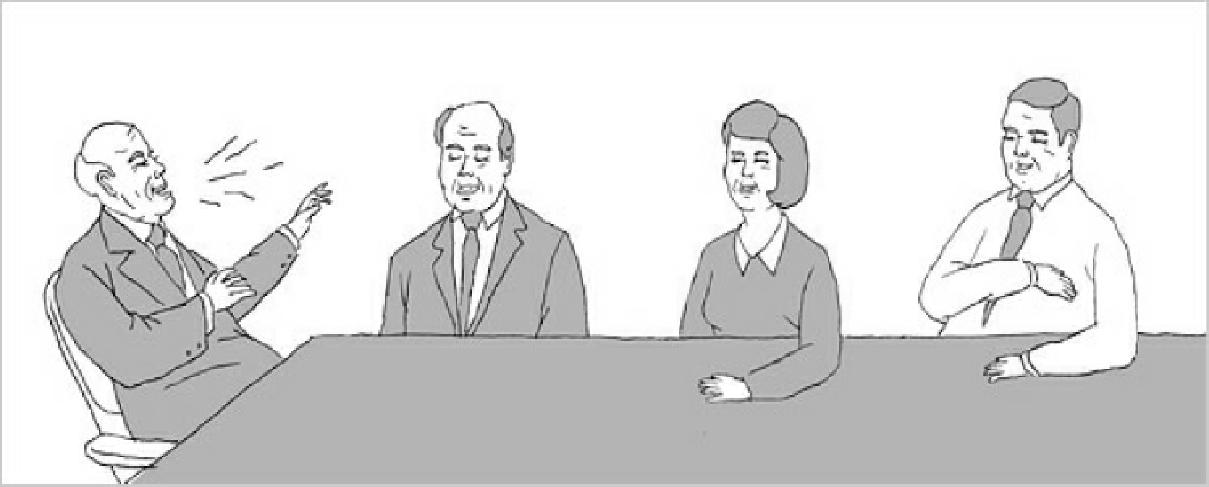
And the other muffin replies:“Holy cow!A talking muffin!”
Did that alleged joke make you laugh?I would guess(and hope)not.But under different circumstances,you would be chuckling softly,maybe giggling,possibly guffawing.I know that's hard to believe,but trust me.The results are just in on a laboratory test of the muffin joke.
Laughter,a topic that stymied philosophers for 2,000 years,is finally yielding to science.Researchers have scanned brains and tickled babies,chimpanzees and rats.They've traced the evolution of laughter back to what looks like the primal joke—or,to be precise,the first stand-up routine to kill with an audience of primates.
It wasn't any funnier than the muffin joke,but that's not surprising,at least not to the researchers.They've discovered something that eluded Plato,Aristotle,Hobbes,Kant,Schopenhauer,Freud and the many theorists who have tried to explain laughter based on the mistaken premise that they're explaining humor.
Occasionally we're surprised into laughing at something funny,but most laughter has little to do with humor.It's an instinctual survival tool for social animals,not an intellectual response to wit.It's not about getting the joke.It's about getting along.
When Robert R.Provine tried applying his training in neuroscience to laughter 20 years ago,he na6vely began by dragging people into his laboratory at the University of Maryland,Baltimore County,to watch episodes of“Saturday Night Live”and a George Carlin routine.They didn't laugh much.It was what a stand-up comic would call a bad room.
So he went out into natural habitats—city sidewalks,suburban malls—and carefully observed thousands of“laugh episodes.”He found that 80%-90%of them Come after straight lines like“I know”or“I'll see you guys later.”The witticisms that induced laughter rarely rose above the level of“You smell like you had a good workout.”
“Most prelaugh dialogue,”Professor Provine concluded in“Laughter,”his 2000 book,“is like that of an interminable television situation Comedy scripted by an extremely ungifted writer.”
He found that most speakers,particularly women,did more laughing than their listeners,using the laughs as punctuation for their sentences.It's a largely involuntary process.People can consciously suppress laughs,but few can make themselves laugh convincingly.
“Laughter is an honest social signal because it's hard to fake,”Professor Provine says.“We're dealing with something powerful,ancient and crude.It's a kind of behavioral fossil showing the roots that all human beings,maybe all mammals,have in common.”
The human ha-ha evolved from the rhythmic sound—pant-pant—made by primates like chimpanzees when they tickle and chase one another while playing.Jaak Panksepp,a neuroscientist and psychologist at Washington State University,discovered that rats emit an ultrasonic chirp(inaudible to humans without special equipment)when they're tickled,and they like the sensation so much they keep coming back for more tickling.
He and Professor Provine figure that the first primate joke—that is,the first action to produce a laugh without physical contact—was the feigned tickle,the same kind of coo-chi-coo move parents make when they thrust their wiggling fingers at a baby.Professor Panksepp thinks the brain has ancient wiring to produce laughter so that young animals learn to play with one another.The laughter stimulates euphoria circuits in the brain and also reassures the other animals that they're playing,not fighting.
“Primal laughter evolved as a signaling device to highlight readiness for friendly interaction,”Professor Panksepp says.“Sophisticated social animals such as mammals need an emotionally positive mechanism to help create social brains and to weave organisms effectively into the social fabric.”
Humans are laughing by the age of four months and then progress from tickling to the Three Stooges to more sophisticated triggers for laughter(or,in some inexplicable cases,to Jim Carrey movies).Laughter can be used cruelly to reinforce a group's solidarity and pride by mocking deviants and insulting outsiders,but mainly it's a subtle social lubricant.It's a way to make friends and also make clear who belongs where in the status hierarchy.
Which brings us back to the muffin joke.It was inflicted by social psychologists at Florida State University on undergraduate women last year,during interviews for what was ostensibly a study of their spending habits.Some of the women were told the interviewer would be awarding a substantial cash prize to a few of the participants,like a boss deciding which underling deserved a bonus.
The women put in the underling position were a lot more likely to laugh at the muffin joke(and others almost as lame)than were women in the control group.But it wasn't just because these underlings were trying to manipulate the boss,as was demonstrated in a follow-up experiment.
This time each of the women watched the muffin joke being told on videotape by a person who was ostensibly going to be working with her on a task.There was supposed to be a cash reward afterward to be allocated by a designated boss.In some cases the woman watching was designated the boss;in other cases she was the underling or a co-worker of the person on the videotape.
When the woman watching was the boss,she didn't laugh much at the muffin joke.But when she was the underling or a co-worker,she laughed much more,even though the joke-teller wasn't in the room to see her.When you're low in the status hierarchy,you need all the allies you can find,so apparently you're primed to chuckle at anything even if it doesn't do you any immediate good.
“Laughter seems to be an automatic response to your situation rather than a conscious strategy,”says Tyler F.Stillman,who did the experiments along with Roy Baumeister and Nathan DeWall.“When I tell the muffin joke to my undergraduate classes,they laugh out loud.”
Mr Stillman says he got so used to the laughs that he wasn't quite prepared for the response at a conference in January,although he realizes he should have expected it.
“It was a small conference attended by some of the most senior researchers in the field,”he recalls.“When they heard me,a lowly graduate student,tell the muffin joke,there was a really uncomfortable silence.You could hear crickets.”
(From The New York Times,March 13,2007)
Questions for Discussion(问题讨论)
1.What does the headline of the article mean?How does it relate to the main idea of the article?
2.Why does the author not hope the muffin joke make the reader laugh?
3.Why did nearly 90%of“laugh episodes”occur after mere straight lines like“I know”?
4.How does laughter relate to humor and status hierarchy?
5.What do you think are the purposes or functions of laugh in our life?
Language Tips(阅读提示)
Holy cow:“Holy cow!”is an exclamation of surprise used in American and Canadian English.It is widely believed to have stemmed from the Hindu belief of reincarnation.Travelers commonly shout the expression as to not hit one of these“reincarnated creatures”while driving.Others derive the origins back to the story from Exodus of the golden calf or the“Holy Cow.”但别因此将此表达惊讶与OMG的holy cow和源于印度圣牛的成语sacred cow混淆了。Sacred cow alludes to the honored status of cows in Hinduism,where they are a symbol of God's generosity to humankind.It has been used figuratively since about 1900.Therefore,sacred cow also refers to a person or thing immune from criticism,often unreasonably so.
Alleged joke:注意作者在此用alleged一词于joke前的用意。
Chuckle,giggle,guffaw:注意这几个作为laugh范畴下的具体词汇所表达的不同含义。
Stand-up routine to kill:Stand-up means a monologue of jokes,gags,or satirical comments delivered usually while standing alone on a stage or in front of a Comera.Routine here refers to a worked-out part(as of an entertainment or sports contest)that may be often repeated.Kill means to make people laugh.独角喜剧,类似中国的单口相声。详细介绍见随后的“文化导读”。
Plato:柏拉图(古希腊哲学家) Ancient Athenian/Greek philosopher; pupil of Socrates;teacher of Aristotle(428-347 BC).
Aristotle:亚里士多德 One of the greatest of the ancient Athenian philosophers;pupil of Plato;teacher of Alexander the Great(384-322 BC).
Hobbes:Thomas Hobbes(1588-1679)was an English philosopher,remembered today for his work on political philosophy.His 1651 book Leviathan《利维坦》established the foundation for most of Western political philosophy from the perspective of social contract theory(社会契约论).Hobbes also contributed to a diverse array of fields,including history,geometry,physicsofgases,theology,ethics,general philosophy,and political science.His account of human nature as selfinterested cooperation has proved to be an enduring theory in the field of philosophical anthropology.
Kant:伊曼努尔·康德(1724-1804)德国哲学家、天文学家、星云说的创立者之一、德国古典哲学的创始人,唯心主义不可知论者,德国古典美学的奠定者。Immanuel Kant is regarded as one of the most influential thinkers of modern Europe and of the late Enlightenment.
Schopenhauer:亚瑟·叔本华(Arthur Schopenhauer,1788-1860)德国哲学家,唯意志论的创始人。他继承了康德对于现象和物自体(即意志)之间的区分。不同于他同时代的费希特、谢林、黑格尔等取消物自体的做法,他坚持物自体,并认为它可以通过直观而被认识,将其确定为意志。意志独立于时间、空间,所有理性、知识都从属于它。人们只有在审美的沉思时逃离其中。叔本华将其著名的极端悲观主义和此学说联系在一起,认为意志的支配最终只能导致虚无和痛苦。他对心灵屈从于器官、欲望和冲动的压抑、扭曲的理解预言了精神分析学和心理学。他文笔流畅,思路清晰,后期的散文式论述对后来哲学著作的诗意化产生了较大影响。German philosopher.His father was a banker and his mother a novelist.He studied in several fields before earning his doctorate in philosophy.He regarded the Upanishads,together with the works of Plato and Immanuel Kant,as the foundation of his philosophical system,a metaphysical doctrine of the will developed in reaction to the idealism of G.W.F.Hegel.His magnum opus,The World as Will and Representation《作为意志和表象的世界》(1819),consists of two comprehensive series of reflections on the theory of knowledge and the philosophy of nature,aesthetics,and ethics.By turning away from spirit and reason to the powers of intuition,creativity,and the irrational,he influenced(partly via Friedrich Nietzsche)the ideas and methods of vitalism,life philosophy,existentialism,and anthropology.His other works include On the Will in Nature《论自然意志》(1836),The Two Main Problems of Ethics《伦理学的两个根本问题》(1841),and Parerga and Paralipomena《附录与补遗》(1851).An unhappy and solitary man,his works earned him the sobriquet“the philosopher of pessimism.”
Freud:西格蒙德·弗洛伊德(1856-1939),奥地利医生兼心理学家、哲学家、精神分析学的创始人。他的心理学观点使我们对人类思想的观念发生了彻底的革命,他提出的概念和术语已被普遍使用——例如,本我(Id),自我(Ego),超我(Super-Ego),恋母情绪(Oedipus Complex)和死亡冲动(Death Drive或Death Instinct)。1900年问世的《梦的解析》,这是他最有创造性、最有意义的论著之一。Austrian neuropsychologist,founder of psychoanalysis,and one of the major intellectual figures of the 20th century.In 1899 he published The Interpretation of Dreams,in which he analyzed the complex symbolic processes underlying dream formation:he proposed that dreams are the disguised expression of unconscious wishes.In his controversial Three Essays on the Theory of Sexuality(1905),he delineated the complicated stages of psychosexual development(oral,anal,and phallic)and the formation of the Oedipus Complex.During World War I,he wrote papers that clarified his understanding of the relations between the unconscious and conscious portions of the mind and the workings of the Id,Ego,and Super-Ego.Freud eventually applied his psychoanalytic insights to such diverse phenomena as jokes and slips of the tongue,ethnographic data,religion and mythology,and modern civilization.Works of note include Totem and Taboo(1913),Beyond the Pleasure Principle(1920),The Future of an Illusion(1927),and Civilization and Its Discontents(1930).Despite the relentless and often compelling challenges mounted against virtually all of his ideas,both in his lifetime and after,Freud has remained one of the most influential figures in contemporary thought.
Saturday Night Live:SNL is a ninety-minute Comedy and music television series that has been broadcast live from New York City on NBC since 11 October 1975.It employs an ensemble of versatile comic actors in topical sketches and parodies punctuated by musical performances by guest artists.Saturday Night Live achieved a large and loyal following,especially among young viewers.It beCome a national forum for political satire,with presidential politics a particular specialty.SNL is one of the longest-running network programs in American television history.
George Carlin:(1937-1908)He was a stand-up Comedian and sometime actor most famous for his 1970s routine known as“The Seven Words You Can Never Say on Television.”
Wiring:原意为布线,注意此处的比喻用法,随后的euphoria circuits中的circuits是继续沿用wiring这一比喻。Wire as a verb also means to predispose,determine,or establish genetically or innately.
The Three Stooges:在20世纪五六十年代的美国,《三个傀儡》是人们生活的一部分,伴随了整整一代人的成长。他们疯狂夸张的表演、经常被折磨得死去活来的狼狈样子,给人们带去了无尽的快乐。可以说《三个傀儡》在美国已成为了一种文化现象,影片中你可以看到20世纪三四十年代美国的社会变迁和人事百态。这部跨越35年的制作过程的电影,还可以堪称为美国早期电影发展的编年史。The Three Stooges was an American vaudeville and Comedy act of the early to mid-20th century best known for their numerous short subject films.Their hallmark was physical slapstick Comedy(胡闹喜剧)punctuated by quickly-delivered one-liners(funny remark or a joke told in one sentence,for example in a play or Comedy programme),within outrageous storylines.Slapstick is a boisterous form of Comedy marked by chases,Collisions,and crude practical jokes.
Jim Carrey:(1962-)He is a BAFTA-nominated(British Academy of Film and Television Arts)and two-time Golden Globe Award-winning Canadian-American actor and stand-up Comedian.He is probably best known for his manic and slapstick performances in Comedy films such as Dumb and Dumber,The Mask,Liar Liar,Bruce Almighty,and Yes Man.Carrey has also achieved critical success in dramatic roles in films such as The Truman Show,Man on the Moon,and Eternal Sunshine of the Spotless Mind.
Ostensibly:注意其隐含意义。Seeming or stated to be real or true,when this is perhaps not the case.
Lame:注意这里lame是解释前面的others,意思是“其他的笑话”。同muffin joke差不多,并不是很好笑。An attempt at humor which is perceived to have been used previously to the point of being cliché,or was never funny to begin with.
Control group:对照组,控制组In a trial of a drug or an experimental procedure,a group matched with the experimental group in all respects except the factor under investigation.A control group is an essential part of the scientific research method because it ensures that any changes observed in an experimental group are due solely to the drug or experimental procedure and not to any other factors.
Cultural Notes(文化导读)
Science of laughter:Whether overheard in a crowded restaurant,punctuating the enthusiastic chatter of friends,or as the noisy guffaws on a TV laugh track,laughter is a fundamental part of everyday life.It is so common that we forget how strange—and important—it is.Indeed,laughter is a“speaking in tongues”in which we're moved not by religious fervor but by an unconscious response to social and linguistic cues.Stripped of its variation and nuance,laughter is a regular series of short vowel-like syllables usually transcribed as“ha-ha,”“ho-ho”or“hee-hee.”These syllables are part of the universal human vocabulary,produced and recognized by people of all cultures.
Given the universality of the sound,our ignorance about the purpose and meaning of laughter is remarkable.We somehow laugh at just the right times,without consciously knowing why we do it.Most people think of laughter as a simple response to Comedy,or a cathartic mood-lifter.Instead,after 10 years of research on this little-studied topic,I concluded that laughter is primarily a social vocalization that binds people together.It is a hidden language that we all speak.It is not a learned group reaction but an instinctive behavior programmed by our genes.Laughter bonds us through humor and play.
Stand-up Comedy:Stand-up Comedy is a style of Comedy where the performer speaks directly to the audience,with the absence of the theatrical“fourth wall”(space separating the audience from the action of a theatrical performance,traditionally conceived of as an imaginary wall completing the enclosure of the stage.).A person who performs standup Comedy is known as a stand-up comic,stand-up Comedian(Comedienne if female)or more informally stand up.It is usually performed by a single Comedian,with the aid of a hand-held microphone.The Comedian usually recites a fast-paced succession of humorous stories,short jokes(called“bits”),and one-liners,which comprise what is typically called a monologue,routine or act.Some stand-up Comedians use props,music or magic tricks to enhance their acts.Stand-up Comedy is often performed in Comedy clubs,bars,colleges and theaters.However,there is no real restriction on where the craft can be performed.Many smaller venues hold“open mic”events,where amateur Comedians perform Comedy before a live audience,offering a way for such performers to hone their craft and possibly break into the business.In North America,many Comedy clubs feature the now-iconic brick wall as the backdrop for stand-up performances.
Many stand-up routines are similar to one-man shows,with the main difference being the expectations of the audience,who,in some cases,expect a relatively steady stream of“laughs.”This in turn affects the aims of the performer,who is under great pressure to deliver those laughs.If the performer cannot coax laughs out of the crowd,sometimes the crowd will poke fun at the Comedian,a practice known as heckling.
Stand-up Comedy is difficult to master partly because the Comedian is at the mercy of the audience,which is an integral element of the act.An adept stand-up Comedian must nimbly play off the mood and tastes of any particular audience,and adjust his or her routine accordingly.Stand-up is an art form that is openly devoted to getting laughs from an audience above all else(unlike theatrical Comedy,which creates Comedy within the structure of a play and with character and situation).The skills attributed to stand-up are diverse;it is often necessary for a stand-up comic to simultaneously assume the roles of a writer,editor,performer,promoter,producer and technician.
One hallmark of a master stand-up Comedian is the ability to not only face down a“heckler”,but win over and entertain the rest of the crowd with a witty retort.Many stand-up Comedians work for years to develop 45 minutes of material,and usually perform their bits repeatedly,slowly perfecting them over time.Actor-Comedian Will Ferrell has called standup Comedy“hard,lonely and vicious.”
Despite the name,stand-up Comedians do not always stand up.Some will sit on a stool;Martin Mull has sometimes used an easy chair.The term“sit-down comic”is usually pejorative in nature.
With more than 70,000 visitors,German Comedian Mario Barth established the world record for the most visitors in a stand-up Comedy show on July 12,2008 in the olympic stadium of Berlin.The record for longest single stand-up performance is currently held by British Comedian Mark Watson who has performed a number of 24 hour shows at the Edinburgh and Melbourne Comedy festivals.
Further Online Reading(网络拓展阅读)
A Big Mystery:Why Do We Laugh?
Contrary to Folk Wisdom,Most Laughter Is Not about Humor
http://www.msnbc.msn.com/id/3077386/
The Benefits of Laughter
By Hara Estroff Marano
http://www.psychologytoday.com/articles/pto-20030429-000001.html
The Joke's on You
Having a good giggle is one of the perks of office life,but guffawing at inopportune moments or owning a‘unique’laugh can prove embarrassing,finds Andrew Shanahan.
http://www.guardian.co.uk/money/2006/jul/31/careers.workandcareers
Comic Relief
Could your workplace do with an injection of humour?Hazel Davis meets the professional laughter merchants who want to Come and tickle your funnybones.
http://www.guardian.co.uk/money/2008/jan/28/2
Journalism 101(报刊点滴)
新闻英语中的旧词添新义。现代英语中旧词添新义的现象往往最先在英语报刊等传媒中使用,以后经人仿效,达到相当程度的普遍性后,才逐渐被吸收进词典里,正式成为现代英语词汇家族的一部分。如,hawk和dove这两个词原意分别为“鹰”和“鸽”,前者现常被新闻记者用来指代政府内阁或议会中主张用武力解决争端的“强硬派”(又译“鹰派”),而后者常指代主张用和平手段解决争端的“温和派”(又译“鸽派”)。又如,gay这个词,原意为“快乐的”,现常在英语报刊里用来指“同性恋的”或“同性恋者”。一系列与gay有关的词也随之产生,包括gay-in(同性恋者集会或淫乱),gay bar(同性恋者酒吧),gay boy(同性恋男子),gayfriend(同性恋对象),gay civil rights(同性恋公民权),gay community(同性恋群居村)和gay lib(同性恋解放运动;争取同性恋权利运动)等。再如,think和tank两词合成的“think tank”这个新词组经过英语报刊等新闻载体广为运用后已编入词典,表示“智囊团”或“顾问班子”,也有人译为“思想库”。再如,brain一词原意主要为“头脑”,现已与一些名词、动词构成许多具有新义的词语,如brain box(电脑,电子计算机),brainchild(脑力劳动成果),brain drain(人才外流),brain gain(人才流入),brainstorm(群策群力;献计献策),brain trust(智囊团),brain truster(智囊;顾问),brainwash(强制灌输),brainwork(脑力劳动),brainworker(脑力劳动者)。
此类词在英语发展过程中原有的词义得到扩展和引申,不仅给常用词带来简洁有力的新义,而且还使它们具有形象化的表达力,因此广泛得以应用。
Reading Comprehension Quiz(选文测验)
Ⅰ.According to the article,determine which statements are true and which are false.
1.In the muffin joke,the second muffin saw a cow in surprise.
2.Laughter has a lot to do with humor.
3.Robert Provine thinks most pre-laugh dialogue is like an endless sitcom by a poor script writer.
4.Speakers often use laughs as punctuation for their utterances.
5.Philosophers have just unveiled the secret of laughter.
Ⅱ.Choose the best answer to each of the following questions.
1.In describing reactions to the muffin joke under different circumstances,the author lists the following except________.
A.chuckle
B.simper
C.guffaw
D.giggle
2.“Bad room”in this article probably means________.
A.not interesting room
B.poorly equipped lab
C.situation where people act abnormally in a room
D.situation where people react poorly to a Comedy
3.“Straight lines”in this article must mean________.
A.lines going in one direction only
B.simple words not intended to make people laugh
C.simple words usually used by non-homosexuals
D.none of the above
4.Jim Carrey must be________.
A.a psychologist
B.high in the status hierarchy
C.in the movie industry
D.none of the above
5.Tyler Stillman________.
A.did the muffin joke experiments
B.is from Florida State University
C.is a graduate student of social psychology
D.all of the above