4.The RNA Revolution
Biology's Big Bang
What physics was to the 20th century,biology will be to the 21st century—and RNA will be a vital part of it.
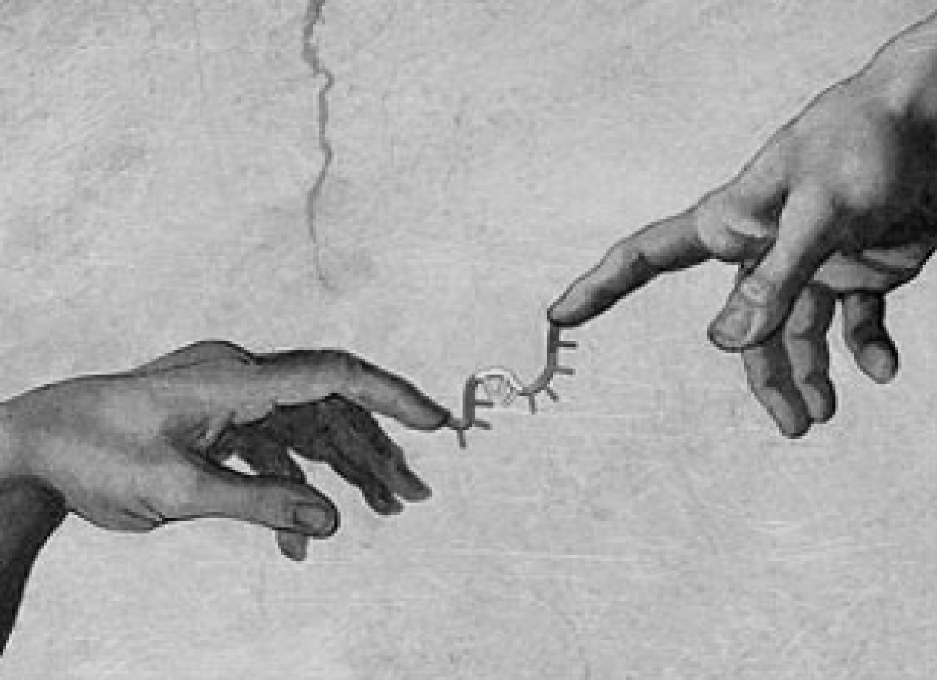
Nature is full of surprises.When atoms were first proved to exist(and that was a mere century ago),they were thought to be made only of electrons and protons.That explained a lot,but it did not quite square with other observations.Then,in 1932,James Chadwick discovered the neutron.Suddenly everything made sense—so much sense that it took only another 13 years to build an atomic bomb.
It is probably no exaggeration to say that biology is now undergoing its“neutron moment.”For more than half a century the fundamental story of living things has been a tale of the interplay between genes,in the form of DNA,and proteins,which the genes encode and which do the donkey work of keeping living organisms living.The past couple of years,however,have seen the rise and rise of a third type of molecule,called RNA.
The analogy is not perfect.Unlike the neutron,RNA has been known about for a long time.Until the past couple of years,however,its role had seemed restricted to fetching and carrying for DNA and proteins.Now RNA looks every bit as important as those two masters.It may,indeed,be the main regulator of what goes on in a cell—the cell's operating system,to draw a computing analogy—as well as the author of many other activities.As important,molecular biologists have gone from thinking that they know roughly what is going on in their subject to suddenly realizing that they have barely a clue.
That might sound a step backwards;in fact,it is how science works.The analogy with physics is deeper than just that between RNA and the neutron.There is in biology at the moment a sense of barely contained expectations reminiscent of the physical sciences at the beginning of the 20th century.It is a feeling of advancing into the unknown,and that where this advance will lead is both exciting and mysterious.
Know thine enemy
As Samuel Goldwyn so wisely advised,never make predictions—especially about the future.But here is one:the analogy between 20thcentury physics and 21st-century biology will continue,for both good and ill.
Physics gave two things to the 20th century.The most obvious gift was power over nature.That power was not always benign,as the atomic bomb showed.But if the 20th century was distinguished by anything from its predecessors,that distinctive feature was physical technology,from motor cars and aeroplanes to computers and the internet.
It is too early to be sure if the distinguishing feature of the 21st century will be biological technology,but there is a good chance that it will be.Simple genetic engineering is now routine;indeed,the first patent application for an artificial living organism has recently been filed.Both the idea of such an organism and the idea that someone might own the rights to it would have been science fiction even a decade ago.And it is not merely that such things are now possible.The other driving force of technological change—necessity—is also there.Many of the big problems facing humanity are biological,or are susceptible to biological intervention.The question of how to deal with an ageing population is one example.Climate change,too,is intimately bound up with biology since it is the result of carbon dioxide going into the air faster than plants can remove it.And the risk of a new,lethal infection suddenly becoming pandemic as a result of modern transport links is as biological as it gets.Even the fact that such an infection might itself be the result of synthetic biology only emphasizes the biological nature of future risks.
At the moment,policymakers have inadequate technological tools to deal with these questions.But it is not hard to imagine such tools.Ageing is directly biological.It probably cannot be stopped,but knowing how cells work—really knowing—will allow the process to be transformed for the better.At least part of the answer to climate change is fuel that grows,rather than fuel that is dug up.Only biotechnology can create that.And infections,pandemic or otherwise,are best dealt with by vaccines,which takes a long time to develop.If cells were truly understood,that process might speed up to the point where the vaccine was ready in time to do something useful.But physics gave the 20th century a more subtle boon than mere power.It also brought an understanding of the vastness of the universe and humanity's insignificant place in it.It allowed people,in William Blake's phrase,to hold infinity in the palm of a hand,and eternity in an hour.
Know thyself
Biology,though,does more than describe humanity's place in the universe.It describes humanity itself.And here,surprisingly,the rise of RNA may be an important part of that description.Ever since the human-genome project was completed,it has puzzled biologists that animals,be they worms,flies or people,all seem to have about the same number of genes for proteins—around 20,000.Yet flies are more complex than worms,and people are more complex than either.Traditional genes are thus not as important as proponents of human nature had suspected nor as proponents of nurture had feared.Instead,the solution to the puzzle seems to lie in the RNA operating system of the cells.This gets bigger with each advance in complexity.And it is noticeably different in a human from that in the brain of a chimpanzee.
If RNA is controlling the complexity of the whole organism,that suggests the operating system of each cell is not only running the cell in question,but is linking up with those of the other cells when a creature is developing.To push the analogy,organs such as the brain are the result of a biological internet.If that is right,the search for the essence of humanity has been looking in the wrong genetic direction.
Of course,such results are speculative and primitive.But that is the point.Lord Rutherford,who proved that atoms exist,knew nothing of neutrons.Chadwick knew nothing of quarks,let alone supersymmetry.Modern biologists are equally ignorant.But eventually,the truth will out.
(From The Economist,June 14th,2007)
Questions for Discussion(问题讨论)
1.Explain“What physics was to the 20th century,biology will be to the 21st century and RNA will be a vital part of it.”
2.What does the author mean by saying“biology is now undergoing its neutron moment”?
3.“There's a good chance that the distinguishing feature of the 21st century will be the biological technology.”Explain it.
4.“To hold infinity in the palm of a hand,and eternity in an hour.”What does it mean?
5.What is the significance of the rise of RNA?
Language Tips(阅读提示)
Atom:(原子)The smallest part of an element that can exist alone or can combine with other substances to form a molecule.
Electron:(电子)A very small piece of matter with a negative electrical charge that moves around the nucleus(=central part)of an atom.
Proton:(质子)A very small piece of a matter with a positive electrical charge that is in the central part of an atom.
Neutron:(中子)A part of an atom that has no electrical charge.
James Chadwick:(1891-1974)An English physicist and Nobel laureate who is best known for discovering the neutron.
Gene:(遗传因子,遗传基因)A part of a cell in a living thing that controls what it looks like,how it grows,and how it develops.People get their genes from their parents.
Protein:(蛋白质)One of several natural substances that exists in food such as meat,eggs,and beans,and which your body needs in order to grow and remain strong and healthy.
Molecule:(分子)The smallest unit into which any substance can be divided without losing its own chemical nature,usually consisting of two or more atoms.
Samuel Goldwyn:U.S.film producer.He emigrated alone at age 13 from Poland to New York,where he worked in a glove factory and beCome a salesman.He formed a film company with his brother-in-law,Jesse L.Lasky(1880-1958),and Cecil B.DeMille in 1913.In 1917 he left the company and with Edgar Selwyn established Goldwyn Pictures Corp.By the time that company merged into MGM(1924),he had beCome an independent producer.He employed top screenwriters,directors,and actors to produce films of high quality,including Wuthering Heights(1939),The Little Foxes(1941),The Best Years of Our Lives(1946),Guys and Dolls(1955),and Porgy and Bess(1959).
William Blake:(1757-1827)English artist,mystic and poet who wrote Songs of Innocence.
Genome:(基因组,染色体组)A genome is an organism's complete set of DNA,including all of its genes.In humans,a copy of the entire genome—more than 3 billion DNA base pairs—is contained in all cells that have a nucleus.
Lord Rutherford:Ernest Rutherford(1871-1937),Nobel Laureate in Chemistry for his investigations into the disintegration of the elements,and the chemistry of radioactive substances.
Quark:(夸克,理论上比原子更小的基本粒子)A very small part of something,which is smaller than an atom.
Geneticengineering:Artificialmanipulation,modification,and recombination of DNA or other nucleic-acid molecules in order to modify an organism or population of organisms.The term initially meant any of a wide range of techniques for modifying or manipulating organisms through heredity and reproduction.Now the term denotes the narrower field of recombinant-DNA technology,or gene cloning,in which DNA molecules from two or more sources are combined,either within cells or in test tubes,and then inserted into host organisms in which they are able to reproduce.This technique is used to produce new genetic combinations that are of value to science,medicine,agriculture,or industry.Through recombinant-DNA techniques,bacteria have been created that are capable of synthesizing human insulin,human interferon,human growth hormone,a hepatitis-B vaccine,and other medically useful substances.Recombinant-DNA techniques,combined with the development of a technique for producing antibodies in great quantity,have made an impact on medical diagnosis and cancer research.Plants have been genetically adjusted to perform nitrogen fixation and to produce their own pesticides.Bacteria capable of biodegrading oil have been produced for use in oil-spill cleanups.Genetic engineering also introduces the fear of adverse genetic manipulations and their consequences(e.g.,antibioticresistant bacteria or new strains of disease).
Cultural Notes(文化导读)
DNA(脱氧核糖核酸):DNA,ordeoxyribonucleicacid,isthe hereditary material in humans and almost all other organisms.Nearly every cell in a person's body has the same DNA.Most DNA is located in the cell nucleus(where it is called nuclear DNA),but a small amount of DNA can also be found in the mitochondria(where it is called mitochondrial DNA or mtDNA).
The information in DNA is stored as a code made up of four chemical bases:adenine(A),guanine(G),cytosine(C),and thymine(T).Human DNA consists of about 3 billion bases,and more than 99 percent of those bases are the same in all people.The order,or sequence,of these bases determines the information available for building and maintaining an organism,similar to the way in which letters of the alphabet appear in a certain order to form words and sentences.
DNA bases pair up with each other,A with T and C with G,to form units called base pairs.Each base is also attached to a sugar molecule and a phosphate molecule.Together,a base,sugar,and phosphate are called a nucleotide.Nucleotides are arranged in two long strands that form a spiral called a double helix.The structure of the double helix is somewhat like a ladder,with the base pairs forming the ladder's rungs and the sugar and phosphate molecules forming the vertical sidepieces of the ladder.
An important property of DNA is that it can replicate,or make copies of itself.Each strand of DNA in the double helix can serve as a pattern for duplicating the sequence of bases.This is critical when cells divide because each new cell needs to have an exact copy of the DNA present in the old cell.
DNA is a double helix formed by base pairs attached to a sugarphosphate backbone.
RNA(核糖核酸):RNA is a nucleic acid.The initials RNA stand for ribose nucleic acid.
RNA is one of two nucleic acids that are found in human cells.The other is DNA(deoxyribose nucleic acid).DNA is the material that makes up the genes and chromosomes in our cells.The genes and chromosomes carry the genetic blueprint that controls our bodies and makes each of us a unique individual.
The way this works is that the DNA carries a code for making proteins,and the different proteins that it tells our cells to make lead not only to the differences between various types of cells,but also the differences between each and every one of us.
The DNA is in the nucleus of the cell,but the proteins are made in the ribosomes,which are microscopic structures in the cytoplasm of the cell,which surrounds the nucleus.RNA carries the blueprint for making the proteins from the DNA in the nucleus to the ribosomes.
So the RNA acts as a messenger carrying instructions from the DNA to the ribosomes.
Once the ribosomes get the recipe from the RNA for the protein that is to be made,they collect the necessary amino acids together and build them up into polypeptides and proteins.
The combination of the different proteins that RNA tells the ribosomes to make is different in each and every one of us,and this unique pattern of proteins makes each of us who and what we are.
The Human Genome Project
The Human Genome Project was an international research effort to determine the sequence of the human genome and identify the genes that it contains.The Project was coordinated by the National Institutes of Health and the U.S.Department of Energy.Additional contributors included universities across the United States and international partners in the United Kingdom,France,Germany,Japan,and China.The Human Genome Project formally began in 1990 and was completed in 2003,2 years ahead of its original schedule.
The work of the Human Genome Project has allowed researchers to begin to understand the blueprint for building a person.As researchers learn more about the functions of genes and proteins,this knowledge will have a major impact in the fields of medicine,biotechnology,and the life sciences.
Know thine enemy:《孙子兵法》“谋攻篇”中说:“知己知彼,百战不殆;不知彼而知己,一胜一负;不知彼,不知己,每战必殆。”又:Know thyself.A precept inscribed in gold letters over the portico of the temple at Delphi.Its authorship has been ascribed to Pythagoras,to several of the wise men of Greece,and to Phemonoe,a mythical Greek poetess.The saying“Know thyself”may refer by extension to the ideal of understanding human behavior,morals,and thought,because ultimately to understand oneself is to understand other humans as well.However,the ancient Greek philosophers thought that no man can ever comprehend the human spirit and thought thoroughly,so it would have been almost inconceivable to know oneself fully.Therefore,the saying may refer to a less ambitious ideal,such as knowing one's own habits,morals,temperament,ability to control anger,and other aspects of human behavior that we struggle with on a daily basis.
Goldwynisms:Samuel Goldwyn was also celebrated for his turn of a phrase,for malapropisms,paradoxes,and other speech errors,often referred to as“Goldwynisms.”(A humorous statement or phrase resulting from the use of incongruous or contradictory words,situations,idioms,etc.)These were partly an outgrowth of his limited education and skills with English,but also reflected a cleverness that was unique among his class,and which added new wrinkles to the English language.Among the most famous of the phrases attributed to him are:“Gentlemen,include me out”;“Never make forecasts,especially about the future”;“Give me a smart idiot over a stupid genius any day”;“They stayed away in droves”;“An oral contract isn't worth the paper it's printed on”;and the observation that“anybody who goes to a psychiatrist ought to have his head examined.”
Further Online Reading(网络拓展阅读)
The Library of Life:What Are Genes and Chromosomes?How Does DNA Tell Cells How to Make a Human?Read on to Decipher the Intricate Three Billion-letter Code That Goes into Making You or Me...James Randerson
The ObserverSunday,27 April 2008
http://www.guardian.co.uk/science/2008/apr/27/genetics.
Biochemistrymolecularbiology
Chemist Shows How RNA Can Be the Starting Point for Life
By Nicholas Wade
Published:May 13,2009
http://www.nytimes.com/2009/05/14/science/14rna.html
Cover Story:The Elixir of Life
By John Cornwell
Sunday TimesMay,25,2003
http://www.timesonline.co.uk/tol/life_and_style/article1132935.ece
The Promise and Power of RNA
By Andrew Pollack
Published:November 10,2008
http://www.nytimes.com/2008/11/11/science/11rna.html
The Next,Next Big Thing:Really Tiny RNA
By Jacob Goldstein
October 2,2007
http://blogs.wsj.com/health/2007/10/02/the-next-next-big-thingreally-tiny-rna/?mod=wsjcrmain
Journalism 101(报刊点滴)
英语新闻标题的类型
从形式和内容上看,标题主要分为以下几种:
1.形态类:
●左齐头式标题:现代报纸采用的基本形式,不论标题行数多少,一概向左靠齐,右边行与行之间的长短可以不予理会。
●通栏式标题:头版头条新闻常采用此类,字号醒目,横跨数栏。
●倒金字塔式标题:这种标题一般为三行或多行题,第一行最长,其余各行依次缩短,如同一座颠倒了的埃及金字塔。
●复合式标题:此类标题通常出现在对重大事件的报道中,其形式为两行标题,有主标题与副标题。
2.意义类:
●摘要式:这类标题提纲挈领,高度概括出新闻的主要内容,最简单易懂。如“Girls Die in Blaze”。
●设问式:可表示未来可能发生某事,如“Oil Price to Rise”。
●引语式:这类标题可以将人们说的常理性的话作标题,如“We Owe Our Lives to Our Pilot”。从语言和文字技巧上看,标题大致可分为以下几种:
●短语式标题,为追求简约,采用单个名词,或名词短语作标题。如“Wineswomanship(妇女酗酒问题)”。
●冗长型,如“It Must Be a Victory Which Peace Can Be Built”。
●平铺直叙型,如“Taiwan Recognizes Mainland Currency”。
●对比式标题,利用词组之间的对仗,词意之间的正反来达到鲜明、上口的效果。如“US is long on game shows,short on foreign news”。
●押韵式标题,采用Saying的形式,押头韵或尾韵。如“Bush Courts Black Caucus”。
Reading Comprehension Quiz(选文测验)
I.According to the article,determine which statements are true and
which are false.
1.RNA has recently been proved to exist.
2.The role of RNA is found restricted to fetch and carry for DNA and proteins.
3.Molecular biologists have Come to realise that they know roughly what is going on in a cell.
4.The first patent application for an artificial living organism has recently been filed.
5.Worms,flies and people have the same number of genes for proteins.
II.Choose the best answer to each of the following questions.
1.Atoms are made of the following except_______.
A.protons
B.neutrons
C.electrons
D.molecules
2.Which is true in the analogy of biology with physics,according to the author?
A.Both have gone a step backwards.
B.Both have the discovery of a new substance.
C.Both describe humanity's place in the universe.
D.Both are the distinguishing feature of the century.
3.Which is not given as an example for biological problem?
A.Power.
B.Ageing.
C.Infections.
D.Climate change.
4.What do biologists find out about genes for proteins?
A.People have more genes than flies.
B.Flies have more genes than worms.
C.Worms have the least number of genes.
D.Flies,worms,and people have about the same number of genes.
5.What is true about RNA,according to the author?
A.It is the neutron.
B.It is another form of DNA.
C.It may be the operating system of the cells.
D.It controls the complexity of the whole organism.