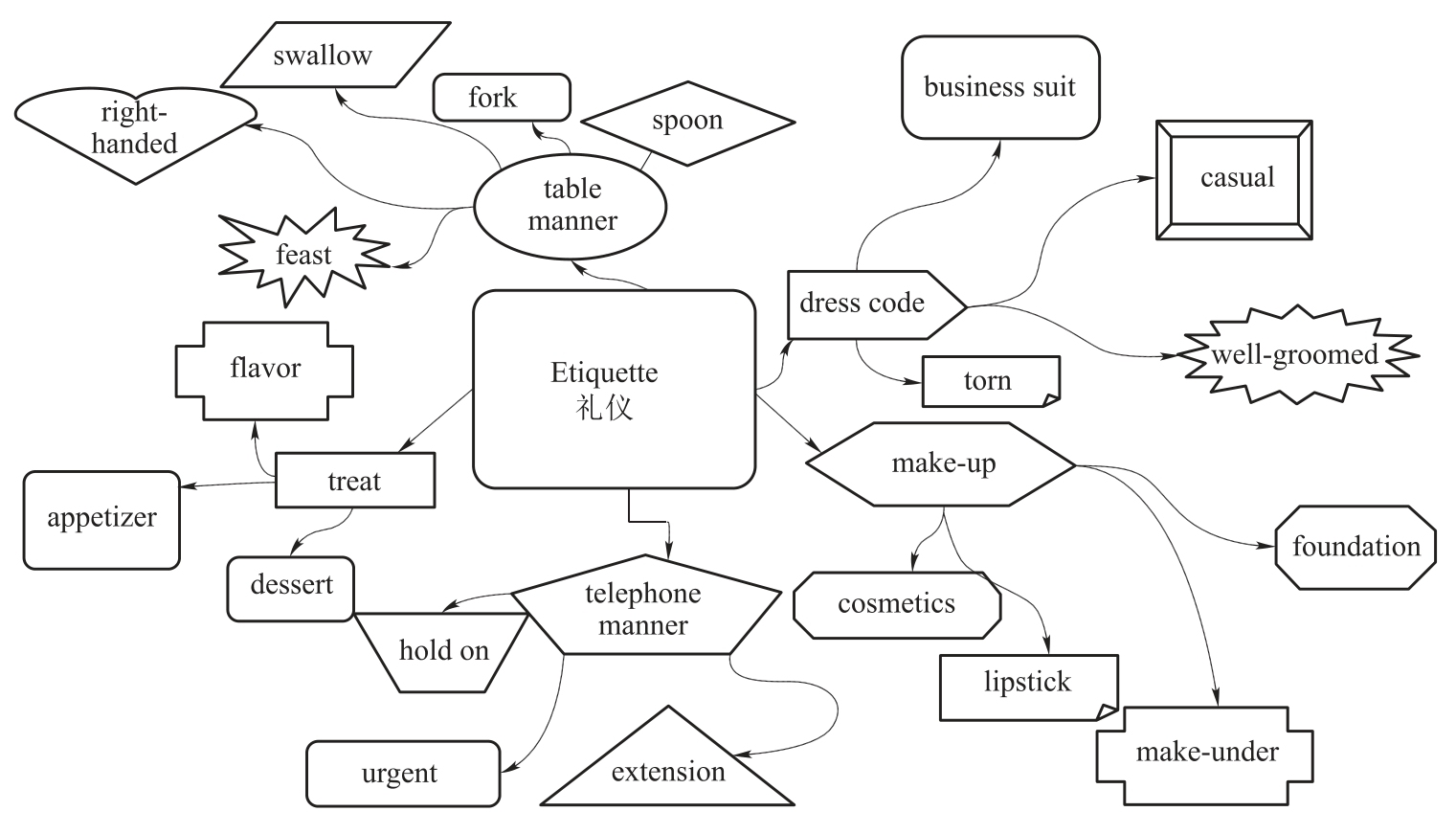
Unit 2 Etiquette 职业礼仪
礼仪是在人际交往中,以约定俗成的方式来表现的律己敬人的过程,涉及穿着、交往、沟通、情商等内容。从个人修养的角度来看,礼仪可以说是一个人内在修养和素质的外在表现。从交际的角度来看,礼仪可以说是人际交往中适用的一种艺术、一种交际方式,是人际交往中约定俗成的示人以尊重、友好的习惯做法。从传播的角度来看,礼仪可以说是在人际交往中进行相互沟通的技巧。学好礼仪,能够让你在生活中少闹笑话,工作中不再犯“菜”。过去,你或许会因为不懂礼仪而好心办坏事,或者不合时宜惹人嫌,那么今天补上这一课,你将改变这一切,成为众人眼中的优雅绅士或气质淑女。
闪亮句型
1. I found that table manners vary from country to country.
我发现每个国家的礼仪都不尽相同。
2. Owing to the fact that our company is a service institution, image is of crucial importance.
由于我们公司是一个服务机构,形象对我们来说至关重要。
3. It is rude to take advantage of the host like that.
这样占主人的便宜真的很没有礼貌。
4. I think your dressing doesn’t match your job.
我认为你的着装和你的工作不符。
5. I’ll put you through to his extension.
我帮你转接他的分机。
快问快答
1. Would you like to have lunch with me?
中午一起吃饭好吗?
—It’s my pleasure to have lunch with you.
和您共进午餐,是我的荣幸。
2. What do you think of the food here?
你喜欢这里的食物吗?
—It makes my mouth water.
我都要流口水了。
3. Do you mind if I call on you tomorrow?
您介意我明天去拜访您吗?
—I am sorry, but I have a full schedule tomorrow.
很抱歉,我明天的安排已经满了。
情境重现
1. Table Manner
餐桌礼仪
Dialogue:
A: Hi, Bill! I read an article about table manners. I found that table manners vary from country to country. But generally speaking, there are some universal rules.
A: 嗨,比尔,我读了一篇有关餐桌礼仪的文章。我发现每个国家的礼仪都不尽相同,但总的来说,还是有一些普遍的规则。
(旁注)① table manner餐桌礼仪
(旁注)② vary from各不相同
B: Yes. For example, when you are bidden to the feast, you should try your best to make less sound and action at table. And to speak while food is still in the mouth is not allowed as well.
B: 是的。例如,当你应邀赴宴,你应尽量少发出声音少做动作。切勿一边吃东西一边说话,这也是不被允许的。
(旁注)③ bidden to the feast应邀赴宴
(旁注)④ try one’s best尽力,尽量
A: Yeah, what’s more, in both western countries and China, before the host picks up spoon or fork, guests should not taste any dish.
A: 嗯,除此之外,在西方国家和中国,在主人拿起汤匙或叉子前,客人们都不能先动食物。
(旁注)⑤ pick up拾起,拿起
(旁注)⑥ spoon汤匙,勺子
B: I see. We should never do anything until the host does it first.
B: 我明白了。在主人没有开动前,我们什么都不要做。
A: Right. Also, there’s a proper technique for using fork and knife. Assuming you are right-handed, hold the fork in your left hand and the knife in your right. Gently cut the meat near the tines of the fork, so you have one bite-sized piece. Bring it up to your mouth, chew quietly and swallow when the meat is sufficiently masticated.
A: 对的。此外,刀叉的运用也有技巧。如果你是右撇子,则左手握叉右手握刀。沿着叉尖优雅地切,切成一口大小。放入嘴中静静咀嚼,充分咀嚼后才咽下。
(旁注)⑦ fork and knife刀叉
(旁注)⑧ right-handed右撇子
(旁注)⑨ swallow吞咽
(旁注)⑩ masticate咀嚼
B: Uh, I learn a lot. And I get a knack for all problems: if I’m not sure what to do, I’ll wait and see what my neighbor does.
B: 嗯,我学到了很多。我知道个解决所有问题的诀窍,那就是如果不知道在餐桌上如何做,那么就看看身边的人的做法吧。
(旁注) knack窍门,诀窍
A: Wow, how clever you are!
A: 哇,你真聪明!
 高频词汇速记
1. vary(根据情况)不同,变化
[例]The students’ work varies considerably in quality.
学生作业的质量甚是参差不齐。
2. while与……同时
[例]You can go swimming while I’m having lunch.
我吃午饭的时候你可以去游泳。
2. Dress Code
职业着装
Dialogue:
A: I’d like to talk with you about the dress code in our company. Do you have a minute?
A: 我想和你讨论下有关公司着装规范的问题。你有时间吗?
(旁注)① dress code着装规范
B: Sure.
B: 当然可以。
A: I think your dressing doesn’t match the job. You should avoid dressing too casual.
A: 你的着装和你的工作不符,别穿得太随意。
(旁注)② match与……相符
(旁注)③ casual随意的,便装的
B: But I love wearing jeans and T-shirts most. What’s your opinion?
B: 可我最爱穿牛仔裤和T恤了。你的建议是什么?
A: Informal clothes such as torn jeans and dirty shoes convey the impression that you are not serious about the job, or that you may be casual about your work as you are about your clothes. Owing to the fact that our company is a service institution, image is of crucial importance. If possible, would you please wear the business suit in the company?
A: 像磨旧的牛仔裤、脏鞋,这些不正式的服装给人造成一种你对工作不认真或者你对待工作的态度就像对待穿着一样不认真的印象。由于我们公司是一个服务机构,形象对我们来说至关重要,如果方便的话,你能否以后在公司穿正装呢?
(旁注)④ torn穿旧的
(旁注)⑤ convey传达,表达
(旁注)⑥ serious about对……认真
(旁注)⑦ casual about对……随便
(旁注)⑧ owing to由于
(旁注)⑨ of crucial importance至关重要
(旁注)⑩ business suit正装
B:OK, I understand. I will make myself well-groomed and modestly dressed from tomorrow.
B:好的,我明白了,我会从明天起让自己仪表整齐,穿着得体。
(旁注) well-groomed and modestly dressed仪表整齐,穿着得体
高频词汇速记
1. casual随意的,随便的
[例]His attitude to his job is rather casual.
他的工作态度不太认真。
2. match与……相符
[例]Let beggars match with beggars.
龙配龙,凤配凤。
3. How to Make Up
浅谈化妆
Dialogue:
A: Shall we put on the make-up when we go to the company?
A: 我们去公司上班的时候是否应该化点妆呢?
(旁注)① put on the make-up上妆
B: I would make up each morning. I think how you dress and make up can make you different. When meeting clients, it’s perceived to be more professional if you put on make-up.
B: 我每天都会化妆的,我认为你的穿着和化妆会使你看起来与众不同。当你去会见客户,化过妆也会被认为是职业化的表现。
(旁注)② perceive认为,理解为
A: Can you offer me some specific advice?
A: 你能给我点具体的意见吗?
(旁注)③ specific具体的
B: Sure, nowadays, many white-collar women like the make-under. Use some basic make-up such as foundation, mascara and lipstick, you will look better and more confident.
B: 当然啦,现今很多白领丽人喜欢化淡妆。用点基础的粉底、睫毛膏和口红,你就会看上去更加漂亮和自信。
(旁注)④ white-collar白领
(旁注)⑤ make-under淡妆
(旁注)⑥ foundation粉底
(旁注)⑦ mascara睫毛膏
(旁注)⑧ lipstick口红
A: But I know little about make-up. I don’t know how to do it.
A: 但是我对化妆一窍不通,我不知道该怎样做。
B: Well, it is not difficult. First you should prepare the basic cosmetics, and then you may follow the steps of make-up column in the fashion magazines, such as Vogue.
B: 这不难,首先你该准备一些基本的化妆品,然后你可以照着《时尚》一类的杂志中的化妆专栏,一步一步学就行了。
(旁注)⑨ cosmetics化妆品
(旁注)⑩ vogue《时尚》
A: Thank you very much; I can’t help starting learning now.
A: 非常感谢。我现在就想开始学化妆了。
(旁注) can’t help doing忍不住做某事
高频词汇速记
1. perceive视为,认为,理解为
[例]She did not perceive herself as disabled.
她不把自己看成残疾人。
2. specific明确的,具体的
[例]I gave you specific instructions.
我给过你明确的指示。
4. Telephone Manner
电话礼仪
Dialogue:
A: Good morning, Shanghai Trading Company. May I help you?
A: 早上好,这里是上海商贸公司,有什么可以帮您?
B: Hello, This is Jack Lee. Can I speak to Robert of the Sales Department?
B: 你好,我是杰克·李,请问销售部的罗伯特在吗?
A: Hold on, please. I’ll put you through to his extension... Oh, sorry, it’s busy at the moment. Would you like him to call you back?
A: 请等一下,我帮您转接他的分机。不好意思,现在占线无法接通,您需要我待会儿让他给您打回去吗?
(旁注)① hold on继续,不挂断
(旁注)② put you through to转接
(旁注)③ extension分机
B: Yeah, I’m tied up today. Would you mind taking a message?
B: 好的,今天我有点忙,你可以帮我留个言吗?
(旁注)④ tie up忙于,时间被……占去
(旁注)⑤ mind doing sth.介意做某事
A: No, not at all. Please go ahead.
A: 当然可以,请说。
(旁注)⑥ not at all一点也不
B: That’s great. Please tell him that I’ve got some problems on the merchandises, and I wanna talk with him in person. It’s urgent. I’ll wait for his call.
B: 那好,请告诉他我有些商品问题需要和他亲自谈谈,十分紧急。我会等他电话的。
A: Can I take your contact?
(旁注)⑦ go ahead继续
(旁注)⑧ merchandise商品,物品
(旁注)⑨ urgent紧急的,紧要的
A: 可以告诉我您的联系方式吗?
B: Hilton Hotel, room 224; my phone number is 5022-224.
B: 希尔顿酒店224房间,我的电话是5022-224。
A: OK, Mr. Lee, I’ll make sure Robert gets it as soon as possible.
A: 好的,李先生。我保证让罗伯特尽早回您电话。
(旁注)⑩ make sure确保,保证
高频词汇速记
1. extension电话分机线,分机号码
[例]Can I have an extension 4332 please?
请接4332分机。
2. urgent紧急的,急迫的,迫切的
[例]The law is in urgent need of reform.
这项法律亟待修订。
5. Business Treat Etiquette
商务宴请礼仪
Dialogue:
A: Last week, my boss invited several guests to a French restaurant. The flavor was good, but one of the clients was quite gaffe.
A: 上周,我老板邀请了几个客人去法国餐厅,菜的味道很好,但是其中一个客户很失态。
(旁注)① flavor味道
(旁注)② gaffe /gæf/失态的,失礼的
B: What happened?
B: 发生了什么事?
A: She ordered the most expensive dishes in the restaurant while all the other people ordered the moderate ones.
A: 她点了餐厅里最贵的菜,而其他人点的都是价格适中的。
(旁注)③ moderate适中的,中等的
B: It is rude to take advantage of the host like that. Only if the host insisted, it’s OK for you to order the pricy dishes or else the guests should choose something moderately priced.
B: 这样占主人的便宜真的很没礼貌,只有主人坚持时,客人才点那么贵的菜,否则作为客人,应该点些价位适中的才对。
(旁注)④ rude粗鲁的
(旁注)⑤ take advantage of利用,占便宜
(旁注)⑥ pricy昂贵的
A: She ordered soup, starter, salad, main dish and dessert. My boss usually eats little, but he had to order the same as hers.
(旁注)⑦ starter(主菜之前的)开胃小吃
(旁注)⑧ dessert甜点
A: 她点了汤,开胃小吃、沙拉、主餐和甜点。我老板通常吃得比较少,但不得不跟着她一起点一样的。
B: Why did your boss have to do so?
B: 你老板为什么要这样做?
A: He is indeed a gentleman. When someone orders appetizers or other dishes in addition to the main course, it’s polite for others to order the same to keep the pace of meal even and avoid the awkwardness of one person’s eating alone later.
A: 他真的是一位绅士。吃饭时,当有人点了除了主菜之外的开胃菜或者其他菜时,别人也点同样的菜是礼貌的,这是为了保持大家进餐的节奏一致,避免一个人吃大家等的尴尬。
(旁注)⑨ appetizer开胃菜
(旁注)⑩ even平均的,相等的
(旁注) awkwardness尴尬,难为情
B: He’s really considerate. I also learn a lesson about the courtesy of business treat.
B: 他真是善解人意。关于商务宴请的礼仪我也上了一课。
(旁注) considerate善解人意的
(旁注) courtesy礼貌的举止
高频词汇速记
1. flavor味道
[例]This meat has rather a high flavor.
这肉有点变质的味道。
2. gaffe失态的,失礼的
[例]He didn’t realize what a gaffe he’d made.
他没意识到自己已出乖露丑。
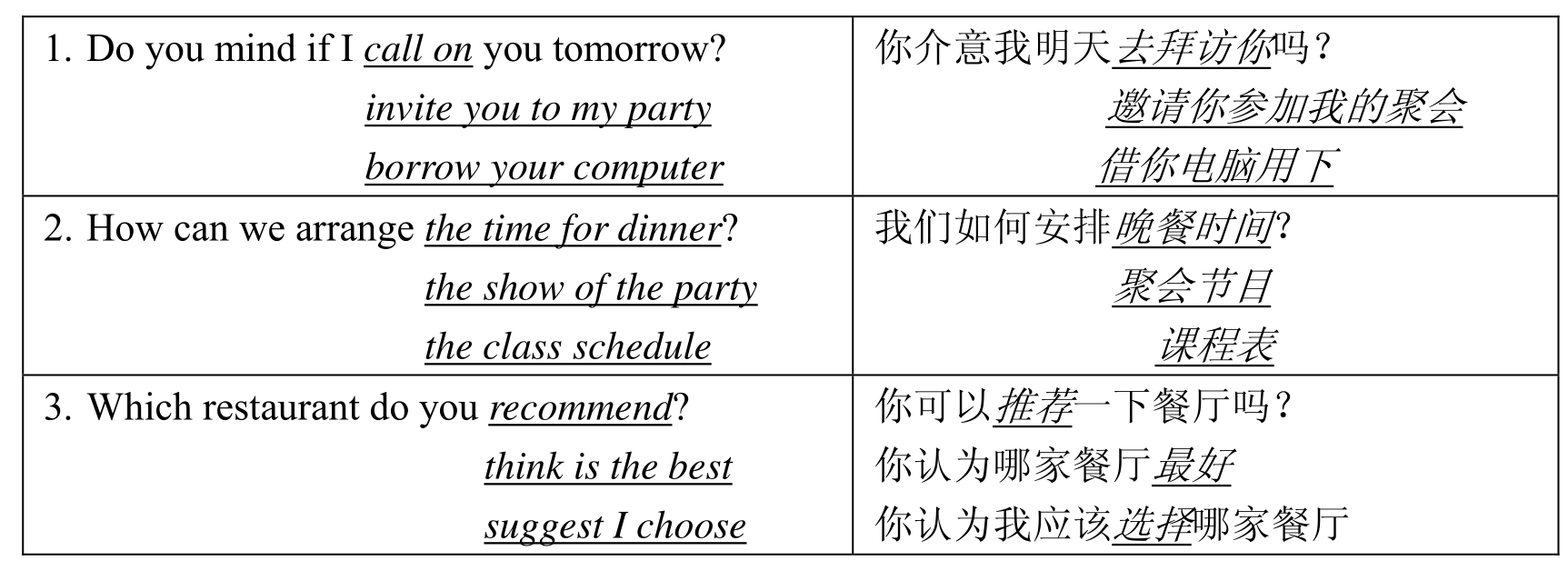
 替换扩展
替换扩展
 百宝箱
百宝箱
中国是一个礼仪之邦(a nation of etiquette),《礼记·曲礼上》说:“礼尚往来,往而不来,非礼也,来而不往,亦非礼也。”早在春秋时期(Spring and Autumn period),送礼的风尚就已形成,并演绎成为一种文化。在现代社会,在交往过程中,送礼几乎是必须的,也是一种潮流。
1. 送礼间隔适宜Have a proper intervening time
送礼的时间间隔也很有讲究,过频过繁或间隔过长都不合适。送礼者可能手头宽裕,或求助心切,便时常大包小包地送上门去,有人以为这样大方,其实不然。因为你以这样的频率送礼目的性太强。一般来说,以选择重要节日、喜庆、寿诞送礼为宜,送礼的既不显得突兀虚套,受礼的收着也心安理得,两全其美。
2. 送礼不办事,办事不送礼Giving gifts while not asking for help
送礼是以物表情,礼载于物。得体的送礼,恰似无声的使者,给交际活动锦上添花。营销人的交际活动,虽然多带有功利性和目的性,但是你千万不要做“现用现交”的人。而且,这样做很容易让人感到有“受贿”之嫌。聪明的营销人平时送礼,只是为了沟通感情。送礼时不办事,办事时绝不送礼!
常见的商务礼品(commercial gifts)分两大类:
第一类是常规产品(conventional products),如:
名片夹business card bag、钱夹wallet、钥匙包key bag、手表watch、石雕stone carving、印章seal、珠宝玉器jewelry and jade、化妆品cosmetics、消费卡consumer cards、传统工艺品 traditional handcrafts等。
第二类是定制产品(custom products),即:为城市、企事业单位或个人定制的产品,如:
高档旅游纪念品superior tourism souvenir;企业商务活动主题等为题材设计的产品specifically designed products;为赠送重要对象,以该对象的名字、生肖、生日、形象、喜好等为特征而特别精选或设计的产品。
思维导图