1
商务英语综合实训
1.4.4.1 第一节 知 识 巩 固

第一节 知 识 巩 固

1. How to write an invitation letter

A letter of invitation is written to people, inviting them for a special occasion or event in your personal and professional life. An invitation letter is written for business events as well as for personal occasions like birthdays, family reunion, etc. Before drafting the letter, first seriously think about the event. Once you have decided that the event is for official purpose or personal then you can begin writing the letter. The letter has to be formal invitation and should have all the relevant facts.

An invitation letter should convey the date, time and venue of the event. The letter has toclearly mention the event. This will help people understand the purpose of the letter. They will get a clear idea of the nature of event. The letter should be short and precise. A soft and polite tone should be used in the letter. The letter will begin with a welcome note and end with the details of a person whom to contact to confirm his attendance for the event. This will help the organizers manage the event.

You have to begin the letter with name and address of sender and receiver. Date has to be mentioned. Begin the main body of the letter with salutations. A word like “Dear” followed by the recipient’s name is a good way to start. The letter has to give out the purpose in the very first paragraph. This helps to clearly convey the message. The letter has to give relevant facts like date, time and venue of the event in the beginning itself. This helps the reader plan his schedule accordingly. Let the invitees know that they have to inform the organizers whether they will attend the event or not before a specified date. Give the reader the details about whom to contact to confirm their attendance for the occasion. This should be the last line of the letter.

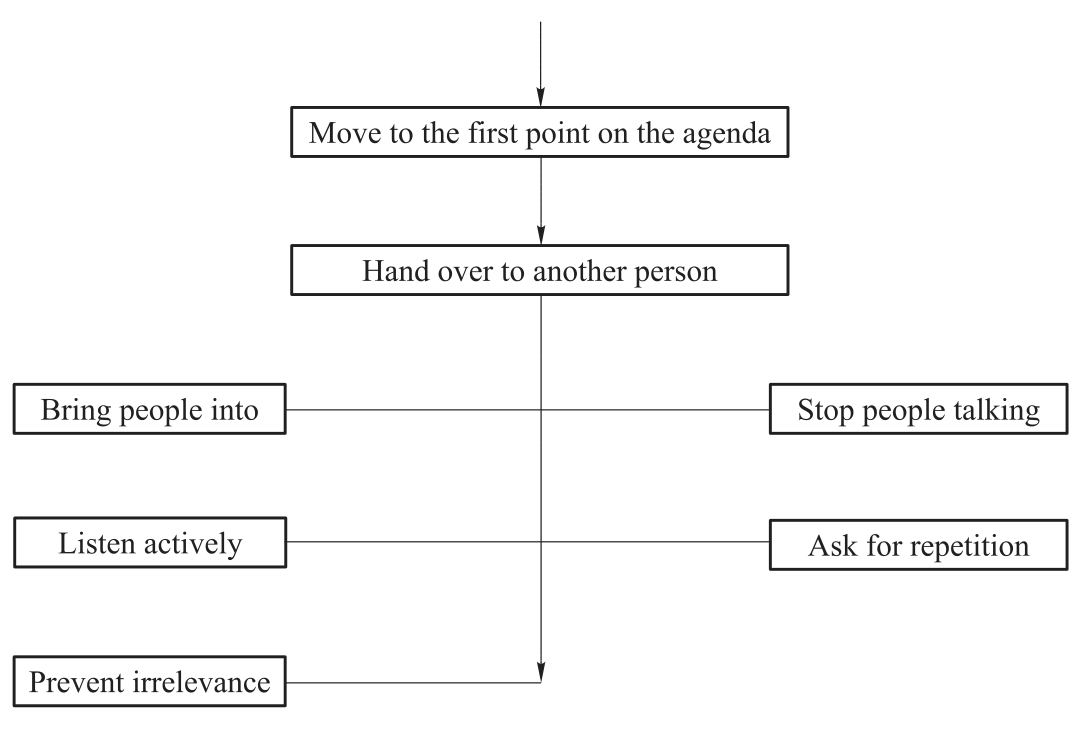
2. The general process of a meeting

Opening the meeting

● Invite introductions from participants (if necessary)

● Explain purpose of meeting

● Present agenda

● Discuss ground rules (who speaks. when to speak, decision making, etc)

img7

img8

Closing the meeting

● Thank participants

● Announce next meeting

3. Some useful expressions used in chairing a meeting

Opening the meeting

● Good morning, ladies and gentlemen

● If we are all here shall we get started?

● First of all I’d like to introduce the colleague from our head office.

● If everyone has got a copy of the agenda, let me first explain the purpose of the meeting.

● The objective / purpose / aim / target of this meeting is to …

● Now let’s look at the agenda in detail.

● As you can see there are five main points / items.

● As we have a lot to get through this morning, can we agree on the ground rules? I suggest / propose the following…

Bringing people in (encouraging hesitant speakers)

● We haven’t heard from you yet, George. What do you think about this proposal?

● Would you like to add anything, George?

Stopping people talking

● One at a time, please!

● Well, thank you, George. I think that’s clear now. Could we have some other opinions?

● Right, thank you, George. I think we’ve all got the point now. Shall we move on?

Asking for repetition or clarification

● I’m sorry. I didn’t hear what you said. Would you mind repeating it, please?

● Sorry. I don’t quite follow you. Could you go over that again, please?

Prevent irrelevance

● I’m afraid that’s outside the scope of this meeting.

● We’ve beginning to lose sight of the main point.

● Keep to the point, please.

● I think we’d better leave that subject for another meeting.

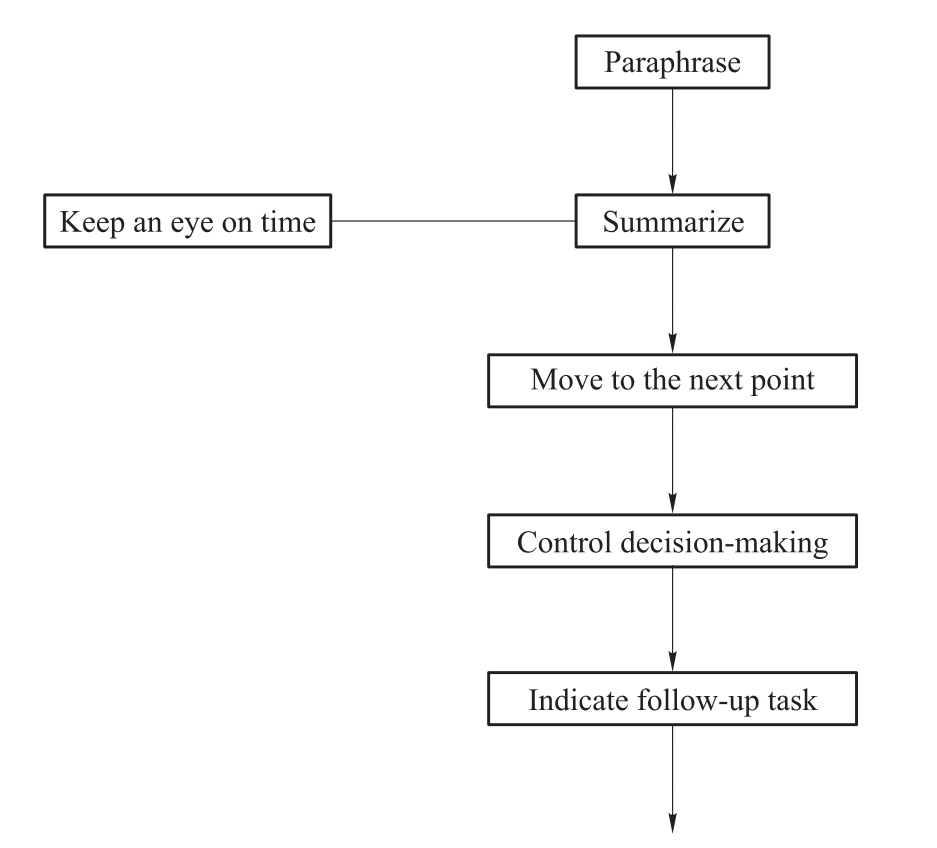
Paraphrase

● So what you’re saying is…

● In other words….

● So you mean…

● So, if I understand you correctly….

Summarizing

● To sum up then…

● So, to summarize what has been said so far…

Keep an eye on the time

● We’re running short of time.

● There’s not much time left.

● Could you please be brief?

Move to the next point

● Right. Let’s move on to the next point.

● Well, I think that covers everything on that point. Let’s move on.

Controll decision-making

● I’d like to (formally) propose that…

● Can we take a vote on that proposal?

● So that motion has been accepted/rejected by 4 votes to 3.

● Well, it seems that we are broadly in agreement that…

Indicate follow-up tasks

● George, do you think you could…

● George, how about preparing some figures for the next meeting?

Closing the meeting

● So, next meeting will be on …at…

● Thanks for your participation.

● Right, I declare the meeting closed.