三、Part1 基础及近年高频话题
掌握了基本的套路之后,我们来细数一下常考的话题,这里不给出参考答案,因为希望考生通过更多的独立思考来提高。并且这些话题都是跟大家日常生活相关的问题,建议考生参考基本套路和提示信息自行组织答案,对临场发挥自信不够的,可以提前写好记熟。当然,伴随着每年1、5、9 月三次的变题,增加所谓的新题淘汰部分旧题,我们要把可能考到的每一题都提前准备好是不可能的也是没必要的,本书要教会大家的是态度、思路、方法、和灵活性。
和写作一样,范文和提示主要是给大家思路的,并不存在标准答案。

本书听力资源
(一)个人信息
1.基本信息
Name 姓名。
family name/last name/surname 姓。
first name/given name 名(不包括姓)。
full name 全名。
nickname 昵称,绰号。
special meaning 特殊的意义。
(1)Does your name have any special meaning?
参考本章开头的回答,结合自身情况回答。
(2)Do you like your name?
先回答是否喜欢,再说原因。比如:不喜欢。内部(internal)原因:我觉得我的名字不够时尚(fashionable);外部(external)原因:我的名字对别人来说,难写、难念,或者发音(pronounce)不好听(unpleasant)。
(3)How are babies given their names in China?
根据发音,寓意等;名字承载着祝愿,希望等;可以举个简单的例子。
(4)Do people in China ever change their names?
根据了解的情况回答,再说原因。比如一些明星的原名太过普通,为了出道成名而选择改名。
2.生 日
(1)Do people in China celebrate birthdays?/ Do people in China have birthday parties? / How do children celebrate birthdays in your country? / Do children and adults celebrate birthdays the same way? / How did you celebrate your last birthday?/ Do you prefer birthday parties with your friends or with your family? / What kinds of birthday gifts do you like to receive?/ Is there a difference between the way you celebrated your birthday in the past and in the present?
实际上,几乎所有的中国人(儿童),庆祝各种节日和纪念日的主要方式都是在聚会(party)上大吃一顿(have a square meal),通常包括一碗长寿面(longevity noddle)。除此之外,年轻人(或成年人) 庆祝的方式还包括和朋友去KTV 唱歌或者别的地方跳舞、送礼物等。
(2)Which birthdays are especially important in China?/ Do you think it’s important for people to celebrate birthday?/ Are birthdays more important for children or for adults?
笔者认为应该包括第一个生日(the very first one),因为新生命对于一个家庭来说很重要;18 岁的生日,意味着你可以享有(enjoy)一些成年人(adults)的权利(rights)了,但是同时也要承担(shoulder)相应的(related)责任(responsibilities)了。大家平时那么忙,任何庆祝,包括生日,都是一个邀请所有亲戚朋友的好机会,过生日不管对儿童还是成年人都显得很重要。当然,有些人会说,给孩子们一个快乐的童年(childhood)很重要,那么庆祝生日是一个必不可少(essential)的手段。
(3)Do you think it’s important to remember people’s birthdays?/ Do you think it’s important to give a special gift to someone on his or her birthday?
记得别人的生日,会让别人觉得是被关心的,当然会帮助你们维持(maintain)好的关系(relationship);这种时候,要是能及时地给出礼物,尤其是那种精挑细选的(carefully selected),还会增进(promote)你们的友谊呢。
3.学 业
评分标准介绍部分我们提到,考官通常会在Part1 询问我们的身份:Are you a student or do you work? 这里分学生和工作人士分别讲述。
(1)Where do you study? /Which is the best university in China?
×× University/High school etc.这里可以描述自己的学校,比如地理位置(location),占据(occupy)的面积(area),人数,特色(feature),名声(reputation),食堂(canteen)等。关于中国最好的大学,考生可以有自己的答案,言之有理即可。
(2)What subject are you studying? /Which subject are you specialized in?/ What is your major?
首先要注意,subject 单指某一门课程,major 主要指你的专业,而subjects 可以是当前专业或者学习阶段涉及的各个课程。比如笔者的专业(business administration)涉及的课程包括管理(management),营销(marketing),经济(economics),会计(accounting),金融(finance)等。为丰富答案可以详细介绍某一门课程。
(3)Why did you choose to study that subject/ those subjects? / Do you like your subject?(Why/ Why not?) /Are your subject interesting? / Do you like your major and why?
这几题的答案可以通用,为什么选,因为喜欢而选,因为有趣而喜欢。当然,建议加入一些细节,比如一个女学生是如下阐释她为什么对某地的地貌的研究感兴趣的:
I’ve always wanted to go there.My father was a great fan of cowboy films and the Wild West so I was subjected to seeing all the epics, many of which were shot there.As a consequence, it feels very familiar to me and it’s awesome both geographically and visually, so it’s somewhere I’ve always wanted to visit.The subsequent research I did and the online photographs made me even keener.(音频116)
这里教大家一种解释原因的办法:内外因法。外因:受周围人的影响(比如此题答案)而做某事;内因:从小对某事感兴趣,无须他人影响。
(4)What subject do you find most useful? /What is your (least) favorite course/subject?
因为有用,所以最喜欢。比如英语口语这门课。因为全球一体化(globalization),我们的跨国商务(international business)和教育(education)用到的主要语言(key language)就是英语。练习口语,可以更容易地谈合同(negotiate contracts),留学的时候和老师更好地交换想法(exchange ideas)。当然,你也可以不喜欢所学的课程和专业。比如理工科(science and engineering)的课上起来比较枯燥。
(5)Do you prefer to study in the morning or at afternoon? Why? / Describe your study habits?
如果可以选的话,笔者选下午。因为对笔者来说早晨起床很困难,只有下午才开始变得清醒。当然,有些同学也许会说两个时间都不喜欢,因为有些夜猫子(nightbird)只有晚上才会状态良好(in good status)。
(6)What would you like to do after graduation? /Are you looking forward to working?
大部分同学甚至工作人士也许会选学习深造(further studies),通过考雅思来申请海外的学校。当然你也可以选择加入就业市场(job market),去把你学到的理论付诸实践。甚至有女同学想要当家庭主妇(housewife),处理家庭琐事(domestic affairs)。当然,上班可以挣钱(make money),去购买学生时代没有能力购买的东西。
(7)Do you think your present subjects are relevant to society?
其实所有的学科都是和社会有一定关系的。只是,数学,物理和化学等理论的科目往往会被间接地应用到社会,而会计和工程等对应的工作岗位在社会中的劳动力市场里会比较多。
练习:
What should teachers do to make subjects more interesting?
参考词汇:
mysterious 神秘的;repeat what the book says 照本宣科;enhance interactions 加强互动;stimulate/motivate 激励;apply theory/knowledge 应用理论/知识
4.未来计划
(1)Do you have a future plan?
(2)What will you do to achieve your plan?
(3)Is making a good plan difficult?
(4)Is making a plan important?
参考词汇:
in the long run 长远来看;long/short-term plan 长/短期计划;internship 实习;go freestyle随性;uncertainty 未知;possibility 可能性;encounter 遭遇;settled/fixed 安排好的;flexible灵活的;confined 被束缚的;follow one’s heart 从心;aim/goal/objective 目标;balance 平衡;achievable 可实现的;ultimate 最终的;confused 迷惑的
5.工作和事业
(1)Why do you choose your current job? /Do you like your current job? Why? /Are your job interesting? /Is your job important to you? /If you could, would you change jobs?What work do you do? /Describe your job in detail.
上面的题目可以参考学业部分答案,这里给下面这个题目举个例子:
What are your job prospects? 答案是笔者多年前申请海外研究生课程的时候学习计划里写的:
It is recognized that the shipping industry is the key mode of global cargo transportation, holding a Master degree in these fields would certainly benefit me in applying for a satisfying job in this widest industry.As the marine system in China has not been fully developed yet, it could offer me great opportunities after I complete my studies in Australia.In my motherland, I could easily get developed and achieve my goal of career because of the immature marine industry.(音频117)
(2)Do you miss being a student?
这种随机追问的题目,答案可以涉及很多方面,比如你怀念学校的课堂(class),宿舍(dormitory),食堂,路,体育场(stadium),当然还有和你一起玩耍、学习、运动的好朋友(buddy/dude)们。
参考词汇:
apply for a job / position 申请一个工作(职位);to get / have a part-time/full-time job; to work in [field/place];to work for [acompany];to specialise in [field];to be a qualified [job];to get / have an interview; to be shortlisted for an interview/job/post; to be demoted / promoted; to be fired / sacked / dismissed; to be made redundant; to retire / to be retired; to get a pension / to be a pensioner; the perks of a job (benefits);to work from home (home-working);to be self-employed/ to work for yourself; to work/do flexi-time / overtime
(二)社会关系相关
1.家
虽然房子这些细节区别和概念对于口语考试并不会产生太大的影响( 至少要知道house和我们大部分人住的是不一样的,并且part 2 常考话题之一就是描述建筑),但是考虑到大家出国后马上会面临住宿的问题,这里还是给大家解析一下。
House: 别墅,通常带有车库、花园,可以烧烤。
Townhouse: 连体或者半连体的双层别墅,院子很小。
Unit: 一般是指本身用来盖一个大别墅的地,盖几个小的别墅,房间比大别墅少些,与邻居之间共享一部分土地,特点就是没有别墅那样的院子,这种笔者在日本见的相对多,在土地资源丰富的美国和澳大利亚见的相对少。
Flat: 一般是郊区的小楼,不是高楼。(如20 世纪80—90 年代国内盖的8 层以下的小居民楼。)
Apartment: 一般是中心商务区(Central Business District)附近的高层公寓。
High-rise: 就是我们现在城市比较多见的所谓“高层”。
(1)Can you describe the place where you live? / Do you live in a house or flat? / Do you like living there? / Why do some people like living in a flat/house?
参考词汇:
urban/country/suburb (outskirts)area 城市/乡村/郊区;
housing price 房价;
infrastructure 基础设施 / facilities (air-conditioner / physical exercise equipment/transport etc.)
Satellite city,卫星城,一些大城市周边的郊县或者其他紧邻的小城市,用来缓解大城市的人口、资源、交通等压力,特点是城市化程度也较高,就业机会多,餐饮、购物、娱乐、休闲活动、医疗等设施齐全。
(2)Can you describe the room you live in?
参考词汇:
colour(不同颜色会对人有不同的心理暗示psychological indication/suggestion/implication: bright 亮色—positive 积极的;dim / dark 暗色—negative 消极.red—anger/ crime/blood; Blue—loneliness/depression; orange/yellow—sunshine/activeness/energy);decoration (well/basically decorated) & layout(家具位置关系);furniture(table/bed/sofa etc.);feelings (comfortable/romantic/ adorable etc.)
参考答案:
My room is a nice place for both relaxation and study, even it’s a little bit small.There is a window in the wall, and a single bed next to the window.My desk with lamp is between this bed and a black bookcase carrying a lot of books.Besides, there are some pictures on the wall, including my favorite star Michael Jackson.I often clean this room because I like it so much.(音频118)
(3)In the future, what type of place would you like to live in?
如果没有被问到上题,此题答案可以是准备好的对于某个地点或房间的描述,也可以是某个特殊的地点,比如靠近水边,near water (sea/river/lake / even a pool),毕竟只是对将来的设想,不妨大胆一点说。
以上内容还可被用到Part2 Describe an interesting house or apartment that you visited.
练习:颜色
(1)Did you have a favourite colour when you were a child? Why/Why not?
(2)What colour would you never choose for the walls of your home?
(3)Do you think that colour has different meanings to different people?
练习:住宿环境
(1)Do you think you have a good living condition?
(2)Do most of people in your country have a good living condition?
(3)Is there any thing to be improved about your living condition?
(4)What can people do to improve the living condition?
参考词汇:
employment 就业;pressure of survival 生存压力;medical care service 医疗服务;welfare福利;sanitation 卫生;mounting 逐渐累积的;environmental pollution 环境污染;haze 雾霾;spread positive energy 传播正能量
2.邻 居
俗话说得好:远亲不如近邻。(Better good neighbours near than relations far away.)
(1)Do you know your neighbours? Why/Why not?
正如前文所说,现在的邻居之间很少往来甚至很陌生。如果不熟悉也没关系,说明不熟悉的原因就好了,比如来往不多(have limited dealings with each other)或生活节奏太快(fast-paced life)等。如果熟悉,说明你们之间融洽的关系(harmonious/friendly/close relationship),还可以按照对人物的处理办法来描述 (详见Part2)。
(2)Do you think it’s important to know your neighbours?
要说明邻居的重要性,开篇的谚语正好也可以用。尽管雅思口语考试要不要用谚语,仁者见仁,智者见智。我们在这里只能说,用在合适的地方可以用来让考官产生文化上的共鸣,反之不如不用。因为谚语是在西方文化背景下的语言浓缩,和我们的成语一样,没有深刻的理解容易用不准。但是笔者不推荐为了备考专门去学习谚语,应该把时间花在发音、流利度等方面的练习上。
(3)What are the benefits of having good relationships with neighbours?
答案可参考上题,同时,邻居们互相了解、互相帮助、互相照顾(know each other, help/assist eachother, look after each other),让人有归属感(sense of belonging)。
(4)Would you prefer to have young people as your neighbours, or old people?
老年人和年轻人的分类描述,也是我们创作语料的一个重要方式。老年人通常喜欢安静,年轻人充满激情,对于我们来说,正常情况下应该喜欢和年轻人为邻,毕竟可以一起玩耍(have fun together)。
分类法:把人按照不同的标准分类描述,是丰富谈话的一种方式,也是Part3(理论分析型问题)比较好用的套路。人群一般可以按照年龄、学历(well-educated/illiteracy)、身份(学生/工作人士)、贫富、地域(Northern/Southern/countryside/urban),东西方等不带偏见地进行分组。不建议按肤色(white / coloured / black)和种族(race)分类。
练习:
(1)Have you ever received help from a neighbour?
(2)Do you think you are a good neighbour? Why/Why not?
(3)What would you do if your neighbours made a lot of noise? Why?
参考词汇:
grateful 感谢的;considerate 体贴的;well-behaved 有礼貌的;occasionally/once in a while/now and then 偶尔;unmeant 非故意的;put up with/endure/bear 忍受;negotiation 协商;warn 警告;complain 投诉;resort to 求助于;call the police 报警
3.教 师
(1)What do you think of teachers?
家长希望所有的教师都是模范(role model),尤其是在道德(moral)上。因为特别是中小学的孩子喜欢模仿(imitate)身边的大人,那么教师的榜样作用就很重要。
(2)Did you (do you) like your high school teachers?
喜欢,原因可以是上面的榜样作用,还有教师可以教我们知识(knowledge)和经验(experience);不喜欢,大部分教师比较strict,even 有时候会因为学生不遵守纪律(disobey the rules)而惩罚(punish)学生。这样做的坏处(negative effect)是:打消(discourage)学生积极性,使学生丧失热情(passion)和自信心(confidence)。
(3)What qualities should a good teacher have?
这种列举类的问题,可以陈列几项,然后详细阐述某一项即可。比如经验(experience),知识(knowledge),奉献(dedication),耐心(patience),沟通技巧(communication skills),影响力(influence)等。举个例子,有耐心和沟通技巧,才可以更好地给学生介绍和解释(introduce &explain)知识,让他们更好地吸收(absorb)知识。
4.朋 友
除了家人、邻居,朋友也对我们至关重要。我们可以把教师、邻居、同学都变成我们的朋友。
(1)Do you have many close friends?
如果回答有,可以介绍平时在一起做什么,比如运动/逛街/听音乐/吃饭(play sports/hang out/listen to music/have dinner)+频率+地点等细节;如果回答没有,说明原因,比如喜欢安静独处,没有太多空余时间等。
(2)Do you think friendship is important?
(3)Which do you prefer, to spend time with friends or spend time alone?
(4)What kind of people do you like to have as friends?
以上三题答案可以都参考第1 题,围绕着和朋友在一起可以做的事情来讲。
当然,一个真正的朋友也该具有一些好品质(quality),比如忠诚(loyal),诚实(honest),值得信赖(trustworthy)等。
(5)How do you keep in contact with your friends?/ Do you like face-to-face conversations with people? / Do you prefer to communicate by telephone calls or by SMS (Short Messaging Service)?
关于人与人之间的交流联络方式:
面对面(face-to-face):效果好(effective);可以借助面部表情(facial expression)来表达文本(text)和声音(voice)难以表达的信息。
电话(telephone):迅速直接,高效率且效果好(efficient and effective),缺点是看不到脸,难以了解(understand)对方的真实感情(real emotion)。
电子邮件/短信(E-mail/text message):可以低成本并传递大量(abundant)信息,并且记录(keep track of)往来消息,但是效率相对电话低,文字阅读还会造成一些误解(misunderstanding),尤其是用别国文学。
信件(Mail):过时(outdated)并且太慢,但是是一种感情的纽带(bond)。
社交软件(Social network App):容易上瘾,有太多虚假的信息,会让人丢掉面对面交流,从而使感情苍白(pale/indifferent)。
练习:电子邮件和书信
(1)Who do you usually send letters to?
(2)Why do some people like to send emails?
(3)Do you like writing?
参考词汇:
type 打字;organize one’s thoughts 整理思路;calm oneself down 使人冷静;focus on one’s inner world 关注某人内心世界;dissertation/thesis 论文;deal with disorganizedmaterials 处理凌乱的资料
练习:信件和信息
(1)Do you prefer texing message or making a phone call?
(2)Why do some people like texing message/making a phone call?
(3)On what occasions do you leave a message?
参考词汇:
emergent/urgent 紧急的;guarantee 保证;accurate 准确的;logical 有逻辑的;effective and efficient 高效的;disturb 打扰;embarrassment 尴尬;ignore 忽略;tone 语气;attitude 态度;offensive 唐突;abrupt 冒失;get through 接通电话;note 字条;memo 备忘录(也可参考Part2 Mail & Message 信件和信息话题相关内容。)
5.家 乡
家乡,如艾青的诗中写道:为什么我的眼里常含泪水?因为我对这土地爱得深沉……对于笔者这样一个环游了世界(round-the-world tour),在外求学(pursue advanced/further studies)并打拼多年的人来讲,家乡是心中最柔软的一块(special emotional feeling)。
(1)Where do you come from?
参考词汇:Inland/coastal city; location; history; traditional food; season
当然,关于一个城市或者地方,可以说的东西方方面面,比如北京可以提政治中心(political center),上海是经济中心(financial center),深圳靠近香港(close to HK)等。在part1 中我们不需要面面俱到,但是不管选哪个点切入,一定记得有细节,例子或者原因。
(2)What tourist attractions are there in your hometown?
类似的题目都可以先总说,然后着重讲一个。比如:Well, there are many place of interesting worth mentioning in my place.The one I’d like to introduce is …
(3)What do you think needs to change in your hometown?
这种题目是让大家表达不满和提意见的,我们对身边的环境、食品安全、交通(environment, food sanitation, traffic)等一定是有不满的,个人推荐说交通,因为各种交通工具的优缺点对于雅思口语考试来说也是应该掌握的。在这里可以说说现在的不便,比如:公交等不准时(not always on time),运力不足(low capability),站点不全(not well spread network)。地铁之类的交通工具应大力发展。
(4)What do you like about your hometown?
可参照第2 题,家乡可以是动态的、平和的、生动的、安全的(dynamic / peaceful / vivid/ safe)等各种,这里可以多谈自己的感受。
(5)What benefits are there to living in a big city?
可以参考卫星城(Satellite city)提到的方方面面,同时也可以跟住在偏远地区(remote area / countryside)的人对比。比如购物设施,对一些购物狂(shopaholic)来说没有足够的精品店(fancy boutiques)和专卖店(specialty shops/stores),比较让人失望(disappointed)。
参考词汇:
capital 首都,省会;county 县;province 省;directly under the jurisdiction of… 受……直辖;original family home 祖籍;dynasty 朝代;a sense of belonging 归属感;all sort of food 各色美食
6.国 家
(1)Is your country large?
(2)What is special or unique about your country?
(3)If you could change one thing about your country, what would it be?
参考词汇:
geographic 地理的;the Four Great Inventions 四大发明;compass 指南针;gunpowder 火药;typography 活字印刷术
(三)社会生活相关
1.交通和步行
这里要详细跟大家讲下交通,尤其是不同的交通方式(mode)之间简单的对比,也是我们对于日常生活该有的体验(experience)和观察(observation)。
(1)Do you often use/take public transportation?
如果回答:是+原因,如便宜、快捷、环保(cheap/cost-effective, fast, environmentally friendly)等。
如果回答:否+原因,如时刻表固定、灵活性不足、拥挤(fixed time table/low flexibility crowdedness)等。
(2)What kind(s) of transport do you usually use?
回答 Prefer+because… 这里简单地对比下各种交通工具的优缺点(advantages & disadvantages / merits & drawbacks)
长途火车:便宜,耗时太长(cheap,takes much time)。
高铁(High-speed rail/Express line):快捷,票价贵(fast; expensive);站点覆盖不全面(not well spread)。
飞机(Air-line):快捷,有时很便宜(fast; sometimes bargain);机场偏远(remote airport)。
轮船(Ship):便宜、客容量大;速度慢、航线太少(Cheap, large accommodation; Low speed; route limited)。
大巴(Coach):线路丰富(more lines than other modes);高污染的(high pollution carrying)。
私家车(Private cars):时间和路线的高灵活性(high flexibility);不安全(low safety level),容易让司机筋疲力尽(exhausted)而在开车过程中觉得困(sleepy)。
地铁(Subway / Underground trains /Metro)/轻轨(light rail):方便准时(convenient & best on time)。
巴士(Bus):便宜,有时速度太慢,太拥挤(Cheap; sometimes too slow & crowded);可以预订(book),有时间表(schedule),有的还有接人服务(pick up service)。
出租车(Taxi/Cab):舒适灵活,但高峰期难以乘坐(comfortable and flexible; expensive and low availability during peak time)。
网约车(Online ride/car-hailing):搭顺风车(get a ride / get rides);通过网站或者软件 (through website or App),分担费用(share cost)。
(3)What do you think of the transport conditions in your hometown? /Would you say that your city is a good place for walking?
可参考家乡部分第3 题;当然,如果答案是满意的话,可以参考上题陈述家乡拥有的几种主要交通方式以及他们的优点。答案:不是个走路的好地方,比如重污染(heavy pollution),拥挤(crowd),快节奏(fast-paced);答案:是个好地方,因为有很多公园,空气质量(air-quality)高(high)。
(4)Do you often (like to) walk? / Where do you walk?
可回答:视情况而定,当我不忙的时候(It depends.When I’m not that busy / have free time),我会选择走一定的距离(certain distance),比如从家到超市的路。当我上下班(学)的时候,会选择比较快一点的交通工具。下班(放学)后,我通常也会在花园里走走,或者放弃电梯(lift/elevator)而走楼梯锻炼。
It depends 意为“视情况而定”。这句话在很多地方可以用,也是比较地道的表达。本题也可以说成:It depends on whether I’m in a hurry or not。
(5)Did you walk a lot when you were a child? / Did you like walking when you were a child?
可回答:是的,上学的路很长,每天要走很多。但是,我并不喜欢走路,还是更喜欢骑车或者坐车,因为可以节省时间,也不累。
(6)What do you think are the benefits of walking? / What do you think of walking? / Is walking important? / Do you like to walk on your own or with others?
可回答:走路不仅能让我们得到身体锻炼(physical exercise),也可以让我放松(relax),尤其是(especially)当我们和家人朋友边走边聊天(chat)的时候。同时,走路还很环保(environmentally friendly)。当然,一个人走也有好处。比如可以去思考一些高于生活的(精神层面的)事情(something bigger than life)。
练习
(1)What kind of people like walking?
(2)Why do some people like to take public transport?
(3)Is public transport important?
(4)What types of public transport are popular in your living city?
参考词汇:
retiree 退休者;health nut 注重养生者;economical and convenient 经济便捷;affordability经济承受力;save resources 节约资源;reduce pollution 减少污染;indispensable 不可缺少的
2.开 车
(1)Is driving difficult or easy where you live? Why/ Why not?
(2)Do you drive a car by yourself? Why/ Why not?
(3)How old do you think people should be before they are allowed to drive? Why?
(4)What kinds of people make the best drivers? Why?
可参考Part2 交通(Transport)话题相关内容。
参考词汇:
populous 人口众多;dense population 人口密集;irrational city planning 城市规划不合理;traffic condition 交通状况;driver license 驾照;traffic jam/congestion 堵车;limited parking lots/space 停车位有限;fuel cost 油耗;self-control 自控力;traffic rules 交通规则;characteristics (人的) 品质;be bold but cautious 胆大心细;observant 观察力强;winding road 连续弯路
3.手 机
手机这个话题,以往放在Part3 多一些,现在已经提到Part1 来了。因为电脑(computer)和手机类似,尤其是联网之后的功能范围基本相同,这里不过多赘述。
(1)How often do you use your mobile phone? / What do you use your mobile phone for?
频率的表达:high/low frequency,这里再推荐几个贴合实际的:不时地(from time to time);查看(check email or message);我的手指从来不离开触摸屏(fingers never leave the touch screen),因为手机不仅是通讯工具(communication/socialising tool),更是我的娱乐设备(entertainment device);我很少(seldom)使用,因为我学习很忙,并且具有高度自控力(high level of self-control/discipline),我仅仅用它当闹钟(alarm clock)。
(2)Do you have a mobile phone? / Can you describe your mobile phone? / What was your first mobile phone? / Would you buy a new one in the future?
目前/很久以前(Currently / long time ago),我用的是Windows 系统的诺基亚(Nokia)手机。因为大部分应用(App: 注意发音是/æp/,或者用Application)仅为安卓(Android)或者苹果(Apple)系统(system)设计,对于我的手机是不适用的(unadaptable),所以功能(functions)非常有限(limited)。我一定会买个新的或者时髦的(stylish),只是时间问题(just a matter of time)。
再次强调,注意时态:四个问题答案建议分别为现在时、现在时、过去时和将来时。
(3)How has your mobile phone changed your life?
其实,手机,尤其是智能手机(smart phone),对我们的生活影响太大了(great influence)。比如,网上银行(on-line banking)让我们在家就完成了很多金融(finance)的活动。还有购物(shopping),众多的App 还可以提供折扣(discount)。社交(socializing)软件大家都很熟,比如微信(Wechat)都快把手机变成对讲机(walkie-talkie)了。
(4)How do you think mobile phones will develop or change in the future?
Bigger than bigger 是苹果的广告语,虽然语法有点问题,但是这种众所周知的说法也是可以接受的。除了大小(size)上越来越大(larger),甚至有可能接近平板电脑(tablet personal computer),手机还可能会变成政府(government)、企业(company)、个人(personal)办公用的主要设备。
练习:
(1)When was the first time when you started to use a mobile phone?
(2)Does everybody in your country have a mobile phone?
(3)Do you think fixed phones will be replaced?
参考词汇:
present/gift 礼物;hard-earned money(打工的)辛苦钱;flip phone 翻盖手机;undoubtedly毫无疑问地;admittedly 无可否认地;hardly possible 几乎不可能的;unprecedented 空前的;communication technology 通讯技术;innovation 革新;install 安装;stable 稳定的
4.穿衣(鞋类和衣服类似)
(1)What styles of clothes do you like to wear? / Do you like to wear cap or hat? / Do you like to wear hats? / What kinds of hats do you have? / Did you wear hat when you were a kid?
这里给大家推荐一些比较常用的词汇:牛仔(Jeans),正装(suit),套装(suits),衬衫(shirt),夹克(jacket),外套(coat),赶潮流的(trendy),运动的(sportswear),紧身裤袜(tights),休闲裤(casual pants),工装裤(cargo pants),胶底运动鞋(sneakers),靴子(boots),高跟鞋(high heel shoes),条纹的(striped),格子短裙(plaid skirt)。举例:很多人喜欢穿运动装的主要原因是宽松(loose),舒适(comfortable),质量好(be of good quality)。
帽子里的hat 通常指有边的帽子,cap 指没有边的,比如制服帽(uniform cap)。年轻人主要喜欢的是棒球帽(baseball hats),街可以经常看到有人戴着NY 标志的帽子,NY 是著名的纽约洋基棒球队的标志(logo)。帽子还可以有太阳帽(sunhat),带羽毛的帽子(feathery hats),编织帽(knitted hat);草帽(strawhat);毛线帽(woolen hat)。
(2)Do you think it’s important what clothes a person wears?
年轻的时候大家都喜欢穿运动装,甚至校服。但是走上了工作岗位就需要特别注意着装。因为着装表明(show)了一个人的品位(taste)。而且在出席正式(formal)的场合时,必须穿着得体(proper),以示尊重(respect)和礼貌(politeness/manners)。
(3)Do you wear the same clothes both at work and after work?
通常我们上班时间会穿制服(uniform)或者商务装(business suits)来显示专业性(profession)和责任(responsibility)。下班穿运动装,原因参考第1 题。
(4)Are you very interested in fashion or clothes fashions? / Where do you like to buy hats?
时尚的(fashionable)东西包括衣服帽子,除了显示品味,通常也比较贵(expensive),对于很多人来说是经济上承担不起的(unaffordable),但是对某些人来说也有炫耀(show off)的功能。现在的年轻人通常都在网购(on-line shopping),比如天猫(T-mall),京东(Jing Dong)和亚马逊(Amazon)等;我们可以在海外亚马逊等网站直接购买东西邮寄回来,只需要交一点关税(custom tax),也可以自己去海外代购(DIY=do it yourself)。当然,我们也可以去市场(open market),因为可以讨价还价(bargain),也可以去专卖店(specialty store)甚至奢侈品店(luxury stores)买些精品(fancy)的衣帽,去一些正式的场合(occasion)。这里介绍几个知名品牌的发音:Louis Vuitton: /'luːiː viː'tɒn/路易威登,s 不发音;Hermès: /er'mez/爱马仕,开头的h 不发音;Chanel: /ʃə'nɛl/香奈儿。
unaffordable 是able 后缀结尾,把动词afford 变成了形容词affordable,再加前缀un 否定,大家要习惯这种结构,解剖法记忆会事半功倍,甚至有时候我们也可以造词,来准确表达意思。
(5)Is wearing hats popular in your country? / What occasion do people in your country wear hat? / Do people usually wear hat for fashion or specific occasions?
在中国,大部分地区和场合并没有戴帽子的习惯。如果有,很多人只是为了时尚,或者在一些地方的婚礼(wedding)上,新郎(bridegroom)和新娘(bride)会戴红色的帽子,还有一些地方的葬礼(funeral)上,亲属(relatives)会戴白色的帽子。
(6)Do you prefer informal or formal clothes?
这种“Prefer”选择的问题,首先选定,然后解释,原因可参考以上几题。
① 描述穿衣。
单词:clean, organized, well-dressed, fashionable, elegant, stylish
季节:in summer, in spring
句型:his dressing is so fashionable.
② 描述衣服。
整体印象:cool, fashionable, elegant, stylish, a piece of art, classy
材质:be made of silk/cotton/wool/feather/fur
图案:be painted+colour; be embroidered with (flowers)=there are flowers on it
练习:
Which do you prefer, dark or light colours of clothes?
参考词汇:
spirited 生机勃勃的;wardrobe 衣柜;vitality 活力
5.饮 食
(1)Is food important to you?
可回答:没有食物,人会挨饿(starve)甚至丧命。因为,肉里有蛋白质(protein),水果和蔬菜里有纤维(fiber)、维生素(vitamins)和矿物质(minerals)、营养物(nutrient)、卡路里(calorie),对于我们的健康(health)非常必要(essential)和重要(vital).
(2)What foods do you usually eat?
可回答:传统食品(traditional food),因为有家乡的味道;也可回答快餐(fast food),因为省钱省时间(save time and money),高热量(calorie)提供工作和学习需要的能量(energy);可以说喜欢吃辣(Spicy food),因为美味(tasty/yummy);也可以说喜欢西餐(western food),因为优雅(elegant)。
(3)What kind of food do you particularly like?
对某种东西着迷/上瘾(be crazy about/addicted to sth.),原因可参照上题。这里也可以提及享用(enjoy)这种食物的频率,比如每天(every day),甚至一天两次(twice a day),一有空(every time when I’m free)等。
其他表达频率的副词还有:
表2.1 表达频率的英语副词
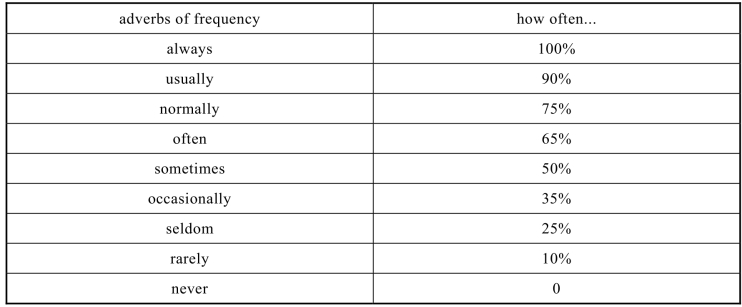
(4)Is there any food you don’t like?
可回答:不怎么吃肉,因为是素食主义者(vegetarian)。一方面,是因为这对动物来说太残忍(cruel);另一方面,更重要的是(more importantly),吃肉多会影响(affect)健康。
练习:
(1)Do you like eating fruit? What fruit do you like best?
(2)Do you think it is important to eat fruit? Why/Why not?
(3)When do you eat fruit every day?
参考词汇:
durian 榴莲;juicy 多汁的
6.厨艺和菜肴
参考词汇:
foodie 美食家;ingredient 原料;chef 大厨;recipe 菜谱;sour 酸;bitter 苦;hot/spicy 辣;salty 咸
(1)Do you know how to cook? Do you like cooking?
如果回答:不会,母亲从来不给我机会碰厨房(touch her kitchen),因为我会把厨房搞乱(mess up),或者我对这事毫无兴趣(interest)。如果回答:会,可以讲自己熟悉的某种食物的制作,或者谈这件事带给自己的成就感(sense of achievement)。
参考词汇:
materials 材料;sophisticated 复杂的;procedures/processes or steps 步骤;mix 混合/搅拌;fry 炸;stir-fry 炒;steam/braise 蒸;boil 煮;stew 炖;roast/grill 烤(肉);toast 烤(面包);bake 烤(饼干蛋糕等);coupled with 加上;seasoning 调料;key points 要点
(2)What do you/your family like to cook?
参考上题和饮食部分第2 题。
参考词汇:
cuisines 大餐(原法语单词,特点就是菜品相对丰富和贵);specialty 招牌菜;specialty dish拿手菜;deep-fried twisted dough stick 油条;steamed stuffed bun 包子
(3)Have you thought about learning how to cook?
如果上题回答否,可能会被追问此题。没想过要学做饭,可能是因为懒(lazy),没耐心(impatient)等,西方很多人喜欢速食或者冷冻食品(frozen food),微波炉(microwave)一加热(heat)就可以上菜(be served)。
(4)Do you think everyone should learn how to cook?
如果回答:不用学,到处都是各种餐厅(cafeteria, café, fast-food chains, restaurant)等,还可以网上(on-line)叫外卖(take-out/ takeaway);如果回答:要努力(endeavour to)去学,毕竟是一个基本技能(basic skill)。尤其当你留学(study overseas)或者在外地工作的时候就可以用上了,因为外面买着吃相对(relatively)比较贵。
(5)Do you eat at home or do you usually eat outside?
如果回答:在家吃,因为自制的(homemade)食品比较健康(healthy),而且相对便宜,制作过程可以放松(relax)自己,还可以和家人更多地在一起团聚(reunion)。如果回答:在外面吃,可以参考前面题目讲快餐的好处,还可以去吃有名(renowned/famous)的大餐等。
练习:
(1)Who usually cook in your family?
(2)How do you/your family learn cooking?
7.节 日
(1)What is your favourite traditional festival?
(2)What do you like to do during that festival?
(3)What do people in your country often do during that festival?
(4)What is your least favourite festival?
可参考Part2 生日、婚礼和节日话题相关内容
参考词汇:
beloved 心爱的;tedious 沉闷的;grocery 食品杂货店;commercial 商业的
(四)娱乐休闲爱好相关
1.健 身
(1)What do you do to keep fit?
(2)How often do you do sports to keep fit?
(3)What should also be done in order to keep fit?
(4)What should old people do to keep fit?
可参考Part2 sports 话题以及Part1 walking 部分相关内容
参考词汇:
balanced diet 均衡饮食;nutritious 有营养的;junk food 垃圾食品;maintain 维持;positive mentality 乐观心态;psychological well-being 心理健康;twilight years 晚年
2.健康生活
(1)What is a healthy lifestyle in your pinion?
(2)How to keep healthy? Are there any suggestions for keeping healthy?
(3)Is keeping healthy easy?
(4)How should old people keep healthy?
可参考Part2 Sports 话题相关内容
参考词汇:
regular 有规律的;hobby and interest 兴趣爱好;leisure activity 休闲活动;delightful mood舒畅心情;maintain 维持;physical 身体的;mental/psychology health 心理健康;irregular 不规律的;lack of self-control 缺乏自控;laziness 懒惰;high intensity of work 高强度工作;social engagement 社交应酬
3.爱 好
这里把唱歌、跳舞、音乐、体育和美术放在一起讨论,关于周末(weekend) 或者业余时间(spare time)干什么的话题,都可以参考借鉴。
参考词汇:
gardening 园艺;photography 摄影;surf the Internet 上网;video game(电视/电脑等)视频游戏;leisure time 休闲时间;youngster 年轻人;go viral 像病毒一样传播;penetrate 渗透;relieve 减轻;foster 培养;nurture 培养
音乐:beat of drum 鼓点;rhythm 节奏;a lyrical tune 抒情的曲调;mellifluous 悠扬的;brash 粗犷的;melodious 旋律优美的;a melody of serene beauty 柔美的旋律;sweet tone colour优美的音色;artistic appeal 艺术感染力
演出:amazing 令人惊讶的;appreciate 欣赏;performance 表演;audience 听众,观众;concert 音乐会;vocal concert 演唱会;vocal 声音的;musician 音乐家;performer 表演者;acoustic effect 音响效果
(1)Do you have a hobby? What is it? / Do you like singing? / Do you enjoy dancing? / Do you like music? / Do you like outdoor activities? / Do you like painting or drawing? / What is the importance of having a hobby?
这种喜欢类的话题,都可以参照姓名部分第2 题,分内外部原因来阐述。内部原因就是你自己的感受,比如唱歌跳舞等可以使你高兴(delighted);外部原因可以是来自家庭、学校(单位)或者朋友的影响,比如我的朋友都喜欢足球,那么我也跟他们一起喜欢,毕竟(after all),这是我们可以共同分享(share in common)的东西。
(2)Where do you usually sing? / Where do Chinese people like to go dancing?
说到地点,比如公园可以跳广场舞(square dancing),能进行的活动(activity)除了唱歌跳舞之外还有很多。
(3)Have you ever learnt how to sing (or to play a musical instrument)? / Has anyone ever taught you to dance? / Is dancing difficult to learn? / Would you learn dancing in the future? /Is it easy to learn how to draw?
和之前cooking 部分的问题如出一辙。乐器可以是比较常见的钢琴(piano) 等。对于未来是否学某事的假设,我们都可以回答有空的话愿意去学。
(4)Do Chinese love singing? / Why do some people dislike singing? / Does China have any traditional dances? / Do you think that traditional dancing will be popular in the future? Why or Why not? /Do old people in China like the same kind of dancing as young people? / What hobbies are popular in your country?
当提到Chinese / people in your country (place) 之类的问题,包括这里的唱歌跳舞,我们都可以说大部分的中国人都是比较保守的(conservative),而公开的(in public) 表演(perform) 等会让我们觉得害羞甚至尴尬(embarrassed)。事实上(actually),我们是有传统的舞蹈的(traditional dances),尤其是(especially) 对于一些少数民族(minorities),唱歌跳舞是他们庆祝(celebrate)节日(festival) 的方式,甚至他们在日常生活中(daily life)也会做这种事。但是,很多人认为传统的东西(包括舞蹈、节日等)在未来不会流行(popular),因为越来越多的年轻人选择了西方的(western) 的生活方式,以此来显示(show) 他们是时尚的(in style)。
(5)How often do you dance? / When do you listen to music? / How much time do you spend listening to music every day? / What outdoor activities do you like to do?+How often do you do those activities?+How much time do you spend outdoors every week? / What outdoor sports do you like? (Why?) / What (types of) outdoor activities are popular in your country?
此题和之前问频率的问题类似。当然我们还学会了It depends 这种表达。
(6)Did you like to dance (often listen to music) when you were a child? / When was the last time you dance? / When was the last time you watched a dance performance? / Why do some people learn dancing? / How to help children to develop a hobby?
回答小时候的事情,可以说是受到家里人的影响而去学习,包括听歌、唱歌跳舞和做饭等。最后一次跳舞/ 看舞蹈表演就可以回答是小时候和家人一起。
(7)Do you think there are any advantages for young people to learn to dance?
年轻人学跳舞不但可以锻炼(physical exercise)、强身(keep fit)、塑身(shape body),而且参加团体活动(teamwork)还可以交友(make friends),建立或者增进友谊(build or enhance friendship),也可以让人找到归属感(sense of belonging)。
(8)What kinds of music do you like to listen to? / Have you ever been to a concert (or a musical performance) before? / Do you like to listen to live music (or songs)? / When did you start listening to this type of music? / Where do you listen to it? / How do you feel when you listen to this music? / What kinds of music are (most) popular in China? / What’s your favourite kind of music?
很多人喜欢:流行音乐(Pop music);说唱音乐(hip-pop);蓝调歌曲,忧郁音乐(Blues);摇滚乐(Rock & Roll);重金属音乐(heavy metal)。还有部分人喜欢:乡村音乐(country music);爵士乐(Jazz);甚至古典音乐(Classical music)。听现场音乐(live music)更能融入氛围(atmosphere),比如管弦乐队音乐(Orchestral music)。还有少部分人喜欢灵魂音乐( soul gospel music),尤其是在教堂(church)里大家一起唱圣歌(psalm) 或者赞美诗(hymn),感觉自己像获得了新生(be reborn)。
(9)Is music an important subject at school in China? / Do kids in China learn painting at school? / Do you think it is good to learn painting? / What are the benefits of learning painting?
在幼儿园(kindergarden)和小学(primary school),音乐课和美术课比较重要,因为可以让学生学会对艺术的欣赏(appreciation of art),培养创造力(creativity),发展(develop)和开发(exploit)他们的天赋(talent)。但是在初中(middle school)以后,众所周知(as we all know),考试和学术表现/成绩第一(exam and academic performance /results first)!
(10)How often do you visit art galleries? / Do people in China like painting? / Why some people dislike painting?
很多考生可能跟笔者一样,在自己长大的地方根本没有听说过(hear about)这样的公共场所(such facilities),所以并没有去画廊的习惯;当然,喜欢美术的人就是另外一回事了(another story)。咱们国家很多人在小时候喜欢画画,也参加相关的(related) 课程;但是到了中学以后,大家都忙于应付(deal with)各种(all kinds of )考试,考虑到(take account that)美术一般不在高考(college entrance examination)范围(range),很多人就没有选择学。
说明休闲爱好的句型
(1)I decided to take up X as a hobby because I have always been fascinated with Y.
(2)Yoga/X is a total mind-body exercise that improves functional strength, flexibility, muscle balance and relaxation through continuous movement and various postures.
(3)Speaking of a hobby that I enjoy, there is no doubt that X could be the one.
(4)To be honest, X is my favorite leisure activity.
介绍休闲爱好背景的句型
(1)I developed an interest in X after Y told me about his/her story /the importance of X.
(2)One of my best friends recommended X to me.He said it’s Y (adj.)
解释休闲爱好的原因的句型
(1)I enjoy it because …
(2)I regard it as the best magazine/game/sport that I have ever read/played because…
(3)There are two reasons why I like X.To start with, … Secondly, …
painting 练习:
(1)Have you ever painted a picture of yourself? Why/Why not?
(2)Does your country have any famous painting collections?
(3)How often do you visit galleries or museums to see paintings?
(4)Would you like to buy an original painting? Why/ Why not?
参考词汇:
self-portrait 自画像;splendid civilisation 灿烂的文明;a wide precious collection of……无数……瑰宝;hand down 传给(后代);Along the River During the Qingming Festival《清明上河图》;preserve 保护;appreciate 欣赏;invaluable/priceless 无价的;private ownership 私人所有
Concert 练习:
(1)What was the last time when you went to a concert?
(2)Do you prefer going to concerts or listening to recording music? Why/ Why not?
(3)Which is more popular where you live, indoor concert or outdoor concert? Why/ Why not?
(4)What kind of concert tickets is the most expensive where you live?
参考词汇:
host 主办方;live atmosphere 现场气氛;pricey 太贵的;economical 经济实惠的;popularity受欢迎度;tour concert 巡回演出;in person 亲自;worthwhile 值得的;admission fee 门票钱
4.电 影
(1)Do you like films?
(2)What kind of films is popular in China?
(3)What kind of films do children like?
可参考Part2 Movie 话题相关内容。
5.电视节目
(1)Do you prefer TV programmes or radio programmes?
(2)What kind of programmes do you like?
(3)What is your favourite programme?
(4)What is your least favourite programme?
可参考Part2 Media 话题相关内容。
参考词汇:
vivid 生动的;interactive 互动的;informative 信息量大的;target audience 目标受众;dating show 相亲节目;crosstalk programme 相声节目;formulated crosstalk 公式相声;amusement娱乐;amusing 有娱乐性;insights into 对……有深刻观察理解;heart-touching/ moving 感人的;have a positive/negative effect on my/our life 对我(们)生活有积/消极影响;for the sake of为了
6.旅 馆
(1)Do you often live in a hotel?
(2)Do you like hotels?
(3)Why do some people like/dislike the hotel?
(4)What should you prepare before living in a hotel?
参考词汇:
business trip 差旅;posh/luxurious/upmarket hotels 高档豪华旅馆;five-star hotel 五星酒店;motel 汽车旅馆;hotel chain 连锁旅馆;Youth Hostel 青年旅社;expenditure 花费;overcrowded过度拥挤的;neat freak 洁癖;sanitary condition 卫生状况;lack of the sense of safety 缺乏安全感;towel 毛巾 toilet articles 洗漱用品;skin care products 护肤品;cosmetics 化妆品;charger充电器
7.旅游胜地
(1)Do you often go to tourist attractions?
(2)What kind of places can become tourist attractions?
(3)What kind of tourist attractions do you like/dislike?
参考词汇:
landmark 地标;at ease/casually 自在地;experience local customs and culture 体验风土人情;natural beauty 自然风光;places of historic figures and cultural heritage 人文景观;cultural value 人文价值;enjoyment 享受;amusement 娱乐性;tropical island 热带岛屿;the extremely skillful creations of the nature 大自然鬼斧神工的创造;theme park 主题公园;monument 纪念碑;crowded and noisy 拥挤吵闹的;remote 偏僻的;inconvenient 不便的;commercialized 商业化的
可参考Part2 度假和旅行话题相关内容

本书听力资源
(五)媒体相关
1.广 告
作为营销(marketing)的主要手段之一,广告的目的就是为了推广(promote)产品(product),增加(increase) 销售量(sales volume)。当然,还有一种叫作公益广告的(public service advertising)大家都很熟悉,这里给出它的英文定义——a message in the public interest disseminated by the media without charge(免费的), with the objective of raising awareness , changing public attitudes and behavior towards a social issue,比如反对毒品的(anti-drug)公益广告。了解了广告的定义(definition),下面的问题就比较简单了。
(1)Why do you think there are so many advertisements now?
(2)Are there many advertisements in your country? / What are the various places where we see advertisements? / Where do you think has more advertisements, on TV or magazines?
其实广告有很多媒介(medium),比如电视(TV),报纸(newspaper),杂志(magazine),小册子(brochure)等。户外广告(outdoor advertisement)还包括海报(poster),广告板(billboard)。移动的(mobile)广告,主要在交通工具比如公共汽车上。当然,网络/信息时代(the Internet / Information Age),还可通过网页(website)和App 推送(push)广告,这可能是目前应用最广的广告形式。
(3)How do you feel about advertisements? / Do you like advertisements?
其实传统的(traditional)户外广告,有一些还是比较不错和有创意的(creative/original)。不过,在我们看电视节目(program)或者网络电视剧(TV play)的时候,过多的(excessive)广告,尤其是推送会严重地(seriously)打扰(disturb)我们,令人厌恶(disgusting)。
(4)Have you ever bought anything because of the advertisement?
这里引用一个写作Task2 的题目:There are many advertisements directed at children, such as snacks, toys and other goods.Parents argue that children are under pressure.Advertisers claim that the advertisements provide useful information.Discuss both views and give your own opinion.参考以下范文,笔者支持后者观点:我们小时候,更容易因为广告而去买或者逼(push)父母等买零食、玩具。当然,现在可能更加理性(rational),即使看到了一些吸引人的(attractive)广告,也会在买之前做一些权衡(evaluation)。
Those who advocate(支持)the spread of advertising targeted at children deem(认为)that these advertisements can provide potential customers with a comprehensive(全面的)understanding of the products advertised, which can help consumers make well-informed buying decisions.Since television advertisements can present goods in a visual and audio way, this can definitely enhance people’s knowledge of the advertised goods, especially some electronic toys or newly-introduced food.
On the other hand, parents are concerned that children are easily attracted by the vivid advertisements from the Internet or television, and because of it, kids will pester(纠缠)their parents to buy the goods advertised.Obviously, children are a group of consumers without the ability to differentiate(区分)good from bad and right from wrong.If they are convinced with the benefits of the products from the advertisement, they would not consider the negative aspects or further explore the truth of the advertisement itself.
Besides, peer pressure is another point which needs to be mentioned here.The widespread advertising campaign will make the public overwhelmed by these advertisements, which means there will always be some parents and children purchasing the advertised goods, and therefore, some psychological(心理的)factors of children may urge(促进)a part of them to obtain the products even though they may not need the goods.(音频119)
2.新闻、报纸与杂志
(1)Do you like reading (news) ? Do you often read (newspapers)? / Do you think it’s important to read newspapers? (Why? / Why not?) / Why do (you think) people read newspapers?
频率已经在前面讲过,我们读报纸等的目的包括:了解最新消息(keep up/be informed with the latest news);获取(acquire)不同的学科知识;浏览(browse)广告或一些娱乐性的内容,比如西方人喜欢在飞机上或者咖啡馆一个人玩的填字游戏(crossword puzzles)。如果回答觉得没必要(unnecessary)读报纸、看电视等,可以解释说互联网(internet)和智能手机(smart phone)取代(replace)了几乎所有传统的媒介。
(2)What do you like to read? / Which do you prefer reading, magazines or newspapers? / Do you prefer to read newspapers or watch TV to get your news? / What kinds of (types of) news/newspapers (or magazines) do you usually read? / How old were you when you first started to read newspapers? / What different types of newspaper are there in China? /What kinds of news do Chinese people read in newspapers? / What sections of the newspaper do you like reading? / What news topics are your most interested in watching/reading about?
如果回答学术杂志/期刊(academic magazines / journals)有点脱离大多数学生的生活;男孩子可以从小喜欢看电脑游戏杂志(报纸),主要了解一些消息,关于(regarding)新出的电脑游戏(PC game),或者新款(new model)的游戏机。还有很多同学喜欢看的是娱乐(recreational)、时尚(fashion)或者体育(sports)方面的名人(celebrities)消息,还有些上进的(aspirant)同学或者老年人(the seniors)喜欢看政治的(political)时事新闻(current affairs)或者民生新闻(civil news)。如果回答不太喜欢看电视或者其他媒体,可以解释是因为没有时间、学业繁忙(be fully engaged with studies)。
(3)Do you care about the news? / Is the news important (to you)? / Do you prefer to read about domestic (or local) news or international news? (Why?)
可回答:视情况而定(It depends on what sort of news we are discussing here)。在我们上学的时候,关于高考的消息也许比较重要;在我们上班后,经济和金融的消息比较受关注(show my concerns / pay more attention to / focus on/ emphasise on)。本地消息会让我们知道(inform us)周围发生的事情,并且它们贴近我们的生活(closer to our life),国际消息会让我们拓宽视野(broaden our horizon)。所以两者都可以喜欢。
(4)What are some methods that newspapers use to attract readers? / What influence do you think newspapers have on society? / Do you think the Internet is a good way to get news?
这种题目绝大多数学生可能没有思考过,这里建议先让步:As you know, I’m just a student, and have no experience, knowledge or interests in how to run the media.If I have to say something about this, I’d like to mention the fact that…, especially some over-exaggerated(过度夸张的)ones, are often adopted by certain low quality publishers to increase their readers.Normally, newspapers are expected to only report the facts to keep the public well informed in all fields, while over-exaggerated and fake(假的)ones could always mislead(误导)us and even cause unrest(动荡)to the whole society.(音频120)
网络的特点是方便(convenient),但是经常会有一些不可靠的(unreliable)消息,虽然它是个获取消息的好方式(good way),但是需要自己辨别对错(distinguish true from fake by oneself)。
练习:
(1)In which way do you like to get news, from newspapers, on TV or via the Internet?
(2)What kind of people like reading newspapers?
(3)Why do some people dislike newspapers?
参考词汇:
selective 有选择的;multitudes of 众多;comparatively 比较地;preference 偏爱;headline头条;promptness 及时性;transmit 传播;living habit 生活习惯;way of life 生活方式;philosophy of life 生活理念;demerits 弊端;new media 新媒体;convenience of the Internet 互联网便利;old-fashioned 过时的;source of information 信息来源;bookstall 报亭;purchase 购买
3.网 络
(1)Do you like using the Internet?
(2)Do you buy things on the Internet?
(3)What do you think of online education?
(4)In your opinion, are there any negative things about using the Internet?
参考词汇:
indispensable 不可缺少的;component 组成部分;questionable 值得怀疑的;physical store实体店;delivery process/service 送货过程/服务;Internet fraud 网络诈骗;break through the boundary of time and space 突破了时空的界限;different from traditional mode of teaching 有别于传统教学模式;open and fair 公开和公平;drawback 缺点;sociability 社交能力;interaction互动;double-edged sword 双刃剑;over addicted to online games 过度沉迷于网上游戏;disclosure of private information 个人信息外泄;network ethic problems 网络道德问题;cybersex网络色情;cyber-violence 网络暴力
(六)抽象话题
1.天气和气候
同样作为这部分的经典话题,天气和气候看似抽象(abstract),其实也不难描述。要注意的是:天气指的是短期(short term)的情况,比如阴晴雨雪,并且多变化;气候说的是长期(long term)的状况,比如每年的春夏秋冬四季变换,比较少变化。厄尔尼诺现象(El Nio)使得气候变得不太正常(abnormal),极端的(extreme)天气,比如暴雨(rainstorm)和干旱(drought)变得更加频繁(frequent)。
(1)What kind/type of weather do you like(best)?
参考词汇:
形容词:mild 温和的;warm 温暖;hot 热的;scorching 炽热的;cool 凉爽的;cold 寒冷的;rainy 下雨的;slippery 滑的;sunny 阳光充足的;windy 刮风的;gloomy 阴天;snowy 下雪的;wet/humid(地面/空气)湿的;frost 霜(可做动词);smoggy 烟尘多的。
名词:thunder 雷;lightning 闪电;cloud 云;mist 薄雾;fog 雾;dense fog 浓雾;haze霾;hail 冰雹;snowflake 雪花;drizzle 细雨;shower 阵雨;thundershower 雷阵雨;storm/tempest暴风雨/雪;sandstorm 沙尘暴;breeze 微风;stormy wind 暴风;hurricane 飓风;typhoon 台风;humidity 湿度;high temperature 高温;less rainfall 少雨;ice rain 冻雨;Tsunami 海啸(最后这几个也是经常伴随厄尔尼诺出现的)。
(2)What sort of weather do you least like? What is the most terrible weather in your area?
和上题一样,任何天气你都可以喜欢或者不喜欢,但是最好说明原因。比如很多考生回答喜欢下雨天,因为适合(be suitable for)睡觉。当然,你还可以说,这种天气会把这个世界冲洗(wash)干净。同理,对于四季也可以有类似的解释:春困(sleepy)秋乏(tired/exhausted),夏热冬寒(freezing),都适合睡觉。
(3)What’s the weather like in your hometown?
这里可以重点描述四季的情况,加入对比。比如炎热的(burning/scorching)夏天和寒冷的冬天漫长(endless)。
其他词汇:moderate 适宜的;adorable 可爱的/迷人的;gone too soon(春秋季)稍纵即逝;all the year around 一年四季/全年
(4)Do you prefer cold weather or hot weather?
(5)Do you think the weather can affect people’s moods?
其实第5 题的问题就可以是第4 题的答案,比如回答:我喜欢低温天气,因为可以使我冷静(calm down),集中注意力在(concentrate on)思考一些哲学的(philosophical)问题。
目前的新题有时候会问得更为具体,比如Do you like raining? / Do you like sunny days? / What do you like to do when it’s a sunny day? / Would you like to stay at home or go outside when the weather is great?
不管别人如何,任何天气情况下,我们都可以喜欢待在家里睡觉。原因可以是:我总是觉得很累。
练习:
(1)How is the weather in winter like in your town or city?
(2)If you could live in any climate, what climate would you choose?
2.环 境
之前在交通方式部分,我们提到了没事可以去公园走走,这里就先聊聊公园和噪音这些近期热门话题。当然,如果题目问到自然景观(Natural Places),也可以参照这部分内容作答。
(1)Are there many parks or public gardens where you live? / Do you often go to a park or a garden? / What do other people do in these places?
公园(Park)其实有两种常见的,城里很多都是人造的(artificial),偏远一点的地方有自然公园(natural park),在一些历史古迹附近可能有遗址公园(heritage park)。public garden其实也就是公园的意思。这里我们为了丰富内容,可以谈谈在公园里可以做的,各种运动和休闲活动,比如下棋(play chess)等。
关于often 这种问频率的问题,最好先回答相应的频率,(词汇部分已经介绍过相关表达),然后再说在公园里的活动。公园里其他人做的事与我们做的基本相同。
(2)Do you think parks are important to a city? / Do you think every city and town should have parks?
通常大家都觉得公园是重要的。因为在城市里,公园甚至(even)是仅有的免费(free of charge)锻炼和休闲的地方。此外(further more),公园的存在也会促进(promote)生态平衡(ecological balance)。
(3)Do you mind noises? / What types of noise do you come across in your daily life? / Where can you (= one) hear loud noise? / What are some places where there is a lot of noise? / Do you think there’s too much noise in modern society? / What sounds do you dislike? (Why?) / Are cities becoming noisier?
一般情况下人都会介意噪音。日常噪音包括城市道路上的车辆发出的噪音,因为现在的私家车(private vehicles)越来越多,并且没有对喇叭(horn)使用进行严格的控制(control or limit),城市变得越来越吵。此外,嗓音还有可能来自上课、上班或者邻居发出的交谈(conversation)声,观看播放(play)影视歌(video or audio)等娱乐(entertainment)作品(works)的声音。我们通常最不能忍受(bear)的是,在学习的时候有人发出的其他(any other)声音,让我们分心(distracted)甚至有时候会令人疯狂(drive me/us crazy)。
(4)Are there any sounds that you like? / What sounds remind you of your childhood? / What (kinds of) music do you like the most?
我们可以回答喜欢歌星比如迈克尔·杰克逊唱歌的声音,因为能鼓励自己学习英语等:People around the world have heard his name and voice – the best international celebrity Michael Jackson.And his sound, no matter in songs or speech, had all encouraged me to learn English and the Western world further when I was young.
(5)What natural sound(s) do you like (the most)? (Why?)
可回答:流水(running water)、风、鸟鸣(bird tweet / song)的声音可以使我们释放(release)压力(stress),忘记学习、工作以及生活中的种种困难(trouble)和烦恼(worry)。
(6)Does your school have any quiet place for studying? / Where do you like to read? / What reading place do you like?
多数人看到这个题目的第一反应都是图书馆(library),或者自习室(self-study room)。这里可以提它们的布局(layout)、功能(function)、容纳人数(total person accommodated)等。对于地点和建筑的具体描述,我们放在Part 2 介绍。
3.时间管理
(1)Are you good at organizing/managing your time?How and why?
(2)How did you learn time management?
(3)Is punctuality important?
参考词汇:
schedule 安排,计划;yearly/monthly/weekly/daily plan agenda 年度/月度/周/日计划;specific明确的;rational 理性的;allocate time 分配时间;slice 切分;segment 部分;lecture/seminar讲座/研讨会;online open course 网络公开课;a loose sense of time 弱的时间观念;unreliable不可靠的;respect 尊重;occupational qualities 职业素质;simultaneously 同时地
4.记忆力
(1)Do you have a good memory?
(2)Do you have the same good memory as before?
(3)How to get a better memory?
参考词汇:
photographic memory 过目不忘的记忆力;average 一般的;sensitive 敏感的;decline 衰退;with the passage of time 随着时间流逝;hard to memorise or recite 记忆背诵困难;memorise by understanding/category/comparison/ association 理解/分类/对比/联想记忆;schooling 学校教育
5.财 产
(1)Is possession important for people?
(2)Where do the possessions of people in your country usually come from?
(3)What kind of possessions do you think is the most important?
(4)How to keep possessions in a safe way?
参考词汇:
guarantee 保障;penniless 身无分文的;admirable 值得钦佩的;inner/ spiritual world 精神世界;inheritance 继承;the second generation of the rich 富二代;start from scratch 白手起家;tangible/intangible assets 有/无形资产;real estates 房地产;intellectual property 知识产权;portfolio allocation 资产配置;don’t put all your eggs in one basket 篮子理论;patent 专利
6.手工品
(1)What handicraft is your country known for?
(2)What handicrafts do you have in your home? Why?
(3)Have you made any handicrafts? Why? / Why not?
(4)Do you think handicrafts have a place in the modern age? Why? / Why not?
可参考Part2 手工艺品话题相关内容。