第二章 井冈山革命斗争
Chapter 2 The Struggle of Jinggangshan Revolutionary Base
第一阶段:井冈山革命根据地的创立(1927.8- 1928.3)
The first stage: the establishment of the Jinggangshan Revolutionary Base.(1927.8-1928.3)
1、八七会议和秋收起义
1. The August 7th Conference and the Autumn Harvest Uprising
1926年7月国共两党出师北伐,在不到10个月时间里解放了大半个中国。然而在北伐战争节节胜利之际,1927年4月至7月,以蒋介石、汪精卫为代表的国民党反动派,背信弃义,相继发动了“四一二”和“七一五”反革命政变。白色恐怖笼罩着全国,国共合作破裂,轰轰烈烈的大革命宣告失败。
In July 1926, the Kuomintang and the Communist Party started the Northern Expeditions, liberating most of China in less than 10 months. However, on the occasion of the victory of the Northern Expedition, from April to July 1927, the Kuomintang reactionaries represented by Chiang Kai-shek and Wang Jingwei broke their promises and successively launched the "Shanghai massacre of 1927" and "Wuhan massacre of 1927”. The white horror envelops the whole country, the cooperation between the KMT and the Communist Party breaks down, and the vigorous revolution failed.
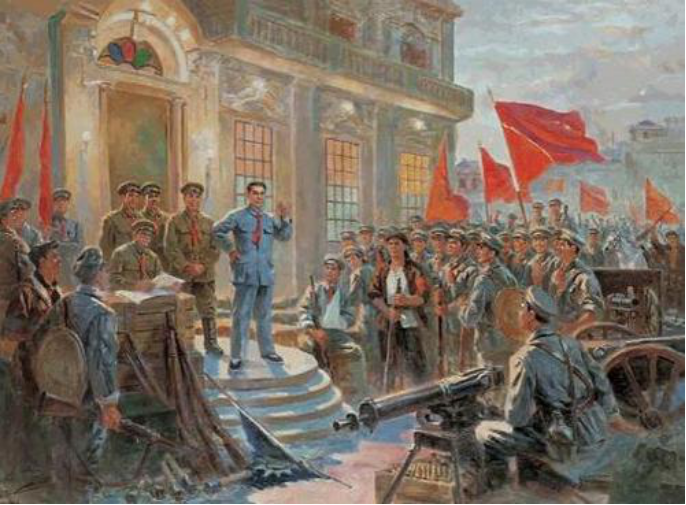
1927年8月1日,以周恩来为首的前委领导下暴发了南昌起义,打响了武装反抗国民党反动派的第一枪,开始了共产党独立领导武装斗争的新时期。随后, 8月7日中共中央在汉口召开紧急会议,史称“八七”会议,这次会议总结了大革命失败的经验教训,纠正了陈独秀的右倾投降主义错误,选举了瞿秋白为中共中央总书记。毛泽东在会上提出了“政权是由枪杆子中取得的”著名论断。八七会议的召开,为挽救党和革命做出了重大贡献。
On August 1, 1927, under the leadership of the former party headed by Zhou Enlai, the Nanchang Uprising broke out, firing the first shot of armed opposition to the Kuomintang reactionaries, and starting a new period of the Communist Party's independent leadership of the armed struggle. Subsequently, on August 7th, the Central Committee of the Communist Party of China convened an emergency meeting in Hankou. The meeting was called the "August 7th" meeting. This meeting summarized the lessons of the failure of the Great Revolution and corrected Chen Duxiu's Right capitulationist mistakes. Qu Qiubai was selected the General Secretary. At the meeting, Mao Zedong put forward the famous assertion that "the regime was obtained from a gun". The convening of the August 7th conference made a significant contribution to saving the party and the revolution.
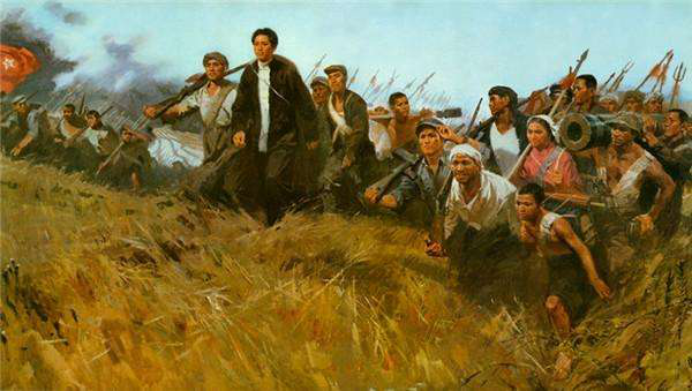
随后,毛泽东9月初在安源召开军事会议,组建了中国工农革命军第一军第一师,共计5000余人,下辖3个团, 钟文章、王兴亚、苏先俊分别为一二三团长,师长余酒度,副师长余愤民,卢德铭任总指挥。9月9日,秋收起义爆发。起义军分别从修水、安源铜鼓取浏阳进攻长沙,但是因为我军兵力分散,再加上四团邱国轩部队叛变,起义军很快失败了。9月14日,毛泽东在上平召开会议,决定放弃攻打长沙部队向萍乡退却,再向湘南转移。
Subsequently, Mao Zedong held a military conference in Anyuan ,Jiangxi in early September, forming the First Army-Division of the First Army of the Chinese Workers 'and Peasants' Revolutionary Army, with a total of more than 5,000 people and 3 regiments. Zhong Wenzhang, Wang Xingya, and Su Xianjun were the regiment leaders. Yu Jiudu was the division commander, Yu Fenmin was the vice commander and Lu Deming was the chief commander. On September 9, the Autumn Harvest Uprising broke out. The insurgents from Xiushui, Anyuan Tonggu attacked Changsha via Liuyang, but because of the dispersal of forces and the rebellion of the fourth regiment, the action quickly failed. On September 14, Mao Zedong held a meeting in Shangping and decided to give up the attack on Changsha and retreat to Pingxiang, then move to southern Hunan.
2、向罗霄山脉中段转移
9月20日,工农革命军从文家市向萍乡转移,但是在转移过程中,途径萍乡芦溪时遭到赣敌袭击,总指挥卢德铭在战斗中英勇牺牲,年仅22岁。
1. Move to the middle of Luoxiao Mountain
On September 20, the Revolutionary Army of Workers and Peasants transferred from Wenjia City to Pingxiang. However, during the transfer, they were attacked by the enemy while passing through Luxi, Pingxiang. Commander Lu Deming died heroically in the battle, only 22 years old.
3、三湾改编和古城会议
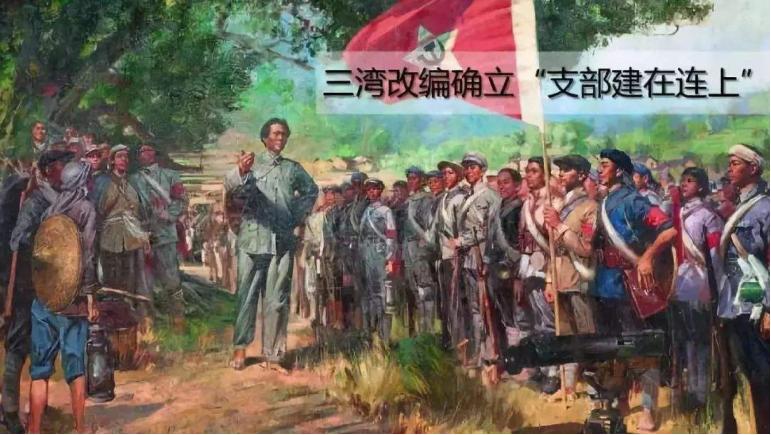
9月29日工农革命军到达永新县的三湾村。毛泽东在这里进行了著名的三湾改编。三湾改编的主要内容有:进行组织整顿,将部队缩编为一个团,称为工农革命军第一师第一团,下辖三两个营。改编后部队剩700人左右,人虽少了但部队更精悍了;确定了“支部建在连上”的制度;是在部队中实行民主制度,连以上设立各级士兵委员会。三湾改编,标志着工农革命军的新生,在我军建军吏上具有深远而伟大的意义。 三湾改编后,部队继续南下,于10月3日到达宁冈古城。召开了前委扩大会议。毛泽东传达了党的“八七”会议精神,总结了秋收起义的经验教训,决定了对袁文才、王佐两支地方武装进行团结改造:着重讨论了在罗霄山脉中段建立革命根据地,开展游击活动等重大问题。
3. Sanwan Adaptation and Gucheng Conference
On September 29, the Revolutionary Army of Workers and Peasants arrived in Sanwan Village, Yongxin County. Mao Zedong made the famous Sanwan adaptation here. The main contents of the Sanwan adaptation are: firstly, reduce the troops into one regiment, called the First Division-Regiment, with three or two battalions. After the reorganization, there are about 700 soldiers left. Although there are fewer people, the troops are even stronger. Secondly, established the "branch is built on the company" System. Thirdly, implement a democratic system in the army, and even set up soldier committees at all levels. The adaptation of the Sanwan means the new birth of the Workers and Peasants Revolutionary Army, which has far-reaching and great significance in the establishment of our army. After the Sanwan adaption, the troops continued south and reached Ninggang on October 3. An extension meeting of the former committee was held. Mao Zedong conveyed the spirit of the August 7th meeting of the party and summarized the lessons of the Autumn Harvest Uprising.And decided to unite and reform the two local armed forces of Yuan Wencai and Wang Zuo and discussed the establishment of a revolutionary base in the middle of the Luoxiao Mountains and the launch of guerrillas and other major issues.
4、水口整修与边界游击
4. Shuikou reform and guerrillas along the border
10月7日,工农革命军进驻茅坪。在途径大仓村,毛泽东会见了袁文才,并送给了袁部100多支枪。袁文才也资助工农革命军1000块大洋以及数月军需粮食。在袁文才的帮助下,部队在茅坪设立了后方留守处,建立了根据地的第一所医院,妥善安置了伤病员。
On October 7, the Revolutionary Army of Workers and Peasants entered Maoping. Mao Zedong met with Yuan Wencai in Dacang village and gave him more than 100 guns. And Yuan Wencai funded 1000 silver coins and grains in return. With the help of Yuan Wencai, the army set up a rear station at Maoping, established the first hospital in the base and properly placed the wounded and sick.
10月23日。在荆竹山,毛泽东向部队宣布了三项纪律:第一、行动听指挥;第二、打土豪筹款要归公;第三、不拿老百姓一个红薯。 这就是三大纪律,八项注意的原胚。10月24日工农革命军到达大井村,受到王佐部队的欢迎。部队在大井住了3天,于27日到达茨坪。
October 23, in Jinzhu Mountain, Mao Zedong announced three disciplines to the army: first, obey the command. Second, turn the captured money in; third, do not take one sweet potato from the civilians. This is the origins of the three major disciplines and eight items of attention. On October 24, the Revolutionary Army of Workers and Peasants arrived in Dajing village and they were welcomed by Wang Zuo's troops. The troops arrived at Ciping on October 27 after living here for three days.
1927年底,工农革命军利用军阀混战的局面攻占了茶陵县城,并于11月28日成立了湘赣边界第一个红色政权——茶陵县工农兵政府,代表谭震林任主席。毛泽东在总结攻打茶陵的经验教训,提出“三大任务”——打仗消灭敌人;打土豪筹款子;宣传群众、组织群众、武装群众、帮助群众建立革命政权。
At the end of 1927, the revolutionary army of workers and peasants seized Chaling County and on November 28, the first red government on the border between Hunan and Jiangxi was established---Peasants and Soldiers Government of Chaling County , and Tan Zhenlin was selected chairman. Mao Zedong summed up the experience and lessons of attacking Chaling and put forward the three major tasks: destroy the enemy, destroy the local tyrants to raise money and organize the masses, arm the masses, and help the masses establish a revolutionary government.
1928年1月为了策应万安暴动,起义军攻打了遂川县城。1月24日,成立遂川县工农兵政府。农民代表王次淳任主席。
1928年2月21日,宁冈县工农兵政府成立,文根宗任工农兵政府主席。茶陵、遂川宁冈三县工农兵政府的成立,标志着井冈山革命根据地已初具规模。
正当根据地蓬勃发展时期,1928年3月上旬,湖南特派员周鲁来到井冈山传达湖南省委指示。由于传达错误,做出开除毛泽东党籍处分,取消毛泽东前委书记,改任师长。在中央左倾盲动主义影响下,工农革命军出击湘南,边界兵力空虚,使敌人趁虚而入,血洗茅坪,是为井冈山革命根据地的“3月失败”。
In response to the Wan’an Riots in January 1928, the insurgents attacked Suichuan County. On January 24, the Workers, Peasants and Soldiers Government of Suichuan County was established. Farmer representative Wang Cichun served as chairman.
On February 21, 1928, the Workers, Peasants and Soldiers Government of Ninggang County was established, and Wen Genzong served as Chairman. The establishment of these three governments marks the beginning of the Jinggangshan Revolutionary Base.
While the base was flourishing, in early March 1928, Hunan Special Commissioner Zhou Lu came to Jinggangshan to convey the instructions of the Hunan Provincial Party Committee. The former Party Secretary, Mao Zedong was reassigned as the division commander.
Under the influence of the central left-leaning activism, the Workers and Peasants Revolutionary Army attacked southern Hunan and the border forces were emptied. The enemy could take advantage of the situation and sacked Maoping, which was the March Failure for the Jinggangshan Revolutionary Base.
第二阶段:革命根据地的全盛时期(1928.4——1928.7)
The second stage: the summit of the revolutionary base (1928.4 ---- 1928.7)
1、朱毛会师和红四军的成立
1. The Association of Mao Zedong and Zhu De and The establishment of the Fourth Red Army
南昌起义部队南下广东后,一路苦战,在广东三河坝一带弹尽粮绝。1927年10月,朱德陈毅率领南昌起义余部转战来到赣南。朱德分别对部队在天心圩整顿、大庾整编和上堡整训,吏称“赣南三整”。“赣南三整”与毛泽东的三湾改编不谋而合,奠定了朱毛会师的基础。1928年朱德在胡少海的策应下攻占了宜章县城。拉开了湘南暴动的序幕。由于部队受到湘军的袭击,为了保存实力,朱德、陈毅带领部队向井冈山转移。
After the Nanchang Uprising the army went south to Guangdong and they fought with the enemy all the way and ran out of food and weapons in Sanheba, Guangdong. In October 1927, Zhu De and Chen Yi led the rest to Gannan. Zhu De trained the troops in Tianxinxu, Dayu and Shangbao respectively. Officially,they are called Three Reorganizations in Gannan" and it coincided with Mao Zedong's adaptations in Sanwan. And it laid the foundation for the Association. In 1928, Zhu De captured Yizhang County under the support of Hu Shaohai. The southern Hunan riots began. Because the army was attacked by the Xiang Army, in order to preserve their strength, Zhu De and Chen Yi led the troops to Jinggangshan mountain.
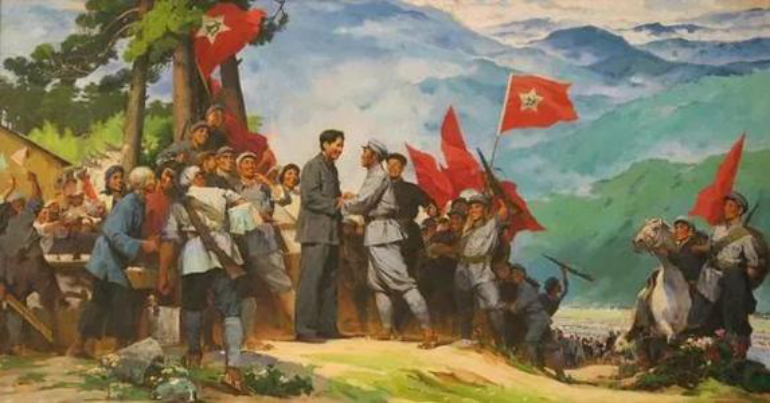
毛泽东得知这一消息后,派张子清去湖南接应朱德、陈毅部队。4月28日,朱毛两军在宁冈龙市胜利会师。5月4日,在龙市广场举行会师庆祝大会。宣布成立中国工农革命第四军,朱德任军长,毛泽东任党代表,王尔琢任参谋长,陈毅任士兵委员会主任。朱毛会师和红四军的成立,在我军建军史上占有重要地位。在中国革命史上具有深远的意义。
Heard the news, Mao Zedong ordered Zhang Ziqing to Hunan to meet Zhu De and Chen Yi's troops. On April 28, the two armies successfully joined in Longshi, Ninggang County. On May 4th, a celebration was held in Longshi Square. And it announced the establishment of the Fourth Army of the Chinese Workers and Peasants Revolution Army. Zhu De was the chief commander, Mao Zedong was the party's representative, Wang Erzhuo was the chief of staff and Chen Yi was the director of the soldier committee. The association of Zhu De and Mao Zedong’s army and the establishment of the Fourth Red Army occupy an important position in the establishment of our army. It has profound significance in China’s revolutionary history.
2、 粉碎敌人的第一次围剿
2. Smash the Enemy's First Siege
朱毛会师后,引起了蒋介石的惊恐,开始对井冈山根据地进行第一围剿。朱毛在分析敌情之后。决定对赣敌采取攻势。对湘敌采取守势。指挥红军。攻占了永新县城,打破敌人第二次“进剿”,再战草市坳。胜利打破敌人的第三次进剿。
After the joint, Chiang Kai-shek was panicked and he ordered the first siege of the Jinggangshan revolutionary base. Zhu De and Mao Zedong analyzed the situation of the enemy and decided to attack the enemy in Jiangxi and defend against the enemy in Hunan. They command the army Captured Yongxin County, broke the enemy's second siege and then fight with the enemy in Caoshiao, broke the enemy's third siege.
1928年5月20日至22日湘赣边界党的第一次代表大会在茅坪召开。边界党的一大召开之后,开始了轰轰烈烈的土地革命运动。土地革命运动的深入开展,激发了广大农民的积极性,加快了根据地的发展。湘赣边界的红色风暴越刮越猛,国民党反动派坐立不安。1928 年6月中旬,敌人对井冈山发动“第四次进剿”。朱德和毛泽东指挥红四军主力取得了龙源口大捷。龙源口大捷是红四军成立以来最为激烈的一次战斗。工农革命军趁胜利创办了红军军械处和大陇红色圩场。龙源口大捷标志着井冈山革命根据地进入全盛时期。
From May 20th to 22nd, 1928, the first Congress of the Hunan-Jiangxi Boundary Party was held in Maoping. After that, a vigorous agrarian revolution began. The in-depth development of the agrarian revolution has stimulated the enthusiasm of the majority of farmers and accelerated the development of base areas. The red storm on the border between Hunan and Jiangxi was getting fiercer and the Kuomintang reactionaries became restless. In mid-June 1928, the enemy launched the fourth siege. Zhu De and Mao Zedong commanded the main force of the Fourth Red Army and obtain the victory of Longyuankou. The victory of Longyuankou was the most intense battle since the establishment of the Fourth Red Army. The Workers and Peasants Revolutionary Army took advantage of the victory to establish the Red Army Ordnance Department and the Dalong Red Market. The victory of Longyuankou marked the first victory against the first encirclement of the KMT and the Jinggangshan Revolutionary Base entered its heyday.
第三阶段:井冈山根据地的曲折发展(1928.8——1928.12)
The third stage: the tortuous development of the Jinggangshan Revolutionary Base (1928.8-1928.12)
1、八月失败和第二次“会剿”的胜利
1、the August Failure and the second victory of anti-encirclement
边界斗争,风云多变。正当井冈山革命根据地迅猛发展之时,1928年6月26日,杨开明、杜修经带来湖南省委的指示信来到边界,要求红军向湘南发展。接到指示信当天晚上,湘赣边界特委召开联席会议,毛泽东从形式、敌情方面陈述了不去湘南的6条理由,要求省委给予新的决定。
Border struggles are always changing. As the Jinggangshan Revolutionary Base developed rapidly, on June 26, 1928, Yang Kaiming and Du Xiujing brought instructions from the Hunan Provincial Party Committee to the border, demanding the Red Army to develop toward southern Hunan. On the evening of receiving the instruction letter, the special committee of the border between Hunan and Jiangxi held a joint meeting. Mao Zedong stated six reasons not to go to southern Hunan in terms of form and hostility, and asked the provincial committee to give a new decision.
7月初,敌人的第二次“进剿”开始了。湘敌吴尚部队从酃县侵入宁冈,准备与江西的敌人到永新会合。根据这一情况,朱德率28.29团进攻酃县、茶陵。红军攻克酃县后,29团的官兵思乡心切,并于当晚召开士兵委员会,擅自决定回湘南去。四军军委开会几经劝阻无效。后29团兵败郴州,几乎全军覆没,29团不复存在。在红军主力远在湘南之际,赣敌趁虚而入,血洗根据地,一时间白色恐怖笼罩城乡、根据地内被杀的人、被烧的房屋不计其数,损失严重,史称八月失败。
In early July, the enemy's second encirclement began. Wu Shang’s troops from Huan invaded Ninggang from Lingxian County, preparing to join Jiangxi’s enemy in Yongxin. According to this situation, Zhu De led the 28th and 29th regiment to attack Lingxian County and Chaling. After the Red Army took Lingxian County, the soldiers of the 29th regiment were homesick and they held a soldier committee that night, and decided to return to the south of Hunan without permission. The Fourth Military Commission failed to stop after several persuasion. The 29th regiment was completely defeated in Chenzhou, almost the entire army was annihilated and the 29th regiment ceased to exist. When the Red Army's main force was far away in southern Hunan, Jiangxi's enemies rushed into the base and the white horror covered the urban and rural areas. There were countless people killed and houses burned in the base. And the loss was called the August Failure.
“八月失败”的原因:1、湘南省委对客观形势的错误估量和军力行动上的盲动主义,是八月失败的根本原因;2、湖南省委代表的错误指令和误导,是八月失败的直接原因;3、红军队伍中本身存在的消极因素和决策错误。
The reasons for the August Failure can be listed as follows: Firstly, the miscalculation of the objective situation by the Xiangnan Provincial Party Committee and blindness in military operations were the root causes. Secondly, the incorrect instructions and misleading instructions of the Hunan Provincial Party Committee were the direct cause. Thirdly, the negative factors and decisive errors existed in the Red Army.
毛泽东得知29团兵败的消息,前往湘南迎接红军大队的归来。在返回井冈山途中,袁崇全的叛变。红28团团长王尔琢在追袁崇全时不幸中弹牺牲。时年27岁。
Heard the defeat of the 29th regiment, Mao Zedong went to Xiangnan to welcome the return of the Red Army. On the way back to Jinggang Mountain, Yuan Chongquan betrayed. Wang Erzhuo, the 27 year-old head of the 28th regiment, was unfortunately shot and killed in pursuit of Yuan Chongquan.
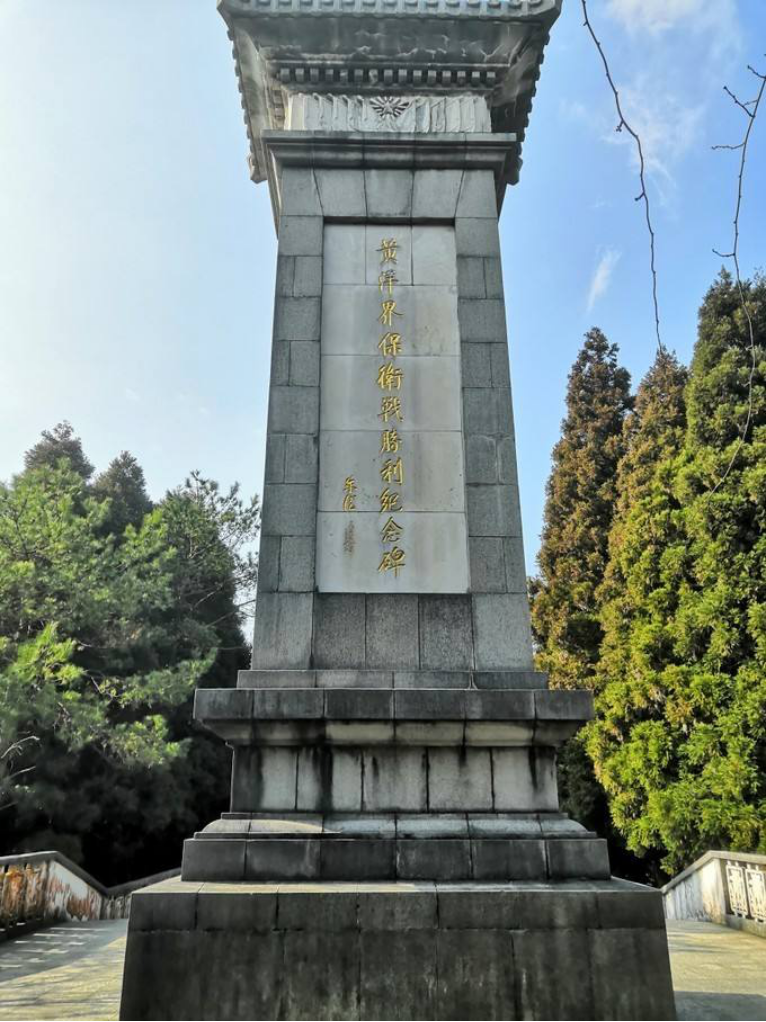
8月30日,湘赣敌军以4个团的兵力,对井冈山发动第二次会剿,在31团党代表何挺颖、一营营长陈毅安的率领下,凭借黄洋界的有利地势,发动群众,以不足一营的兵力,击溃敌军四个团的进攻,歼灭数百人,取得了黄洋界保卫战的重大胜利,击破了湘赣两省敌军的第二次会剿。
On August 30, the enemy army in Hunan and Jiangxi launched a second encirclement against Jinggangshan with 4 regiments. Under the leadership of He Tingying and the first battalion leader Chen Yi'an, they defeated the attack of the four enemy regiments, annihilated hundreds of enemy, and achieved a major victory in the defense battle of Huangyangjie with the favorable position and the help ofthe masses, with less than one battalion. This marked the second victory of defeating the encirclement of the enemy forces in Hunan and Jiangxi Provinces.
2、反经济封锁的斗争和建设巩固的根据地。
由于敌人残酷的经济封锁,我军做了以下措施:创办红军造币厂;开辟红色圩场;设立公卖处和公营商店;成立竹木委员会;开展群众性熬硝盐运动。这些有利措施,在一定程度上打破了敌人的经济封锁。
2. Struggle against the economic blockade and build a strong base.
Due to the brutal economic blockade of the enemy, the Red Army made the following measures: established the Red Army mint, opened the red market and set up public sales offices and public stores, established bamboo and wood committees and carried out a massive salt nitration campaign. These favorable measures have, to a certain extent, broken the economic blockade of the enemy.
大发展时期,这时党员人数已达到一万以上。其间不少投机分子也混进党内和政府里。鉴于“八月失败”的经验教训,9月以后,特委决定历行“洗党”,对于宁冈、永新两县的党组织宣布解散,党员重新登记。“洗党”以后,党员数量减少了,但战斗力更强了。
During the great development period, the number of party members reached more than 10,000. In the meantime, many speculators were mixed into the party and the government. Given the lessons of the August Failure, after September, the Special Committee decided to purify the party and announced the dissolution of the party organizations in Ninggang and Yongxin counties and re-register the party members. After that the number of party members decreased, but the fighting force became stronger.
1928年10月,上旬,湘赣边界党的第二次代表大会在宁冈茅坪召开。大会通过了毛泽东起草的《中国的红色政权为什么能够存在?》并选举产生了湘赣边界第二次特委会。谭震林为特委书记。
1928年11月6日,根据中央来信指示并重新组建了前敌委员,毛泽东为书记,是井冈山革命根据地的最高领导机关。
11月15日,红四军党的“六大”在宁冈新城召开,大会讨论了红军的政治、军事、党务等重要问题,选举23人组成了新一届军委,朱德为军委书记。
In early October 1928, the second Congress of the Hunan-Jiangxi Boundary Party was held in Maoping, Ninggang. The conference passed the Why Does China's Red Regime Exist, drafted by Mao Zedong and elected the second special committee, and Tan Zhenlin is the Secretary of the special committee.
On November 6, 1928, according to the instructions from the Central Committee, the former enemy committee was established and it was the highest leading organ in the Jinggangshan Revolutionary Base. Mao Zedong was the secretary.
On November 15th, the "Sixth National Congress" of the Fourth Army Party of the Red Army was held in Xincheng, Ninggang. The conference discussed important issues such as the political, military, and party affairs of the Red Army. 23 people were elected to form the new military committee, and Zhu De was the secretary of the military committee.
在边界党的建设中,毛泽东时常困扰的问题就是:“斗争的布尔什维克党”的建设,真是难得很。在井冈山家族观念严重,地方主义突出和典型的土客籍矛盾,是阻碍党建设的主要原因。
In the construction of party, the problem that troubled Mao Zedong often troubles is the construction of the communist party. The serious family concept in Jinggangshan Mountain, the prominent localism and the typical contradictions between local residents and Hakka people are the main reasons hindering party construction.
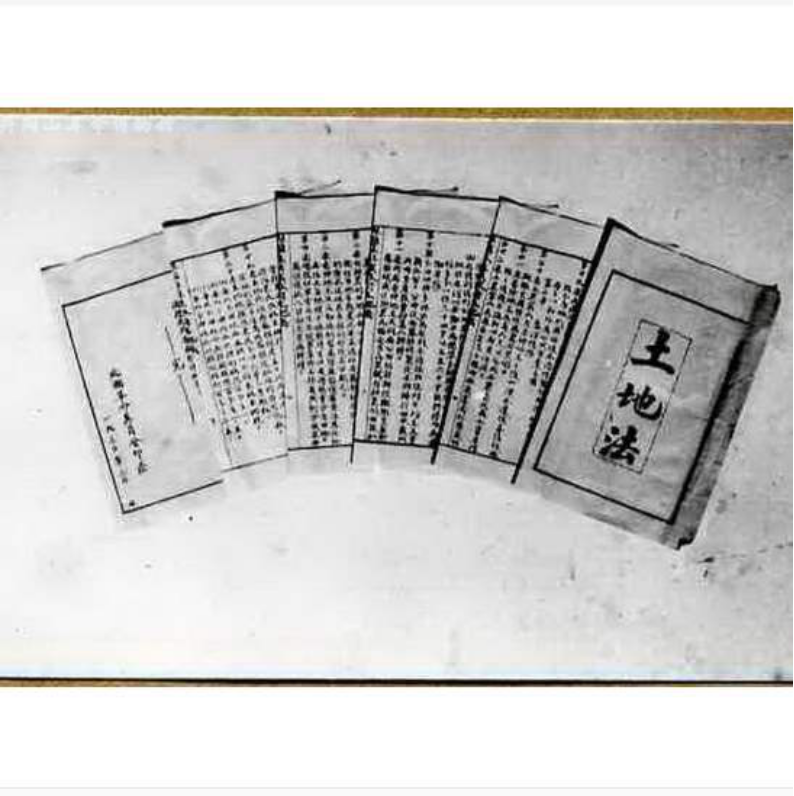
1928年12月,湘赣边界工农兵政府根据中央有关土地革命的精神,全面总结了井冈山根据地土地革命的经验,制定并公布了我党最早的土地法规《井冈山土地法》。它为我党后来深入开展土地革命,制定更全面的土地法令奠定了基础。《井冈山土地法》也存在一些缺陷,主要有三点: 1、没收一切土地,而不只是没收地主土地。2、土地所有权属政府而不是农民,农民只有使用权。3、禁止土地买卖。
土地革命的实行,使根据地贫苦农民分得了土地,解放了农村生产力,激发了农民群众的革命热情,大大促进了根据地的建设的发展。
In accordance with the spirit of the central government regarding the land revolution, in December 1928, the Government of the Workers, Peasants and Soldiers comprehensively summarized the experience of the land revolution in the Jinggangshan Revolutionary Base and formulated the party ’s earliest land law, the Jinggangshan Land Law. It laid the foundation for our party's in-depth land revolution and the formulation of a more comprehensive land law. However, the Jinggangshan Land Law also has some flaws. Fistly, it confiscated all land, not just the landlords’ land. Secondly, the ownership of land belongs to the government, not the farmers, and farmers only have the right to use. Thirdly, it prohibited land sales.
The implementation of the agrarian revolution enabled poor farmers in the base areas to share land, liberated rural productive forces, stimulated the revolutionary enthusiasm of the masses and greatly promoted the development of base areas.